


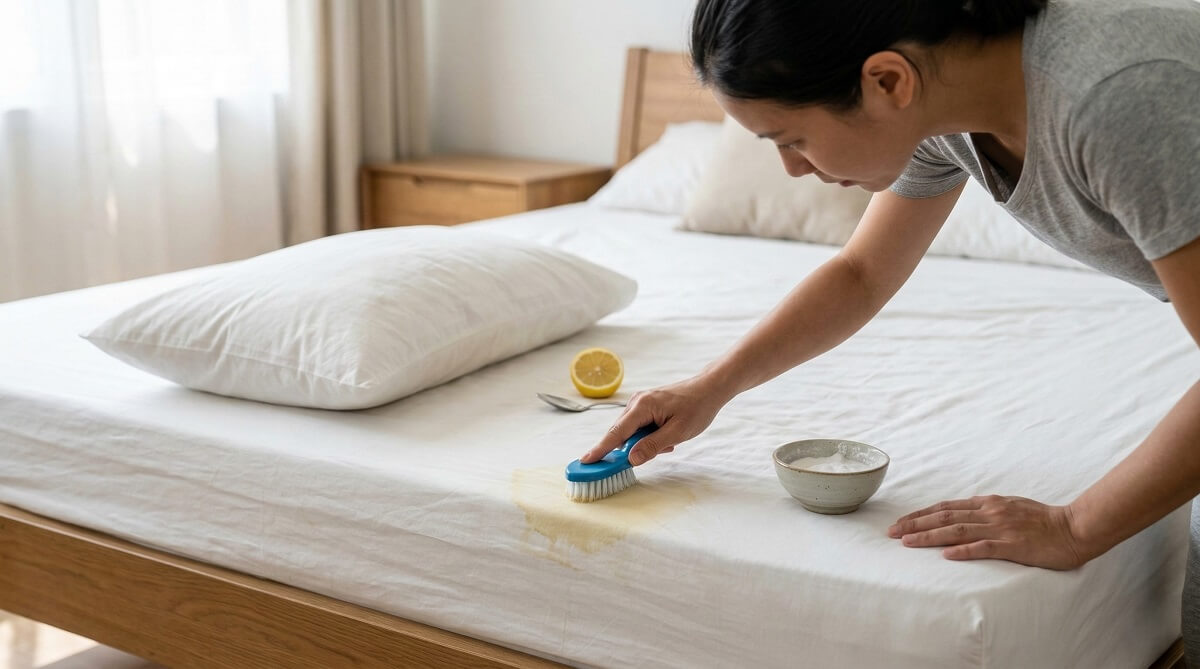
Sweat stains on sheets can be completely removed using common household products, with the most effective approach depending on whether the stains are fresh or set-in. For fresh stains, a simple pre-treatment with baking soda and hydrogen peroxide followed by a warm wash works for most cases. Old, yellowed stains need overnight soaking in oxygen bleach or borax before washing.
The key is avoiding two common mistakes: using chlorine bleach (which actually makes sweat stains worse by reacting with proteins) and putting sheets in the dryer before confirming stains are gone (heat sets remaining stains permanently). According to professional laundry services, chlorine bleach reacts with the proteins in sweat and aluminum compounds from antiperspirants, intensifying yellow stains instead of removing them.
This guide covers four proven methods with exact costs, the science behind why sweat creates yellow stains, fabric-specific guidance for different sheet materials, and prevention strategies to stop stains before they start. For other common bedding issues, see our guide on removing blood stains from sheets.
Quick Method Selector
✅ Use the Baking Soda + Hydrogen Peroxide Method if:
- Stains are less than 2 weeks old
- You have 2-3 hours total time
- You want the most eco-friendly option
- Cost: $0.39-0.98 per treatment (based on February 2026 pricing)
✅ Use the Oxygen Bleach Soak Method if:
- Stains are old, set-in, or yellowed
- You can wait overnight (6-24 hours)
- You have white or colorfast sheets
- Cost: $0.15-0.89 per treatment
✅ Use the Borax Method if:
- You have hard water
- Standard methods haven’t worked
- You want odor elimination too
- Cost: $0.35-0.50 per treatment
❌ Skip DIY methods if:
- Sheets are silk or delicate materials (professional cleaning needed)
- Stains have been through the dryer 3+ times
- Sheet fabric is already deteriorating or thinning
- Cost to replace is lower than treatment time investment (sheets typically $18-40 per set)
Why Sweat Creates Yellow Stains on Sheets
Understanding what causes sweat stains helps you choose the right removal method. Pure sweat alone is actually colorless and odorless – the yellow staining comes from a chemical reaction.
The Aluminum-Protein Reaction
Most antiperspirants contain aluminum-based compounds (aluminum chloride, aluminum zirconium). When these compounds mix with proteins in your sweat and body oils over time, they create a yellow residue that bonds with fabric fibers. This reaction intensifies with heat and repeated washing, which is why stains often worsen before you notice them.
According to professional laundry services, this aluminum-protein reaction is also why chlorine bleach fails on sweat stains – the bleach reacts with these same proteins, actually locking the yellow color into the fabric permanently rather than lifting it out.
Why White Sheets Show Stains Most
White sheets don’t stain more easily than colored sheets – you just see the yellowing more obviously. All sheet colors can develop the same protein-oil buildup from nighttime sweating. White and light-colored sheets simply make the discoloration visible earlier, which actually helps you catch and treat stains before they become deeply set.
How Stains Worsen Over Time
Fresh sweat stains start as barely visible spots. Over days and weeks, the aluminum-protein compounds oxidize (react with oxygen in air), darkening the yellow color. Each time you wash sheets without pre-treatment, regular detergent doesn’t break down these compounds – it just redistributes them. Eventually, you end up with sheets that look dingy even when clean.
The 3-Step Universal Process (Works for All Methods)
All four methods in this guide follow the same basic structure. Understanding these three critical steps will help you avoid the mistakes that make stains permanent.
Step 1 — Pre-Treat the Stain (Don’t Skip This)
Pre-treatment breaks down the protein-oil compounds before washing. Regular detergent alone can’t do this effectively – you need something that specifically targets proteins. Each approach uses different agents (enzymes, oxygen, acids) to break these bonds.
Let pre-treatment sit for at least 30 minutes, though longer works better. For stubborn discoloration, overnight soaking (8-12 hours) gives the cleaning agents time to fully penetrate and dissolve the residue. The temptation to rush this step is strong, but 90% of successful removal happens during pre-treatment, not during washing.
Warning about scrubbing: Don’t scrub or rub stained areas aggressively. This grinds the compounds deeper into fabric fibers and can damage the material. Instead, apply your cleaning solution and let chemistry do the work.
Step 2 — Wash with Proper Temperature
Water temperature matters more than you might think. According to laundry experts, fresh protein-based stains respond best to warm or cold water (not hot), while old, set-in stains that have already oxidized can handle hot water since the proteins are already denatured.
Temperature guidelines:
- Fresh stains (under 2 weeks): Warm water (90-100°F) or cold water (60-80°F)
- Old stains (2+ weeks): Hot water (130-140°F) – the hottest your fabric can tolerate
- Delicate fabrics: Always use cold water regardless of stain age
Check your sheet care label for maximum safe temperature. Most cotton sheets can handle hot water, but bamboo, microfiber, and blended fabrics often require lower temperatures to prevent damage.
Skip fabric softener: Fabric softener coats fibers with a waxy residue that can lock in remaining stain compounds. Use it only after you’ve confirmed stains are completely gone.
Step 3 — Check Before Drying
This step is critical and non-negotiable. Heat from the dryer permanently sets any remaining residue into the fabric through a process similar to curing or baking them in. Once heat-set, marks become nearly impossible to lift out.
After washing, inspect your sheets while they’re still damp. Look at the previously discolored areas in good light – bright sunlight works best. If you see even a faint shadow of yellowing, do not put sheets in the dryer. Repeat your treatment process instead.
Air-drying benefits: Air-dry your sheets by hanging them outside, laying them flat, or draping them over a drying rack. If you can dry them in direct sunlight, even better – UV light from the sun naturally bleaches fabrics by breaking down chromophores (color compounds) in stains. According to research on sun-bleaching, 2 to 3 hours of direct sunlight provides optimal natural whitening without damaging fabric.
Method 1 — Baking Soda + Hydrogen Peroxide (Best for Fresh Stains)
This eco-friendly method works best on stains that haven’t fully set and yellowed. The combination creates a gentle oxidizing paste that breaks down sweat proteins without harsh chemicals.
What You’ll Need
- Baking soda: 1/2 cup per treatment (ARM & HAMMER 4 lb box: $3.34 at Walmart, $0.84 per lb)
- Hydrogen peroxide (3%): 1/4 cup (2 fl oz) per treatment (16 oz bottle: $6.29 on Amazon, $0.39 per fl oz)
- Mixing bowl
- Spoon or spatula for mixing
- Soft brush or clean cloth (optional)
Cost per treatment: Approximately $0.17 (baking soda) + $0.78 (hydrogen peroxide) = $0.95 per treatment using standard products. Budget option using bulk hydrogen peroxide brings cost down to around $0.39 per treatment.
Time required: 30-60 minutes pre-treatment + 45 minutes washing + 2-4 hours air drying = 3-6 hours total
Step-by-Step Instructions
1. Mix the paste
Combine 1/2 cup baking soda with 1/4 cup hydrogen peroxide in a bowl. Mix until you get a thick paste with the consistency of toothpaste. If it’s too thick to spread, add a tiny bit more peroxide (1 teaspoon at a time). If it’s too runny, add more baking soda.
2. Apply to stains
Spread the paste directly onto stained areas, covering them completely with a layer about 1/4-inch thick. Focus on the most yellowed spots, but treat the general area where you sleep since oils accumulate even where you can’t see visible staining.
3. Let it sit
Leave the paste on for 30-60 minutes. You might see slight fizzing as the hydrogen peroxide reacts with proteins – this is normal and means it’s working. For stubborn stains, you can leave it up to 2 hours. Don’t let it dry completely; if it starts to look crusty, mist lightly with water.
4. Wash in warm water
Without rinsing off the paste first, put sheets directly into your washing machine. Add your regular detergent and run a warm or hot water cycle (check your fabric care label first). The agitation will dissolve the paste while the peroxide continues working.
5. Air dry and inspect
Skip the dryer and air-dry your sheets. Once completely dry, check the previously stained areas. If stains persist, repeat the process – sometimes it takes 2-3 treatments for stubborn spots.
Why This Works
Baking soda (sodium bicarbonate) is mildly alkaline, which helps lift oils from fabric. Hydrogen peroxide releases oxygen when it contacts proteins, breaking down the molecular bonds in sweat stains. Together, they create a gentle but effective treatment that won’t damage most fabrics.
Unlike chlorine bleach, hydrogen peroxide doesn’t react negatively with sweat proteins. According to cleaning science resources, hydrogen peroxide is “well suited to eliminating biological, protein-based stains” because it oxidizes them rather than setting them.
Pros and Cons
Pros:
- Gentle on fabrics – safe for most sheet materials
- Eco-friendly with no harsh chemicals
- Inexpensive ingredients you likely already have
- Non-toxic and safe around children and pets
- Works on both white and colored sheets
Cons:
- Takes time – not instant like some commercial products
- Less effective on deeply set, old stains (over 1 month)
- May need repeating for stubborn stains
- Hydrogen peroxide can lighten dark fabrics slightly (always test first)
Method 2 — Oxygen Bleach Soak (Best for Old/Set-In Stains)
When discoloration has turned deep yellow or dingy gray, oxygen bleach provides the heavy-duty cleaning power needed. This is the most effective approach for stubborn yellowing that has resisted other treatments.
What You’ll Need
- Oxygen bleach: OxiClean Versatile Stain Remover (3 lbs: $10.98 at Walmart) or generic sodium percarbonate powder
- Large container: Basin, bucket, or bathtub large enough to fully submerge sheets
- Hot water: Enough to cover sheets completely (oxygen bleach activates best in hot water)
- Stirring implement
Cost per treatment: Using 1-2 scoops (1-2 oz) of OxiClean per soak, cost ranges from $0.15-0.89 depending on amount used and container size purchased.
Time required: 10 minutes prep + 6-24 hours soaking + 45 minutes washing + 3-5 hours air drying = 10-30 hours total (mostly passive waiting)
Step-by-Step Instructions
1. Prepare soaking solution
Fill your container with hot water – as hot as your tap provides (typically 120-140°F). Add 1-2 scoops of oxygen bleach powder per gallon of water. For a bathtub, use 4-6 scoops total. Stir until powder dissolves completely. The solution should look slightly cloudy.
2. Submerge sheets completely
Push sheets down into the solution until fully submerged. Every part needs contact with the oxygen bleach to work properly. If sheets float, weigh them down with a clean, white towel or plate. Don’t overcrowd – sheets need room to move in the solution.
3. Soak for 6-24 hours
Minimum soak time is 6 hours, but overnight (12-24 hours) works best for stubborn yellow marks. The sodium percarbonate in oxygen bleach breaks down into hydrogen peroxide and sodium carbonate, slowly releasing oxygen that lifts the residue. You can agitate sheets gently every few hours to help the process.
4. Wring out and wash
Remove sheets from the soaking solution and wring out excess liquid. Don’t rinse yet. Place directly in your washing machine and run a hot water cycle with your regular detergent. The combination of remaining oxygen bleach plus detergent provides maximum cleaning power.
5. Inspect and air dry
Check sheets while damp. If yellowing persists, you can repeat the soaking process – sometimes heavily discolored bedding needs 2-3 rounds. Once satisfied, air dry completely before using or storing.
Why This Works
Oxygen bleach (sodium percarbonate) releases hydrogen peroxide when dissolved in water. This oxygen-based cleaning action breaks down protein bonds and lifts oxidized compounds without the harsh chlorine found in regular bleach. It’s safe for colors because it doesn’t strip dye the way chlorine does.
Pros and Cons
Pros:
- Most effective for stubborn, old stains
- Whitens and brightens without damage
- Also removes odors trapped in fabric
- Safe for colored sheets (won’t bleach them)
- Works on multiple fabric types
Cons:
- Requires overnight wait – not a quick fix
- Need large soaking container (bathtub works best)
- More expensive per treatment than baking soda method
- Creates bulky, wet laundry to handle
Method 3 — Borax Treatment (Best for Hard Water Areas)
If you have hard water (high mineral content), standard cleaning methods often fail because minerals interfere with cleaning agents. Borax is a water softener that allows other cleaners to work properly while also boosting their stain-fighting power.
What You’ll Need
- Borax: 20 Mule Team Borax, 65 oz box (available on Amazon in single or multi-packs)
- Regular laundry detergent
- Basin for pre-soaking (optional but recommended)
Cost per treatment: Using 1/2 cup (4 oz) of borax per treatment, a 65 oz container provides approximately 16 treatments at $0.35-0.50 per treatment (based on typical borax pricing of $5.50-8.00 per box).
Time required: 1-2 hours pre-soak + 45 minutes washing + 3-4 hours air drying = 5-7 hours total
Step-by-Step Instructions
1. Pre-soak in borax solution (optional but recommended)
Dissolve 1/2 cup borax in a basin of warm water. Submerge the stained sections and let soak for 1-2 hours. This pre-treatment step isn’t mandatory, but it significantly improves results, especially for yellowed stains.
2. Prepare washing machine
Add your sheets to the washing machine. Pour 1/2 cup borax directly into the drum with the sheets (not in the detergent dispenser). Add your regular amount of laundry detergent to the dispenser as usual.
3. Wash in warm to hot water
Run a warm or hot water cycle based on your fabric type. The borax softens the water, allowing the detergent to create better suds and penetrate fabric more effectively. It also boosts the pH, which helps break down oils.
4. Air dry and check
As always, air dry sheets and inspect before considering them done. Repeat if necessary.
Why This Works
Borax (sodium borate) softens hard water by binding with calcium and magnesium ions that would otherwise block cleaning agents. It also raises water pH slightly, creating a more alkaline environment that breaks down oils and greases more effectively. The combination of water softening plus alkaline boost makes it especially effective in areas with mineral-heavy water.
Pros and Cons
Pros:
- Excellent for hard water areas where other methods fail
- Also works as deodorizer – removes sweat smell as well as stains
- Very affordable per treatment
- Multi-purpose product (laundry, cleaning, pest control)
- Long shelf life
Cons:
- Requires careful handling – can irritate skin and eyes
- Not suitable for all fabric types (check care label)
- Less eco-friendly than baking soda method
- Should be kept away from children and pets
Method 4 — Vinegar + Baking Soda (Budget Option)
When you need to treat sweat stains but don’t want to buy specialized products, this pantry staples method provides a workable solution using items you likely already have.
What You’ll Need
- White vinegar: 1 cup per treatment
- Baking soda: 1/2 cup per treatment
- Spray bottle (optional)
Cost per treatment: Approximately $0.25 per treatment (vinegar: $0.20, baking soda: $0.05) – the most affordable method.
Time required: 30-45 minutes pre-treatment + 45 minutes washing + 3-4 hours air drying = 4-6 hours total
Step-by-Step Instructions
1. Apply white vinegar
Pour white vinegar directly onto stained areas, or spray it on using a spray bottle for better coverage. Saturate the stains completely – don’t be shy with the vinegar. The acetic acid in vinegar breaks down oils and some protein compounds.
2. Sprinkle baking soda
While the vinegar is still wet, sprinkle baking soda over the treated areas. You’ll see immediate fizzing and bubbling – this is the acid-base reaction creating carbon dioxide gas. This fizzing action helps lift stain particles from fabric fibers.
3. Let the reaction work
Allow the vinegar-baking soda mixture to sit for 30-45 minutes. The initial fizzing stops after a few minutes, but the cleaning action continues. Keep the area damp – if it starts drying out, spray with a little more vinegar.
4. Wash normally
Place sheets in the washing machine without rinsing off the baking soda-vinegar residue. Run a regular warm water cycle with your usual detergent.
5. Air dry and evaluate
Air dry completely and check results. This method is gentler than oxygen bleach, so stubborn stains may need 2-3 treatments.
Why This Works
White vinegar (5% acetic acid) dissolves mineral deposits and breaks down some oils. Baking soda is alkaline and absorbs odors while providing mild abrasive action. The fizzing reaction when they combine creates agitation that helps lift particles. While not as powerful as enzyme-based methods, this combination handles mild to moderate stains effectively.
Pros and Cons
Pros:
- Extremely inexpensive – cheapest method by far
- Uses common household items
- Very eco-friendly and non-toxic
- Safe for most fabric types
- Also deodorizes and freshens sheets
Cons:
- Least effective on stubborn, old stains
- Works best as maintenance treatment rather than stain rescue
- Strong vinegar smell during treatment (dissipates after washing)
- May require multiple treatments for visible results
Comparison Table — All Methods at a Glance
| Method | Best For | Time Required | Cost per Treatment | Fresh Stains | Old Stains | Eco-Friendly | Difficulty |
|---|---|---|---|---|---|---|---|
| Baking Soda + H₂O₂ | Fresh stains under 2 weeks | 3-6 hours | $0.39-0.98 | ⭐⭐⭐⭐⭐ | ⭐⭐⭐ | ⭐⭐⭐⭐⭐ | Easy |
| Oxygen Bleach | Old, yellowed stains | 10-30 hours | $0.15-0.89 | ⭐⭐⭐⭐ | ⭐⭐⭐⭐⭐ | ⭐⭐⭐⭐ | Easy |
| Borax | Hard water areas | 5-7 hours | $0.35-0.50 | ⭐⭐⭐⭐ | ⭐⭐⭐⭐ | ⭐⭐⭐ | Easy |
| Vinegar + Baking Soda | Budget option, mild stains | 4-6 hours | $0.25 | ⭐⭐⭐ | ⭐⭐ | ⭐⭐⭐⭐⭐ | Easy |
Note: All costs based on February 2026 retail pricing. Time includes active work plus soaking/drying. Star ratings reflect typical effectiveness.
Special Cases and Troubleshooting
Fabric-Specific Guidance
Different sheet materials require different approaches. Using the wrong method can damage fabric or set stains permanently.
| Fabric Type | Safe Methods | Avoid | Special Notes |
|---|---|---|---|
| 100% Cotton | All methods work | Excessive heat can shrink | Most durable option; can handle multiple treatments |
| Cotton Blend (Poly/Cotton) | Methods 1-3 | Very hot water (over 140°F) | Check care label; polyester component limits heat tolerance |
| Bamboo/Rayon | Method 1, Method 4 | Harsh chemicals, high heat | Delicate fibers; use gentle products only |
| Microfiber | Method 1 (cold water) | Bleach, high heat, fabric softener | Holds oils stubbornly; may need multiple treatments |
| Linen | Methods 1-3 | Chlorine bleach | Durable but wrinkles easily; iron damp if needed |
| Silk | Professional cleaning only | All DIY methods | Too delicate for home stain treatment |
Dealing with Extra-Stubborn Stains
When standard treatments don’t fully remove stains, you have options before giving up. For additional cleaning techniques that might help, see our guide on cleaning memory foam mattresses.
Repeat treatments: Sometimes yellowing needs 2-3 treatment cycles. Each round weakens the discoloration further. Allow sheets to dry completely between attempts so you can accurately assess remaining marks.
Combine methods safely: You can use Method 1 (baking soda + hydrogen peroxide) as a pre-treatment, then follow up with Method 2 (oxygen bleach soak) for maximum power. Don’t combine borax and vinegar in the same treatment – the acid-base reaction neutralizes both products.
When to give up: If you’ve tried three full treatment cycles using different approaches and yellowing remains visible, the residue has likely bonded permanently with fabric fibers. At this point, replacing sheets is more cost-effective than continuing treatment.
What to Do When Methods Fail
Sometimes sheets are beyond saving. Here’s how to tell and what to do instead.
Warning signs sheets are beyond saving:
- Fabric has thinned noticeably in discolored areas
- Yellowing has gone through the dryer 3+ times
- Discoloration covers more than 30% of the sheet surface
- Fabric feels different (rough, stiff) even when laundered
- Fitted sheets no longer stay snug (overstretched elastic)
Cost-benefit analysis: High-quality replacement sheet sets cost $30-60 for queen size on Amazon or at major retailers. If you’ve spent 4+ hours treating stains without success, your time investment exceeds the replacement cost for most budget to mid-range sheets.
According to textile industry guidelines, high-quality sheets typically last 2-3 years or approximately 100 washes under normal use. If your sheets are approaching this age and have persistent stains, replacement is the practical choice. For more on sheet longevity, check our guide on how long bedding lasts.
How to Prevent Sweat Stains (Save Time and Effort)
Prevention takes less effort than removal. These strategies stop sweat stains before they start.
Pre-Bed Habits That Help
1. Shower before bed
Nighttime showering removes the day’s accumulated body oils, dead skin cells, and product residue that contribute to staining. You’ll transfer less onto your sheets, especially in areas like your pillow and upper body zone.
2. Switch to aluminum-free deodorant
Since aluminum compounds cause the yellow staining reaction, aluminum-free deodorants eliminate this problem at the source. Natural deodorants using baking soda, arrowroot powder, or mineral salts work for many people. If you need antiperspirant strength, apply it in the morning rather than before bed.
3. Let skin products absorb
If you apply moisturizers, body lotions, or prescription creams before bed, give them 15-20 minutes to absorb before getting into bed. Products sitting on skin surface transfer directly to sheets.
Bedroom Environment Optimization
Ideal sleeping temperature: According to sleep psychologist Michelle Drerup, PsyD at Cleveland Clinic, you should keep bedroom temperature between 60 and 67°F (15-19°C) for optimal sleep. “Think of your bedroom as your cave. It should be cool, dark and quiet to enhance your sleep.” This temperature range not only improves sleep quality but also reduces nighttime sweating significantly.
Most people sweat because their bedroom is too warm. Each degree above 67°F increases perspiration, which accelerates sheet staining. Use air conditioning, fans, or open windows to maintain cooler temperatures.
Humidity control: High humidity prevents sweat from evaporating, keeping you damp all night. Aim for 30-50% relative humidity. A small dehumidifier in the bedroom costs $30-50 and can make a noticeable difference in how much you sweat.
Breathable sleepwear: Natural fibers like cotton, bamboo, or linen allow air circulation and moisture wicking. Synthetic materials (polyester, nylon) trap heat and moisture against your skin, increasing how much you sweat into sheets.
Sheet Protection Strategies
Use mattress protectors: While mattress protectors don’t stop sheet staining, they prevent sweat from soaking through to your mattress (a much more expensive item to replace). Quality waterproof mattress protectors cost $25-45 on Amazon. For mattress care tips, see our guide on drying a wet mattress.
Wash sheets weekly: According to dermatologist Sean McGregor, DO at Cleveland Clinic, you should wash bed sheets at least once per week. “Bacteria love skin so much that there are actually more bacterial organisms in our bodies than we have cells,” he notes. Weekly washing prevents sweat and oils from building up to the point where they create visible stains.
The average person sheds approximately 1.5 grams of dead skin daily, creating an environment where bacteria thrive. More frequent washing during hot, humid weather – every 3-4 days – keeps accumulation at bay. For tips on efficient laundering, see our guide on how long laundry takes.
Choose forgiving sheet colors: White sheets show every stain, but darker or patterned sheets hide minor discoloration. If you’re prone to sweating and want to reduce visible staining, consider light gray, beige, or subtle prints. You can still use the same cleaning methods when stains do appear – you’ll just notice them less between treatments. To keep your bedding fresh between washes, check our guide on removing mattress odors.
Consider Sweat-Resistant Bedding
Specialized sheets designed to resist moisture and bacteria cost more upfront but can reduce staining frequency.
Silver-infused sheets: Fabric woven with silver ions naturally resists bacterial growth and reduces odors. These sheets still get sweat stains but less quickly than standard cotton.
Bamboo and moisture-wicking options: Bamboo sheets absorb moisture more effectively than cotton, keeping you drier throughout the night. Less contact between sweat and fabric means less staining opportunity.
Cost-benefit analysis: Sweat-resistant sheet sets cost $60-120 on Amazon compared to $30-60 for standard cotton. If you’re treating sheets for sweat stains every month, the premium price pays for itself through reduced cleaning time and extended sheet lifespan.
Common Mistakes to Avoid
These well-intentioned actions actually make sweat stains worse or set them permanently.
1. Using Chlorine Bleach
Chlorine bleach reacts chemically with the proteins in sweat and aluminum compounds from antiperspirants, intensifying yellow stains instead of removing them. According to professional laundry services, this reaction makes stains darker and locks discoloration into fabric permanently.
Use oxygen bleach (sodium percarbonate) instead – it breaks down proteins without the negative chemical reaction. If you’ve already used chlorine bleach on sweat stains, try the oxygen bleach soak method to potentially reverse some of the damage. For related fabric care issues, see our article on why clothes smell musty after washing.
2. Putting Stained Sheets in the Dryer
Heat permanently sets protein-based stains by denaturing (cooking) them into fabric fibers. Once heat-set, stains become nearly impossible to remove. Always air dry sheets after treating stains and confirm stains are completely gone before using any heat.
3. Using Hot Water on Fresh Stains
Fresh protein stains respond better to cold or warm water. Hot water on fresh stains can begin the denaturing process, making removal harder. Save hot water for old, already-set stains where proteins have already oxidized.
4. Overloading the Washing Machine
Sheets need room to agitate and circulate in wash water. Cramming too many sheets (or adding other items) prevents proper cleaning. Wash sheet sets individually for best results, especially when treating stains.
5. Skipping Pre-Treatment
Regular detergent alone can’t break down the aluminum-protein compounds in sweat yellowing. Pre-treatment with enzyme-based or oxygen-based cleaners is necessary for effective removal. Skipping this step means you’re just redistributing residue rather than eliminating it.
6. Giving Up Too Soon
Stubborn discoloration often needs 2-3 treatment cycles. Each round weakens the bonds between residue and fabric. Many people give up after one attempt, not realizing that persistence pays off. As long as you see any improvement after a treatment, continue with additional rounds.
7. Using Fabric Softener During Treatment
Fabric softener coats fibers with waxy residue that locks in remaining yellowing. Wait until discoloration is completely removed before adding fabric softener to your wash routine.
FAQ — Your Sweat Stain Questions Answered
Can you remove sweat stains that have been washed and dried?
Yes, though it’s more challenging. Heat from the dryer sets stains, but they’re not always permanent. Try the oxygen bleach soak method (Method 2) with an overnight soak. Expect to repeat the process 2-3 times. Success rate drops significantly after 3+ dryer cycles – at that point, professional cleaning or replacement may be more practical. For other stain removal challenges, check our guide on removing blood from sheets.
Should I use hot or cold water for sweat stains?
Use cold or warm water for fresh stains (under 2 weeks old) to prevent setting the proteins. For old, yellowed stains that have already oxidized, hot water works better since the proteins are already denatured. Always check your sheet care label for maximum safe temperature before using hot water.
Does bleach remove sweat stains from white sheets?
Chlorine bleach makes sweat stains worse, not better. It reacts with sweat proteins and aluminum compounds, intensifying yellowing. Use oxygen bleach instead – it safely removes sweat stains from white sheets without the negative chemical reaction. Oxygen bleach (like OxiClean) costs $10.98 for 3 lbs at Walmart and works significantly better.
How long do I need to soak sheets to remove sweat stains?
Minimum soak time is 1 hour for mild stains. Overnight soaking (8-12 hours) works best for stubborn yellow stains. The oxygen bleach method recommends 6-24 hours for deeply set stains. Longer soaking gives cleaning agents more time to break down protein-oil bonds in the fabric.
Can I prevent yellow sweat stains on sheets?
Yes, through several strategies: wash sheets weekly (per dermatologist recommendations from Cleveland Clinic), shower before bed to remove body oils, switch to aluminum-free deodorant to eliminate the main staining compound, and keep your bedroom between 60-67°F to reduce nighttime sweating. Weekly washing prevents accumulation that leads to visible yellowing.
Why are my white sheets turning yellow?
Yellow stains come from a reaction between sweat proteins and aluminum compounds in most antiperspirants. Pure sweat is colorless – the yellowing happens when aluminum mixes with proteins and body oils, then oxidizes (reacts with oxygen) over time. This creates the distinctive yellow discoloration you see on sheets, especially in areas where your body contacts them most.
How often should I wash sheets to prevent staining?
At least once per week, according to dermatologist Sean McGregor, DO at Cleveland Clinic. During hot, humid weather or if you’re a heavy sweater, increase frequency to every 3-4 days. Weekly washing prevents sweat and oils from accumulating to the point where they create permanent stains. Washing also removes the 1.5 grams of dead skin cells you shed daily, reducing bacteria growth. For more on washing considerations, see our article on washing towels and sheets together.
Will sun-drying help whiten yellowed sheets?
Yes, UV light from sunlight naturally bleaches fabrics by breaking down chromophores (color-causing compounds) in stains. Research on sun-bleaching shows 2-3 hours of direct sunlight provides optimal whitening without damaging fabric. Combine sun-drying with one of the cleaning methods above for best results. Long-term UV exposure can eventually weaken fabric, so limit sun-drying to when you’re actively treating stains.
What’s the best product for removing old sweat stains?
Oxygen bleach (sodium percarbonate) is most effective for old, set-in sweat stains. OxiClean Versatile Stain Remover ($10.98 for 3 lbs at Walmart) or generic oxygen bleach products work well. Use the overnight soaking method (6-24 hours) for best results. For very stubborn stains, combine oxygen bleach soak with a baking soda-hydrogen peroxide pre-treatment.
When should I just replace my sheets instead of cleaning them?
Replace sheets when: fabric has thinned noticeably in stained areas, stains cover more than 30% of the surface, you’ve tried three different treatment methods without improvement, fitted sheet elastic is stretched out, or sheets are approaching 2-3 years old (typical lifespan is 100 washes). At this point, replacement ($30-60 for queen size) is more cost-effective than continued treatment time.
When to Replace Instead of Clean
Sometimes the most practical solution is replacement rather than continued cleaning attempts.
Signs Your Sheets Are Beyond Saving
Fabric deterioration: Look for thinning patches, small holes, or areas where the fabric feels different (rough, papery, stiff). Once fabric structure breaks down, cleaning agents can damage it further. Stained areas often deteriorate faster because they’ve had repeated chemical treatments.
Stain severity: If yellowing covers more than 30% of the sheet surface or has created distinct brown spots, the time investment to treat it exceeds the cost to replace. Heavy staining like this usually indicates the sheets are at end-of-life anyway.
Heat-set stains: If stains have been through the dryer 3+ times, they’re likely permanent. You can try one round of intensive treatment (oxygen bleach overnight soak), but if that doesn’t work, don’t waste more time.
Cost-benefit calculation: If you’ve spent 4+ hours treating stains across multiple attempts without satisfactory results, your time is worth more than budget replacement sheets. Even at minimum wage ($7.25/hour federally, higher in many states), 4 hours equals $29 – the cost of new sheets.
Average Sheet Lifespan
According to textile industry guidelines, high-quality bed sheets typically last 2-3 years or approximately 100 washes under normal use. Linen sheets can last 3-5 years or longer, while lower-quality cotton blends may only last 1-2 years.
Factors affecting lifespan include:
- How closely you follow care instructions
- Frequency of use and washing
- Material composition (natural fibers outlast synthetics)
- Having multiple sets to rotate extends individual set lifespan
If your sheets are approaching 2 years of weekly use and have persistent stains, replacement is the practical choice. Quality queen-size sheet sets cost $30-60 on Amazon, less than the value of your time spent treating stubborn stains repeatedly.
Final Thoughts
Sweat stains don’t have to mean the end of your favorite sheets. With the right method for your situation – whether it’s the baking soda and hydrogen peroxide treatment for fresh stains or an overnight oxygen bleach soak for stubborn yellowing – you can restore your bedding to like-new condition. The key is choosing the appropriate method based on stain age and fabric type, then having patience to let the chemistry work.
For best results, gather your supplies and start treatment as soon as you notice staining. The sooner you act, the easier the stains come out. Remember the two critical rules: never use chlorine bleach on sweat stains, and always air dry sheets until you’ve confirmed stains are completely gone.
Prevention through weekly washing, cooler sleeping temperatures (60-67°F), and aluminum-free deodorant reduces how often you’ll need to treat stains in the first place. But when stains do appear, you now have four proven methods to tackle them, from the 25-cent vinegar solution to the heavy-duty oxygen bleach soak.
Related articles:
