


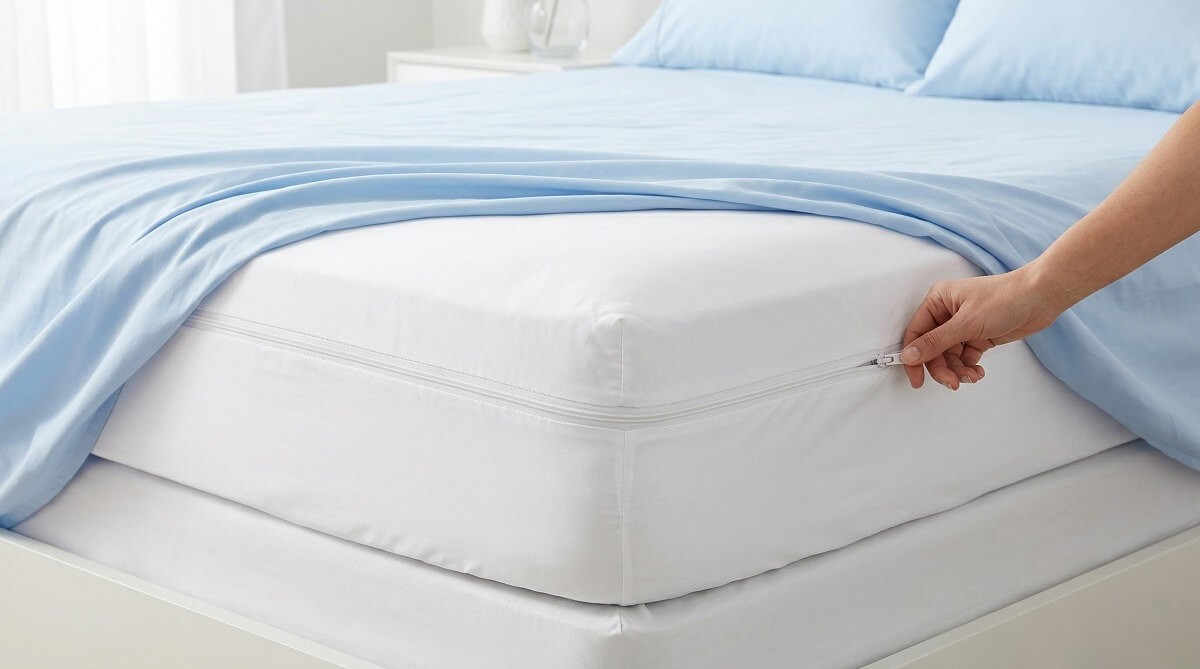
If you’re shopping for a bed bug proof mattress protector, one thing matters above everything else: you need a full six-sided encasement with a sealed zipper, not a standard fitted protector that only covers the top. Bed bugs enter and hide along the sides and bottom of your mattress—a top-only cover leaves the door wide open. for more context on what separates useful mattress protection from marketing noise. (If you’re also evaluating full , we’ve got those covered too.)
For most people, the AllerEase Platinum Zip-Off Top Mattress Protector is the right call. It was named the top pick by Wirecutter after testing more than 35 encasements—it has a secure zipper with a French seam and Velcro closure, a convenient zip-off top panel for easier washing, and a lifetime warranty. It was priced around $53 for a queen as of January 2025 (check Amazon for current pricing). If you need lab-certified protection with an entomologist’s stamp of approval, the Mattress Safe Sofcover Ultimate is the upgrade pick at a higher price point. On a budget, the Bedbug Solution Elite from AllergyStore.com delivers solid OEKO-TEX-certified coverage for around $30.
Below, we cover what to look for, how these three picks differ, and how to use a mattress encasement correctly—whether you’re being proactive or dealing with an actual infestation.
Who Should (and Shouldn’t) Buy a Bed Bug Mattress Encasement
✅ Best For
- Anyone who has recently found or treated bed bugs — encasements contain existing bugs and block new ones
- Frequent travelers who regularly stay in hotels or shared accommodations
- Allergy and asthma sufferers — a well-made encasement blocks dust mites as effectively as bed bugs
- Renters in apartment buildings or shared housing with shared laundry areas
- Anyone with a used mattress, or a guest room used by different people
❌ Skip If
- Your mattress is over 22 inches deep — only a few specialty encasements accommodate this
- You need a plush pillowtop feel — a zippered encasement compresses the surface slightly
- You already have a certified six-sided encasement that’s in good condition
Encasement vs. Protector — A Difference That Actually Matters
A regular mattress protector typically covers only the top and part of the sides, secured like a fitted sheet. That leaves the bottom and lower sides exposed. Bed bugs don’t care about your top surface—they hide in seams, in folds, and underneath the mattress where a standard cover provides zero defense.
A mattress encasement is different. It wraps all six sides of the mattress and zips shut completely. The zipper itself matters too—a loose or unprotected zipper creates gaps as small as 1mm, which is enough for bed bug nymphs (just 1.5mm long, ) to squeeze through or out of. Quality encasements address this with padded zipper flaps, Velcro closures, self-locking mechanisms, or patent-pending tape seals.
What “Bed Bug Proof” Requires—Technically Speaking
The phrase gets thrown around loosely. Here’s what the construction actually needs to do:
- Fabric pore size under 10 microns — Nancy Zimmerman, Head of Product Development at American Textile Company, told Wirecutter that weave tightness matters more than thread count. Polyester with pores under 10 microns blocks both dust mites and allergens.
- Reinforced seam construction — Single-stitch seams develop gaps after washing. French seams or five-thread serger stitching hold up better. Wirecutter found holes in seams on many encasements after just three wash cycles.
- A zipper with a secondary seal — Whether it’s Velcro, a hook lock, or a patented tape closure, the zipper end needs to be fully covered.
- Six-sided coverage — All sides must be enclosed, including the bottom panel underneath the mattress.
On certifications: look for Oeko-Tex Standard 100, which limits harmful chemicals including PFAS (per- and polyfluoroalkyl substances). PFAS are used in water-resistant treatments and have been linked to health risks including cancer, hormone disruption, and immune system suppression, according to the NRDC. As of January 2024, Oeko-Tex allows no intentional PFAS use and caps total fluorine at 100 mg/kg. Some products go further and are independently verified PFAS-free across fabric, zippers, and threads. The ASTM F1670 standard—used on surgical gowns and lab coats—tests fluid penetration resistance, a useful benchmark for mattress protectors. True bed bug certification means an entomologist introduced live bed bugs to the encasement during testing to verify they couldn’t enter or escape. covers the broader approach to keeping your bedroom bug-free.
Five Features That Separate Solid Encasements from Ones That Will Fail You
1. Zipper Quality and Closure Mechanism
The zipper is the most vulnerable part of any encasement. Bugs exploit even small gaps. When evaluating a cover, check whether the zipper has a secondary closure: a Velcro flap (AllerEase), a hook lock (Mattress Safe), or a patented tape seal (Bedbug Solution Elite). Without one, the zipper can shift during sleep, opening a gap.
2. Seam Construction
Wirecutter found visible holes along the seams of several encasements after just three wash cycles—including some pricey models. French seams (AllerEase) and five-thread serger stitching (Mattress Safe) hold up significantly better than single-stitch construction.
3. Fabric Weave and Backing Material
Tightly woven polyester with a pore size under 10 microns blocks dust mites and allergens. A polyurethane laminate backing adds waterproofing without the crinkly, plasticky feel of older vinyl covers. The difference between a cover that rustles every time you move and one that sleeps silently comes down to this backing layer.
4. Certifications Worth Checking
Oeko-Tex Standard 100 is the most useful general certification—it limits PFAS and other harmful chemicals. ASTM F1670 confirms the cover resists fluid penetration. Entomologist certification (Mattress Safe, Bedbug Solution Elite) means live bugs were used in testing. Not every solid product has all three, but knowing what each one confirms helps you compare.
5. Washability at the Right Temperature
To eliminate dust mites, bedding needs to be washed at 130°F (54°C) or higher. Research published in the Journal of Allergy and Clinical Immunology confirms that washing at 140°F (60°C) eliminates 100% of house dust mites, while warm water at 104°F kills fewer than 7%. Your encasement needs to tolerate hot wash cycles without warping, shrinking, or developing holes. Some models specify cool or warm wash—that’s a problem if dust mite control is a priority for you.
Top Bed Bug Proof Mattress Encasements Compared
| Product | Price (Queen, approx.) | Sides | Zipper Seal | Certification | Waterproof | Warranty |
|---|---|---|---|---|---|---|
| AllerEase Platinum Zip-Off Top | ~$53 (Jan 2025) | 6 | Velcro + French seam | PFAS-tested | Yes (PU lining) | Lifetime |
| Mattress Safe Sofcover Ultimate | ~$114 (Jan 2025) | 6 | Hook lock | Bed Bug Certified (entomologist) | Yes (PU lining) | 10 years |
| Bedbug Solution Elite (AllergyStore) | ~$30 | 6 | Tape closure (patented Bugstop® Seal) | Oeko-Tex 100, ASTM F1670, PFAS-free | Yes | Lifetime |
| SafeRest Premium Encasement | ~$70 (official site) | 6 | 360° micro zipper + safety clip | Hypoallergenic, lab tested | Yes | 10 years |
Prices as noted; check retailers for current pricing. All prices in USD.
Best Overall: AllerEase Platinum Zip-Off Top Mattress Protector
This is the encasement Wirecutter named its top pick after testing over 35 options. The zip-off top panel makes washing significantly easier than dealing with a full encasement removal—allergists recommend washing bedding weekly if you have allergies or asthma, so that convenience matters. It has a French seam at the zipper (which resists hole formation after repeated laundering), a Velcro zipper closure that prevents shifting, and corner straps that help it stay in position on the mattress. The polyurethane lining adds waterproofing. It fits mattresses up to 17 inches deep in queen and comes with a lifetime warranty. Check current price on Amazon.
One real caveat: it takes a long time to dry. The quilted top layer needs at least two dryer cycles on low, or one cycle followed by air-drying. Factor that into your laundry routine.
Best for Verified Lab Protection: Mattress Safe Sofcover Ultimate
Go here if you want documented proof that bugs can’t get through. It was independently tested by an entomologist—live bed bugs were introduced to the encasement to verify it blocked entry and escape. Construction is five-thread serger stitching on all seams, and the hook-lock zipper stayed in place when Wirecutter’s testers jumped on the bed. It accommodates a wider range of mattress depths than most: 5–9″, 9–15″, or 16–22″, making it a strong option for thicker foam or pillowtop mattresses. Made in the USA. The 10-year warranty covers the first three years on a non-prorated replacement basis. See the Mattress Safe Sofcover Ultimate. It’s significantly more expensive than the AllerEase, but the lab data is thorough.
Best Budget Pick: Bedbug Solution Elite (AllergyStore)
At around $30, this covers more certification ground than encasements costing twice as much. It’s Oeko-Tex Standard 100 certified, PFAS-free across fabric, zippers, and threads, and tested to ASTM F1670-08—the same fluid penetration standard used on surgical gowns. The patented Bugstop® Seal is a tape-style closure over the zipper end that remains sticky after washing. It’s used commercially by hotels, hospitals, and shelters. The fabric was independently tested by Snell Scientifics to confirm bugs can’t chew through. Machine washable up to 140°F. Lifetime warranty. Check current pricing at AllergyStore.com.
Already Dealing with Bed Bugs? Here’s Where Encasements Fit the Plan
A mattress encasement doesn’t kill bed bugs—but it’s a critical tool for containing and eventually eliminating an infestation. The logic is straightforward: once a cover is sealed over an infested mattress, the bugs inside can’t reach you to feed. Without a blood meal, they eventually starve. This takes time—professional pest management guidance suggests leaving the encasement in place for 12–18 months during active treatment to be certain all bugs and eggs have been eliminated. covers the full integrated approach.
According to the CDC, bed bugs are not known to spread disease, but they cause itching, sleep disruption, and can trigger allergic reactions in some people. They spread via luggage, furniture, clothing, and bedding. Signs of infestation include rust-colored blood spots, shed exoskeletons, and a musty odor.
A few things to keep in mind if you’re dealing with an active infestation:
- Cover the box spring too. Wirecutter notes this specifically—bed bugs harbor in box springs as readily as in mattresses. Box spring encasements are available from AllerEase, Mattress Safe, and SafeRest.
- The encasement alone won’t solve the problem. It needs to be part of an integrated pest management (IPM) approach: frequent vacuuming, washing all bedding at 130°F+, and professional extermination if the infestation is widespread.
- Don’t remove or replace the encasement during treatment. Once it’s sealed, leave it. If it tears or the zipper fails, replace it immediately.
If you’re preventing rather than treating, an encasement is much simpler—put it on, wash it once or twice a year, and forget it’s there.
How to Put On a Mattress Encasement (and Keep It Working)
Installation
- Strip all bedding from the mattress.
- Stand the mattress upright (or slide it to the side of the bed frame if you have a footboard).
- Open the encasement fully and work the cover down over the top half of the mattress.
- Lay the mattress back down and pull the cover the rest of the way on.
- Zip it closed completely, engaging any secondary closure (Velcro flap, hook lock, or tape seal).
- Put on a clean set of sheets and make the bed normally.
On fit: The cover should fit comfortably, not tightly. If it’s stretched too snug, the seams and zipper are under stress and more likely to fail. Measure your mattress depth before buying — from the base to the top surface, including any pillowtop or topper you want to encase. Mattress Safe offers three depth ranges (5–9″, 9–15″, 16–22″), which makes sizing more precise than most brands.
Care
- Washing frequency: Once or twice per year for prevention; more often (monthly) during active infestation treatment or if you have allergies.
- Temperature: Hot water, 130°F (54°C) minimum, to kill dust mites. Research confirms that warm water at 104°F kills fewer than 7% of mites. Follow the product’s specific care instructions — some quilted tops (like AllerEase) specify low dryer heat to protect the polyurethane lining.
- Drying: Allow extra time. Quilted or laminated covers can take two full dryer cycles on low to dry completely. Putting a damp encasement on a mattress can trap moisture and encourage mold.
- Inspection: Periodically check for tears, especially along seams and near the zipper. A damaged encasement should be replaced — a cover with holes provides false confidence, not real protection.
Frequently Asked Questions
What’s the difference between a mattress protector and a mattress encasement?
A mattress protector typically fits over the top and sides like a fitted sheet, leaving the bottom exposed. A mattress encasement wraps all six sides of the mattress and zips shut completely. Only a six-sided encasement provides meaningful bed bug protection. for a detailed comparison.
Can bed bugs chew through a mattress encasement?
Not through a well-made one. The Bedbug Solution Elite was independently tested by Snell Scientifics, LLC, which confirmed bugs cannot chew through the fabric. However, bugs can exploit gaps in zipper seals or damaged seams—which is why secondary zipper closures and reinforced stitching are critical features, not optional extras.
How do I know if my mattress cover is truly bed bug proof?
Look for entomologist certification (live bugs used in testing), strong seam construction, and a secondary zipper seal. Marketing terms like “bed bug resistant” or “bed bug protection” are weaker claims than verified test data. The Mattress Safe Sofcover Ultimate and Bedbug Solution Elite have the most rigorous third-party testing of the options covered here.
Do I need to cover my box spring too?
Yes, if bed bugs are a concern. Wirecutter and pest control professionals recommend encasing the box spring along with the mattress. Bed bugs harbor in box springs as readily as in mattresses. Box spring encasements are available from AllerEase, Mattress Safe, and SafeRest.
How often should I wash a bed bug mattress encasement?
Once or twice a year for standard prevention use. If you have allergies or asthma, allergists recommend washing all bedding — including encasement top panels where zip-off options allow — weekly in hot water. During active bed bug treatment, monthly washing of the exterior is reasonable, but don’t unzip the encasement until the infestation is fully resolved. on ChubbytIps.
Can a mattress encasement help with dust mite allergies?
Yes — a quality encasement with tightly woven fabric (pore size under 10 microns) blocks dust mites as well as bed bugs. Many people use encasements primarily for allergy control. The AllerEase line was originally developed for this purpose. Combining an encasement with weekly hot-water washing of exposed bedding is the approach recommended by allergist Cristina Porch-Curren, MD, per Wirecutter’s testing.
How tight should a mattress encasement fit?
Loosely enough that it doesn’t stress the seams or zipper. If the cover pulls tightly across the mattress, the seams are more likely to develop gaps over time. Use the manufacturer’s depth sizing guide and measure your mattress accurately — include any topper or pillowtop layer you want enclosed.
Do I need to clean my mattress before putting on the encasement?
Not necessarily. You can vacuum the mattress surface first, and if you’ve treated it with spray or steam cleaning, let it dry completely before covering it. If there’s an active infestation, you can put the encasement on as-is — the goal is to seal bugs in, not to sanitize first.
Whichever option you go with, the important thing is getting one that’s actually six-sided and certified — a cheap cover with loose seams offers false confidence, not real protection. Check current prices on AllerEase on Amazon, the Mattress Safe Sofcover Ultimate, or the Bedbug Solution Elite at AllergyStore.
