


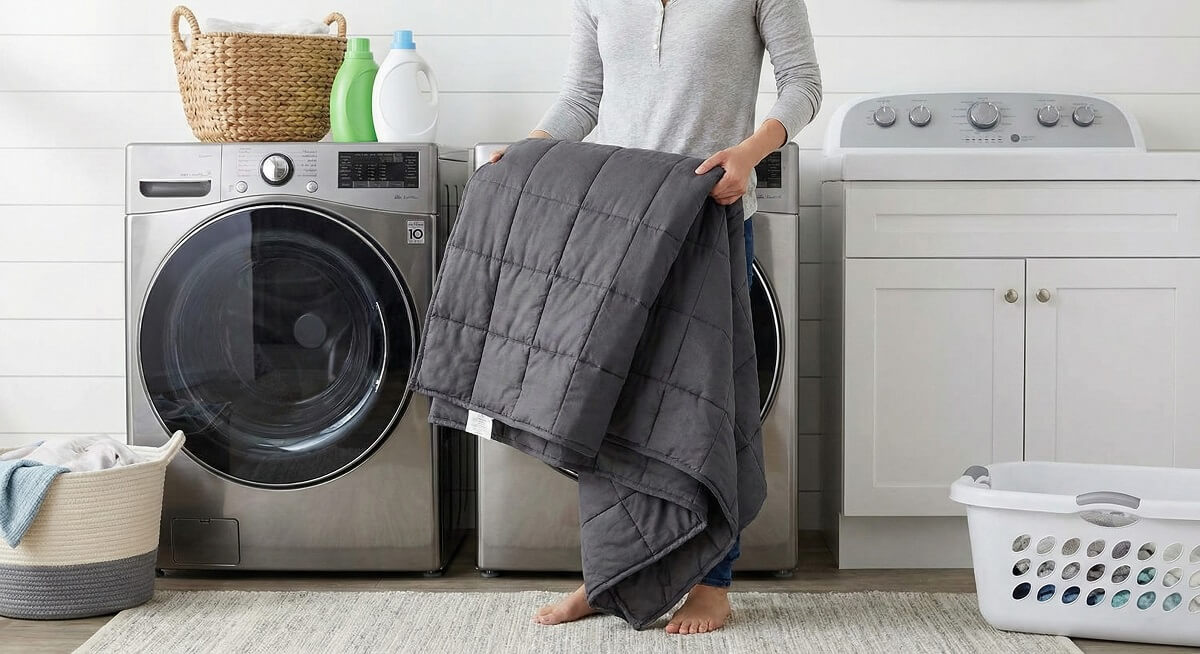
Yes, most weighted blankets can be washed at home. The key factors are your blanket’s weight, fill material, and your washing machine’s capacity. Blankets filled with glass beads, plastic pellets, or steel shot beads are typically safe to wash. Blankets with organic fillers like sand, rice, or beans should never be washed with water.
For blankets under 15 pounds, a standard home washing machine works fine. Heavier blankets (15-25 pounds) need a large-capacity washer with at least 4.5-5 cubic feet. Anything over 25 pounds should go to a laundromat with commercial machines, according to Tide’s care guide. If you’re also looking for tips on keeping other bedding fresh, check out our for more cleaning advice.
The golden rule: always check your care label first. When in doubt, use cold water, a gentle cycle, and skip the fabric softener.
Quick Guide: Can You Wash Your Weighted Blanket?
Safe to Machine Wash If:
- Blanket weighs under 20 pounds and your washer has adequate capacity
- Care label says “machine washable”
- Fill material is glass beads, plastic pellets, or steel shot
- Fabric is cotton, polyester, or fleece
Use Laundromat or Hand Wash If:
- Blanket weighs over 20 pounds
- Your home washer is under 4.5 cubic feet capacity
- Care label specifies professional cleaning
Do NOT Wash If:
- Fill is organic material (sand, rice, corn, beans)
- Label says “dry clean only”
- Fabric is delicate silk or wool without water-safe instructions
Before You Wash: What to Check First
Understanding Your Blanket’s Fill Material
Not all weighted blankets are created equal. The fill material determines whether your blanket can handle water.
Washable fills: Glass beads are the most common fill and handle washing well. According to YNM Home, glass beads don’t absorb moisture, which means faster drying times. Plastic poly pellets, steel shot beads, and micro glass beads are also safe to wash.
Non-washable fills: Blankets filled with sand, rice, corn, or beans should never go in water. These organic materials absorb moisture, grow mold, and fall apart when wet. If your blanket has organic fill, stick to spot cleaning or professional dry cleaning.
Does Your Washing Machine Have the Capacity?
Your blanket’s dry weight is just the starting point. Wet blankets weigh significantly more, and overloading your washer can damage both the machine and your blanket.
| Blanket Weight | Minimum Washer Capacity | Recommendation |
|---|---|---|
| Under 12 lbs | 3.0 cubic feet | Most home washers work fine |
| 12-15 lbs | 3.2 cubic feet | Standard home washer OK |
| 15-18 lbs | 4.5 cubic feet | Large capacity washer needed |
| 18-25 lbs | 5.0+ cubic feet | Extra-large washer or laundromat |
| Over 25 lbs | Commercial machine | Laundromat required |
Top-loader vs. front-loader: Front-loading washers are gentler on weighted blankets. According to Whirlpool, top-loaders with center agitators can snag and tear the fabric. If you have a top-loader with an agitator, consider the bathtub method instead.
How to Machine Wash a Weighted Blanket
Step 1: Pre-Treat Any Stains
Check your blanket for spots before tossing it in the wash. Apply a small amount of mild liquid detergent directly to stained areas and let it sit for 5-10 minutes. For stubborn stains, gently work the detergent in with your fingers or a soft brush. For more stain removal techniques, see our .
Step 2: Load the Machine Properly
Place the blanket in the washer by itself. Weighted blankets need room to move freely during the wash cycle. Adding other items crowds the drum and prevents proper cleaning.
Distribute the blanket evenly around the drum. Bunching it on one side can throw off the machine’s balance during the spin cycle.
Step 3: Choose the Right Settings
- Water temperature: Cold water is safest. Some blankets tolerate warm water up to 85°F, but hot water can damage beads and shrink fabric.
- Cycle: Gentle or delicate cycle reduces wear on fabric and stitching.
- Detergent: Use a mild liquid detergent. Avoid powder detergents that might not dissolve fully.
What to skip: Never use bleach, chlorine, or fabric softener. These products break down fibers, leave residue, and can cause the fill to clump together. Fabric softener in particular makes weighted blankets feel stiff and scratchy over time.
Step 4: Add an Extra Rinse
If your machine has the option, run an extra rinse cycle. Weighted blankets are thick, and leftover detergent residue can make the fabric feel crunchy or cause skin irritation.
How to Dry a Weighted Blanket
Air Drying (Recommended)
Air drying is the gentlest option and helps your blanket last longer. Lay the blanket flat on a clean surface or hang it over a sturdy drying rack. Make sure the weight is evenly distributed to prevent stretching.
Flip the blanket every 4-6 hours so both sides dry evenly. According to Tide, expect the process to take 24-48 hours depending on humidity and blanket thickness. The good news: glass bead fills don’t absorb water, so you’re mainly drying the fabric itself.
Machine Drying
If air drying isn’t practical, you can use a dryer on the lowest heat setting. High heat can melt plastic pellets, damage stitching, and shrink cotton fabrics.
Toss in a few clean tennis balls or dryer balls to help fluff the blanket and prevent fill from clumping in one spot. Stop the dryer periodically to redistribute the blanket and check progress.
Never iron a weighted blanket. The heat can melt fillers and damage the inner construction.
How to Hand Wash a Weighted Blanket
Hand washing works well for heavy blankets that exceed your washer’s capacity, or for blankets with delicate fabrics.
What You’ll Need
- Bathtub or large basin
- Mild liquid detergent
- Soft brush (optional, for stains)
- Clean towels for drying
Step-by-Step Process
- Fill the tub with cool or lukewarm water. Add a small amount of mild detergent and swish to dissolve.
- Submerge the blanket completely. Gently press and knead the fabric to work the soapy water through.
- Soak for 15-30 minutes. This gives the detergent time to break up body oils and dirt.
- Drain and rinse. Refill with clean water and press out the soapy water. Repeat until the water runs clear.
- Remove excess water. Press down on the blanket to squeeze out water. Never wring or twist, which can damage seams and shift the fill.
After hand washing, lay the blanket flat to air dry. The process takes longer than machine-washed blankets since more water gets trapped in the fabric.
When to Use Professional Cleaning
Laundromat Option
Commercial washers at laundromats can handle blankets over 25 pounds without straining. These machines have larger drums and stronger motors designed for bulky items.
Self-service laundromat costs typically range from $4.75 to $10.00 per wash, depending on machine size. Dryers run about $0.75 for the first 18 minutes. For weighted blankets, plan on using the largest available machines.
Dry Cleaning
Some weighted blankets require dry cleaning, particularly those with:
- Silk or wool outer fabric
- Organic fill materials
- “Dry clean only” care labels
When dropping off your blanket, let the dry cleaner know it’s weighted so they can handle it appropriately. Prices vary by location but expect to pay more than standard blanket cleaning due to the extra weight.
Troubleshooting Common Problems
Beads Clumped Together
Clumping usually happens during drying. While the blanket is still slightly damp, manually redistribute the fill by shaking and massaging the fabric. Using dryer balls during machine drying helps prevent this issue.
Uneven Weight Distribution
If the fill has shifted to one side, lay the blanket flat and work the beads back into place with your hands. Proper drying technique (flipping regularly, using dryer balls) prevents this from happening.
Blanket Shrunk
Shrinkage is usually caused by hot water or high-heat drying. Unfortunately, there’s no reliable fix once fabric shrinks. Prevention is key: always use cold water and low heat.
Bead Leakage
Check seams before washing. Small holes or loose stitching can tear open during the wash cycle, spilling beads everywhere. Repair any damage before washing, or consider replacing a blanket with significant wear.
How Often Should You Wash a Weighted Blanket?
Daily sleepers: If you use your weighted blanket every night, wash it every 2-3 weeks to prevent buildup of sweat, body oils, and dust mites.
Occasional users: For blankets used only on the couch or during naps, 3-4 washes per year is sufficient.
With a duvet cover: A removable cover protects your blanket and drastically reduces how often you need to wash the blanket itself. Wash the cover weekly; the blanket only needs cleaning monthly or less.
Keep in mind that frequent washing does wear down fabric over time. According to the Sleep Foundation, a quality weighted blanket should last 5 years or longer with proper care.
Tips to Keep Your Weighted Blanket Cleaner Longer
Use a Removable Duvet Cover
A duvet cover is the single best investment for extending your blanket’s life. The cover takes the brunt of daily wear, spills, and body contact. Most covers can be machine washed and dried without special care. Wondering about other bedding items? Our cover everything from comforters to mattress pads.
Spot Clean Spills Immediately
Don’t wait for laundry day when accidents happen. Blot liquid spills right away with a clean cloth, then treat the spot with mild soap and cold water. Quick action prevents stains from setting into the fabric.
Store Properly
Before putting your blanket away for the season, make sure it’s completely clean and dry. Store in a breathable fabric bag or cotton pillowcase. Avoid plastic containers, which can trap moisture and lead to mildew.
Frequently Asked Questions
Can you put a weighted blanket in the washing machine?
Yes, most weighted blankets with glass bead or plastic pellet fill can go in a washing machine. Check your blanket’s care label and make sure your washer has enough capacity for the blanket’s weight. Use cold water and a gentle cycle.
Can you put a weighted blanket in the dryer?
Yes, but only on low or no-heat settings. High heat can damage plastic pellets, melt some fill materials, and shrink fabric. Air drying is gentler and extends the blanket’s lifespan.
How do you wash a weighted blanket with glass beads?
Glass bead blankets are among the easiest to wash. Machine wash on gentle cycle with cold water and mild detergent. The beads don’t absorb water, so drying is relatively quick. Avoid bleach and fabric softener.
Is a 15 lb weighted blanket too heavy for a washing machine?
A 15 lb blanket needs a washer with at least 3.2 cubic feet capacity. Most standard home washers (4.0+ cubic feet) can handle this weight without issue. Check your machine’s manual if you’re unsure about capacity.
What detergent is best for washing a weighted blanket?
Use a mild liquid detergent without added dyes or heavy fragrances. Avoid powder detergents (may not dissolve fully), bleach, and fabric softener. Less is more with weighted blankets.
Can you use fabric softener on a weighted blanket?
No. Fabric softener leaves residue that makes the blanket feel stiff and can cause the fill to clump. It also breaks down fabric fibers over time. Skip it entirely for weighted blankets.
How long does it take for a weighted blanket to dry?
Air drying takes 24-48 hours depending on humidity and blanket thickness. Machine drying on low heat takes 1-2 hours but requires monitoring. Glass bead blankets dry faster since the beads don’t absorb moisture.
Can you wash a weighted blanket that was peed on?
Yes. Act quickly by blotting excess moisture, then pre-treat the area with an enzymatic cleaner designed for urine. Wash in cold water with mild detergent and run an extra rinse cycle. Make sure the blanket dries completely to prevent odor.
How often should you wash a weighted blanket?
For nightly use, wash every 2-3 weeks. For occasional use, 3-4 times per year is enough. Using a removable duvet cover means you can wash the blanket less frequently.
Will washing a weighted blanket ruin it?
Not if you follow proper care instructions. Use cold water, gentle cycles, and avoid harsh chemicals. The main risks are using water that’s too hot (causes shrinking) or overloading your washer (damages machine and blanket). With proper care, your blanket should last 5+ years.
Always check your specific blanket’s care label before washing. When in doubt, start with the gentlest cleaning method and work up from there. For more home care tips, explore our .
