


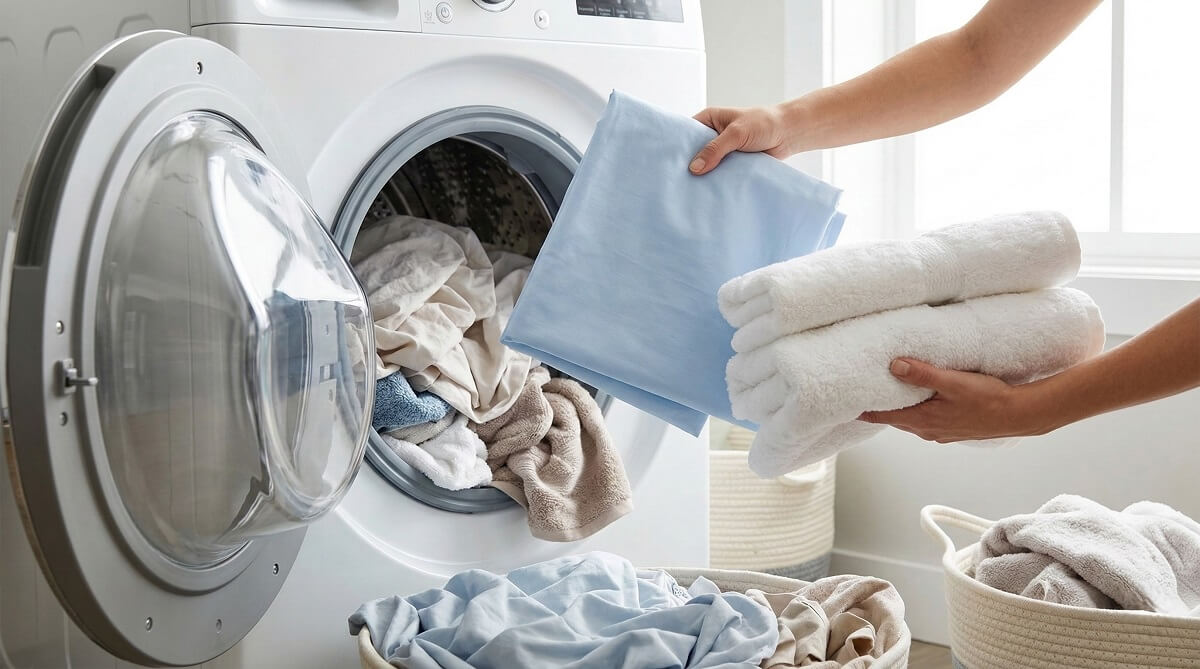
You can wash towels and sheets together, but you probably shouldn’t in most cases. While combining loads might seem like a time-saver, it often leads to lint-covered sheets, uneven cleaning, and shorter fabric lifespan. The decision depends on three key factors: your , the fabric types you’re dealing with, and whether you’re willing to accept some trade-offs.
For most households, washing towels and sheets separately is worth the extra 30 minutes. Towels shed lint, retain moisture longer, and can damage delicate through friction. Sheets, especially those made from silk, microfiber, or bamboo, need gentler treatment than the heavy-duty wash your towels require. According to the Sleep Foundation, sheets should be washed weekly, while bath towels can go every three uses—different schedules that make combined washing less practical.
If you have a large-capacity washer (4.5+ cubic feet), similar fabric types like cotton towels with cotton sheets, and you’re sorting by color and weight, you can sometimes combine loads successfully. We’ll break down exactly when it works and when it doesn’t, plus show you how to fix common problems like lint transfer and musty odors.
Quick Decision: When to Wash Together vs. Separately
✅ You Can Wash Together If:
- You have a large-capacity washing machine (4.5+ cubic feet or 14+ kg)
- Both items are 100% cotton and the same color
- Sheets and towels are similar weight (no heavy bath towels with lightweight sheets)
- You’re in an emergency situation (laundromat, broken dryer, time crunch)
- You use mesh laundry bags to separate items during the wash
❌ Wash Separately If:
- You have delicate sheets (silk, bamboo, microfiber, satin, high thread count)
- Your towels are brand new and shedding heavy lint
- Sheets and towels are different colors (risk of dye transfer)
- You want maximum lifespan from your linens
- Your washing machine is standard size (6-8 kg or under 4 cubic feet)
- Either item is heavily soiled or has stubborn stains
The Science Behind Fabric Compatibility
Why Natural Fibers Shed (And Synthetic Fibers Attract)
Cotton and linen towels naturally shed lint during washing due to their fiber structure. These loose fibers float around in the wash water and cling to smoother fabrics. and polyester sheets, with their tightly woven synthetic structure, attract and hold this lint like a magnet. The result? Sheets covered in fuzzy bits that feel rough to the touch and develop pilling over time.
Water Absorption Rates Create Washing Conflicts
Towels are designed to absorb moisture—that’s their job. Terry cloth towels can absorb three to four times more water than sheets during a wash cycle. This difference means towels stay heavy and waterlogged while sheets finish rinsing, leading to uneven cleaning. The washing machine struggles to agitate everything properly, and you end up with clean sheets but damp, detergent-filled towels, or vice versa.
Temperature Requirements Directly Conflict
Here’s where things get tricky. Cotton towels need hot water (around 130-140°F) to kill bacteria and remove body oils effectively. But delicate sheets require much gentler treatment. According to bedding care guides, bamboo sheets need cold water to protect their fibers, while silk sheets can’t exceed 86°F without damage. Cotton sheets can handle warm to hot water (90-140°F), but high thread count varieties still prefer cooler temps. When you combine towels and sheets, you’re forced to compromise on temperature, which often means neither gets properly cleaned.
Four Problems That Happen When You Mix Them
Problem 1: The Lint Transfer Issue
Towels shed fibers continuously in the wash, especially new towels during their first three to five wash cycles. This lint doesn’t just disappear—it floats in the water and sticks to your smooth sheet fabric. Once embedded, lint is stubborn to remove and makes sheets feel scratchy and look worn. The lint also builds up in your washing machine’s filter and drum, potentially affecting future loads even when you wash sheets separately.
Problem 2: Friction Damage to Delicate Fabrics
Heavy, wet towels act like sandpaper during the washing machine’s agitation cycle. As they tumble against lightweight sheets, the friction causes pilling (those annoying fabric balls), thinning, and can even create small tears in delicate materials. This is particularly damaging to , , and high-thread-count cotton sheets that cost significantly more than basic bedding. The repeated abrasion can reduce your sheet lifespan, forcing earlier replacement.
Problem 3: Bacteria and Odor Cross-Contamination
Towels harbor bacteria, mold spores, and body oils, especially bath towels used on damp skin. According to health experts at Cleveland Clinic, bacteria can survive two to three weeks on fabric, while respiratory viruses and fungi last several days. When washed with sheets—particularly in cool water that doesn’t kill germs—these microbes can transfer.
Kitchen towels present an even bigger concern. A Kansas State University study found that towels were the most contaminated item in test kitchens, with over 90% of food prepared alongside raw meat becoming contaminated. Washing kitchen towels with your bed sheets risks transferring food bacteria like Salmonella directly onto bedding that touches your face.
Problem 4: The Balling-Up Effect
Lightweight sheets have a frustrating tendency to wrap around heavy, wet towels during the wash cycle. Once tangled together, neither item gets fully cleaned or rinsed. Detergent residue gets trapped in the fabric folds, leading to that musty, sour smell even after drying. You’ll need to rewash everything, wasting water, energy, and your time—negating any efficiency you thought you’d gain by combining loads.
When You CAN Successfully Wash Together (The Exceptions)
Scenario 1: Large-Capacity Machines
If you own a large-capacity washing machine—typically 4.5 cubic feet or larger—you have more flexibility. These machines, like the LG WM3900HWA 4.5 cu.ft. front-load washer, have enough space and water volume for proper agitation. You can fit one queen sheet set plus two to three hand towels without overloading. Just avoid adding heavy bath towels—stick to smaller hand or wash towels.
According to appliance comparisons, front-load washers from LG range from 2.4 to 5.8 cubic feet, while Samsung models go up to 6.0 cubic feet. If your machine is on the smaller end (under 4 cubic feet), it’s better to keep loads separate.
Scenario 2: Matching Fabric Types
The safest combination is 100% cotton sheets with 100% cotton towels of similar weight and color. Both fabrics can handle similar wash temperatures and agitation cycles. Sort by color family to prevent dye transfer—white with white, darks with darks. Even with matching fabrics, use mesh laundry bags to keep items separated during the wash, reducing friction damage.
Scenario 3: Emergency Situations
Sometimes you just have to make it work. At a laundromat with limited time or machines, or when dealing with a broken appliance, combining loads becomes necessary. In these cases, minimize damage by washing in cold water (protects delicate fabrics), using a gentle cycle, and removing sheets early from the dryer to prevent over-drying while towels finish.
What About Hand Towels and Washcloths?
Smaller towels are safer to wash with sheets than bulky bath towels. Hand towels and washcloths have less weight, meaning less friction damage and easier rinsing. You can typically add two to three hand towels to a sheet set without major issues. Still sort by color and fabric type, and limit yourself to avoid overloading the machine.
How to Wash Sheets Properly (The Right Way)
Washing Frequency
The Sleep Foundation recommends washing sheets about once a week. If you have pets sleeping in your bed, bump that up to every three to four days. People with allergies or asthma should also wash more frequently, as dirt, oil, and sweat build up overnight even if you shower before bed.
Step-by-Step Washing Instructions
- Sort by fabric type (cotton, linen, bamboo, microfiber, silk)
- Sort again by color (whites, lights, darks)
- Check for specific temperature and cycle requirements
- Use an enzyme-based detergent like Persil ProClean for effective body soil removal
- Wash on gentle or normal cycle—avoid heavy-duty settings that stress fabric
- Use warm water for cotton (100-130°F), cool for bamboo and microfiber, cold for silk
- Skip fabric softener, which reduces breathability and can damage delicate fibers
Drying Best Practices
Remove sheets promptly after the wash cycle ends to prevent wrinkles and mildew. Tumble dry on medium-low heat, or pull them out slightly damp for line drying. Sheets typically dry in 30 to 45 minutes. Over-drying weakens fibers and causes unnecessary wear.
How to Wash Towels Properly (The Right Way)
Washing Frequency
Health experts at Houston Methodist recommend washing bath towels after every three uses—assuming you hang them properly to dry between uses. Hand towels should be washed every one to two days, while kitchen towels and washcloths need washing after each use due to bacteria buildup.
Step-by-Step Washing Instructions
- Shake out towels to remove loose debris and lint
- Sort by color and usage type (keep kitchen towels separate from )
- Wash in hot water (130-140°F) to kill bacteria and remove body oils
- Use a heavy-duty or enzyme-based —Persil ProClean or Tide Plus Ultra Stain Release work well
- Add a half cup of white vinegar occasionally to remove detergent buildup and odors
- Never use fabric softener on towels—it coats fibers and destroys absorbency
- Don’t overload the machine; towels need room to agitate properly
Drying Best Practices
Dry towels on medium-high heat until completely dry. Any dampness leads to mildew and that musty smell. Add Smart Sheep wool dryer balls (which have over 54,000 five-star reviews on Amazon) to maintain fluffiness naturally. Towels typically take 45 to 60 minutes to dry fully.
Fabric Compatibility Guide
This table shows which sheet types can safely be washed with towels, and under what conditions.
| Sheet Type | Compatible Towels | Water Temp | Wash Cycle | Can Combine? | Notes |
|---|---|---|---|---|---|
| Cotton (standard) | Cotton towels | Warm (100-130°F) | Normal | Yes (with care) | Sort by color, similar weights only, large machine required |
| Cotton (high thread count 400+) | Hand towels only | Warm (90-100°F) | Gentle | Limited | Avoid heavy bath towels; friction damages expensive sheets |
| Microfiber | None recommended | Cold | Gentle | No | Attracts lint easily; wash separately always |
| Bamboo | None recommended | Cold | Delicate | No | Too delicate for towel friction; different temp requirements |
| Linen | None recommended | Cool (60-80°F) | Gentle | No | Gets softer with washing but needs gentle care |
| Silk / Satin | Never combine | Cold (max 86°F) | Delicate | Never | Extremely delicate; towel friction will damage fabric |
| Flannel | Cotton towels | Warm | Normal | Yes (with care) | Match colors carefully; flannel can pill from friction |
Troubleshooting Common Laundry Problems
My Sheets Have Lint All Over Them
Cause: You washed them with lint-shedding towels.
Solutions:
- Run sheets through an extra rinse cycle with a half cup of to loosen fibers
- Use a lint roller (Scotch-Brite makes one that’s 50% stickier than standard) to remove surface lint
- Wash separately going forward to prevent the issue
My Towels Smell Musty After Washing
Cause: Insufficient drying, or they got trapped inside wet sheets during the wash and didn’t rinse properly.
Solutions:
- Rewash in hot water with one cup of white vinegar added to the rinse cycle
- Dry completely on high heat—any dampness causes mildew
- Clean your washing machine drum (buildup may be the real culprit)
- Never leave wet laundry sitting in the machine
Sheets Feel Rough or Stiff
Cause: Detergent buildup or friction damage from washing with towels.
Solutions:
- Wash with a half cup of baking soda to remove residue
- Stop using fabric softener if you currently do
- Reduce detergent amount—most people use too much
- If friction-damaged, the sheets may need replacement
Colors Bled From Towels to Sheets
Cause: Washing different colors together, or towels with unstable dyes.
Prevention:
- Always sort by color before washing
- Wash new colored towels separately two to three times first
- Use color-catcher sheets if you must combine different colors
Frequently Asked Questions
Can you wash sheets and towels together in cold water?
While possible, it’s not recommended. Cold water won’t kill bacteria on towels or effectively remove body oils from either item. If you must use cold water (to save energy or protect delicate fabrics), wash sheets and towels separately and consider adding an antibacterial laundry additive. Hot water is essential for proper towel hygiene.
What happens if I accidentally washed towels and sheets together?
Check your sheets for lint (use a lint roller if needed), verify both items smell fresh (rewash if musty), and inspect sheets for new damage or pilling. If everything looks and smells okay, you likely avoided major issues. Just don’t make it a regular habit, as repeated washing together will cause cumulative damage.
Can you wash bath towels with kitchen towels?
No, this is not recommended. Kitchen towels carry food bacteria like Salmonella and E. coli that can transfer to bath towels even in washing. Keep them completely separate, and wash kitchen towels in hot water after each use for proper sanitation.
How do I wash sheets and towels if I have a small washing machine?
With a small machine (6-7 kg capacity or under 4 cubic feet), always wash separately. One queen sheet set fills most of the drum capacity. Trying to add towels will overload the machine, prevent proper cleaning, and strain the motor. Separate loads are necessary with compact washers.
Is it more eco-friendly to wash sheets and towels together?
Not necessarily. While you save one wash cycle, the trade-offs often waste more resources. You may need to rewash items that weren’t cleaned properly, replace linens sooner due to damage, or run extra rinse cycles to remove lint. According to EPA Energy Star data, efficient washers use 14 gallons per load versus 20 for standard models. Washing separately but with full, properly sorted loads is more efficient overall.
Can I use the same detergent for sheets and towels?
Yes, enzyme-based detergents like Persil ProClean or Tide work for both. However, towels benefit from with strong enzyme blends, while delicate sheets may need gentler options. The key difference: skip fabric softener on towels (reduces absorbency) and delicate sheets (can damage fibers). Use it only on standard cotton sheets if desired.
How often should I replace my sheets and towels?
Sheets last two to three years with proper care, longer for high-quality cotton. Towels last one to two years with frequent use. Replace sheets when you notice thinning fabric, persistent odors that won’t wash out, or pilling and tears. Replace towels when they show reduced absorbency, rough texture, or musty smells that persist after washing.
Can you wash white towels and white sheets together?
This is one of the safer combinations if both are cotton, similar weight, and you use hot water. White items can handle bleach if needed for deep cleaning. Still, sort by weight—keep heavy bath towels separate from lightweight sheets for best results.
What’s the best washing machine setting for towels and sheets?
Towels need a normal or heavy-duty cycle with hot water. Sheets need a gentle or normal cycle with warm to cool water, depending on fabric type. The different requirements are another compelling reason to wash them separately rather than compromising with a middle-ground setting that cleans neither properly.
Do new towels shed more lint than old ones?
Yes, significantly. New towels shed excess fibers during the first three to five washes. Always wash new towels separately—even from other towels—until lint shedding decreases. This is especially important to avoid coating your sheets in lint if you accidentally combine loads.
The Bottom Line on Washing Towels and Sheets
For most households, the small inconvenience of running separate loads is worth the benefits: cleaner linens, longer-lasting fabrics, and no lint-covered sheets. If you have a large-capacity machine and you’re careful about sorting by fabric type, color, and weight, you can occasionally combine loads in a pinch—but it shouldn’t be your standard practice.
The key is understanding the trade-offs. Washing together saves time and possibly one load of water, but often results in poor cleaning, fabric damage, and the need to replace linens sooner. Over the lifetime of your sheets and towels, washing them properly will save you more money than combining loads ever could.
When in doubt, check the care labels, trust your washing machine’s capacity limits, and remember: a little extra effort on laundry day means softer sheets, fluffier towels, and linens that last years instead of months.
Looking to upgrade your washing routine? Check current prices on large-capacity washing machines, enzyme-based detergents, and wool dryer balls at Amazon.
Browse more and to keep your linens fresh and long-lasting.
