


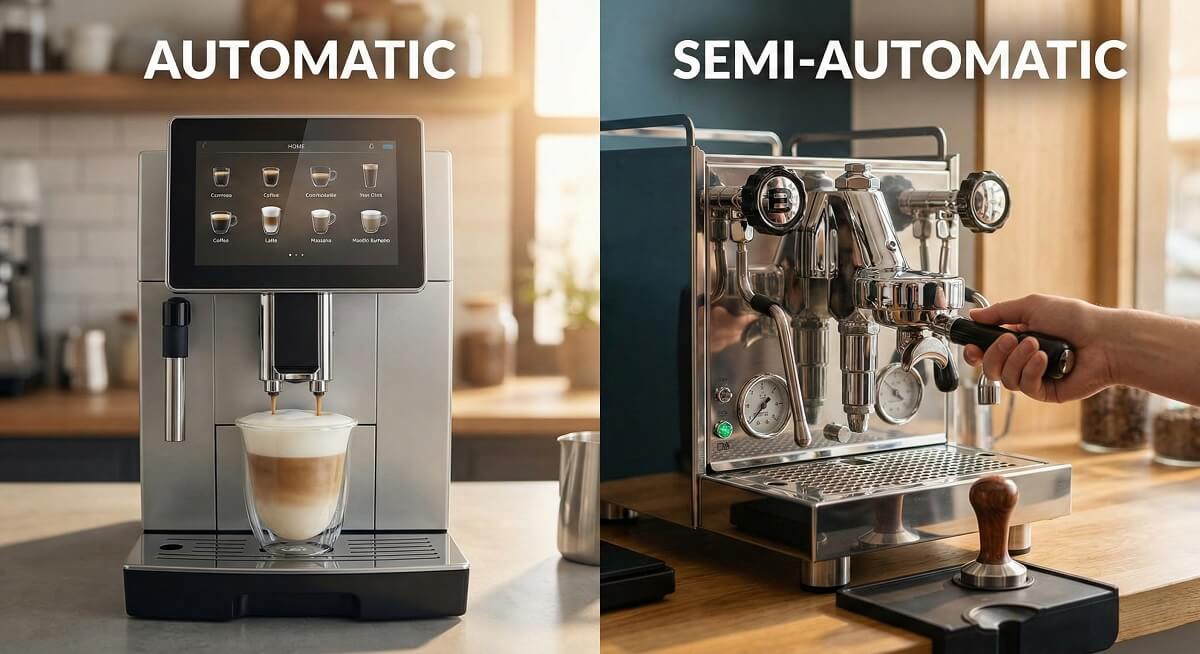
For most home users who want solid espresso without mastering technique, a fully automatic machine like the De’Longhi Magnifica or Philips 3200 series offers the right balance. If you enjoy the ritual of dialing in shots and eventually want to try latte art, semi-automatic machines like the Breville Barista Express ($499-699) or Gaggia Classic Pro ($449) reward the extra effort.
This guide breaks down the real differences between these machine types. Not just features on paper, but what your actual mornings will look like, what you’ll spend over three years, and which choice makes sense for how you drink coffee.
Quick Decision: Who Should Buy Which?
Go Semi-Automatic If You:
- Enjoy hands-on coffee making and want to develop a skill
- Have 5-10 minutes for your morning routine
- Want the best possible shot quality you can achieve at home
- Care about latte art
- Budget: $300-800 for machine plus grinder
Go Fully Automatic If You:
- Want great coffee ready in under 60 seconds
- Have multiple people in your household with different drink preferences
- Prefer low maintenance over maximum customization
- Travel often and need something others can use easily
- Budget: $500-2,800
Skip Both If You:
- You’re happy with pour-over, French press, or pod machines
- You only drink coffee a few times a week
- Counter space is extremely limited (these machines aren’t small)
The Core Difference in Plain English
The naming is confusing, so here’s what each type actually means:
Semi-Automatic: You grind the beans, load the portafilter, tamp the grounds, and control when the shot starts and stops. The machine handles water temperature and pump pressure. According to JavaPresse’s espresso guide, this is what you see in specialty coffee shops and the homes of enthusiasts.
Automatic: Same as semi-automatic, but the machine stops the shot automatically after a preset volume—typically 25-30 seconds. You still handle grinding and tamping.
Fully Automatic (Superautomatic): Press a button. The machine grinds, tamps, brews, and dispenses. Some even froth milk automatically. You basically tell it what drink you want and wait.
What Your Mornings Actually Look Like
Morning With a Semi-Automatic (5-10 minutes)
You wake up, grind beans fresh (about 18 grams for a double shot), distribute the grounds evenly in the portafilter, tamp with consistent pressure, lock the portafilter into the group head, and start the pump. You watch the shot, timing it—usually 25-30 seconds for a proper extraction. Then you steam milk if you’re making a latte, which takes another minute or two to get the texture right.
There’s a learning curve. Your first few weeks will include some bitter, sour, or weak shots while you figure out the right grind size for your beans. After that, you’ll develop a rhythm and muscle memory. Many people find the process meditative before the chaos of the day begins.
Morning With a Fully Automatic (60-90 seconds)
Fill the bean hopper (holds enough for 10-20 drinks), fill the water tank, press the button for your drink. Wait about a minute. Done. If you want a milk drink, machines with automatic frothers add maybe 30 seconds.
The tradeoff: you’re drinking what the machine decides to make. You can adjust strength and volume within the machine’s parameters, but you can’t fine-tune extraction the way an experienced barista would. For many people, that’s perfectly fine—the coffee is consistent and tastes good.
The Learning Curve Reality
Semi-automatic machines take most people 2-4 weeks of daily practice to make reliably good shots. Some never stop tweaking and experimenting, which is part of the appeal.
Superautomatics? Usable from day one. Read the manual, press buttons, get coffee. The machine handles the variables that trip up beginners. Check out our for more tips on mastering new kitchen equipment.
Real Costs: What You’ll Actually Spend
Upfront Machine Costs (2026 Pricing)
| Category | Semi-Automatic | Fully Automatic |
|---|---|---|
| Entry Level | $200-450 | $500-800 |
| Mid-Range | $500-1,000 | $900-1,500 |
| Premium | $1,200-3,000+ | $1,800-3,500+ |
Specific examples (prices verified February 2026):
- Breville Bambino Plus (semi-auto entry): $199-249
- Gaggia Classic Pro (semi-auto mid): $449
- Breville Barista Express (semi-auto with grinder): $499-699
- Philips 3200 LatteGo (superauto entry): $665-775
- De’Longhi Magnifica Start (superauto entry): $499-599
- Jura E8 (superauto premium): $2,699-2,799
Important note on semi-automatics: Most don’t include a grinder. Budget an extra $100-500 for a capable burr grinder. The grinder matters more than the machine for shot quality—don’t pair a $700 machine with a $30 blade grinder.
Ongoing Costs (Annual)
According to Clive Coffee’s maintenance guide, you should expect these regular expenses:
- Coffee beans: $15-30/lb (same for both types)
- Descaling solution: $15-25/year (every 3 months)
- Cleaning tablets: $10-20/year
- Water filters (optional): $20-40/year
Total maintenance supplies: roughly $25-50 per year for basic upkeep.
Note: According to Tom’s Guide’s review, the Philips 3200 includes an AquaClean filter that can handle up to 5,000 cups before descaling is needed—potentially years of use for typical households.
Three-Year Cost Estimate
For someone making two drinks daily using mid-range equipment:
Semi-automatic setup: $700 machine + $300 grinder + $150 supplies = roughly $1,150 over three years
Fully automatic setup: $800 machine + $150 supplies = roughly $950 over three years
The superauto is actually more affordable upfront since you don’t need a separate grinder. The semi-auto setup costs more initially but uses commercial-grade components that can last 10+ years with proper care.
Side-by-Side Feature Comparison
| Feature | Semi-Automatic | Fully Automatic |
|---|---|---|
| Built-in Grinder | Usually no (separate purchase) | Yes |
| Grind Adjustment | Infinite (with standalone grinder) | Limited (5-15 steps typically) |
| One-Touch Brewing | No | Yes |
| Milk Frothing | Manual steam wand | Automatic frother or steam wand |
| Latte Art Capable | Yes | Limited (auto frothers don’t make microfoam) |
| Shot Customization | Full control | Preset options with adjustments |
| Brew Time | 5-10 minutes (including prep) | 60-90 seconds |
| Skill Required | Moderate (learning curve) | Minimal |
Why Grinder Quality Matters
Built-in grinders on superautomatics are convenient but limited. They typically offer 5-15 grind settings, which sounds like plenty until you realize espresso extraction is sensitive to tiny changes. A standalone burr grinder gives you far more precision.
That said, superauto grinders have improved significantly. According to Jura’s specifications, the E8’s Aroma G3 grinder delivers quiet, consistent grinding. The Philips 3200’s ceramic burrs similarly deliver reliable results that satisfy most home users. If you’re not chasing competition-level shots, built-in grinders work fine.
Milk Frothing: The Real Difference
Traditional steam wands on semi-autos let you create microfoam—the silky, paintable milk texture used for latte art. It takes practice, but the results are superior.
Automatic frothers produce decent foam quickly, but it’s usually coarser and won’t hold detailed patterns. If you mostly drink straight espresso or don’t care about latte art, this doesn’t matter. If you want to pour rosettas, go semi-automatic. For more on coffee preparation techniques, browse our .
Popular Models Worth Considering (2026)
Semi-Automatic Picks
Entry Level:
- Breville Bambino Plus ($199-249): Compact, heats in 3 seconds thanks to its thermojet system, excellent steam wand. Needs a separate grinder but delivers impressive shots for the price.
- Mr. Coffee One-Touch CoffeeHouse+ ($199): Includes automatic milk frothing—unusual at this price. Solid starting point if you’re not sure about the hobby.
Mid-Range:
- Gaggia Classic Pro ($449): Built in Italy with a commercial-size 58mm portafilter and brass boiler. Highly moddable, with an enthusiast community that’s turned this into a cult favorite. According to Coffeeness, it can last 10+ years with proper maintenance.
- Breville Barista Express ($499-699): Includes a built-in grinder, making it the most popular semi-auto on Amazon. All-in-one solution for beginners who don’t want to buy components separately.
Premium:
- Breville Dual Boiler ($1,499-1,699): Separate boilers for brewing and steaming, PID temperature control. Near-commercial performance.
- Profitec Pro 300 ($1,799+): German engineering, dual boiler, E61 group head. The “last machine you’ll ever buy” for many enthusiasts.
Fully Automatic Picks
Entry Level:
- De’Longhi Magnifica Start ($499-599): Reliable brand, simple interface, excellent value. De’Longhi offers a 2-year warranty that extends to 3 years with product registration.
- Philips 3200 LatteGo ($665-775): The LatteGo milk system has only two parts to clean—a genuine convenience advantage. Ceramic grinder with 12 settings. Narrow footprint saves counter space.
Mid-Range:
- De’Longhi Dinamica ($999-1,299): More drink options than entry models, improved milk system, and programmable favorites.
- Philips 4300 LatteGo ($1,199-1,399): Touchscreen interface, 8 coffee varieties, and the same easy-clean milk system.
Premium:
- Jura E8 ($2,699-2,799): 17 drink options, Pulse Extraction Process for better crema, whisper-quiet Aroma G3 grinder. App connectivity via WiFi. Two-year warranty. This is what “superautomatic done right” looks like.
- De’Longhi Eletta Explore ($1,999-2,299): 40+ recipes, bean adapt technology, and cold brew functionality.
Maintenance: What Each Type Requires
Daily Tasks
Semi-Automatic:
- Purge the steam wand after each use (takes 5 seconds)
- Wipe the portafilter basket
- Empty the drip tray when it fills
Fully Automatic:
- Empty the grounds container (usually every 10-15 drinks)
- Rinse the milk system if used
- Respond to any cleaning prompts on screen
Weekly/Monthly Tasks
Both types need regular descaling—typically every 3 months, depending on water hardness. Running cleaning tablets through monthly helps remove coffee oils that build up and affect taste.
Semi-autos require occasional backflushing (using a blank basket to clean the group head) and periodic group gasket replacement (annually for heavy users).
The Scale Problem
Scale buildup is the number one cause of espresso machine failures. Hard water leaves mineral deposits that clog internal components. Using filtered water and descaling on schedule extends machine life significantly. The machines themselves will often remind you when descaling is needed. For more maintenance tips, check our .
Frequently Asked Questions
Is a semi-automatic espresso machine hard to use?
There’s a learning curve, but it’s manageable. Expect 2-4 weeks of daily practice before you’re making consistently good shots. The main skills to develop: finding the right grind size, tamping with even pressure, and timing your extraction. Plenty of YouTube tutorials break this down step by step.
Can fully automatic machines make good espresso?
Yes, with caveats. Superautos produce espresso that satisfies most home drinkers. The shots won’t match what a skilled barista pulls on commercial equipment, but they’re far better than pod machines and consistent every time. If you’re mostly making milk drinks, the espresso quality difference matters less anyway.
Do I need a separate grinder for a semi-automatic machine?
Yes, unless you buy a machine with a built-in grinder like the Breville Barista Express. The grinder is arguably more important than the machine itself—inconsistent grinding leads to inconsistent extraction. Budget $100-300 for a capable entry-level burr grinder.
How long do espresso machines last?
Quality semi-automatics (Gaggia, Rancilio, Breville Dual Boiler) can last 10+ years with proper maintenance. Superautomatics typically last 5-10 years due to more complex internal mechanisms. Machines from lesser-known brands might fail within 1-2 years.
Can I make latte art with a fully automatic machine?
Limited. Automatic milk frothers produce foam, but not the silky microfoam needed for intricate designs. Some superautos have traditional steam wands (like the Jura E8) that allow manual frothing if you want to learn—but then you’re losing the “automatic” convenience for milk drinks.
Are superautomatic machines worth the extra cost?
Depends on what you value. If your time is worth more than the extra $300-500 upfront, and you don’t care about mastering espresso technique, superautomatics deliver solid coffee with minimal effort. If you see coffee-making as a hobby worth learning, semi-automatics offer more satisfaction per dollar.
What’s the difference between automatic and superautomatic?
“Automatic” technically means the machine controls shot volume—you still grind and tamp. “Superautomatic” handles everything including grinding. In casual conversation, people often use these terms interchangeably. When shopping, look for “one-touch” or “bean-to-cup” features to identify true superautos.
Which type is better for an office?
Fully automatic. No training required, consistent results regardless of who’s using it, and faster throughput. Semi-autos in offices lead to either one person becoming the unofficial barista or a lot of mediocre espresso. Browse more for office equipment recommendations.
Ready to Choose?
Both paths lead to better espresso than you’ll get from a pod machine or your local gas station. Semi-automatics reward involvement and offer a skill to develop. Superautomatics deliver convenience and consistency. Neither choice is wrong—just different.
Check current prices on Amazon or Best Buy. For deeper product comparisons and expert advice, Seattle Coffee Gear has extensive reviews and helpful customer service.
