


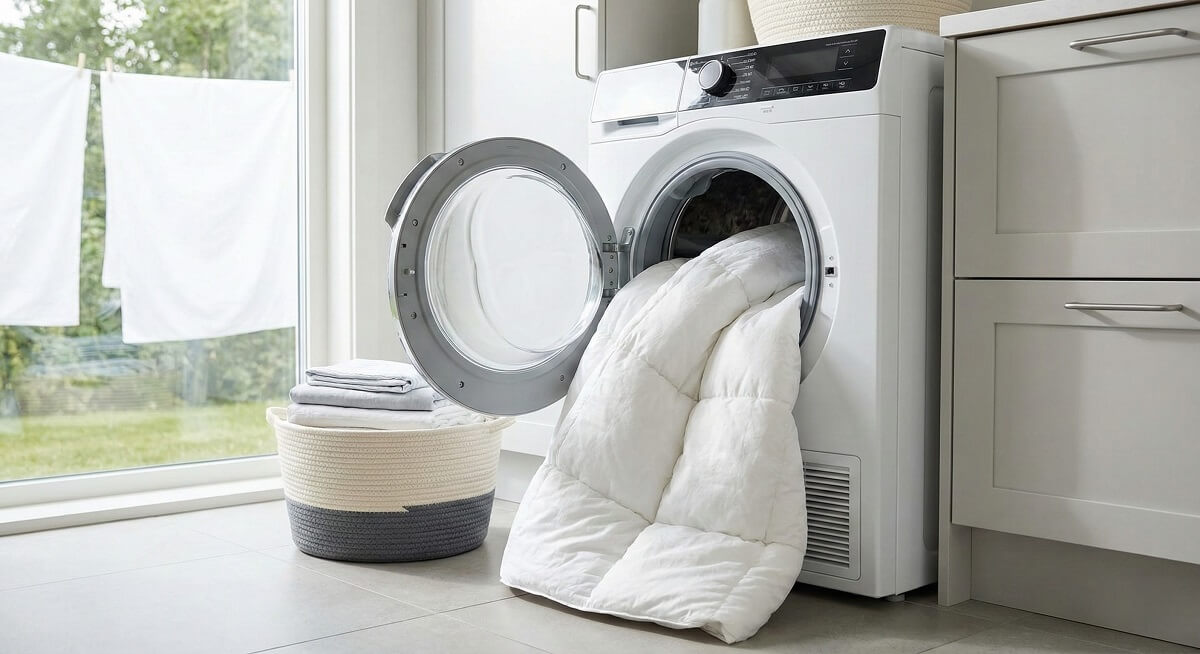
The short answer: Use your dryer on low heat (around 100-125°F) with 2-3 wool dryer balls or clean tennis balls, checking and fluffing every 30 minutes. Most comforters take 2-3 hours to dry completely, though larger down comforters may need 3-4 hours.
Down comforters require extra patience—lower heat and longer drying times protect the delicate filling. If your home dryer drum is smaller than 4.5 cubic feet, head to a laundromat with commercial-sized machines instead. If you’re also looking to refresh other bedding items, our cover everything from sheets to mattresses.
The most important rule: make sure your comforter is completely dry before putting it back on the bed. Even slight dampness can lead to mold, musty odors, and ruined filling. When in doubt, run another drying cycle.
Who Should (and Shouldn’t) Dry Their Comforter at Home
Best For
- Twin to queen-size comforters that fit comfortably in your dryer
- Synthetic fill comforters (more forgiving than down)
- Anyone with a dryer of 4.5 cubic feet or larger
- Budget-conscious homeowners who want to skip professional cleaning
Consider Professional Cleaning If
- Your comforter’s care label says “dry clean only”
- You have an expensive or heirloom down comforter
- Your dryer is too small and laundromat isn’t convenient
- The comforter has stubborn stains requiring special treatment
Before You Start: What You’ll Need
- A large-capacity dryer: At least 3.5 cubic feet for queen, 4.2+ cubic feet for king (7.0 cubic feet recommended for best results)
- 2-3 wool dryer balls or clean tennis balls: These prevent clumping and help the filling dry evenly
- Clean, dry towels (optional): Adding one for the first 15 minutes absorbs extra moisture
- Time: Plan for 2-4 hours depending on size and fill type
Don’t have wool dryer balls? They’re worth picking up—according to independent testing by Prudent Reviews, they reduce drying time by about 14% compared to drying without them. You can find them at most home goods stores or online for around $10-15 for a set.
How to Dry a Comforter in the Dryer (Step-by-Step)
Step 1: Remove Excess Water First
Before the comforter goes anywhere near the dryer, get as much water out as possible. Gently press or squeeze the fabric—never wring or twist it, which can damage the filling and cause permanent clumping.
If your washing machine has an extra spin cycle option, run it. The less water in the comforter, the faster and more evenly it will dry.
Step 2: Check Your Dryer Size
Your comforter needs room to tumble freely. If it’s crammed in tight, air can’t circulate properly and you’ll end up with damp spots.
| Comforter Size | Minimum Dryer Capacity | Recommended Capacity |
|---|---|---|
| Twin | 3.0 cubic feet | 4.0+ cubic feet |
| Full/Double | 3.5 cubic feet | 4.5+ cubic feet |
| Queen | 3.5 cubic feet | 5.0+ cubic feet |
| King/Cal King | 4.2 cubic feet | 7.0+ cubic feet |
If your comforter barely fits, consider using a laundromat’s commercial dryer instead. Most commercial units offer 30-80 lb capacity, which handles even oversized king comforters easily.
Step 3: Add Dryer Balls
Toss in 2-3 wool dryer balls or clean tennis balls. As they bounce around, they break up clumps of filling and keep the comforter from balling up in the center.
Wool dryer balls vs. tennis balls: Both work, but wool balls are the better long-term choice. According to Homes and Gardens, tennis balls can emit a rubber smell when heated and may damage your dryer’s bearings over time. Wool balls are quieter, last for hundreds of loads, and won’t transfer any odors or colors to your bedding.
Step 4: Select the Right Heat Setting
This step matters more than you might think. The wrong temperature can shrink fabric, damage filling, or leave your comforter flat and lifeless.
| Heat Setting | Temperature Range | Best For |
|---|---|---|
| Low Heat | 95-125°F | Down comforters, delicate fabrics |
| Medium Heat | 130-140°F | Synthetic fill comforters |
| High Heat | 140-160°F | Avoid for comforters |
Bottom line: When in doubt, go with low heat. It takes longer, but your comforter will thank you.
Step 5: Dry in Cycles with Fluffing Breaks
Here’s where many people go wrong—they start the dryer and walk away for three hours. That approach often results in a comforter that’s dry on the outside and damp in the middle.
Instead, follow this schedule:
- Run the dryer for 30 minutes
- Pause and remove the comforter
- Shake it out vigorously and check for damp spots
- For down comforters, gently break up any wet clumps with your fingers
- Return to the dryer and repeat
According to Good Housekeeping’s cleaning experts, this repositioning and fluffing is the key to drying your comforter as quickly and evenly as possible.
Step 6: Verify Complete Dryness
Before declaring victory, feel the entire comforter carefully—especially the center and corners where moisture hides. The fabric should feel uniformly dry and fluffy throughout.
Warning signs it’s not ready:
- Cool or clammy spots (not just “not warm”—actually cool to the touch)
- Heavy areas that haven’t fluffed up
- Any musty smell at all
If you find damp spots, keep drying. A slightly over-dried comforter won’t cause any problems, but a damp one can develop mold within 24-48 hours.
Expected Drying Times by Comforter Type
These times assume low-to-medium heat in a standard home dryer with regular fluffing breaks:
| Comforter Type | Twin/Full | Queen/King |
|---|---|---|
| Down Fill | 2-3 hours | 3-4 hours |
| Synthetic Fill | 1.5-2 hours | 2-3 hours |
| Down Alternative | 1.5-2.5 hours | 2.5-3.5 hours |
Note: Commercial dryers at laundromats typically cut these times by 30-60 minutes thanks to their larger drums and higher airflow capacity.
How to Air Dry a Comforter (No Dryer Method)
No dryer? No problem—though you’ll need patience. Air drying is gentler on fabrics and costs nothing, but it takes significantly longer.
When Air Drying Makes Sense
- The care label prohibits tumble drying
- You don’t have dryer access
- You prefer a gentler approach for delicate down
- Energy costs are a concern
Indoor Air Drying
- Lay the comforter flat on a clean drying rack or across two sturdy chairs
- Position a fan nearby to increase airflow
- Rotate and flip every 2-3 hours
- Fluff by hand each time you flip
Expected time: 24-48 hours depending on humidity and air circulation.
Outdoor Air Drying
- Choose a warm, breezy day (avoid rainy or highly humid conditions)
- Hang over a sturdy clothesline or railing
- Avoid direct sunlight, which can fade colors and damage down filling
- Bring inside before evening dew settles
- If not fully dry by nightfall, finish indoors
Expected time: 8-24 hours in ideal conditions.
Using a Laundromat for Oversized Comforters
If your comforter is too big for your home dryer, a laundromat’s commercial machines are your best bet. Here’s what to expect:
Commercial Dryer Benefits
- 30-80 lb capacity handles any comforter size
- Faster drying due to larger drums and higher airflow
- No risk of overloading or uneven drying
Typical Costs
| Dryer Size | Cost per Cycle |
|---|---|
| 30 lb dryer | $1.75-$2.00 |
| 45 lb dryer | $2.50-$3.00 |
| 75 lb dryer | $4.00-$4.50 |
Plan for 2-3 cycles for a king-size down comforter. Bring your own dryer balls, and use the same low-heat, check-every-30-minutes approach you’d use at home.
Common Mistakes That Ruin Comforters
Using High Heat
High heat might seem like a time-saver, but it causes real damage. Down feathers become brittle and lose their loft. Synthetic fills can melt or clump permanently. Fabrics may shrink. Always stick with low-to-medium heat.
Not Drying Completely
This is the number one mistake. A comforter that feels “mostly dry” can develop mold and mildew within 24-48 hours. The result? Musty odors, potential health issues, and a ruined comforter. If you’re unsure, run another cycle.
Skipping the Dryer Balls
Without something to break up the filling as it dries, your comforter’s insulation will clump into balls. This leaves you with a lumpy, uneven comforter that’s uncomfortable and doesn’t insulate properly. Once dried this way, it’s difficult (sometimes impossible) to fix.
Overcrowding the Dryer
A comforter crammed into a too-small dryer can’t tumble freely. Air doesn’t circulate, moisture gets trapped, and you end up running cycle after cycle while still getting damp spots. Use the right size dryer from the start.
Down vs. Synthetic Comforters: Drying Differences
| Factor | Down Comforter | Synthetic Comforter |
|---|---|---|
| Heat Setting | Low only (95-125°F) | Low to medium (up to 140°F) |
| Drying Time | Longer (2-4 hours) | Shorter (1.5-3 hours) |
| Clumping Risk | Higher—needs more attention | Lower—more forgiving |
| Air Dry Option | Good choice for delicate down | Works well, dries faster |
| Durability | More delicate, requires care | More durable, handles more heat |
Not sure what type of comforter you have? Check the care label or look for tags that indicate the fill material. If you’re shopping for a new one, our can help you choose the right option.
How Often Should You Wash and Dry Your Comforter?
- With a duvet cover: Every 3-6 months (the cover does most of the protection)
- Without a duvet cover: Every 1-2 months
- Allergy sufferers: Monthly or more frequently
- After illness: Wash immediately
- Before seasonal storage: Always wash and fully dry first
According to Good Housekeeping, washing your comforter once or twice per season is sufficient for most households.
Quick-Dry Tips When You Need Your Comforter Fast
Need your comforter dry sooner? These tricks can help:
- Add a dry towel: Put a clean, dry bath towel in with the comforter for the first 15-20 minutes. It absorbs moisture and speeds up the initial drying. Remove it after that first phase.
- Use more dryer balls: Four to six balls work better than two for large comforters.
- Hit the laundromat: Commercial dryers simply work faster due to their size and power.
- Don’t increase the heat: This seems counterintuitive, but cranking up the temperature causes damage without significantly speeding things up.
- Plan ahead: Start drying in the morning, not at 9 PM when you need it for bed.
When Professional Cleaning Makes Sense
Sometimes the DIY approach isn’t the right call. Consider professional cleaning for:
- Dry clean only labels
- Expensive or heirloom down comforters
- Stubborn stains requiring special treatment
- Convenience when you don’t have time
Typical Professional Cleaning Costs
| Comforter Type | Price Range |
|---|---|
| Full comforter | $30-$40 |
| Queen comforter | $35-$45 |
| King comforter | $40-$50 |
| Down king comforter | $45-$60 |
Prices vary by location—urban areas typically charge more. Look for seasonal promotions, especially during warmer months when demand is lower.
Frequently Asked Questions
How long does it take to dry a comforter?
Most comforters take 2-3 hours on low heat with regular fluffing breaks. Down comforters and larger sizes (queen/king) may need 3-4 hours. Air drying takes 24-48 hours. Always verify complete dryness before use.
Can I put a soaking wet comforter in the dryer?
Not directly. First, remove excess water by gently pressing (not wringing) the comforter or running an extra spin cycle in the washer. A soaking wet comforter takes much longer to dry, strains your dryer, and may not dry evenly.
What temperature should I dry my comforter on?
Low heat (95-125°F) for down comforters. Low to medium (up to 140°F) for synthetic fill. Never use high heat, which can damage filling and shrink fabric.
Can I dry a comforter without dryer balls?
You can, but the filling will likely clump together, leaving you with a lumpy, uneven comforter. Dryer balls (or tennis balls) prevent this by keeping the filling distributed as it dries.
How do I know when my comforter is completely dry?
Feel the entire surface, paying special attention to the center and corners. It should feel uniformly dry and fluffy—not cool, clammy, or heavy in spots. If you find any dampness, keep drying.
Why does my comforter smell musty after drying?
A musty smell means the comforter wasn’t fully dry and mold or mildew has started growing. Re-wash using hot water (if the care label allows) and dry completely, checking thoroughly before removing from the dryer.
Can I use fabric softener when drying my comforter?
Skip the fabric softener. It coats fibers and reduces the comforter’s fluffiness and breathability over time. Dryer balls provide natural softening without the residue buildup.
Is air drying better than machine drying?
Air drying is gentler on fabrics but takes much longer (24-48 hours). Machine drying on low heat is safe for most comforters and far more practical. Choose based on your care label instructions and time constraints.
With the right approach, drying your comforter at home is straightforward—and you’ll save money compared to professional cleaning. The keys are patience, low heat, dryer balls, and regular fluff checks. Follow these steps, and you’ll have fresh, fluffy bedding ready for a good night’s sleep.
For more home care tips, browse our for step-by-step instructions on caring for everything in your home.
