


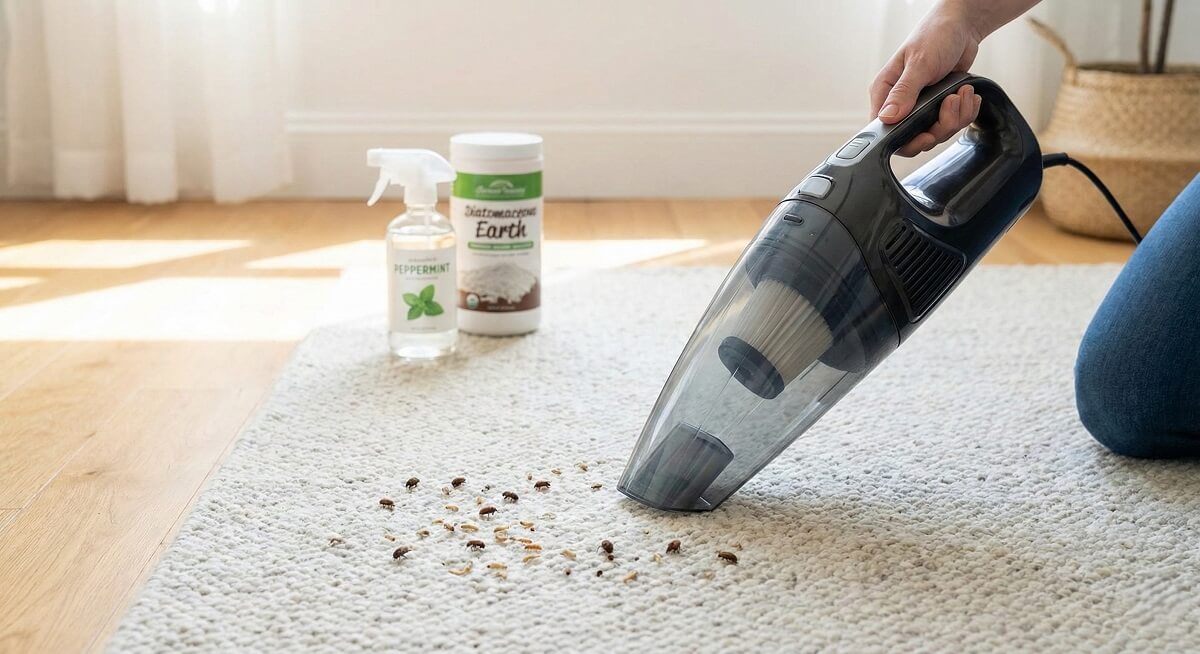
Carpet beetles can destroy wool carpets, clothing, and upholstery if left unchecked. According to Rutgers University, they cause more damage to fabrics than clothes moths. The good news: you can eliminate them permanently with a systematic approach.
The fastest path to permanent elimination combines thorough vacuuming, hot washing all affected fabrics, treating with boric acid or insecticide, and preventing re-entry. Mild infestations clear up in 2-4 weeks with consistent effort. Severe cases may take 2-3 months or require professional treatment ($200-$300 per visit on average).
This guide walks you through exactly what to do, which products work, and how to know if you need professional help. for more practical tips.
DIY or Professional? Assess Your Situation First
DIY Methods Will Likely Work If:
- You’ve spotted only a few beetles or larvae
- Damage is limited to one area (a closet, one rug)
- You caught the problem early
- You have time for daily vacuuming for 1-2 weeks
Call a Professional If:
- Beetles or larvae appear in multiple rooms
- DIY methods haven’t worked after 2-3 weeks
- Infestation is in walls, HVAC ducts, or other hard-to-reach areas
- You or family members have allergic reactions (itchy rash, respiratory issues)
- The problem keeps recurring despite prevention efforts
Professional cost: Expect to pay $200-$300 per visit for standard treatment, or up to $900 for severe infestations requiring multiple visits. Heat treatment for large areas runs $1,700-$4,000.
What Are Carpet Beetles?
Carpet beetles are small, oval-shaped insects that feed on natural fibers like wool, silk, fur, and leather. Despite the name, they also infest clothing, upholstery, and even dried food products.
Four species are common in the United States:
- Black carpet beetle — The most common species. Solid black, 1/8 to 3/16 inch long.
- Varied carpet beetle — Mottled pattern of white, brown, and yellow. About 1/12 to 1/8 inch.
- Furniture carpet beetle — Similar to varied, found on upholstered furniture.
- Common carpet beetle — Black with white and orange-red scales.
Key fact: Adult beetles don’t cause damage. The larvae do all the destruction. They’re tan, hairy, worm-like creatures that can live 70 days to over a year before becoming adults. If you’re dealing with other fabric pests, covers similar treatment methods.
Signs You Have Carpet Beetles
Look for these indicators:
- Irregular holes in wool, silk, fur, or leather items (concentrated in one area, not scattered)
- Shed larval skins — Light brown, bristly casings left behind as larvae grow
- Larvae themselves — Tan, hairy, worm-like, about 1/4 inch long
- Adult beetles near windows — They’re attracted to light and often found on windowsills
- Bare patches on rugs and carpet edges
- Damaged stored food — Flour, cereal, pet food
Where to Check
- Under furniture and area rugs
- Inside closets, especially wool storage
- Along baseboards and carpet edges
- Air vents and dark corners
- Stored blankets, clothing, and linens
The 7-Step Permanent Elimination Plan
Step 1: Locate the Source
Find where the infestation is concentrated. Check for the highest number of larvae, shed skins, and damaged items. Common hotspots include closets with wool clothing, under heavy furniture, and along carpet edges against walls.
Step 2: Vacuum Everything Thoroughly
This is your most powerful weapon. Vacuum all carpeted areas, focusing on:
- Carpet edges along walls
- Under and behind furniture
- Upholstered furniture seams and cushions
- Closet floors and shelves
- Baseboards and corners
Critical: Empty the vacuum canister or dispose of the bag outside immediately after each session. Seal it in a plastic bag first. Repeat daily for at least 1-2 weeks.
Step 3: Wash All Fabrics in Hot Water
Hot water (120°F or higher) kills eggs, larvae, and adult beetles. Wash:
- All bedding and pillows
- Curtains and drapes
- Clothing from affected closets
- Throw blankets and slipcovers
Dry on the highest heat setting your fabrics can handle.
For items that can’t be washed: Freeze them for at least two weeks in sealed plastic bags, according to Rutgers University. Alternatively, dry clean delicate items.
Step 4: Apply Treatment
Choose a treatment method based on your situation (see comparison table below). For most homes, boric acid or food-grade diatomaceous earth works well.
Boric acid application:
- Sprinkle a light layer on carpets and rugs
- Use a broom or brush to work it into the fibers
- Let it sit for 2-3 hours
- Vacuum thoroughly
Diatomaceous earth application:
- Apply a thin layer to carpets, baseboards, and closet floors
- Leave for 24-48 hours
- Vacuum completely
Wear a dust mask when applying either product to avoid inhaling particles.
Step 5: Treat Remaining Problem Areas
For cracks, crevices, and hard-to-reach spots, apply insecticide spray or additional boric acid. Products containing bifenthrin, deltamethrin, or cyfluthrin provide long-lasting protection. Bifenthrin remains effective for up to 35 days after application.
Repeat treatment in 7-10 days to catch any larvae that hatched from eggs that survived the first round.
Step 6: Discard Heavily Infested Items
If an item is severely damaged or the infestation is deep in the fibers, disposal may be more practical than treatment. Seal items in plastic bags before putting them in the trash.
Step 7: Implement Prevention Measures
Prevention is essential for permanent elimination. See the prevention section below.
Treatment Methods Compared
| Method | Effectiveness | Approximate Cost | Safe for Pets/Kids | Best For |
|---|---|---|---|---|
| Boric Acid Powder | High | $5-$15 | No (toxic if ingested) | Carpets, rugs, severe infestations |
| Diatomaceous Earth (Food-Grade) | Medium-High | $10-$25 | Yes | Homes with pets, ongoing prevention |
| White Vinegar Spray | Low-Medium | Under $5 | Yes | Light infestations, maintenance |
| Insecticide Spray (Bifenthrin) | High | $20-$50 | No (until dry) | Severe infestations, cracks/crevices |
| Steam Cleaning | High | $30-$75 (rental) | Yes | Carpets, upholstery, chemical-free option |
| Professional Treatment | Very High | $200-$300/visit | Varies by method | Severe or recurring infestations |
Note: Prices are approximate and vary by retailer and location. Check current pricing before purchasing. For more pest control options, .
Natural vs. Chemical Treatments
Natural Options
Diatomaceous Earth (Food-Grade)
This fine powder is made from fossilized algae. It works by damaging insects’ exoskeletons, causing them to dehydrate. It’s effective but slower-acting than chemical options. Harris makes a popular 4 lb container available at Home Depot and similar retailers.
White Vinegar
Mix equal parts white vinegar and water in a spray bottle. The acidity repels carpet beetles but won’t kill an existing infestation on its own. Use it for maintenance after treatment or alongside other methods.
Cedar Products
Cedar blocks, chips, or sachets repel carpet beetles and other fabric pests. Place them in closets and storage areas. They work as a deterrent, not a treatment for active infestations.
Chemical Options
Boric Acid
Highly effective against carpet beetles. It disrupts their metabolism when ingested and damages their exoskeletons. Keep away from pets and children. You’ll find it at hardware stores and in the laundry aisle (20 Mule Team Borax works similarly).
Insecticide Sprays
Products containing bifenthrin, deltamethrin, or cyfluthrin are recommended by university extension services for carpet beetle control. Bifen IT (bifenthrin 7.9%) and Suspend SC (deltamethrin) are popular professional-grade options available to homeowners online.
What doesn’t work: According to Rutgers University, aerosol bug bombs provide minimal protection against carpet beetles. Cedar chests alone also offer insufficient protection for long-term storage.
When to Call a Professional Exterminator
Consider professional help if:
- The infestation spans multiple rooms
- DIY methods haven’t reduced the problem after 2-3 weeks
- Beetles are inside walls or HVAC systems
- You’ve had recurring infestations despite prevention efforts
- Health concerns arise (severe allergic reactions, respiratory issues)
What Professionals Offer
- Commercial-grade insecticides not available to consumers
- Heat treatments that eliminate all life stages at once
- Inspection of hidden areas you might miss
- Treatment warranties (typically 30-90 days)
Cost Expectations
According to industry data from HomeGuide:
- Average cost: $200-$300 per visit
- Minor infestation: Under $150
- Severe infestation: Up to $900 (multiple visits required)
- Heat treatment: $1,700-$4,000 for large areas
- Per square foot: $0.15-$0.25
Most infestations require 2-3 visits for complete elimination.
Health Concerns: Are Carpet Beetles Dangerous?
Carpet beetles don’t bite, sting, or transmit diseases. However, they can cause health issues through allergic reactions.
Carpet Beetle Dermatitis
Some people develop an allergic reaction called carpet beetle dermatitis from contact with larval hairs (called hastisetae). According to medical sources, symptoms include:
- Red, itchy bumps on the skin
- Rash that may look like bed bug bites or eczema
- Symptoms appearing on exposed skin (arms, neck, hands)
The rash typically clears within a few days to a couple weeks once exposure stops. Over-the-counter antihistamines and hydrocortisone cream help manage itching.
Respiratory Issues
Long-term exposure to carpet beetle larvae and their shed hairs can trigger rhinoconjunctivitis (stuffy nose, itchy eyes) and aggravate asthma in sensitive individuals.
Who’s at Higher Risk
- People with existing allergies or asthma
- Those with prolonged exposure
- Individuals with sensitive skin
How to Prevent Carpet Beetles From Coming Back
Regular Cleaning Routine
A consistent cleaning schedule is your best defense. to keep your home pest-free.
- Vacuum carpets and upholstery weekly
- Clean under furniture and along baseboards monthly
- Wash bedding and curtains regularly
- Don’t let lint, pet hair, or dust accumulate in corners
Storage Best Practices
Proper storage protects valuable clothing and textiles from damage. for more ideas.
- Store wool, silk, and fur items in sealed plastic containers or vacuum bags
- Add cedar blocks or lavender sachets to closets and drawers
- Always wash or dry clean clothing before long-term storage
- Periodically inspect stored items for signs of damage
Entry Prevention
- Install window screens (adult beetles fly in through open windows)
- Inspect cut flowers and potted plants before bringing them inside
- Check secondhand furniture, rugs, and clothing carefully
- Seal gaps around doors and windows
Food Storage
- Keep flour, cereal, and dry goods in airtight containers
- Clean up pet food spills promptly
- Don’t leave pet food out overnight
Environmental Controls
- Remove bird nests and animal nests near your home
- Keep storage areas well-lit (beetles prefer darkness)
- Reduce humidity in closets and storage spaces
Frequently Asked Questions
How long does it take to get rid of carpet beetles permanently?
With consistent treatment, expect 2-4 weeks for mild infestations and 2-3 months for severe cases. The timeline depends on how thoroughly you treat affected areas and whether you eliminate all life stages. Larvae can live over a year, so follow-up treatments are important.
Will carpet beetles go away on their own?
No. Without intervention, they continue reproducing. A single female can lay 40-90 eggs, and the larvae survive for months while feeding on your fabrics.
Can carpet beetles live in your bed?
They can infest bedding, especially if it contains wool or other natural fibers. More commonly, they’re found under beds in dusty areas. If you suspect bed involvement, wash all bedding in hot water and vacuum the mattress and box spring. covers deep cleaning techniques.
Do carpet beetles bite humans?
No. The rash-like irritation some people experience is an allergic reaction to the tiny hairs on carpet beetle larvae, not bites. This condition is called carpet beetle dermatitis.
What kills carpet beetle eggs?
Heat (washing at 120°F or higher), freezing (at least two weeks), steam cleaning, boric acid, and insecticides all kill carpet beetle eggs. Vacuuming removes eggs but doesn’t kill them, so dispose of vacuum contents outside immediately.
Does washing clothes kill carpet beetles?
Yes, if you wash in hot water (120°F or higher) and dry on high heat. This kills all life stages including eggs.
Can I use boric acid around pets?
Boric acid is toxic to pets if ingested. If you have dogs or cats, use food-grade diatomaceous earth instead. It’s effective against carpet beetles and safe around pets.
How much does professional carpet beetle treatment cost?
The average cost is $200-$300 per visit. Minor infestations may cost under $150, while severe cases requiring multiple visits can reach $900. Heat treatment for whole rooms costs $1,700-$4,000.
Next Steps
Start with thorough vacuuming and hot washing today. If you need treatment products, boric acid and diatomaceous earth are available at most hardware stores and online retailers. For severe or persistent infestations, contact a local pest control company for an inspection and quote.
on ChubbytIps for help with other household pests and cleaning challenges.
