


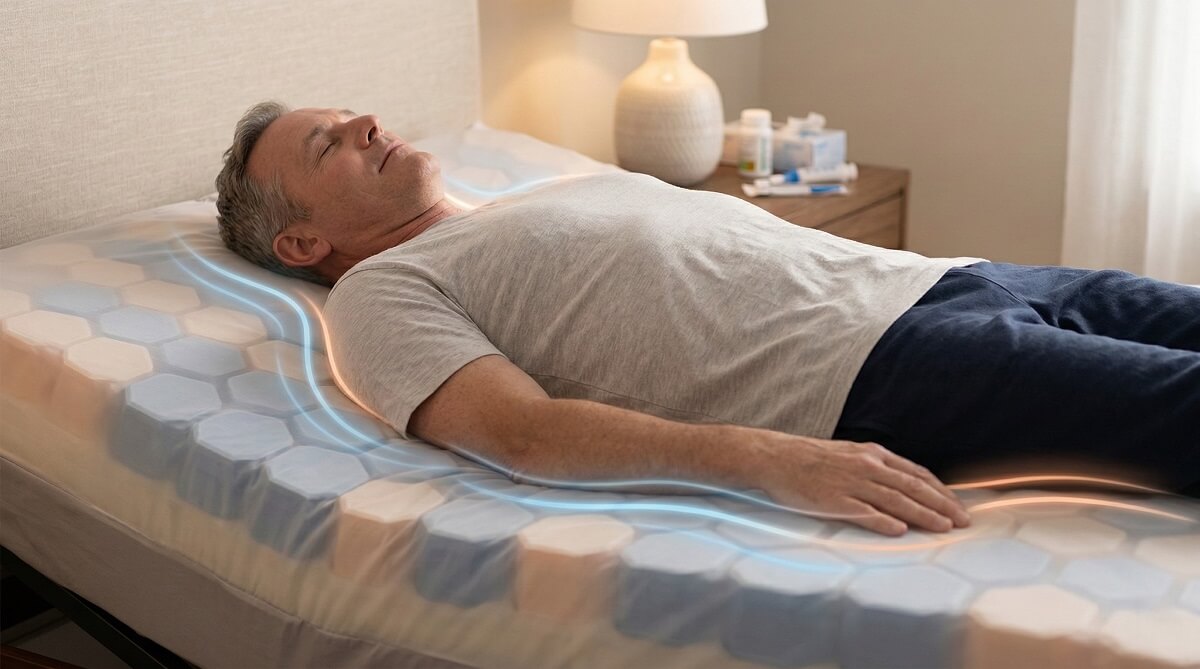
A pressure relief mattress distributes your weight more evenly across the sleep surface, helping prevent pain and sores. If you wake up with aching hips, shoulders, or lower back, switching to a mattress designed for pressure relief can make a real difference. These sleep surfaces use materials like memory foam, specialized air cells, or multi-layered construction to cushion pressure points while supporting your spine.
For most home users dealing with chronic pain or discomfort, a or hybrid mattress offers the best balance of pressure relief and support. Budget-friendly options start around $249-$599 from brands like Zinus, while premium models like Tempur-Pedic range from $1,399-$1,999. Medical-grade pressure redistribution mattresses are available for people at higher risk of developing pressure ulcers, and Medicare may cover them with a prescription after a $283 deductible plus 20% copay.
Your sleeping position and body weight determine which firmness level works best. Side sleepers under 130 pounds typically need softer surfaces, while stomach sleepers and those over 230 pounds require firmer support to maintain proper alignment.
Who Should (and Shouldn’t) Buy a Pressure Relief Mattress
✅ Best For:
- Side sleepers experiencing shoulder or hip pain
- People recovering from surgery or injury
- Those with chronic pain conditions like arthritis or fibromyalgia
- Elderly individuals spending extended time in bed
- Anyone waking up with pressure-related soreness
- People who find their current mattress too firm and unforgiving
❌ Skip If:
- You prefer a very firm, traditional innerspring feel
- You sleep hot and dislike memory foam heat retention
- You’re on a tight budget under $400
- You need immediate responsiveness for frequent position changes
- You have latex allergies and can’t find suitable alternatives
- You’re already comfortable with your current mattress
Understanding How Pressure Relief Works
What Causes Pressure Points
When you lie down, your body weight isn’t distributed evenly. Certain areas—hips, shoulders, and heels—bear more concentrated force because of your body’s natural curves. On a firm surface that doesn’t conform to these curves, this concentrated weight creates pressure points. Over time, restricted blood flow to these areas causes discomfort, numbness, and soreness that can wake you up or leave you aching in the morning.
The problem gets worse for side sleepers, who have their entire body weight concentrated on just one shoulder and one hip. Back sleepers face less dramatic pressure concentration, while stomach sleepers typically experience pressure in different areas, mainly the lower back and pelvis.
The Science of Pressure Distribution
A pressure relief mattress works by conforming to your body’s shape, spreading your weight across a larger surface area. Instead of your hip bearing 40 pounds of concentrated force on a small area, that same weight gets distributed across several square inches. This reduces the force per square inch—the actual measurement of pressure—which improves circulation and lessens discomfort.
Different materials achieve this through different mechanisms. Memory foam softens when it contacts your body heat, allowing it to mold around pressure points. uses natural elasticity to push back gently while conforming. Air systems adjust pressure by inflating or deflating chambers. The key is balancing this contouring comfort layer with a supportive base that keeps your .
Medical vs. Consumer Pressure Relief
There’s a meaningful distinction between consumer pressure relief mattresses and medical-grade pressure redistribution systems. Consumer models focus on reducing discomfort and improving sleep quality for healthy individuals who experience soreness from sleeping. These typically use memory foam, latex, or hybrid construction.
Medical-grade systems are designed to prevent and treat pressure ulcers (bedsores) in at-risk patients. These often use alternating pressure technology, where air cells inflate and deflate on a schedule to prevent any single area from bearing prolonged pressure. Some combine alternating pressure with low air loss systems that allow air to escape through the mattress cover, managing moisture and temperature for bedridden patients.
Materials That Provide Pressure Relief
Memory Foam
Memory foam conforms closely to your body shape, creating excellent pressure relief by distributing weight evenly. It responds to body heat, softening where it contacts your skin and molding around pressure points. This material excels at reducing pressure on hips and shoulders, making it particularly helpful for side sleepers.
The main drawback is heat retention. Memory foam traps body heat more than other materials, which can be uncomfortable for hot sleepers. Modern memory foam mattresses address this with gel infusions, copper particles, or open-cell construction that improves airflow. Memory foam also responds slowly to pressure, creating a “sinking in” feeling that some people love and others find restrictive.
Foam density matters for durability. The ideal range for memory foam comfort layers is 2.5-3.9 lbs/ft³, which has become the industry standard. Higher density foam (5+ lbs/ft³) lasts longer but costs more and may sleep hotter. With proper care, high-density foam mattresses can last decades, while lower-density foam breaks down faster from nightly wear and tear. According to Tom’s Guide, most quality memory foam mattresses last 7-10 years.
Latex Foam
Latex offers moderate pressure relief with a springier, more responsive feel than memory foam. It doesn’t conform as closely, but many people prefer its bouncier surface that makes changing positions easier. Natural latex is derived from rubber tree sap, while synthetic versions use petroleum-based materials.
Two manufacturing processes create different feels. Talalay latex undergoes additional processing that creates a more consistent, softer feel throughout the material. Dunlop latex is denser and firmer, often used in support layers rather than comfort layers. Both types sleep cooler than memory foam because latex has an open cell structure that allows better airflow.
According to Latex For Less, natural latex mattresses can last 15-25 years, significantly longer than memory foam or hybrid options. This makes them a worthwhile long-term investment despite higher upfront costs. Latex is also naturally resistant to dust mites and mold, appealing to people with allergies—though those with latex allergies must avoid this material entirely.
Hybrid Construction
combine foam comfort layers over a pocketed coil support core. This design aims to deliver the pressure relief of foam with the support, responsiveness, and cooling of innersprings. The foam layers (memory foam, latex, or polyfoam) cushion pressure points, while the coils provide a supportive base and allow air circulation.
Quality hybrids typically include 2-4 inches of comfort foam over individually wrapped coils. According to Mattress Clarity, the Glacier Apex memory foam hybrid, ranked #1 in recent testing, is priced at $1,399 for a queen—14% less than the average memory foam hybrid. Most hybrid mattresses last 7-10 years, with longevity depending heavily on the quality of both the coils and foam layers.
Hybrids work well for combination sleepers who change positions frequently, as they respond more quickly than pure memory foam. They also sleep cooler because air flows through the coil layer. However, they cost more than comparable all-foam mattresses and may transfer more motion between partners than solid memory foam.
Alternating Pressure & Air Systems
Medical-grade alternating pressure mattresses use air cells that inflate and deflate on a timed cycle, typically every 5-10 minutes. This prevents any single area of the body from bearing continuous pressure, dramatically reducing the risk of pressure ulcers for bedridden patients. Some systems combine this with low air loss technology, where air slowly escapes through microscopic holes in the cover to manage heat and moisture.
These systems are prescribed for high-risk patients: those with existing pressure ulcers, limited mobility, diabetes with poor circulation, or who are bedridden. They’re not typically needed or recommended for general pain relief. With a doctor’s prescription, Medicare Part B covers pressure-reducing support surfaces after you meet the $283 deductible and pay 20% of the Medicare-approved amount.
Pressure Relief Mattress Comparison
| Mattress Type | Pressure Relief Level | Best For | Price Range (Queen) | Heat Retention | Lifespan |
|---|---|---|---|---|---|
| Memory Foam | Excellent | Side sleepers, chronic pain | $249-$2,200 | Moderate-High | 7-10 years |
| Latex | Good | Eco-conscious, hot sleepers | $800-$2,500 | Low | 15-25 years |
| Hybrid | Very Good | Combination sleepers | $600-$2,000 | Low-Moderate | 7-10 years |
| Innerspring (traditional) | Poor | Stomach sleepers, firm preference | $300-$1,200 | Very Low | 5-7 years |
| Medical Air Mattress | Excellent (clinical) | High-risk ulcer patients | $800-$5,000+ | Low | 3-5 years |
Specific Product Examples
Budget Option: Zinus memory foam mattresses start at $249-$599, featuring basic pressure relief with cooling gel or green tea infusions. Good entry point for those on a tight budget.
Mid-Range: The Purple Original uses a GelFlex Grid technology that’s been used in hospital beds for critical patients for over 20 years. Currently priced at $1,299 (reduced from $1,499) for a queen, it includes a 100-night trial and 10-year warranty.
Premium: Tempur-Pedic mattresses consistently rank highest in pressure relief testing and last 10-15 years with proper care. The TEMPUR-Adapt line starts around $1,399-$1,999 for a queen during sales. Their proprietary TEMPUR-Material provides what many consider unparalleled pressure relief and motion cancellation.
Choosing Based on Your Sleeping Position
Side Sleepers
need the most pressure relief because their entire body weight concentrates on shoulders and hips. Look for softer comfort layers—at least 3-4 inches of memory foam or latex in the 4-6/10 firmness range. Without adequate cushioning, you’ll wake up with numb arms or aching hips.
Memory foam excels here, as it contours closely around these pressure points. If you weigh under 130 pounds, you’ll need an even softer surface to create sufficient sinkage and pressure relief. Heavier side sleepers need softer comfort layers over firmer support cores to prevent excessive sinkage that misaligns the spine.
Back Sleepers
need moderate pressure relief focused on the lumbar region. A medium to medium-firm mattress (5-7/10 firmness) typically works best. Too soft, and your hips sink too far, creating a hammock effect that strains your lower back. Too firm, and the gap under your lumbar spine creates pressure points.
Hybrid mattresses often work well for back sleepers because they provide contouring comfort at shoulders and hips while maintaining overall support. Look for models with zoned support that offers firmer reinforcement under the lumbar area.
Stomach Sleepers
Stomach sleepers need less pressure relief and more emphasis on preventing lower back sag. A firm mattress (6-8/10 firmness) keeps hips from sinking too far, which would arch the back uncomfortably. Most stomach sleepers find memory foam too soft, preferring firmer latex or hybrid construction.
If you’re a stomach sleeper experiencing pain, the problem might be your sleeping position rather than your mattress. This position puts stress on your neck and lower back. Consider transitioning to side or back sleeping for better spinal alignment.
Combination Sleepers
If you switch positions throughout the night, you need a balance of pressure relief and responsiveness. Memory foam’s slow response can feel restrictive when you try to move. Hybrid mattresses or latex foam respond more quickly while still providing decent pressure relief.
Look for a medium firmness (5-6/10) that compromises between the needs of different positions. A mattress that’s perfect for side sleeping but terrible for back sleeping won’t work if you do both regularly.
Weight and Body Type Considerations
Under 130 Pounds
Lighter individuals need softer surfaces to create sufficient pressure relief. You don’t compress foam as much as heavier people, so what feels medium to someone weighing 200 pounds will feel firm to you. Look for softer memory foam or plush latex in the 3-5/10 firmness range.
The downside is limited options—many mattresses are designed for average body weights. Pay attention to reviews from lighter users rather than general ratings. Some manufacturers offer soft or plush versions specifically for lighter sleepers.
130-230 Pounds
Most mattresses are designed for this weight range, giving you the widest selection. A medium to medium-firm mattress (5-7/10) typically works well, though your sleeping position matters more than weight in this range. Follow the position-based guidance above for best results.
Over 230 Pounds
Heavier individuals need firmer support and higher-density foams to prevent excessive sinkage. Look for mattresses specifically rated for higher weight capacities, typically featuring 7-8/10 firmness with high-density foam (5+ lbs/ft³) or reinforced coil systems.
Standard memory foam may not provide adequate support, causing you to sink too far into the mattress. This misaligns your spine and creates a hammock effect. Hybrids with strong coil systems or extra-firm latex work better for pressure relief without excessive sinkage. Some manufacturers specify weight capacity ratings—look for these if you’re over 250 pounds.
Medical-Grade Pressure Relief Mattresses
Who Needs a Medical Mattress
Medical-grade pressure redistribution systems are prescribed for individuals at significant risk of developing pressure ulcers. Risk categories include:
- Bedridden patients who can’t reposition themselves
- People with existing pressure sores or ulcers
- Individuals with limited mobility due to paralysis, stroke, or severe injury
- Diabetic patients with poor circulation
- Elderly individuals with fragile skin and limited movement
- Post-surgical patients on extended bed rest
If you’re simply looking for better sleep and less pain, you don’t need medical-grade equipment. Consumer pressure relief mattresses will serve you better at lower cost. Consult your doctor if you’re unsure about your risk level.
Types of Medical Pressure Systems
Alternating Pressure Mattresses: Air cells inflate and deflate on a timed cycle (typically every 5-10 minutes), preventing prolonged pressure on any body area. This actively redistributes load rather than just reducing it.
Low Air Loss Systems: Air continuously flows through the mattress and escapes through the cover’s microscopic perforations. This manages heat and moisture while providing pressure redistribution—important for patients who can’t reposition themselves or manage temperature.
Combination Systems: Some medical mattresses combine alternating pressure with low air loss for maximum protection in very high-risk patients.
Static Pressure Redistribution: High-density foam systems that redistribute pressure without moving parts. These work well for moderate-risk patients who can occasionally reposition themselves.
Medicare Coverage
Medicare Part B covers pressure-reducing support surfaces when medically necessary and prescribed by a doctor. For 2026, you must first meet the Medicare Part B deductible of $283. After meeting the deductible, you’re responsible for 20% of the Medicare-approved amount.
Your doctor must document medical necessity, typically including risk assessment scores showing you’re at high risk for pressure ulcers. Some types—particularly powered air flotation beds—require prior authorization. Medicare classifies these as Durable Medical Equipment (DME), meaning they’ll cover rental or purchase depending on expected duration of need.
Work with your healthcare provider and a Medicare-approved DME supplier to handle the paperwork and approval process. Don’t purchase a medical mattress out-of-pocket expecting reimbursement—get approval first.
Top Features to Look For
- CertiPUR-US Certification: Ensures foam is made without harmful chemicals like formaldehyde, heavy metals, or flame retardants. This certification also limits volatile organic compounds (VOCs) that cause that “new mattress smell.”
- Removable, Washable Cover: Essential for hygiene and maintenance. Mattress covers collect sweat, skin cells, and allergens. Being able to remove and wash the cover extends mattress life and keeps your sleep surface clean.
- Edge Support: Reinforced edges prevent sagging when you sit or sleep near the mattress perimeter. Particularly important for couples who use the full surface area or anyone who sits on the edge to get dressed.
- Cooling Technology: Look for gel infusions, phase-change materials, or breathable covers if you sleep hot. Hybrids naturally sleep cooler due to airflow through the coil layer. Some brands use copper or graphite infusions to pull heat away from your body.
- Motion Isolation: Important for couples. Memory foam excels at absorbing motion, preventing your partner’s movements from disturbing you. Innersprings and responsive latex transfer more motion.
- Trial Period: At least 90-120 nights lets you test the mattress long enough to adjust and determine if it truly works for you. Most mattress companies now offer home trials with free returns, eliminating showroom pressure.
- Warranty: Quality mattresses should include 10+ year warranties. Read the fine print—some warranties only cover manufacturing defects, not normal body impressions under a certain depth (typically 1-1.5 inches).
Common Concerns and Solutions
“Will It Sleep Hot?”
Traditional memory foam does sleep warmer than innersprings because it contours around your body, reducing airflow. Modern solutions include gel infusions that absorb and disperse heat, open-cell foam structures that allow better air circulation, and phase-change materials embedded in the cover that actively regulate temperature.
If heat retention concerns you, consider a hybrid mattress that combines foam comfort layers with a coil support core. The open space around coils allows substantial air circulation. Latex also sleeps cooler than memory foam while still providing good pressure relief. You can also use and to manage temperature.
“How Long Does Pressure Relief Last?”
Foam degrades over time. As it breaks down, it loses its ability to bounce back, creating permanent body impressions and reducing pressure relief effectiveness. Memory foam typically lasts 7-10 years, while latex can last 15-25 years due to its more resilient structure. Hybrid mattresses last 7-10 years on average, with longevity depending on both foam and coil quality.
Replace your mattress when you notice permanent body impressions deeper than 1.5 inches, increased pain or discomfort, or when you simply sleep better elsewhere. Even if it looks fine, internal foam degradation affects support and pressure relief before visible sagging appears.
“Can I Use It on My Current Bed Frame?”
Most pressure relief mattresses work with platform beds, slatted frames (with slats no more than 3 inches apart), or solid foundations. Many also work with adjustable bases, though you should verify compatibility—some all-foam mattresses work beautifully on adjustable frames, while thick hybrids may not flex properly.
Traditional box springs aren’t recommended for memory foam or hybrid mattresses. Box springs are designed to provide bounce with innerspring mattresses, but foam mattresses don’t need this flex. The uneven support from a worn box spring can damage foam layers. Check the manufacturer’s foundation requirements to maintain your warranty.
“What About Mattress Toppers?”
A can add pressure relief to your existing mattress at lower cost than buying a new mattress. Toppers ranging from 2-4 inches thick can significantly improve comfort on a too-firm bed. Quality toppers cost $100-$400 versus $500-$2,000 for a new mattress.
However, toppers have limitations. They can’t fix a worn-out mattress with failed support layers or permanent body impressions. They’re best for adding comfort to a mattress that’s simply too firm but otherwise in good condition. A topper also won’t last as long as a complete mattress—expect 3-5 years before the topper itself needs replacement.
Maintenance and Care
Proper maintenance extends your pressure relief mattress’s lifespan and maintains its performance:
Rotation: Rotate your mattress 180 degrees every 3-6 months if the manufacturer allows it. Some mattresses have designated head and foot ends and shouldn’t be rotated. Never flip a one-sided mattress—the comfort layers only work properly on top.
Cleaning: Vacuum the mattress surface monthly to remove dust and allergens. Spot-clean spills immediately with mild soap and water, blotting rather than rubbing. Let the area air dry completely before covering it. For removable covers, follow manufacturer washing instructions—typically cold water, gentle cycle, line dry.
Moisture Protection: Use a waterproof mattress protector, especially for medical uses or children’s beds. Look for breathable waterproof protectors that don’t trap heat. Moisture damages foam and creates conditions for mold growth.
Foundation: Ensure adequate support underneath. Memory foam needs a solid or closely-slatted foundation to prevent sagging. Check that slats are no more than 3 inches apart. Replace worn foundations that sag or have broken slats.
Warranty Claims: Document body impressions by laying a yardstick across the depression and measuring depth. Most warranties cover impressions deeper than 1.5 inches. Take photos and contact the manufacturer promptly if you notice qualifying defects.
Frequently Asked Questions
What’s the difference between a pressure relief mattress and a regular mattress?
Pressure relief mattresses use specialized materials and construction to distribute body weight more evenly, reducing concentrated pressure on hips, shoulders, and other contact points. They typically feature memory foam, latex, or advanced comfort layers that conform to your body shape. Regular innerspring mattresses provide less contouring, creating more concentrated pressure where your body contacts the surface.
Does Medicare cover pressure relief mattresses?
Yes, Medicare Part B covers pressure-reducing support surfaces when medically necessary and prescribed by a doctor. For 2026, you must first meet the $283 Part B deductible, then pay 20% of the Medicare-approved amount. Coverage applies to medical-grade systems for patients at high risk of pressure ulcers—not consumer comfort mattresses for general pain relief. Your doctor must document medical necessity, and some systems require prior authorization.
How firm should a pressure relief mattress be?
Firmness depends on your body weight and sleeping position. Side sleepers typically need softer surfaces (4-6/10 firmness) to cushion shoulders and hips. Back sleepers do best with medium firmness (5-7/10), while stomach sleepers need firmer support (6-8/10) to prevent lower back sag. If you weigh under 130 pounds, go softer by 1-2 points. Over 230 pounds, choose firmer by 1-2 points. These scales vary by manufacturer, so read reviews from people with similar body types.
Will a pressure relief mattress help with arthritis pain?
Pressure relief mattresses can reduce discomfort from pressure points, but they don’t treat arthritis itself. Many arthritis sufferers report better sleep and less morning stiffness on pressure-relieving surfaces because reduced pressure improves circulation and causes less localized soreness. However, severe arthritis pain requires medical treatment—a sleep surface alone won’t resolve the underlying inflammation and joint damage.
How long do pressure relief mattresses last?
Lifespan varies by material. Quality memory foam mattresses typically last 7-10 years. Latex mattresses last 15-25 years, significantly longer than other types. Hybrid mattresses average 7-10 years, depending on coil and foam quality. Medical air systems last 3-5 years with proper maintenance. Replace your mattress when you notice permanent body impressions deeper than 1.5 inches, increased pain, or when you sleep better elsewhere.
Can couples with different needs share a pressure relief mattress?
Yes, several solutions work for couples with different preferences. Split king or split queen configurations let each person choose their own firmness. Some manufacturers offer dual-firmness designs with different materials on each side. Alternatively, choose a medium firmness that compromises between both partners’ preferences, or use a mattress topper on one side to adjust firmness. Memory foam’s motion isolation also helps when partners have different sleep schedules or move differently during sleep.
Are pressure relief mattresses safe for children?
Memory foam and latex pressure relief mattresses are generally safe for children over 12 months old. Infants under 12 months should sleep on firm surfaces without pillows or soft bedding, following safe sleep guidelines to reduce SIDS risk. For older children, pressure relief mattresses can improve comfort and sleep quality, particularly for kids with chronic pain conditions. Choose models with CertiPUR-US certification to ensure foam is free from harmful chemicals.
How do I know if I need a medical-grade pressure mattress?
Consult your doctor if you have existing pressure ulcers, are bedridden or have severely limited mobility, have diabetes with poor circulation, or have been identified as high-risk for pressure sores. Medical-grade mattresses are prescribed equipment for clinical needs, not general comfort improvement. If you’re simply looking for better sleep and less pain without medical complications, consumer pressure relief mattresses will serve you better at lower cost.
What’s the difference between memory foam density and firmness?
Density measures how much foam material exists per cubic foot (lbs/ft³), affecting durability and support. Higher density foam lasts longer and provides more support but may sleep hotter. Firmness measures how much the foam compresses under pressure, tested using IFD (Indentation Force Deflection) ratings. IFD below 19 indicates soft foam, while ratings above 50 indicate firm foam. You can have high-density soft foam or low-density firm foam—they’re independent characteristics.
Can I use an electric blanket with a pressure relief mattress?
Most manufacturers recommend against using electric blankets or heating pads directly on memory foam mattresses. The additional heat can degrade the foam more quickly and may void your warranty. Heat also makes memory foam softer, potentially creating excessive sinkage. If you need warmth, use heated mattress pads designed for memory foam, which include safety features and won’t exceed temperatures that damage the material. Always check your mattress warranty before using heating devices.
Once you’ve identified your needs based on sleeping position, body weight, and specific pressure relief requirements, compare current options from reputable manufacturers. Check for trial periods that let you test the mattress at home—pressure relief is personal, and what works for one person may not work for another. Check current prices on Amazon to see the latest deals on quality memory foam, latex, and hybrid options.
For medical-grade pressure mattresses, consult your healthcare provider about Medicare coverage and prescription requirements before making a purchase. Your doctor can assess your risk level and determine whether you need clinical-grade pressure redistribution or if a consumer mattress will meet your needs.
