


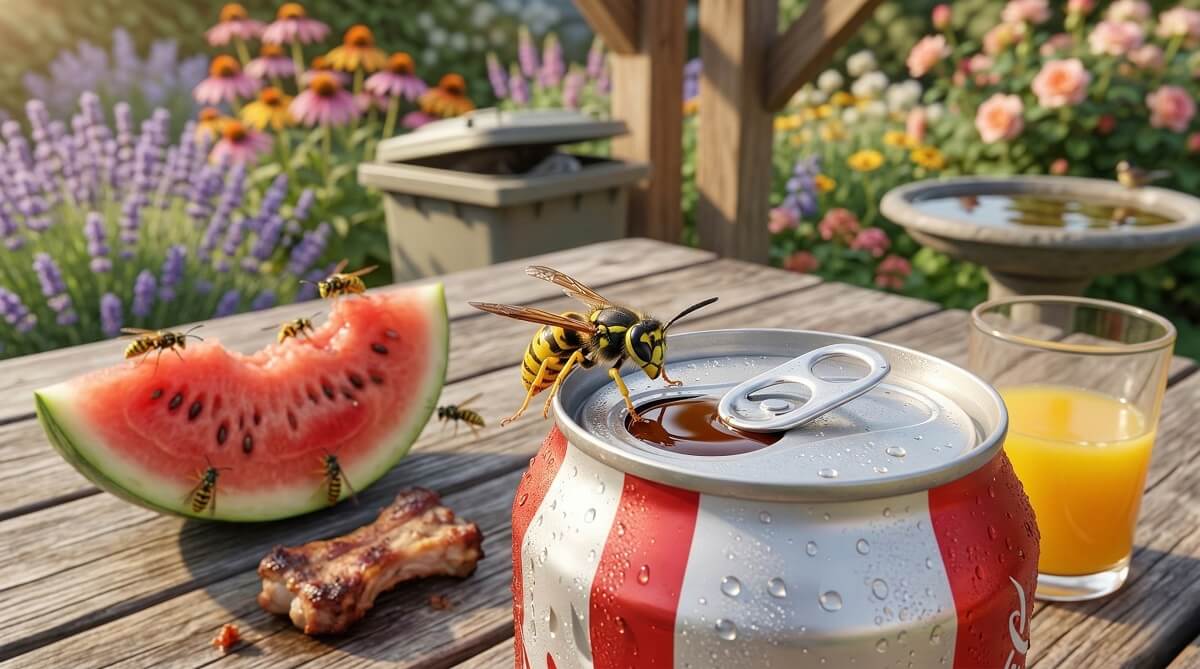
If you’re seeing more wasps around your outdoor spaces, you’re likely providing three things they need: food sources, water, and sheltered nesting spots. Wasps are attracted to proteins like meat and insects in spring and early summer, then shift to sugary foods—ripe fruit, soda, and nectar—by late summer as their colonies reach peak size. This seasonal diet change explains why August and September bring the most aggressive wasp activity around picnics, garbage cans, and fruit trees.
Understanding what draws wasps to your property puts you ahead of the problem. Research from university extension programs shows that prevention through eliminating attractants reduces wasp presence far more effectively than reactive measures alone. Whether you’re dealing with yellow jackets, paper wasps, or hornets, the strategies remain consistent: control food sources, manage water features, seal potential nesting sites, and know when to .
This guide breaks down the science behind wasp attraction, identifies the specific things bringing them to your yard, and provides research-backed methods to keep them away. We’ll cover species-specific behavior, seasonal patterns, natural repellents that actually work, and when DIY approaches become dangerous. If you’re also dealing with other stinging insects, our helps distinguish between different species.
Quick Assessment: Is Your Property Attracting Wasps?
🚨 High Risk Indicators (Immediate Attention Needed)
- Visible nests under eaves, in attics, or wall voids
- Multiple wasps hovering around specific areas daily
- Fallen fruit from trees accumulating on the ground
- Unsealed garbage cans near outdoor living spaces
- Standing water sources like birdbaths, pet bowls, or leaky fixtures
- Wasps entering and exiting cracks or gaps in your home’s exterior
⚠️ Moderate Risk Indicators (Prevention Recommended)
- Outdoor dining areas with food remnants
- Flowering plants positioned near doors and windows
- Wooden decks, fences, or structures showing weathering
- Compost bins without tight-fitting lids
- Bright yellow or white outdoor furniture and decorations
- Aphid infestations on plants
✔️ Low Risk (Maintain Vigilance)
- Occasional single wasp sightings
- Sealed outdoor areas with minimal food access
- Regular property maintenance completed
- No visible nesting activity
Understanding What Attracts Wasps to Your Yard
Wasps don’t show up randomly. They’re searching for three essential resources that support their colonies: food, water, and shelter. Your yard becomes attractive when it offers easy access to any combination of these elements. The specific attractants vary by season, with wasp behavior shifting dramatically as summer progresses.
The Three Primary Attractants
Food Sources: The Seasonal Shift
Wasp dietary needs change throughout their lifecycle. In spring and early summer, worker wasps hunt aggressively for protein-rich foods. According to University of Minnesota Extension research, social wasps like yellowjackets and hornets consume flies, caterpillars, beetles, and similar prey during this period. Paper wasps focus primarily on caterpillars. These insects aren’t just feeding themselves—they’re gathering protein to feed larvae back at the nest.
By late summer, the colony dynamics shift. Once wasp colonies reach full size in August, queens slow their egg production. With fewer larvae to feed, adult wasps switch from hunting protein to seeking sugars. This explains why you’ll suddenly see them swarming around ripe fruit, soda cans, and outdoor meals. Adult wasps consume a liquid diet throughout their lives, feeding on flower nectar, fruit juices, honeydew from aphids, and nutritional liquids produced by their larvae.
This seasonal diet shift correlates with increased aggression. Research from Penn State Extension confirms that wasps become more defensive in late summer and fall when food resources become scarce. The combination of larger colony sizes and increased competition for limited food makes late summer the peak period for human-wasp conflicts.
Water Sources: More Than Just Drinking
Wasps need water for multiple purposes beyond hydration. They use water for nest construction, mixing it with wood pulp to create their paper-like nest material. Water also helps cool their nests during hot weather and aids in digestion. Research on wasp foraging behavior shows they travel considerable distances—typically 200 meters to 2.5 kilometers from their nest—to locate water sources.
Common water attractants include birdbaths, pet bowls, pools, leaky outdoor faucets, and even puddles after rain. Unlike bees, which prefer large open water sources, wasps often favor smaller, more accessible water features where they can land safely without risk of drowning.
Shelter and Nesting Sites
Wasps seek protected, elevated locations near food and water sources for nesting. Each species has distinct preferences. Paper wasps and bald-faced hornets construct nests above ground on eaves and overhangs. Yellow jackets typically excavate underground nests, though they occasionally nest in wall voids and attics. European hornets suspend large paper nests from trees or attach them to building exteriors.
Ideal nesting conditions include protection from elements, warmth, nearby food sources, and isolation from predators. This explains why eaves, overhangs, sheds, attics, and wall voids are prime real estate for wasp colonies. According to University of Maryland Extension research, structural features that offer these conditions essentially advertise “vacancy” to queen wasps scouting for nest sites in spring.
Seasonal Behavior: Why Late Summer Is Peak Wasp Season
The Wasp Colony Lifecycle
Social wasp colonies last only one year. Penn State Extension documentation confirms that paper wasps, hornets, and yellowjackets build new nests from scratch each spring and never reuse the previous year’s nest. Only fertilized queens survive winter, finding sheltered locations to hibernate. Understanding this helps with timing prevention efforts effectively.
In spring, surviving queens emerge and establish nests in May. Each queen works alone initially, building the nest structure and raising the first generation of worker wasps. As workers mature, they take over nest expansion and foraging duties while the queen focuses on egg production.
Colony growth accelerates through summer. Paper wasp colonies typically contain 20-75 adults on a single nest, though they can grow to over 200 under favorable conditions. Yellowjacket colonies range from a few hundred to several thousand members. Bald-faced hornet nests contain 100-400 workers. By August, colonies reach maximum size just as natural food sources begin declining.
By late September, reproduction ceases. The colony produces new queens and males. After mating, new queens seek overwintering sites while workers and the old queen die off. By the end of September, few if any wasps remain from the original colony.
The Late Summer Diet Shift Explained
The timing of this diet shift isn’t coincidental. Early in the season, workers gather protein because larvae require substantial amounts for development. The larvae produce nutritional liquids that adult wasps consume, creating a symbiotic exchange within the colony.
When the queen reduces egg production in late summer, fewer larvae need feeding. Workers still require energy for their own maintenance and nest defense, but their nutritional needs shift entirely to carbohydrates. This sudden focus on sugary foods brings them into conflict with human activities—outdoor dining, fruit harvesting, garbage disposal.
The aggression increase stems from multiple factors. Larger colony sizes mean more wasps competing for food. Declining natural food sources increase foraging pressure. Research indicates that in response to food scarcity, social wasps become increasingly protective of resources. This perfect storm of factors explains why late summer outdoor gatherings often end with wasp encounters.
Common Wasp Species in the USA and What Each Prefers
Not all wasps behave identically. Understanding the species you’re dealing with helps predict their behavior and choose appropriate management strategies. Here are the most common social wasps in the United States:
| Species | Size | Appearance | Nesting Location | Primary Attractants | Aggression Level |
|---|---|---|---|---|---|
| Yellow Jackets | 3/8 to 5/8 inch | Black and yellow striping patterns | Ground burrows, wall voids, shrubs | Meats, sweets, garbage, fallen fruit | High – easily agitated |
| Paper Wasps | 5/8 to 1 inch | Yellow, reddish, or dark with long legs | Eaves, overhangs, branches | Caterpillars, nectar, aphid honeydew | Moderate – less defensive |
| Bald-Faced Hornets | 5/8 to 3/4 inch (workers), 1+ inch (queens) | Black and white with white face | Trees, shrubs (exposed nests) | Insects, sweet foods, tree sap | High – very defensive |
| European Hornets | 3/4 to 1-3/8 inches | Reddish-brown with golden yellow | Tree cavities, wall voids, attics | Insects (hunt day/night), tree bark | Moderate – less aggressive than yellowjackets |
| Mud Daubers | 3/4 to 1 inch | Black and yellow, thread-waisted | Mud tubes on structures | Spiders (primary prey) | Very low – rarely sting |
Yellow jackets present the highest risk to homeowners. Their ground-nesting habits mean people often disturb nests accidentally while mowing or gardening. They’re also the most aggressive defenders, with colonies capable of thousands of members. Research shows they release alarm pheromones from their venom sacs when threatened, coordinating colony-wide attacks that can drive even large predators away.
Paper wasps, despite their size, are less aggressive. They build smaller colonies and generally avoid conflict unless their nest is directly threatened. However, their preference for building under eaves and overhangs near human activity means encounters are common.
European hornets have an interesting behavior: they hunt both day and night and are attracted to lights, which sometimes brings them indoors. They’re less likely to sting than yellowjackets but their size makes their stings more painful.
8 Specific Things Attracting Wasps to Your Property
1. Open Garbage and Compost
Garbage cans provide both protein and sugar sources in one convenient location. Meat scraps, fruit peels, and sugary beverage residue create an irresistible combination. Wasps can detect these food sources from considerable distances using their highly developed sense of smell.
Prevention: Use garbage cans with tight-fitting lids. Rinse containers before disposal. Keep garbage cans away from outdoor living areas—at least 20-30 feet from patios and decks. Empty outdoor bins regularly, especially during late summer when wasp activity peaks.
2. Fallen and Overripe Fruit
Fruit trees become wasp magnets in late summer. The combination of natural sugars and fermenting fruit creates powerful attractants. Fallen fruit rotting on the ground concentrates wasps in specific areas, creating hazards for anyone working in the yard.
Prevention: Harvest fruit as it ripens rather than letting it overripen on trees. Collect fallen fruit daily. If you have fruit trees, consider this maintenance a critical wasp prevention task from July through October. For ornamental fruit trees, remove fruit before it becomes overripe if possible.
3. Outdoor Food and Beverages
Outdoor dining presents multiple attractants simultaneously. Meats from grilling attract wasps seeking protein. Sodas, juices, and sweet desserts provide the sugars they crave. Research on wasp foraging shows they can locate food sources quickly once one scout identifies a productive site.
Prevention: Keep food covered until serving. Use mesh food tents over serving dishes. Serve beverages in covered containers with lids and straws. Clean up spills immediately—even a small amount of soda on a picnic table can attract wasps. Remove dishes promptly after eating rather than leaving them outside.
4. Flowering Plants and Gardens
While wasps are less effective pollinators than bees, they do visit flowers for nectar. Many wasp species visit flowers regularly, contributing to pollination as a side effect of their feeding. The benefit is that wasps foraging on flowers are typically docile, focused on feeding rather than defending territory.
Management approach: You don’t need to eliminate flowering plants—wasps provide pest control benefits that often outweigh concerns about their presence. Instead, consider placement. Position heavy-blooming plants away from high-traffic areas like doorways and outdoor seating. This lets wasps access flowers while minimizing encounters.
5. Standing Water Sources
Wasps need consistent water access throughout the active season. They prefer water sources where they can land safely. Shallow edges on birdbaths, overflow from pet bowls, and leaky outdoor faucets all provide ideal drinking and nest-building water.
Prevention: Change birdbath water every 2-3 days to discourage wasps (and mosquitoes). Fix leaky outdoor faucets and hose connections. For pet water bowls kept outside, consider placing them away from doors and windows. If you have a pool, maintain proper chlorine levels and skim regularly—wasps avoid treated water.
6. Bright Colors and Sweet Scents
Wasps have trichromatic color vision, seeing colors from yellow through ultraviolet but not red. Research on wasp color preferences shows mixed results—some studies found pink and yellow traps most effective, while others found yellow didn’t specifically attract certain wasp species. The most consistent finding is that wasps associate bright colors with flowers, their natural food sources.
Sweet scents work similarly. Wasps have a highly developed sense of smell and associate sweet fragrances with food. Perfumes, scented soaps, and fragranced lotions can attract their attention, though they won’t sustain interest once wasps realize there’s no actual food.
Prevention: When working outdoors in areas with wasp activity, choose muted colors like khaki, tan, or dark colors. Avoid bright yellow, white, pink, and purple. Skip heavily scented personal care products if you’re doing yard work or dining outside during peak wasp season.
7. Weathered Wood and Building Materials
Wasps harvest wood pulp to build their paper nests. They prefer weathered, untreated wood where the fibers are more accessible. You’ll sometimes see them on old decks, fences, and outdoor furniture, literally chewing wood fibers. European hornets are particularly known for this behavior, sometimes damaging bark on trees.
Prevention: Paint or seal wooden structures. Treated and painted wood is less attractive to wasps. Replace severely weathered boards on decks and fences. Cover outdoor wooden furniture when not in use. This not only deters wasps but also extends the life of wooden structures.
8. Aphid Infestations and Other Pest Insects
This creates a double attractant situation. Wasps hunt pest insects like caterpillars, flies, and beetles to feed their larvae. They also consume honeydew, the sugary substance aphids excrete. A heavy aphid infestation on your plants essentially hangs a “restaurant open” sign for wasps.
The relationship between pest control and wasp management is complex. Wasps provide genuine pest control benefits—research indicates they consume hundreds of pest insects during a season. However, large populations of pest insects also attract more wasps than you might want around your home.
Management approach: Control aphid and caterpillar populations on plants near your home. reduce one attractant without using harsh pesticides that might harm beneficial insects. This balanced approach keeps wasp populations at manageable levels while preserving their pest control benefits. For comprehensive garden pest management, see our .
How to Prevent Wasps From Being Attracted to Your Property
Elimination Strategy by Attractant Type
Food Source Management
- Garbage: Use sealed containers exclusively. Store garbage cans at least 20-30 feet from living areas. Rinse containers before disposal to minimize odors. Schedule regular garbage collection, increasing frequency during peak wasp season if necessary.
- Fruit: Harvest promptly at peak ripeness. Collect fallen fruit daily from July through October. Remove fruit from ornamental trees before full ripening if wasp activity is high.
- Outdoor dining: Serve food in covered containers. Use mesh tents over serving dishes. Provide covered cups with lids and straws for beverages. Clean spills immediately. Remove dishes within 30 minutes of finishing meals.
Water Source Management
- Change birdbath water every 2-3 days
- Repair leaky outdoor faucets and hose connections promptly
- Empty and refill pet water bowls daily
- Maintain proper pool chemistry to discourage wasp drinking
- Eliminate standing water in plant saucers, gutters, and low spots in yard
Nesting Prevention
The best time to prevent nesting is early spring before colonies establish. Conduct monthly inspections from March through October, focusing on:
- Eaves and overhangs (especially corners and protected spots)
- Attic vents and crawl space openings
- Wall cracks and gaps around windows and doors
- Shed interiors, under decks, behind shutters
- Outdoor furniture and equipment storage areas
Seal discovered cracks and gaps with caulk or foam. Repair damaged window screens. Install vent covers on attic and crawl space openings. Apply these repairs in winter or early spring (February-March) before queens emerge from hibernation to scout nesting locations.
Natural Repellents That Actually Work
Essential oil research provides the most compelling evidence for natural wasp repellents. A peer-reviewed study published in Pest Management Science tested 21 essential oils against yellowjackets and paper wasps. The results were striking: 17 of the 21 oils showed significant repellency.
Even more impressive, researchers found that oil combinations worked better than single oils. A 4-oil blend of clove, geranium, lemongrass, and rosemary completely blocked wasp attraction in testing. A 3-oil blend (minus rosemary) showed similarly strong results. For more information on using natural pest deterrents around your home, check our .
Most Effective Essential Oils for Wasp Repellency:
- Peppermint oil: Menthol, its active compound, showed strong repellent properties
- Clove oil: Part of the most effective blend tested
- Geranium oil: Strong standalone repellent and blend component
- Lemongrass oil: Effective in both 3-oil and 4-oil blends
- Citronella oil: Well-known insect repellent, effective against wasps
- Eucalyptus oil: Strong scent wasps avoid
Application Methods:
Mix 10-15 drops of essential oil (or oil blend) with 2 cups of water in a spray bottle. Spray around doorways, windows, eaves, and other areas where you want to deter wasps. Reapply every 2-3 days as oils evaporate quickly. Increase application frequency after rain.
Important limitations: Essential oils work as spatial repellents, meaning they discourage wasps from lingering in treated areas. They won’t eliminate existing nests or provide complete protection. Think of them as one tool in a broader prevention strategy, not a standalone solution.
Repellent Plants:
While research on plant-based repellents is less rigorous than essential oil studies, anecdotal evidence supports several plants:
- Mint (peppermint, spearmint) – Contains natural menthol
- Eucalyptus – Strong aromatic oils
- Citronella – Known insect deterrent properties
- Wormwood – Bitter compounds wasps avoid
Plant these in containers near outdoor seating areas, doors, and windows. The concentration of repellent compounds is lower in living plants than in essential oils, so don’t expect dramatic results, but they add another layer of deterrence.
Commercial Deterrents and Their Effectiveness
Fake Wasp Nests
The theory behind fake nests is that territorial wasps won’t build near existing colonies. Research support for this approach is mixed. Paper wasps show some territorial behavior that might support this strategy, but yellowjackets and hornets are less influenced by fake nests. If you try this approach, install fake nests in early spring before real colonies establish.
Wasp Traps
Commercial and homemade traps can reduce local wasp numbers, but they come with caveats. Traps work by luring wasps with attractants (sugar water, protein baits), then trapping them inside. The problem: the same attractants that draw wasps to the trap can draw more wasps to your property overall.
Best practices for trap use:
- Place traps 20-30 feet away from outdoor living areas, not right next to patios
- Set traps in early spring to catch queens before they establish colonies
- Empty and maintain traps regularly—full traps lose effectiveness
- Remove traps immediately if they seem to be increasing wasp activity
Traps work best as supplementary measures alongside food source elimination and nest prevention, not as standalone solutions.
What NOT to Do: Common Mistakes That Attract More Wasps
Mistake 1: Improper Nest Removal
Attempting to remove active wasp nests without proper equipment and timing often escalates problems. Wasps defend their nests vigorously, especially yellowjackets and hornets. Approaching a nest during daylight hours when wasps are active and alert invites aggressive defense.
Even worse is partially destroying a nest or sealing its entrance while wasps are still inside. University extension research documents cases where homeowners sealed wasp nest entrances without eliminating the colony. Trapped wasps chewed through wallboard and ceilings, resulting in angry wasps inside living spaces—a much worse situation than the original outdoor nest.
Safe timing for nest removal: Very early morning or late evening when temperatures are cooler and wasps are less active. Even then, DIY removal is only appropriate for small, newly-formed nests (smaller than a golf ball) in accessible locations.
Mistake 2: Killing Individual Wasps Near Nests
Swatting or spraying individual wasps near their nest triggers alarm pheromone release. Research published in multiple entomology journals confirms that social wasps release chemical signals from their venom sacs when threatened or killed. These alarm pheromones mark intruders for attack and rouse the colony to defensive action.
Studies show these pheromones are strongly attractive to other workers and trigger aggressive swarm responses. The coordinated attack of a large colony can drive even large predators away from nests. For humans, this means turning a single wasp encounter into a multi-wasp emergency.
Better approach: Move slowly and calmly away from wasps showing interest in you. Don’t swat or make aggressive movements. If wasps are congregating in a specific area, avoid that zone and address the attractant later when wasps aren’t present.
Mistake 3: Using Sweet-Scented Products Outdoors
Scented personal care products attract wasp attention during peak season. Perfumes, scented lotions, fragranced sunscreens, and aromatic hair products all contain compounds wasps associate with food sources. While wasps won’t sustain interest once they realize you’re not food, the initial attraction increases your risk of close encounters.
Prevention during high-risk periods: From mid-July through September, choose unscented or minimally scented personal care products when spending time outdoors. This includes sunscreen, which you need to wear—just select unscented formulations. Save the heavily fragranced products for indoor use or cooler months when wasp activity decreases.
Mistake 4: Ignoring Small Nests Early in Season
A paper wasp nest the size of a golf ball in May seems manageable. That same colony in August might contain 75-200 wasps on a nest 10 inches across. Wasp colony growth is exponential—small early-season nests balloon into major problems by late summer.
Queens establish nests in May. The first generation of workers emerges by mid-June. From there, growth accelerates as more workers mature and take over nest expansion while the queen focuses exclusively on egg production. The prevention window is April through early June—after that, nests grow too large for safe DIY removal.
Recommended action: Inspect your property weekly from April through June. If you find small nests in accessible locations during this period, removal is safer and more manageable. Very small nests (smaller than a walnut) can sometimes be knocked down with a strong water spray from a safe distance in early morning. Anything larger warrants professional removal.
When Wasps Inside Your Home Are Cause for Concern
How Wasps Get Indoors
Wasps enter homes through surprisingly small openings. Common entry points include:
- Gaps around window and door frames
- Damaged or improperly sealed window screens
- Attic vents without proper screening
- Chimney openings without caps
- Cracks in siding or foundation
- Gaps where utilities enter the home (pipes, wires, cables)
Wasps come indoors for three main reasons. First, they may be seeking nesting sites, particularly queens searching for overwintering locations in fall. Second, existing nests built in wall voids, attics, or other interior spaces produce wasps that eventually find their way into living areas. Third, accidental entry through open doors or windows—wasps investigating indoor food sources or simply lost.
Signs of Indoor Infestation
A single wasp that flew in through an open door isn’t an infestation. Signs of a real problem include:
- Repeated sightings: Multiple wasps appearing indoors daily, especially in the same area
- Buzzing sounds: Audible buzzing from walls, ceilings, or attic spaces
- Concentration patterns: Wasps repeatedly appearing near specific windows or areas
- Visible nest material: Paper-like nest material visible in corners, attics, or crawl spaces
- Entry/exit activity: Wasps entering or exiting through specific cracks or gaps
If you’re seeing multiple wasps indoors daily, you likely have a nest in a wall void, attic, or other interior space. This requires professional intervention—attempting DIY removal of interior nests risks driving wasps into living spaces.
Indoor Attractants to Eliminate
Even without an indoor nest, you can reduce accidental wasp entries:
- Food sources: Store food in sealed containers. Clean up crumbs and spills promptly. Keep kitchen garbage in covered bins.
- Entry points: Inspect and seal gaps around windows and doors. Repair damaged screens. Install chimney caps and screen attic vents.
- Lights: European hornets hunt at night and are attracted to lights. Use curtains or blinds to minimize light visible from outside during evening hours in summer.
The Role of Wasps in Your Yard’s Ecosystem
Before declaring war on all wasps, consider their ecological benefits. Wasps provide valuable services that often go unrecognized.
Pest Control Services
Social wasps consume hundreds of pest insects during the active season. Paper wasps specialize in caterpillars, removing pests that damage vegetable and ornamental plants. Yellowjackets and hornets hunt flies, beetles, and other insects. This natural pest control reduces the need for chemical pesticides in your yard.
Some wasp species target specific pests. Cicada killers, despite their intimidating size, are solitary wasps that hunt cicadas almost exclusively. They’re not aggressive toward humans and provide targeted pest control without the colony defense behaviors that make social wasps problematic.
Pollination Contribution
While less efficient than bees, wasps do contribute to pollination. Many wasp species visit flowers regularly for nectar. Research on wasp pollination shows they’re particularly important for certain plant species. Some plants have even evolved to attract wasp pollinators specifically.
Balancing Coexistence with Safety
The goal isn’t eliminating every wasp from your property—that’s neither realistic nor ecologically sound. Instead, aim for management that reduces human-wasp conflicts while preserving their beneficial roles.
When to tolerate wasps:
- Nests located far from high-traffic areas (50+ feet from living spaces)
- Solitary wasps like mud daubers (rarely sting, excellent pest control)
- Small paper wasp nests under eaves away from doors and windows
- Wasps foraging on flowers away from human activity areas
When removal is warranted:
- Nests near doors, windows, or outdoor living spaces
- Ground nests in lawn areas (high risk when mowing)
- Any nest accessed by children’s play areas
- Large colonies showing defensive behavior
- Indoor nests or nests inside wall voids
The distinction matters. A paper wasp nest under the eave of a detached garage 75 feet from your house poses minimal risk and provides pest control benefits. That same nest above your front door requires removal.
When to Call Professional Help
DIY vs. Professional Removal Decision Guide
Call a Professional For:
- Large nests: Anything larger than a softball requires professional equipment and expertise
- Yellow jacket ground nests: These are the most dangerous to disturb, with colonies reaching thousands of members
- Difficult locations: Nests in attics, wall voids, high eaves (requiring ladder work), or underground
- Multiple nests: Properties with several active nests indicate favorable conditions requiring comprehensive treatment
- Indoor nests: Any nest inside your home’s living spaces or wall voids
- Allergy concerns: Anyone with known sting allergies should never attempt wasp removal
- Bald-faced hornets: These are particularly aggressive defenders best handled by professionals
DIY May Be Appropriate For:
- Very small nests (golf ball size or smaller) in early spring
- Easily accessible locations (low eaves, fence posts)
- Low-aggression species like mud daubers or solitary wasps
- When you have proper protective equipment (full body coverage, face protection)
- Early morning or late evening timing when wasps are inactive
Important safety note: Even small nests can be dangerous if you’re allergic to stings or if the nest is larger than it appears from the outside. When in doubt, call a professional. The cost of professional removal is far less than emergency medical treatment for multiple stings or an allergic reaction.
What to Expect From Professional Removal
Cost Ranges (2026 Pricing)
Professional wasp nest removal costs $300 to $700 on average, according to multiple industry cost aggregators. However, pricing varies significantly based on several factors:
- Yellow jacket removal: $500-$1,300 (most expensive due to aggressive defense and difficult underground nests)
- Paper wasp removal: $100-$400 (smaller colonies, less aggressive)
- Hornet removal: $300-$800 (larger nests, defensive behavior)
- Inspection fee: $75-$100 if removal is declined after assessment
Additional costs may apply for:
- Multiple nest removal
- Wall void nests requiring access holes
- Extreme height locations requiring specialized equipment
- Emergency same-day service
- Debris disposal and nest material removal
Treatment Methods
Professionals use several approaches depending on nest location and species:
Spray treatment: Aerosol insecticides that can be applied from safe distances (15-20 feet). Effective for exposed nests on structures. Treatment typically kills the colony within hours.
Dust application: Insecticidal dusts applied directly into nest entrances. Particularly effective for ground nests and wall voids. Dust coats wasps as they enter and exit, spreading throughout the colony.
Vacuuming: High-powered vacuums extract wasps from nests. Used for indoor nests or situations where insecticide application is undesirable. Cost averages $270-$350.
Physical removal: After killing the colony, professionals often remove nest material to prevent attracting other pests and to eliminate pheromone markers that might attract new colonies.
Guarantees and Follow-up
Most professional pest control companies offer guarantees on wasp removal, typically 30-90 days. If wasps return to the treated area during the guarantee period, companies provide re-treatment at no additional cost. Ask about guarantee terms before agreeing to service.
Some companies offer preventive services, treating common nesting sites in early spring to prevent colony establishment. This proactive approach costs less than reactive removal and prevents the problem entirely.
Wasp Sting Allergies and Medical Considerations
Understanding allergy risks is crucial for anyone dealing with wasps. CDC data provides clear statistics on the scope of the problem.
Allergy Prevalence
Systemic allergic reactions to wasp and bee stings occur in 0.5% to 3.3% of the U.S. population—roughly 1.6 to 11 million Americans. Severe life-threatening reactions occur in 0.4-0.8% of children and 3% of adults, according to medical research on Hymenoptera venom allergy.
If you’ve had a severe allergic reaction to a sting previously, your risk of future reactions is significant. Medical research shows people with prior severe reactions have a 25-65% chance of anaphylaxis from subsequent stings.
Mortality Data
Between 2000-2017, an average of 62 deaths per year resulted from hornet, wasp, and bee stings in the United States, with approximately 80% of deaths occurring among males, according to CDC mortality statistics. More recent data (2011-2021) shows an increase to 72 deaths per year on average.
While deaths are relatively rare given the millions of stings that occur annually, they underscore the importance of taking sting allergies seriously. Learn more about and when to seek emergency care.
Symptoms Requiring Immediate Medical Attention
Seek emergency medical care immediately if you experience:
- Difficulty breathing or wheezing
- Swelling of face, throat, or tongue
- Rapid heartbeat or dizziness
- Hives or itching spreading beyond the sting site
- Nausea, vomiting, or diarrhea after a sting
- Confusion or loss of consciousness
These symptoms indicate anaphylaxis, a potentially life-threatening allergic reaction requiring immediate epinephrine injection and emergency medical care.
Prevention for Allergy Sufferers
If you know you’re allergic to stings:
- Carry an epinephrine auto-injector (EpiPen) at all times during wasp season
- Wear medical alert identification indicating your allergy
- Never attempt DIY wasp nest removal
- Consider immunotherapy (allergy shots) to reduce reaction severity
- Inform family members and coworkers about your allergy and EpiPen location
Frequently Asked Questions
What smell attracts wasps the most?
Sweet scents attract wasps most strongly, particularly fruity or floral fragrances that mimic their natural food sources. Overripe fruit, sugary beverages, and sweet perfumes all draw wasp attention. Protein-based food odors also attract wasps during spring and early summer when they’re hunting to feed larvae. Surprisingly, the smell of other wasps—specifically alarm pheromones released when wasps are killed—can attract more wasps to an area. For tips on keeping your outdoor spaces wasp-free during gatherings, see our .
What time of year are wasps most attracted to yards?
Late summer (August through September) brings peak wasp attraction to yards. Colonies reach maximum size during this period, sometimes containing thousands of members. Simultaneously, natural food sources decline while wasp dietary needs shift from protein to sugar. This combination drives wasps to actively seek out human food sources, garbage, fallen fruit, and sweet beverages. Activity begins declining in late September as colonies naturally die off, with only new queens surviving to overwinter.
Do wasps come back to the same nest every year?
No, social wasps (paper wasps, yellowjackets, hornets) build entirely new nests each year and never reuse old nests. Only fertilized queens survive winter by hibernating in sheltered locations like tree bark, attics, or shed walls. In spring, surviving queens emerge and start fresh nests from scratch. Old nests disintegrate over winter and provide no value for new colonies. However, favorable nest sites may attract new queens year after year, so you might see new nests in the same general areas even though they’re technically new structures. For year-round , plan your property maintenance accordingly.
What colors should I avoid wearing to prevent attracting wasps?
Avoid bright yellow, white, pink, green, and purple when working outdoors during peak wasp season. Wasps have trichromatic color vision and associate these bright colors with flowers, their natural food sources. Research on wasp color preferences shows mixed results for specific colors, but the consistent finding is that bright colors attract more attention than muted tones. Choose khaki, tan, gray, or dark colors instead. Wasps cannot see red, making it effectively invisible to them, but darker colors generally work better than bright red for avoiding wasp attention.
Are wasps attracted to certain types of wood?
Wasps prefer weathered, untreated wood where fibers are more easily accessible. They chew wood fibers to mix with saliva, creating the paper-like pulp used for nest construction. Old fence boards, weathered decks, and untreated wooden furniture attract wasps for harvesting. Painted, stained, or treated wood is less attractive because protective coatings make fiber extraction difficult. European hornets are particularly known for this behavior and sometimes damage tree bark while harvesting wood pulp.
Will killing one wasp attract more?
Yes, killing a wasp near its nest can attract more wasps through alarm pheromone release. Research shows that wasps release chemical signals from their venom sacs when threatened or killed. These alarm pheromones serve two purposes: they mark intruders for attack and alert other colony members to danger. Studies demonstrate these pheromones strongly attract other workers and trigger aggressive, coordinated defensive responses. The larger the colony, the more dramatic the response. This is why swatting at wasps near nests often escalates from a single-wasp encounter to a multiple-wasp attack.
How far will wasps travel for food?
Wasps typically forage within 200 meters to 2.5 kilometers (roughly 650 feet to 1.5 miles) from their nest, according to entomological research on foraging behavior. Most foraging activity concentrates in a 1.0-1.5 kilometer radius from the colony. Individual wasps learn locations of productive food sources and return repeatedly, also recruiting other colony members to valuable resources. This foraging range means attractants on your property can draw wasps from considerable distances, not just from nests immediately nearby.
Can wasps smell fear or sweat?
Wasps cannot smell fear—that’s a myth. However, they do respond to rapid movements and defensive behaviors, which might create the impression they sense fear. As for sweat, wasps have highly developed chemoreception but there’s no research indicating they’re specifically attracted to or repelled by human sweat. They’re far more interested in food odors than body odors. The confusion may stem from the fact that outdoor activities that produce sweat often occur near food sources (picnics, outdoor dining) where wasps are already present. Stay calm and move slowly when wasps approach—your movement patterns affect their behavior more than your scent.
What’s the difference between what attracts wasps vs. bees?
Both wasps and bees are attracted to flowers for nectar, but their other food preferences differ significantly. Bees are exclusively vegetarian, feeding on nectar and pollen throughout their lifecycle. Wasps, by contrast, hunt other insects and are attracted to protein sources like meat, making them common around picnics and garbage. Wasps also show stronger attraction to sugary human foods and beverages than bees do. While bees might investigate sweet drinks, wasps actively seek them out, especially in late summer. Both are attracted to similar colors (yellow, white, floral tones) but wasps are more opportunistic scavengers while bees focus almost exclusively on floral resources.
Do electronic wasp repellents work?
No reliable scientific evidence supports the effectiveness of ultrasonic or electronic wasp repellents. While these devices claim to repel insects using high-frequency sound waves or electromagnetic pulses, peer-reviewed research consistently shows they have little to no impact on wasp behavior. Wasps rely primarily on visual and chemical cues rather than sound for navigation and food location. Multiple independent studies testing these devices found no significant difference in insect activity between areas with and without electronic repellents. Save your money and invest in proven methods like essential oil sprays, attractant elimination, and proper nest prevention instead.
Moving Forward: Your Wasp Management Strategy
Understanding what attracts wasps puts you in control. Start with the Quick Assessment at the top of this article to identify your highest-risk attractants. Address those first—removing fallen fruit, sealing garbage cans, and eliminating standing water often produces immediate results.
For established colonies, honest assessment of your situation determines the next step. Small nests caught in May might be manageable with morning water spray removal. Large nests, difficult locations, or aggressive species warrant professional help. Given that professional removal costs $300-700 on average—far less than emergency room treatment for severe stings—professional service often represents the safer, more cost-effective choice.
Remember that complete wasp elimination isn’t the goal. These insects provide pest control and pollination benefits worth preserving. The objective is managing human-wasp conflicts through smart property management, not declaring war on beneficial insects. A distant nest in a low-traffic area can coexist peacefully while providing natural pest control for your yard.
If you’re dealing with an active infestation requiring professional help, contact licensed pest control services in your area for assessment and removal quotes. For more information on managing other common household pests, . You might also find our helpful for staying ahead of pest problems year-round.
