


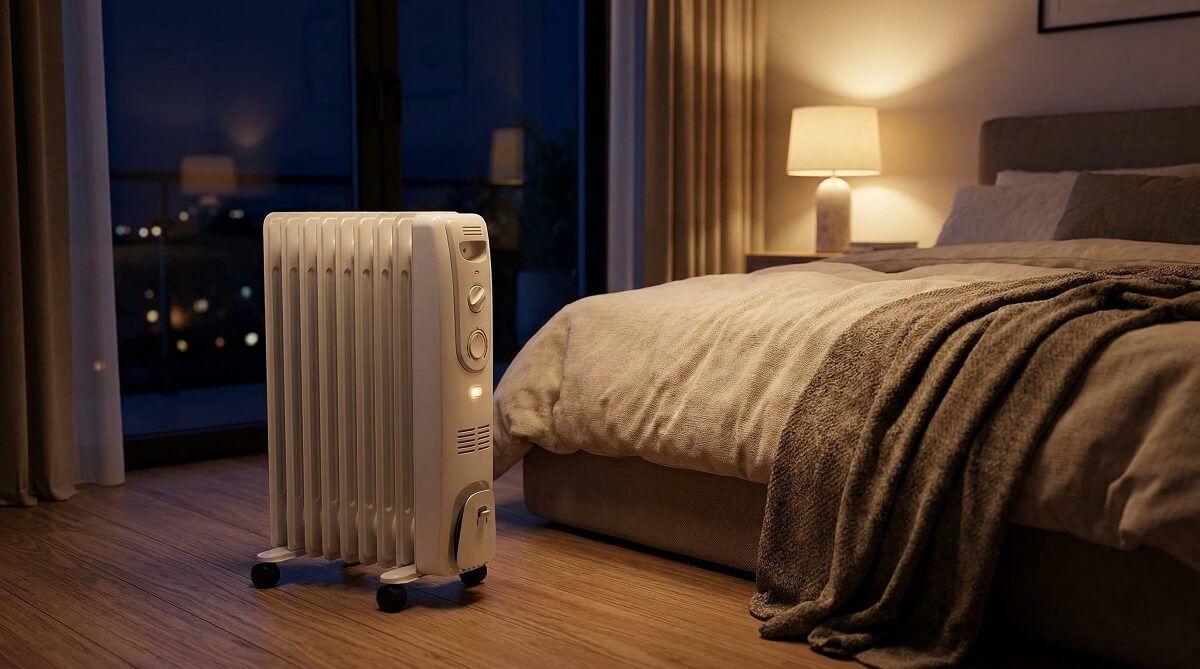
Every winter, approximately 1,700 space heater fires result in 80 deaths and 160 injuries in the United States. Most of these deaths happen overnight, when people are asleep and unable to respond quickly to fire or carbon monoxide buildup. That’s the reality you’re dealing with when you ask whether it’s safe to leave a heater running while you sleep.
Here’s the straight answer: most recommend against leaving any portable space heater unattended overnight. But if you must use overnight heating, oil-filled radiators and permanently-installed central heating systems are your safest options. Modern heaters with automatic shutoff, tip-over protection, and thermostat control can be used overnight with proper precautions, but you need to understand that heater type matters less than safety features plus proper setup. Even the “safest” heater becomes dangerous when placed near curtains, plugged into extension cords, or left on unstable surfaces.
The truth is, many people do run space heaters overnight because their is inadequate or broken. This guide will help you minimize risk if you’re in that situation, but understand that no space heater is 100% risk-free when left unattended.
Quick Safety Decision Guide
✅ Safer for Overnight Use (with precautions)
- Oil-filled electric radiators with auto-shutoff and tip-over protection
- Wall-mounted infrared heaters (permanently installed)
- Central heating systems (furnace, heat pump, baseboard)
- Modern ceramic heaters with overheat protection and thermostats
⚠️ Use Only While Awake
- Fan-forced space heaters
- Radiant coil heaters
- Halogen heaters
- Any portable heater without automatic shutoff
❌ Never Leave Unattended Overnight
- Propane or gas heaters indoors without proper venting
- Kerosene heaters
- Wood stoves without oversight
- Extension cord-powered heaters
- Heaters within 3 feet of flammable materials
- Damaged or recalled heaters (including the 500,000 GoveeLife units recalled in November 2024 and nearly 7,700 Vornado VH2 units recalled in January 2025)
The Real Statistics on Space Heater Fires
According to the National Fire Protection Association (NFPA), U.S. fire departments responded to an annual estimated average of 38,881 home heating equipment fires from 2019-2023. These fires resulted in 432 civilian deaths, 1,352 injuries, and $1.1 billion in property damages.
Space heaters and heating stoves were involved in nearly one-third (29%) of these fires. But here’s the alarming part: 81% of home heating fire deaths included stationary or portable space heaters. Space heaters account for a smaller percentage of fires overall, but they cause a disproportionate number of deaths because overnight fires catch people while sleeping.
Nearly half of all U.S. home heating equipment fires (46 percent) occur between December and February, when people are most likely to use supplemental heating and run heaters for extended periods.
More than half of all home heating fire deaths resulted from fires that began when a heater was positioned too close to things that burn, such as upholstered furniture, clothing, mattresses, or bedding. This is the single most preventable cause of heater fires, yet it remains the leading killer.
The Three Main Overnight Hazards
Fire Risk
Heaters ignite nearby materials through direct contact, radiant heat, or electrical malfunction. When a portable heater tips over or its internal components overheat, it can ignite carpet, bedding, curtains, or furniture within seconds. Electrical overload from running high-wattage heaters on circuits that can’t handle the load leads to melted wires, sparking, and circuit fires inside your walls.
The exists because radiant heat from a space heater can gradually heat materials to their ignition point over time, even without direct contact. Paper, fabric, and wood can all catch fire from sustained exposure to heat.
Carbon Monoxide Poisoning
Gas, propane, and kerosene heaters produce as a byproduct of combustion. CO is colorless, odorless, and deadly. You can’t smell it, and when you’re asleep, you won’t notice the symptoms (headache, dizziness, confusion) until it’s too late.
Electric heaters don’t produce carbon monoxide, which is one major safety advantage. However, if you use any combustion-based heater indoors, a working carbon monoxide detector is not optional. It’s required.
Oxygen Depletion
Unvented combustion heaters consume oxygen from the room as they operate. In enclosed bedrooms with closed doors and windows, oxygen levels can drop to dangerous levels over several hours. This causes symptoms similar to CO poisoning and can be fatal in extreme cases.
If you must use a gas or propane heater (which, again, I don’t recommend for overnight use), crack a window for ventilation. Better yet, don’t use combustion heaters in bedrooms at all.
Heater Types Ranked by Overnight Safety
Safest Options for Overnight Use
Oil-Filled Radiators ⭐⭐⭐⭐⭐
Oil-filled radiators are the gold standard for overnight heating safety. They work by heating thermal oil sealed inside metal columns. The oil retains heat and continues radiating warmth even after the heating element shuts off, which means more consistent temperature control and less cycling on and off.
The DeLonghi TRD40615E is one of the most recommended models, with a list price of $149.95. It features 75% more radiant surface area than standard oil-filled radiators, a 24-hour programmable timer, and digital controls. The design maximizes gentle heat without drying out the air or stirring up allergens.
Pros: Silent operation, even heat distribution, cool-touch exterior (you can touch the housing without burning yourself), stays warm after shutoff, no exposed heating element.
Cons: Slow to heat up a room (takes 20-30 minutes to reach full output), heavy (difficult to move between rooms), higher upfront cost compared to basic space heaters.
Ceramic Heaters with Advanced Safety ⭐⭐⭐⭐
Modern ceramic heaters use PTC (Positive Temperature Coefficient) ceramic technology, which self-regulates to prevent overheating. As the ceramic element heats up, its electrical resistance increases, which naturally limits temperature. This is safer than older coil-based heaters.
The Lasko 754200 retails for about $36 at The Home Depot and is one of the most popular budget ceramic heaters. It offers 1500W on high, 900W on low, plus a fan-only mode. The adjustable thermostat has 11 temperature settings, and it includes automatic overheat protection with a cool-touch exterior.
However, not all ceramic heaters are created equal for overnight use. You need models with automatic shutoff, tip-over protection, and thermostat control. Don’t buy the cheapest unit and assume it’s safe to leave running while you sleep.
Pros: Fast heating, compact size, energy-efficient, lightweight and portable.
Cons: Can dry out air (consider running a humidifier), fan noise (not silent like oil-filled radiators), must have auto-shutoff to be safe overnight.
Permanently-Mounted Infrared Heaters ⭐⭐⭐⭐⭐
Wall or ceiling-mounted infrared heating panels are arguably the safest option for overnight heating because they’re fixed in place. They can’t tip over, can’t be moved near combustible materials, and stay out of reach of children and pets.
Infrared heaters work differently than convection heaters. Instead of warming the air, they emit infrared radiation that directly heats objects and people in the room (similar to how the sun warms your skin). This is more and doesn’t dry out the air.
Installation typically requires professional help and costs more upfront, but the safety benefits are significant. These are best for garages, workshops, patios, and large rooms where you want permanent heating solutions.
Pros: Can’t tip over, can’t be moved near flammables, even heating, energy-efficient, no air circulation (better for allergies).
Cons: Professional installation required, higher upfront cost, permanent placement (not portable).
Use-Only-While-Awake Heaters
Fan-Forced Electric Heaters ⭐⭐⭐
Fan-forced heaters blow air over a heating element to quickly warm a room. They’re inexpensive and effective for fast heating, but the exposed heating elements and mechanical fans create more failure points. If the fan malfunctions while the element is hot, you have a fire hazard.
If you must use a fan-forced heater overnight, set a timer shutoff so it doesn’t run all night. Use it to warm the room before bed, then turn it off when you sleep.
Pros: Inexpensive ($20-50), fast heating, widely available.
Cons: Higher fire risk if left unattended, dry air, fan noise, exposed elements collect dust.
Radiant/Coil Heaters ⭐⭐
These are the old-school heaters with glowing orange coils. The exposed coils reach extremely high temperatures and will ignite anything that touches them. Dust accumulation on the coils can also catch fire.
Newer models have protective grills and some safety features, but the fundamental design is inherently riskier than enclosed heating elements. Use these only while you’re awake and alert.
Pros: Instant heat, very low cost.
Cons: High surface temperature (fire hazard), ignites dust and debris, minimal safety features in older models.
Never-Leave-Unattended Heaters
Propane/Gas Heaters ⭐
Propane and natural gas heaters produce carbon monoxide and require proper ventilation. Unless you have a vented heater installed by a professional with exhaust ducted outside, do not use gas heaters indoors overnight.
These are appropriate for outdoor spaces, well-ventilated garages, and construction sites. They’re not bedroom heaters.
Kerosene Heaters ⭐
Kerosene heaters are banned for indoor use in many jurisdictions because of the fumes, carbon monoxide risk, and fire hazard. They require special fuel handling, produce strong odors, and need constant ventilation.
Some states and cities have specific regulations prohibiting kerosene heater use in residential buildings. Check your local codes, but assume these are not safe for overnight indoor use.
Heater Types: Safety Comparison
| Heater Type | Overnight Safe? | Key Safety Features | Avg Price | Operating Cost (8hrs) | Fire Risk | CO Risk |
|---|---|---|---|---|---|---|
| Oil-Filled Radiator | ✅ Yes (with precautions) | Auto-shutoff, tip-over, thermostat | $150 | $2.16 | Low | None |
| Ceramic (advanced) | ✅ Yes (with precautions) | Auto-shutoff, overheat, tip-over | $36-80 | $2.16 | Low-Medium | None |
| Infrared (mounted) | ✅ Yes | Fixed install, thermostat, overheat | $200-400 | $2.16 | Very Low | None |
| Fan-Forced Electric | ⚠️ Not recommended | Varies by model | $20-50 | $2.16 | Medium | None |
| Radiant/Coil | ❌ No | Minimal (older models) | $20-40 | $2.16 | High | None |
| Propane/Gas | ❌ No (indoors) | CO detector required | $100-300 | $1.50-2.00 | Medium | High |
Note: Operating costs calculated using 1500W heaters running 8 hours at average 2026 U.S. residential electricity rates of 18.02¢/kWh, as projected by the U.S. Energy Information Administration. A 1500W heater running for 8 hours consumes 12 kWh, costing approximately $2.16 per night. Gas heater costs vary by propane prices.
Essential Safety Features for Overnight Heaters
Non-Negotiable Safety Features
Automatic Shutoff
Overheat protection automatically cuts power when internal temperatures exceed safe limits (typically around 120-140°F for housing temperature). This prevents the heating element from continuing to heat if airflow is blocked or internal components malfunction.
Timer shutoff lets you set a maximum run time (like 4 or 8 hours), so the heater automatically turns off even if nothing goes wrong. This is your backup safety layer.
UL 1278 certification is the safety standard for movable and wall- or ceiling-hung electric room heaters. It covers leakage, temperature, and durability tests. Products rated above 850W require additional warnings about overheating hazards. Look for the UL, ETL, or CSA mark on any heater you buy.
Tip-Over Protection
A gravity switch inside the heater detects when the unit is not in its upright position. If the heater tips over (knocked by a pet, bumped by a person, or placed on an unstable surface), it automatically shuts off within seconds.
Test this feature before relying on it. Gently tilt your heater to verify it cuts power immediately. This feature is especially important if you have pets or children.
Cool-Touch Exterior
Heater housing should remain cool enough to touch even when the unit is running at full power. Materials like heat-resistant plastic or well-insulated metal prevent accidental burns.
Touch-safe temperature standards generally limit exterior housing to below 140°F to prevent burns on contact. Oil-filled radiators excel at this because the oil distributes heat evenly across the large surface area.
Thermostat Control
A thermostat prevents the heater from running constantly. It cycles the heating element on and off to maintain your set temperature. This reduces energy waste, prevents overheating, and lowers fire risk.
Digital thermostats tend to be more accurate than analog dial controls, but either is acceptable as long as it functions properly.
Nice-to-Have Safety Features
GFCI/ALCI Plug: Ground Fault Circuit Interrupter (GFCI) or Appliance Leakage Circuit Interrupter (ALCI) plugs detect electrical faults and shut off power before you get shocked. These are required on bathroom heaters but useful anywhere.
Smart Home Integration: with app control let you monitor and control your heater remotely. You can shut it off from bed, set schedules, receive temperature alerts, and track energy consumption. Smart heaters from brands like Dr.Prepare, MORENTO, and CLEVAST offer remote shutoff capability, which adds a safety layer if you forget to turn off the heater before leaving.
Smart heaters with ECO mode can auto-adjust heat levels and save up to 40% on energy bills by using occupancy sensors and precise thermostat control.
Low Oxygen Shutoff Sensor: For gas and propane heaters, this sensor detects when oxygen levels drop below safe thresholds and automatically shuts off the burner. If you use a gas heater (which, again, you shouldn’t overnight), this feature is essential.
Safe Overnight Heater Setup: Step-by-Step
Before You Turn It On
Verify Safety Certifications
Look for UL, ETL, or CSA marks on the heater’s label. These indicate the heater has been tested to safety standards. UL 1278 is the specific standard for portable electric heaters.
Check for recent recalls on the U.S. Consumer Product Safety Commission website. Recent examples include nearly 7,700 Vornado VH2 heaters recalled in January 2025 due to power cord detachment hazards, and over 500,000 GoveeLife and Govee smart heaters recalled in November 2024 after 113 reports of overheating, 7 fires, and 1 burn injury.
Inspect Your Heater
Check the power cord for fraying, melting, or damage. Inspect the plug for discoloration (sign of overheating) or looseness. Examine the housing and grill for cracks or damage. Clean dust from vents and heating elements before use, as accumulated dust can ignite.
Choose the Right Location
Follow the 3-foot clearance rule recommended by the NFPA. Keep the heater at least 3 feet away from anything that can burn: curtains, bedding, furniture, paper, clothing, and upholstered items.
Place the heater on a flat, stable, hard surface. Carpets and rugs can block airflow underneath the heater, and unstable surfaces increase tip-over risk.
Position the heater near a wall outlet. Never use with space heaters. The high wattage (typically 1500W) can overload extension cords, causing melting, sparking, and fires. Space heaters should plug directly into wall outlets only.
During Overnight Use
Set Up Safety Layers
Install working in bedrooms and hallways. Test them monthly and replace batteries annually. A smoke detector gives you early warning if something goes wrong.
Place a carbon monoxide detector in your bedroom if using any gas or propane heater (though, again, this is not recommended). Top-rated CO detectors for 2026 include the First Alert OneLink with voice alerts and smartphone integration, and the Kidde Nighthawk plug-in model with digital display.
Keep a fire extinguisher accessible. An ABC-rated extinguisher handles electrical, wood, and fabric fires. Know where it is and how to use it before an emergency.
Maintain a clear exit path from your bedroom. Don’t block doorways with furniture or clutter. In a fire, you need to get out quickly.
Optimize Heater Settings
Use the lowest effective temperature. You don’t need tropical warmth overnight. Set the thermostat to 68-72°F for comfortable sleep without overworking the heater.
Set a timer shutoff if your heater has that feature. Program it to turn off after 4-6 hours, once the room is warm and you’re asleep under blankets.
Use thermostat mode, not constant-on mode. Let the heater cycle on and off as needed to maintain temperature.
Smart Monitoring Options
WiFi-enabled smart heaters let you monitor temperature, receive alerts, and shut off the heater remotely from your phone. You can also set schedules to automatically turn off the heater at a specific time or when room temperature reaches your target.
If you don’t have a smart heater, at least leave your bedroom door slightly open to improve air circulation and make it easier to detect smoke from other parts of the house.
What Home Insurance Says About Space Heaters
Home insurance policies typically cover fire damage caused by space heaters, but there are caveats. Insurers expect you to follow manufacturer instructions and basic safety practices. If an investigation determines you were negligent (like using a recalled heater, using an extension cord, or placing the heater near combustibles), your claim could be denied.
Common Insurance Requirements
- UL-listed heaters only (no uncertified imports)
- Some policies have clauses against overnight space heater use
- Minimum clearance requirements (usually 3 feet)
- Working smoke and CO detectors required
Protect Your Coverage
Keep receipts and manuals for your heater to document that you purchased a certified product. Follow manufacturer instructions exactly. Report any heater incidents to your insurance company immediately, even if there’s no major damage.
If you’re using space heaters regularly because your central heating is inadequate, consider documenting that with your insurer. Some companies offer guidance or even discounts for upgrades that reduce reliance on portable heaters.
Safer Alternatives to Overnight Space Heaters
Upgrade Central Heating
If you’re relying on space heaters because your central heating isn’t keeping you warm, the long-term solution is to fix or upgrade your heating system. A (like Nest or Ecobee) lets you schedule temperature zones and run your furnace more efficiently. These typically cost $120-250 installed.
Improving is often more cost-effective than running space heaters all winter. Sealing air leaks, adding attic insulation, and upgrading windows reduce heat loss and lower heating bills.
Electric Mattress Pads and Blankets
provide direct warmth exactly where you need it: in bed. They use far less energy than space heaters (typically 50-200W vs 1500W) and have built-in safety features like auto-shutoff.
Running a 100W heated blanket for 8 hours costs about $0.14 per night at 2026 electricity rates, compared to $2.16 for a 1500W space heater. Over a winter season, that’s a savings of over $360.
Modern electric blankets and mattress pads have come a long way in safety. Look for models with UL certification, multiple heat settings, and auto-shutoff after 10 hours. These are much safer than leaving a portable heater running all night.
Permanent Heating Solutions
Radiant Floor Heating
In-floor electric heating systems provide invisible, silent, and safe warmth. There are no exposed elements, nothing to tip over, and consistent heat from the ground up. Installation costs vary widely depending on room size and flooring type, but this is a permanent solution that eliminates the need for space heaters.
Wall Panel Heaters
Flush-mount electric wall panels are thermostat-controlled, can’t tip over, and don’t take up floor space. They’re hardwired into your electrical system and provide zone heating without the fire risks of portable heaters.
These require professional installation and electrical work, but the safety benefits are worth considering if you regularly need supplemental heat in specific rooms.
Safety Checklist: Before You Sleep with a Heater Running
Go through this checklist every time before leaving a heater on overnight. If you can’t check every box, do not leave the heater running while you sleep.
- ☐ Heater has UL, ETL, or CSA certification mark
- ☐ Auto-shutoff feature tested and working
- ☐ Tip-over protection tested (gently tilt to verify)
- ☐ Thermostat set to reasonable temperature (68-72°F)
- ☐ Timer set for auto-shutoff (if available)
- ☐ 3-foot clearance verified in all directions
- ☐ Placed on hard, flat, level surface
- ☐ Plugged directly into wall outlet (NOT extension cord or power strip)
- ☐ Cord not under rugs or furniture
- ☐ Smoke detector battery fresh and tested
- ☐ CO detector present (if gas heater)
- ☐ Fire extinguisher accessible
- ☐ Bedroom door slightly open OR window cracked
- ☐ Pets removed from room
- ☐ All flammable materials removed from vicinity
- ☐ Heater cord away from foot traffic
If you cannot check ALL boxes, DO NOT leave the heater on overnight.
Who Should (and Shouldn’t) Use Overnight Heaters
✅ You Can Consider Overnight Heating If:
- You have a modern heater with all safety features (auto-shutoff, tip-over protection, thermostat)
- Your home has working smoke and CO detectors
- You can maintain 3-foot clearance in all directions
- You have a stable, hard surface to place the heater
- You’re using proper wall outlets (not extension cords)
- You have a fire extinguisher accessible
- Your central heating is broken and repair is pending
- You live in extreme cold where overnight temperatures drop dangerously low
❌ Skip Overnight Heaters If:
- You have young children or pets in the bedroom
- Your heater lacks automatic shutoff or tip-over protection
- You don’t have working smoke detectors
- Your bedroom is cluttered with flammable materials
- You only have extension cords available
- You’re using an older heater without modern safety features
- You’re a heavy sleeper who might not wake to a smoke alarm
- You can stay warm with electric blankets or better insulation
- Your heater has visible damage or is subject to recall
Frequently Asked Questions
What is the absolute safest heater to leave on overnight?
Oil-filled electric radiators with automatic shutoff, tip-over protection, and thermostat control are the safest portable heaters for overnight use. Models like the DeLonghi TRD40615E have cool-touch exteriors, no exposed heating elements, and continue radiating heat safely even after shutoff. However, even these should only be used with proper clearance, direct wall outlet connection, and working .
Are ceramic heaters safe to leave on all night?
Modern ceramic heaters with PTC technology, automatic shutoff, tip-over protection, and thermostat control can be used overnight with proper precautions. However, not all ceramic heaters have these features. Budget models without automatic shutoff should only be used while you’re awake. The Lasko 754200 is an example of a ceramic heater with adequate safety features for overnight use when properly positioned.
Can I leave an oil-filled radiator on 24/7?
While oil-filled radiators are among the safest heater types, continuous 24/7 operation isn’t recommended without periodic inspection. The heater should cycle on and off via thermostat control rather than running constantly. Check the unit daily for any unusual smells, sounds, or overheating. Most manufacturers recommend occasional breaks in operation and regular maintenance. For continuous heating needs, upgrade your central heating system instead.
Do I need a carbon monoxide detector with an electric heater?
No. Electric heaters do not produce carbon monoxide because they don’t involve combustion. However, you should still have CO detectors in your home if you have gas appliances (furnace, water heater, stove) or an attached garage. If you use any propane, natural gas, or kerosene heater, a CO detector is absolutely required and should be placed in the same room.
What does UL certification mean for space heaters?
UL 1278 is the safety standard for movable and wall- or ceiling-hung electric room heaters. It covers leakage current, temperature limits, and durability testing. Certified heaters undergo tests for overheat protection, tip-over stability, and electrical safety. Products rated above 850W require additional warnings about overheating hazards. UL, ETL, and CSA marks all indicate third-party safety certification. Never buy a heater without one of these marks.
How much does it cost to run a space heater overnight?
A typical 1500W space heater running for 8 hours consumes 12 kWh of electricity. At the projected 2026 average U.S. residential rate of 18.02¢/kWh, that costs $2.16 per night or about $64.86 per month (30 nights). Your actual cost depends on local electricity rates and how often the heater cycles on and off. Using thermostat mode instead of constant-on can reduce costs by 30-40%.
Can I use a smart plug with a space heater?
Most heater manufacturers explicitly warn against using smart plugs, timers, or power strips with space heaters. The high wattage (1500W) can overload these devices, and cutting power via a smart plug may bypass the heater’s internal safety shutoffs. If you want smart control, buy a WiFi-enabled heater with built-in app control rather than adding a smart plug to a standard heater.
Is it safe to sleep with a portable heater in my bedroom?
Many people do sleep with portable heaters in their bedrooms, but it’s not without risk. If you must do this, use only oil-filled radiators or ceramic heaters with full safety features (auto-shutoff, tip-over protection, thermostat), maintain 3-foot clearance, plug directly into a wall outlet, and have working smoke detectors. Better alternatives include heated blankets, fixing your central heating, or improving insulation.
What should I do if my space heater starts smoking?
Unplug the heater immediately if it’s safe to approach. If there are visible flames or heavy smoke, evacuate everyone from the home and call 911 from outside. Don’t try to move a burning heater. Close the door to the room if possible to contain the fire. Use your fire extinguisher only if the fire is small and contained, and you have a clear exit path behind you. When in doubt, get out and let firefighters handle it.
Are infrared heaters safer than ceramic heaters?
Wall-mounted infrared heaters are safer than portable ceramic heaters because they’re permanently installed and can’t tip over or be moved near combustibles. However, comparing portable infrared to portable ceramic heaters, the safety depends more on specific features (auto-shutoff, tip-over protection) than the heating technology itself. Both types can be safe with proper features and setup. Oil-filled radiators remain the safest portable option overall.
The Bottom Line on Overnight Heating
If you take nothing else from this guide, remember this: space heaters cause 81% of home heating fire deaths, and most happen overnight when people can’t respond quickly. Oil-filled radiators with full safety features are your best option if you must use portable overnight heating. and permanently-installed heaters are inherently safer because they don’t have the tip-over and placement risks of portable units.
Even the safest heater requires proper setup: 3-foot clearance from combustibles, direct wall outlet connection, working smoke detectors, and regular inspection. No heater is 100% risk-free when left unattended.
For long-term solutions, consider (which use 85-95% less energy), fixing your central heating, or improving insulation. These approaches address the root problem without the fire risk of space heaters.
When to Call a Professional
If you’re relying on space heaters because your central heating is inadequate, call an HVAC technician to diagnose and repair your furnace or heat pump. The cost of professional heating system repair is often less than the cumulative cost of running space heaters all winter, and it’s far safer.
If you want to install permanent zone heating (wall panels, infrared heaters, radiant floor), hire a licensed electrician to ensure proper installation and circuit capacity. Heaters that are hardwired by professionals are safer than portable units you set up yourself.
Consider a home energy audit to identify where you’re losing heat. Sealing leaks and adding insulation may eliminate the need for supplemental heating entirely.
Before You Buy
Before purchasing an overnight heater, check current prices and safety ratings on Amazon and read recent customer reviews about safety feature performance. Pay attention to reviews that mention tip-over protection reliability, auto-shutoff function, and thermostat accuracy.
For permanent heating solutions, get quotes from local to compare costs against ongoing space heater use. You may find that a $300 furnace repair saves you more than the $150-300 you’d spend on safe space heaters plus the ongoing $60-90 monthly operating costs.
Stay warm, but stay safe.
