


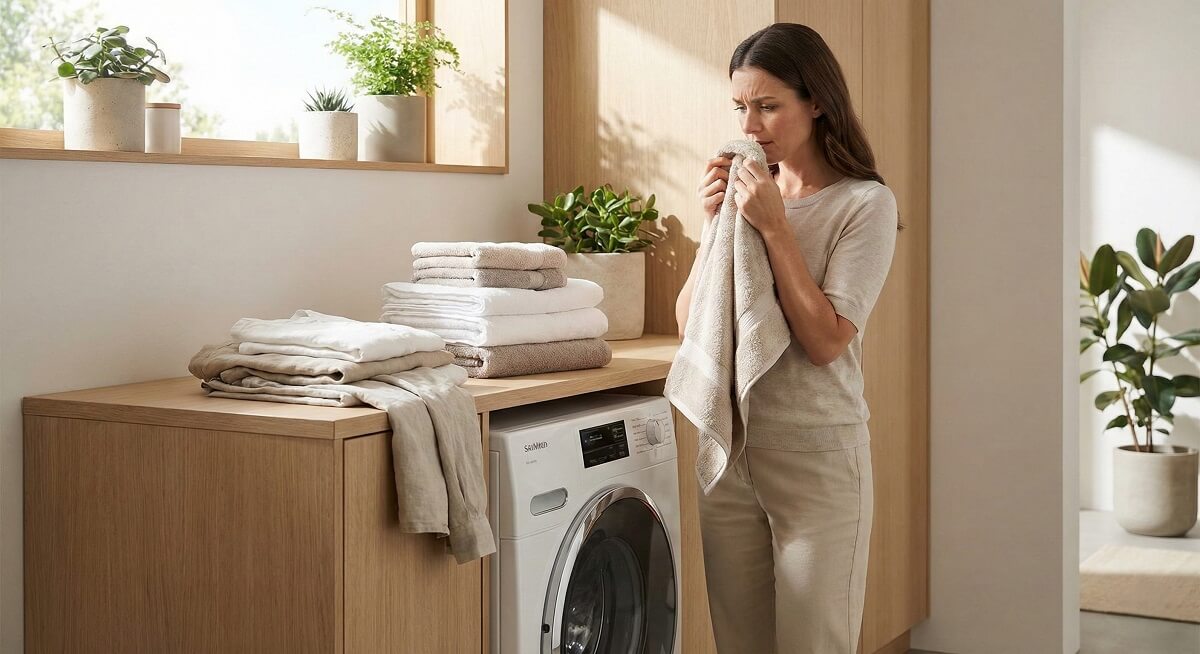
That musty smell on freshly washed clothes comes from bacteria and mold thriving in warm, damp conditions. The most common culprits: leaving wet laundry sitting too long, a dirty washing machine, using too much detergent, or not drying clothes completely. The fix depends on your specific situation.
Quick fix for clothes that already smell: Rewash with 1 cup of white vinegar (skip the detergent) and dry completely—preferably in the sun. If the problem keeps happening, you likely need to clean your washer or adjust your laundry habits. (For related issues, see our guide on .)
According to laundry care experts, wet clothes shouldn’t sit in the washer for more than 8-12 hours before bacterial growth accelerates. This guide covers the science behind the smell, helps you identify your specific cause, and gives you step-by-step fixes that actually work.
Quick Diagnosis: What’s Causing Your Musty Laundry?
| Symptom | Likely Cause | Solution |
|---|---|---|
| All laundry smells musty | Dirty washing machine | Clean your washer (see below) |
| Only towels smell | Thick fabric + incomplete drying | Wash hot, dry completely |
| Only gym clothes smell | Synthetic fabric trapping bacteria | Pre-soak in vinegar |
| Smell appears after drying | Clothes sat wet too long | Move to dryer within 1-2 hours |
| Smell returns after storage | Not fully dry before folding | Ensure bone-dry before storing |
The Science: Why Wet Clothes Start to Smell
Bacteria + Sweat = That Sour Smell
When you wear clothes, bacteria from your skin transfer to the fabric along with sweat and body oils. These bacteria feed on the organic compounds in your sweat, and their digestive byproducts create that familiar sour, musty odor. The warmer and damper the environment, the faster they multiply.
According to research published in Applied and Environmental Microbiology, bacteria and fungi can survive for weeks to months on textiles—and under the right conditions, they actively grow rather than just survive.
How Fast Does the Smell Develop?
In warm, humid conditions (like inside a closed washer in summer), bacterial growth accelerates significantly within 8 hours. During cooler months, you might have up to 12 hours before odors set in. The timeline shortens if your laundry room is warm or if the clothes were particularly sweaty.
Why Some Fabrics Smell Worse Than Others
If your gym clothes smell worse than your cotton t-shirts, there’s a scientific reason. Research from Ghent University found that polyester clothing smells significantly more intense than cotton after exercise. The culprit? A bacteria called Micrococcus that thrives on synthetic fibers but struggles to grow on cotton.
Polyester’s hydrophobic (water-repelling) nature means sweat and odor compounds sit on the surface rather than being absorbed into the fiber. This creates the perfect environment for odor-causing bacteria to flourish.
The 6 Most Common Causes (And How to Fix Each One)
1. You Left Wet Clothes Sitting Too Long
The problem: Bacteria multiply rapidly in warm, damp, dark conditions—exactly what you get inside a closed washing machine. That forgotten load you left overnight? It’s been a bacteria incubator.
The fix: Move clothes to the dryer within 1-2 hours of the wash cycle ending. If you can’t be there when it finishes, set a timer on your phone or use your washer’s delay start feature so it finishes when you’re available.
If your clothes already smell: Rewash with 1 cup of white vinegar instead of detergent. The acetic acid in vinegar binds to volatile odor molecules and neutralizes them rather than just masking the smell. Dry completely afterward.
2. Your Washing Machine Is Dirty
The problem: Mold, mildew, and detergent residue build up inside your washer’s drum, hoses, and gaskets over time. Every load picks up some of that funk. If everything you wash comes out smelling musty, your machine is likely the source.
The fix: According to Whirlpool’s recommendation, clean your washing machine once per month or every 30 cycles. Run an empty hot water cycle with 2 cups of white vinegar or a washing machine cleaner tablet. Wipe down the door seal and leave the door open between loads to let the interior dry out.
3. You’re Using Too Much Detergent
The problem: More soap doesn’t mean cleaner clothes. Excess detergent doesn’t fully rinse out, leaving residue on your clothes and inside your machine. That residue becomes a breeding ground for bacteria and mold.
This issue is especially common with soft water, which requires less detergent to produce suds. If you see soap residue on clothes or notice your washer smells even after cleaning, you’re probably overdosing.
The fix: Use half the recommended amount and add more only if clothes aren’t coming clean. For high-efficiency (HE) washers, always use HE detergent—regular detergent produces too many suds and won’t rinse properly.
4. You’re Overloading the Washer
The problem: When clothes are packed too tightly, water can’t circulate and detergent can’t reach every surface. Some items don’t get properly cleaned, and none of them rinse thoroughly.
The fix: Fill the drum no more than two-thirds to three-quarters full. A good test: you should be able to fit your hand between the top of the clothes and the top of the drum. Give your laundry room to move.
5. Clothes Aren’t Drying Completely
The problem: Even slightly damp clothes will develop a musty smell once you fold them and put them away. The moisture gets trapped with nowhere to go, and bacteria start growing in the dark, enclosed space of your drawer or closet.
The fix: Make sure clothes are bone dry before folding or hanging. If line drying, give items plenty of space and airflow. The sun provides a bonus: according to research covered by The New York Times, UV rays have natural antibacterial properties that help eliminate odors.
For dryer users: run an extra 10-15 minutes if clothes feel even slightly cool to the touch. Thick items like towels and jeans need longer than lightweight fabrics.
6. You’re Storing Clothes Wrong
The problem: Folding clothes while they’re still warm from the dryer can trap residual moisture. Cramming too many items into drawers limits airflow and creates pockets where humidity builds up.
The fix: Let clothes cool completely before putting them away. Don’t overstuff drawers or closets—air circulation prevents moisture buildup. If your closet tends to be humid, a small dehumidifier or moisture absorber can help. (Related: for home appliances.)
DIY Remedies That Actually Work
| Solution | Best For | How to Use |
|---|---|---|
| White vinegar | General musty smell | 1 cup in wash cycle (skip detergent), then rewash normally |
| Baking soda | Stubborn odors | 1/2 cup added with your regular detergent |
| Hot water wash | Towels, whites, sturdy fabrics | Hottest setting the fabric can handle (check labels) |
| Sunlight | All fabrics | Line dry in direct sun for natural sanitizing |
| Borax | Heavy odors, hard water areas | 1/2 cup added with detergent |
| Oxygen bleach | Whites and color-safe items | Per package directions, effective odor eliminator |
Important: Vinegar and baking soda work differently. Vinegar neutralizes odors; baking soda absorbs them. Don’t add them at the same time—they’ll neutralize each other. Use vinegar first, then baking soda in a second wash if odors persist. For more cleaning tips using common household items, check our .
Special Cases
Why Towels Are the Worst Offenders
Towels are thick, absorbent, and have direct contact with your body—the perfect storm for musty smells. Their density means they hold moisture longer and take longer to dry completely, giving bacteria more time to multiply.
The fix: Wash towels separately on the hottest setting they can handle. Don’t fold them while still warm. Hang used towels to dry between uses rather than leaving them in a damp heap. Replace towels every 2-3 years if odors persist despite proper care. (Wondering ? Similar care principles apply to other household textiles.)
Gym Clothes and Activewear
Synthetic workout fabrics are engineered to wick moisture away from your skin—but that same design makes them odor magnets. Research shows polyester harbors more odor-causing Micrococcus bacteria than cotton, and that bacteria forms biofilms that are hard to remove with regular washing.
The fix: Pre-soak activewear in a solution of 1 cup vinegar per gallon of cool water for 30 minutes before washing. Turn items inside out to expose the sweatiest surfaces. Consider a sports-specific detergent formulated to break down oils and bacteria in synthetic fabrics.
Front-Loader Problems
Front-load washers are more prone to mold and mildew than top-loaders. The rubber door gasket creates an airtight seal that traps moisture after every wash, and water collects in the folds where you can’t see it.
The fix:
- Wipe the rubber gasket dry after every load—pull back the folds and check for standing water
- Always leave the door cracked open when not in use
- Run a hot empty cycle with vinegar or a washer cleaner monthly
- Pull out the detergent dispenser and clean it periodically
Preventing Musty Laundry: Quick Checklist
- Move clothes to dryer within 1-2 hours of wash cycle ending
- Clean your washing machine monthly (hot empty cycle with vinegar)
- Leave washer door open between loads
- Don’t overload—fill drum 2/3 to 3/4 full maximum
- Use correct detergent amount (less is often more)
- Ensure clothes are completely dry before storing
- Wash towels and gym clothes on hot when possible
- Wipe front-loader gasket after each use
Frequently Asked Questions
How long can wet clothes sit in the washer before they start to smell?
In warm conditions, 8 hours is the general limit before bacterial growth accelerates and odors develop. In cooler weather, you might have up to 12 hours. If you forgot a load overnight, give it a sniff—if it smells off, rewash with vinegar before drying.
Does rewashing remove the musty smell?
Usually, yes—but plain detergent alone may not be enough for stubborn odors. Add 1 cup of white vinegar to the wash cycle (without detergent), then run a second wash with your regular detergent. The vinegar neutralizes odor compounds rather than just masking them.
Is vinegar safe for all fabrics?
White vinegar is safe for most washable fabrics including cotton, polyester, and blends. Avoid using it on silk, wool, or delicate items with special finishes. It won’t damage your washing machine—in fact, it helps clean it.
Why do my clothes smell fine at first but musty after sitting in the closet?
They weren’t completely dry when you put them away. Even slight residual moisture gets trapped in enclosed spaces and creates the perfect environment for mildew. Always ensure clothes are bone dry and cool before folding or hanging.
Does hot water really make a difference?
Yes. According to WebMD, water at 140°F (60°C) or higher kills most bacteria and viruses. Hot water plus a 45-minute dryer cycle provides the most effective sanitization. Always check fabric labels—some materials can’t handle high heat.
Do fabric softeners cause musty smell?
They can contribute to the problem. Fabric softener leaves a coating on fibers that can trap bacteria and reduce absorbency (especially in towels). If you’re battling persistent odors, try skipping the fabric softener for a few weeks and see if things improve.
Why does my washing machine smell even though I clean it?
Buildup may exist in areas you can’t easily reach—behind the drum, in the pump, or deep in the rubber gasket folds. Try running multiple hot cleaning cycles in a row. For persistent issues, the machine may need professional cleaning or the gasket may need replacement.
Should I wash sweaty clothes immediately?
Ideally, yes—or at least hang them to dry before tossing in the hamper. Wet, sweaty clothes balled up in a dark laundry basket are a bacterial paradise. If you can’t wash right away, spread items out where air can circulate until laundry day. For more laundry tips, browse our .
Next Steps
Start with the most likely cause based on your symptoms, and work through the fixes one at a time. Most musty laundry problems can be solved with simple habit changes and a monthly washer cleaning routine. For more home care tips, browse our .
