


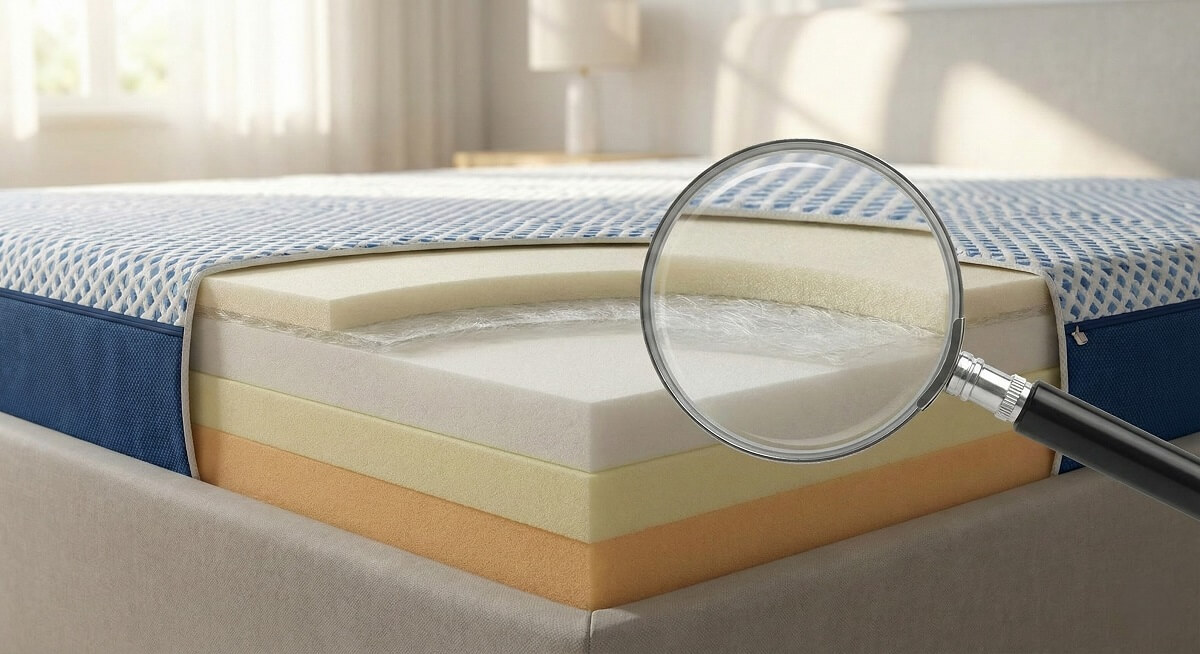
The short answer: No, current Nectar mattresses do not contain fiberglass. According to a statement from Resident Home (Nectar’s parent company), the brand transitioned away from fiberglass in 2022 and started using rayon-based fire barriers instead. From 2023 onward, all newly manufactured Nectar mattresses are confirmed fiberglass-free.
However, if you purchased a Nectar mattress before 2022, your model may contain fiberglass in the fire barrier beneath the cover. The key thing to remember: never remove your mattress cover regardless of when you bought it. Doing so voids your warranty and could expose internal materials.
This guide covers what Nectar uses instead of fiberglass, how to check if your mattress might have it, and what steps to take if you own an older model. If you’re new to mattress shopping, our can help you understand what to look for.
Quick Guide: Should You Be Concerned?
You Can Buy With Confidence If:
- You’re purchasing a new Nectar mattress in 2026
- You want a at a reasonable price
- You’re looking for a long trial period (365 nights) and lifetime warranty
Take Precautions If:
- You own a Nectar mattress purchased before 2022
- Your mattress cover shows signs of wear, holes, or damage
- You’ve previously removed or washed your mattress cover
What Nectar Officially Says About Fiberglass
Nectar’s parent company, Resident Home, provided a clear statement to Tom’s Guide about their materials:
“Like virtually every other major mattress manufacturer, Nectar did previously utilize fiberglass as a fire retardant because of its exceptional resistance to flames. Starting in 2022, Nectar transitioned away from utilizing fiberglass in favor of Rayon.”
The spokesperson added that while pinpointing the exact transition date at the product level is difficult, they “can confidently say that from at least 2023 forward all newly manufactured Nectar mattresses do not include fiberglass.”
This aligns with what the National Council on Aging (NCOA) reports in their expert-tested review: “All Nectar only sells 100% fiberglass-free mattresses made with CertiPUR-US-certified foams.”
Why Do Some Mattresses Have Fiberglass in the First Place?
Federal Fire Safety Requirements
All mattresses sold in the United States must meet the federal flammability standard known as 16 CFR 1633. This Consumer Product Safety Commission (CPSC) regulation requires mattresses to withstand a 30-minute open flame test without exceeding specific heat release limits.
To meet these standards, manufacturers must include some form of fire barrier. Options include:
- Fiberglass — Inexpensive and effective, but potentially problematic if exposed
- Rayon — Wood pulp-derived fiber, soft and safe
- Wool — Natural flame resistance, used in organic mattresses
- Treated cotton — Cotton with added flame retardant properties
- Chemical treatments (TCPP) — Used primarily in UK markets
Why Fiberglass Was Common
are particularly flammable, which historically made fiberglass an attractive option for budget and mid-range brands. It’s cheap, highly effective at containing flames, and doesn’t require expensive natural materials. When contained properly beneath a mattress cover, it poses no health risk during normal use.
The problems arise when consumers unknowingly remove or wash their mattress covers, releasing microscopic glass fibers into their homes.
Is Fiberglass in Mattresses Actually Dangerous?
Potential Health Risks When Exposed
If fiberglass particles escape from a damaged mattress cover, they can cause:
- Skin irritation: Itching, redness, and rash from contact with tiny glass fibers
- Respiratory problems: Coughing, wheezing, and throat irritation if particles are inhaled
- Eye irritation: Redness, tearing, and discomfort
- Home contamination: Particles can spread through HVAC systems and embed in furniture, clothing, and carpets
Context: When Risk Actually Occurs
Here’s the important context: fiberglass is only a problem if it escapes from the mattress. This typically happens when:
- Someone removes the mattress cover (often to wash it)
- The cover develops holes, tears, or significant wear
- Pets or sharp objects damage the cover
If your mattress cover remains intact, fiberglass inside poses minimal risk. That said, many consumers prefer to avoid fiberglass entirely—which is why Nectar’s transition to rayon is significant.
What Does Nectar Use Instead of Fiberglass?
Rayon Fire Barriers
According to Resident Home’s statement, current Nectar mattresses use “Rayon (or a Rayon and Polyester blend) to meet federal flammability standards.”
About rayon as a fire barrier:
- Derived primarily from wood pulp (a semi-synthetic fiber)
- Known for softness and versatility
- Effective at preventing fire spread
- Does not shed harmful particles like fiberglass
- Meets the same federal safety standards
Natural Wool (Awara Line)
Resident Home also owns the Awara brand, which uses natural wool as its fire barrier. Wool is naturally flame-resistant and a popular choice in . However, Awara mattresses carry a higher price point than the standard Nectar lineup.
Current Nectar Mattress Models (2026)
All current Nectar mattresses share these characteristics: fiberglass-free construction, rayon-based fire barriers, and CertiPUR-US certified foams.
| Model | Type | Queen Price (Sale) | Fire Barrier |
|---|---|---|---|
| Nectar Classic Memory Foam | All-foam | ~$349-649 | Rayon |
| Nectar Classic Hybrid | Foam + coils | ~$469 | Rayon |
| Nectar Premier Memory Foam | All-foam | ~$549-1,297 | Rayon |
| Nectar Premier Hybrid | Foam + coils | ~$799 | Rayon |
| Nectar Luxe Hybrid | Foam + coils | ~$1,249 | Rayon |
| Nectar Ultra | Premium | ~$1,799-1,999 | Rayon |
Prices reflect typical sale pricing as of February 2026. Nectar runs frequent promotions, so check current offers.
What CertiPUR-US Certification Actually Covers
Nectar advertises CertiPUR-US certification, but it’s important to understand what this means:
- What it covers: The flexible polyurethane foam used in the mattress
- What it guarantees: Foam is made without harmful chemicals like formaldehyde, prohibited phthalates, and certain flame retardants
- What it doesn’t cover: Fire barrier materials, covers, or other non-foam components
This is why fiberglass questions persisted even for “certified” mattresses—the certification never addressed fire barriers specifically. Nectar’s move to rayon addresses this gap.
How to Check If Your Mattress Contains Fiberglass
Check the Label
Look for the law tag (usually on the side or bottom of your mattress) and search for:
- Terms like “glass fiber,” “glass wool,” or “silica”
- Material composition percentages
- Warnings about cover removal
Contact the Manufacturer
If the label is unclear, contact customer service directly. For Nectar:
- Phone: 888-863-2827
- Email: [email protected]
Ask specifically about the fire barrier material used in your mattress model.
Warning Signs That May Indicate Fiberglass
- Very low price point (queen under $400)
- Strong “do not remove cover” warnings without explanation
- Vague or evasive responses about materials
- Purchase date before 2022 (for Nectar specifically)
What to Do If You Already Own a Nectar Mattress
If You Bought Your Nectar in 2023 or Later
Your mattress should be fiberglass-free based on Nectar’s confirmed timeline. Still follow these best practices:
- Never remove the mattress cover
- Use a quality
- Spot-clean only if needed
If You Bought Your Nectar Before 2022
Your mattress may contain fiberglass in the fire barrier. Here’s what to do:
- Inspect the cover — Look for holes, tears, or significant wear
- If damaged: Consider replacing the mattress. Do not attempt to repair or patch.
- If intact: Add a fitted, waterproof mattress protector as an extra barrier
- Never remove or wash the cover — This is the most common cause of fiberglass exposure
If You’ve Been Exposed to Fiberglass
- Wash affected skin thoroughly with soap and cool water
- Vacuum the area using a vacuum with a HEPA filter
- Wash exposed clothing separately in warm water
- For significant contamination, consider professional cleaning services
- If symptoms persist, consult a healthcare provider
Frequently Asked Questions
Do Nectar mattresses have fiberglass?
No. Current Nectar mattresses manufactured from 2023 onward do not contain fiberglass. The company transitioned to rayon-based fire barriers starting in 2022. Older models (pre-2022) may have contained fiberglass.
Is it safe to sleep on a Nectar mattress?
Yes. Nectar mattresses use CertiPUR-US certified foams and rayon fire barriers that meet federal safety standards. They’re safe for normal use. Just don’t remove the cover.
Can I remove my Nectar mattress cover to wash it?
No. Nectar explicitly states that removing the cover voids your warranty. The cover is not designed to be removed. Use a separate mattress protector that you can wash instead.
What should I do if my older Nectar mattress might have fiberglass?
Keep the cover intact, add a mattress protector, and inspect regularly for damage. If the cover is damaged, consider replacing the mattress rather than risking exposure.
What are the symptoms of fiberglass exposure?
Common symptoms include skin itching and rash, eye irritation, coughing, and throat soreness. If you experience these after disturbing a mattress cover, wash affected areas and vacuum with a HEPA filter.
How long do Nectar mattresses last?
Nectar estimates 5.5 to 8.5 years depending on use and care. The Forever Warranty covers manufacturing defects for as long as you own the mattress.
What certifications should I look for in a safe mattress?
Look for CertiPUR-US (foam safety), GREENGUARD Gold (low emissions), GOTS or GOLS (organic materials), and OEKO-TEX Standard 100. Note that CertiPUR-US only covers foam, not fire barriers.
Are there fiberglass-free alternatives to Nectar?
Yes. Saatva, Avocado, and Purple are known for fiberglass-free construction. Organic mattresses using wool fire barriers (like Avocado and Awara) are also good options, though typically at higher price points. Check our for more options.
Bottom Line
If you’re in 2026, current Nectar models are fiberglass-free and offer solid value with their 365-night trial and lifetime warranty. For existing owners of older Nectar mattresses, the key is simple: keep your cover intact and use a mattress protector.
Check current Nectar prices and promotions on Nectar’s official website or at major retailers like Amazon.
