


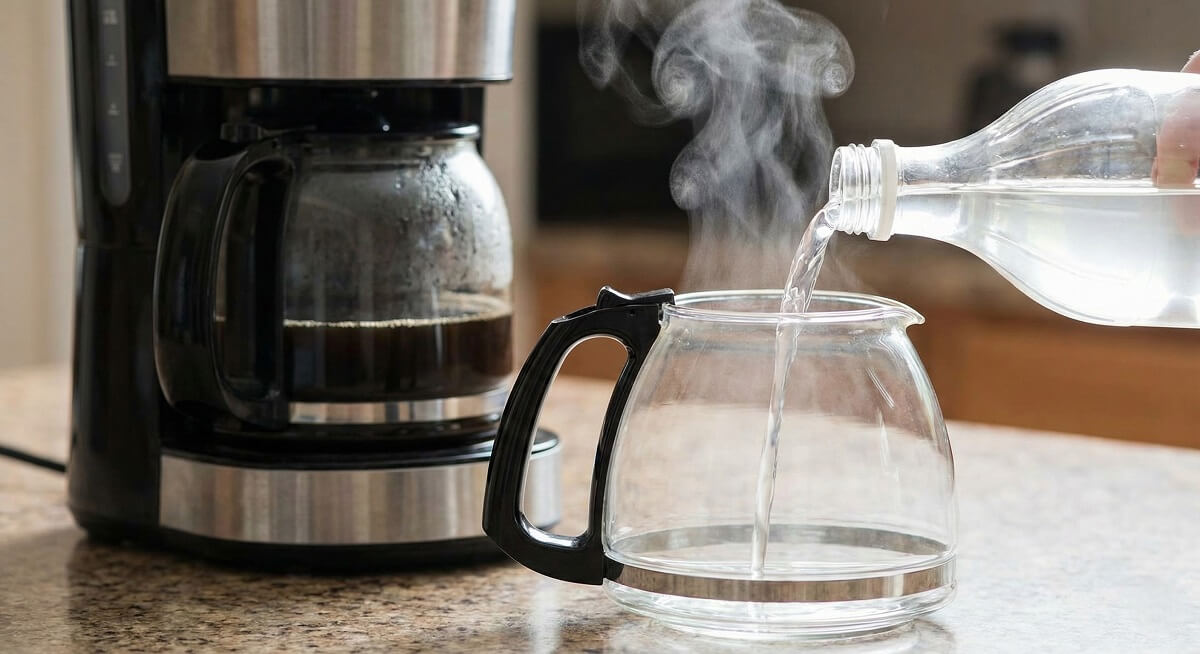
White distilled vinegar mixed with equal parts water effectively removes mineral buildup, coffee oils, and bacteria from your coffee maker. Run this solution through a brewing cycle, let it sit for 30 minutes, then rinse with 2-3 cycles of fresh water. The whole process takes about an hour and costs roughly 40 cents.
This method works for drip coffee makers, , and most other brewing systems. If you use your machine daily, clean it once a month. For occasional use, every 2-3 months should keep things running smoothly.
One important note before you start: always unplug your machine before cleaning removable parts, and never skip the rinse cycles. Leftover vinegar will definitely affect your coffee’s taste.
Should You Use Vinegar to Clean Your Coffee Maker?
This Method Works Well If:
- You have white distilled vinegar at home
- You own a standard drip or single-serve coffee maker
- You want the most affordable cleaning solution
- Your machine’s manual doesn’t specifically prohibit vinegar
- You don’t mind the temporary vinegar smell during cleaning
Consider Other Options If:
- Your manufacturer explicitly warns against vinegar (Jura, Moccamaster, some Breville models)
- You have a high-end espresso machine with specialized descaling needs
- You’re concerned about warranty coverage
- You prefer a ready-to-use commercial solution
Why Your Coffee Maker Needs Regular Cleaning
That reservoir sitting on your counter is doing more than holding water. According to an NSF International study, about half of all coffee maker reservoirs contain yeast and mold. Even more concerning, roughly one in ten tested positive for coliform bacteria.
The warm, moist environment inside your coffee maker creates ideal conditions for bacterial growth. The study found that coffee reservoirs actually had higher germ counts than both bathroom door handles and toilet seats.
Beyond the health concerns, mineral deposits from your tap water build up inside the machine over time. These deposits slow down brewing, reduce water temperature, and make your coffee taste flat or bitter. Coffee oils also leave a residue that eventually turns rancid, adding off-flavors to every cup.
Regular cleaning addresses all these issues. If you’re also looking to upgrade your morning routine, our cover everything from grinding beans to choosing the right brew method.
Signs Your Coffee Maker Needs Cleaning Right Now
Your machine will tell you when it needs attention. Watch for these warning signs:
- Bitter or stale-tasting coffee — Even with fresh beans, dirty machines produce off-flavors
- Slower brewing times — Mineral buildup restricts water flow
- Unusual sounds — Gurgling or sputtering indicates blockages
- White or chalky deposits — Visible scale on the carafe or inside the reservoir
- Unpleasant odors — Musty smells mean mold or bacteria
- Coffee isn’t hot enough — Scale insulates the heating element
- Descaling light is on — If your machine has one, don’t ignore it
Noticing any of these? Time to grab that vinegar.
What You’ll Need
The supplies are simple and inexpensive:
- White distilled vinegar — The standard 5% acidity found in grocery stores. Don’t use cleaning vinegar (6% acidity) as it can damage rubber seals.
- Fresh water — Filtered is ideal if you have hard water
- Dish soap — For washing removable parts
- Soft cloth or sponge — For exterior cleaning
- Optional: soft brush — Helpful for reaching crevices around the filter basket
Cost Comparison: Vinegar vs. Commercial Descalers
| Method | Cost Per Clean | Effectiveness | Notes |
|---|---|---|---|
| White vinegar | ~$0.40 | High | Strong smell, may require extra rinsing |
| Keurig descaling solution | ~$10-12/bottle | High | Fewer cycles needed, brand recommended |
| Generic descaler tablets | ~$0.83 | High | Convenient, no measuring |
| Baking soda | ~$0.25 | Medium | Better for odors than mineral buildup |
| Lemon juice | ~$0.50 | Medium | Pleasant smell, less effective on heavy scale |
Step-by-Step: Cleaning a Drip Coffee Maker with Vinegar
Step 1: Prep Your Machine
Unplug the coffee maker and let it cool if you’ve used it recently. Remove the carafe, filter basket, and any other removable parts. Dump out old water and discard any used coffee grounds or filters.
Step 2: Wash Removable Parts
Hand wash the carafe, filter basket, and lid with warm soapy water. A soft brush helps scrub away stubborn coffee stains. Rinse thoroughly and set aside to dry.
Step 3: Mix the Vinegar Solution
Combine equal parts white distilled vinegar and water. For a standard 12-cup coffee maker, that’s about 6 cups of each. If you’re dealing with heavy mineral buildup, increase to 2 parts vinegar to 1 part water.
Pour the solution into the water reservoir until it’s full.
Step 4: Run a Partial Brew Cycle
Place the empty carafe on the warming plate (no coffee or filter needed). Start a regular brew cycle. Halfway through—when about half the solution has brewed—turn off the machine.
Let it sit for 30 minutes. This allows the vinegar to work on deposits inside the heating element and water lines.
Step 5: Complete the Cycle and Drain
Turn the machine back on and let the remaining solution brew through. Once finished, carefully pour out the hot vinegar solution from the carafe.
Take a look inside the reservoir and carafe. You may see loosened mineral flakes—that’s the scale breaking away.
Step 6: Rinse Thoroughly
Fill the reservoir with fresh, clean water. Run a complete brew cycle. Repeat this at least two more times, or until you can’t smell or taste any vinegar.
Pro tip: Taste a small amount of the brewed water after each rinse cycle. If it still has a vinegar tang, run another cycle.
Step 7: Clean the Exterior
Wipe down the outside of the machine with a damp cloth. Pay attention to the warming plate, which often collects drips and residue. Dry everything thoroughly before plugging the machine back in.
Reassemble all parts and you’re ready for fresh coffee.
How to Clean a Keurig with Vinegar
Single-serve machines like Keurigs need the same care as drip brewers, with a few specific steps.
Before You Start
Remove any K-cup from the holder. Take out the water filter if your model has one—otherwise it will absorb vinegar and affect future brews. Empty the water reservoir completely.
The Cleaning Process
- Fill the reservoir halfway with white distilled vinegar
- Fill the rest with fresh water (50/50 ratio)
- For newer models with a descale mode, press and hold the 8 oz and 12 oz buttons (or 10 oz and 12 oz) for 3 seconds until the light turns solid
- Place a large mug on the drip tray
- Run brew cycles on the largest cup setting without inserting a K-cup
- Empty the mug after each cycle and repeat until the reservoir is empty
- Let the machine sit for 30 minutes
- Fill the reservoir with fresh water only
- Run at least 3-4 rinse cycles to flush out all vinegar
A Note About Keurig’s Official Stance
Keurig recommends their own descaling solution and notes that using other products may affect warranty coverage. The official solution is more expensive (around $10-12) but works faster with fewer rinse cycles. If your Keurig is still under warranty and you’re concerned, stick with the branded descaler.
For more kitchen appliance care tips, check out our .
Cleaning Other Coffee Maker Types
Single-Serve Pod Machines (Non-Keurig)
Most single-serve brewers follow a similar process to Keurigs. Check your manual first, as some brands have specific requirements. Nespresso machines, for example, work best with their own descaling kits due to the high-pressure brewing system.
French Press
Disassemble the plunger and soak all parts in a solution of warm water and a tablespoon of vinegar for 15-20 minutes. Scrub the mesh filter thoroughly—coffee oils love to hide in those tiny holes. Rinse well before your next brew.
Espresso Machines
Most home espresso machines require specialized descaling solutions. Using vinegar in these high-pressure systems can damage internal components and often voids the warranty. Check your manual or contact the manufacturer for approved cleaning methods.
Vinegar Alternatives That Work
Not a fan of the vinegar smell? Here are other options:
Baking Soda
Mix 1/4 cup baking soda with 1 cup warm water. Run through a brew cycle, let sit 30 minutes, then rinse. Better for removing odors and light stains than heavy mineral deposits.
Lemon Juice
Use equal parts lemon juice and water. The citric acid breaks down scale while leaving a fresher scent than vinegar. Works well for light to moderate buildup.
Citric Acid Powder
Dissolve 1-2 tablespoons of citric acid in a full reservoir of water. Effective as vinegar without the strong smell. Available at grocery stores in the canning section.
Commercial Descalers
Products like Urnex, Dezcal, and brand-specific solutions are formulated for coffee equipment. They cost more but work quickly and are warranty-safe for most machines. See our for product recommendations.
How Often Should You Clean Your Coffee Maker?
Your cleaning schedule depends on two factors: how often you brew and your water hardness.
General Guidelines
- Daily users: Deep clean with vinegar monthly
- A few times per week: Every 2-3 months
- Occasional use: Every 3-6 months
Water Hardness Matters
According to the U.S. Geological Survey, about 85% of Americans have hard water. Cities in the Southwest are hit hardest—Las Vegas, Phoenix, and San Antonio all have water hardness levels of 15-20+ grains per gallon (gpg).
Hard water means more mineral buildup. If you live in a hard water area, clean more frequently. Not sure about your water? Check your local utility’s water quality report or look for white residue on faucets and showerheads—that’s a clear sign of hard water.
Daily Maintenance
Between deep cleans, keep things fresh by:
- Emptying the reservoir after each use
- Leaving the lid open to let the interior dry
- Washing the carafe with soap and water daily
- Replacing water filters as recommended (usually every 2 months)
Common Mistakes to Avoid
- Using cleaning vinegar (6% acidity) — Stick with regular white distilled vinegar at 5%. The higher acidity can damage rubber seals and gaskets over time.
- Not rinsing enough — Two cycles is the minimum. Three or four is better. Nobody wants vinegar-flavored coffee.
- Forgetting the carafe and filter basket — These parts need regular washing too, not just the internal system.
- Waiting until there’s a problem — By the time you taste something off, buildup has been developing for weeks.
- Using vinegar on the wrong machines — Some manufacturers explicitly prohibit it. When in doubt, check your manual.
- Leaving vinegar solution overnight — Extended contact can damage components. Stick to 30-60 minutes maximum.
Will Vinegar Void Your Warranty?
It depends on the brand. Some manufacturers explicitly warn against vinegar:
- Jura: Vinegar use voids the warranty
- Moccamaster: Warns that vinegar “reacts chemically with the copper heating element” and causes lasting bad taste
- Breville: Some models specify descaling solution only
- Keurig: Recommends their solution for warranty protection
For basic drip coffee makers from brands like Mr. Coffee, Hamilton Beach, and Cuisinart, vinegar is generally fine. But always check your specific model’s manual before cleaning.
If warranty coverage matters to you and your machine cost more than $100, consider using the manufacturer’s recommended descaler.
Frequently Asked Questions
Will cleaning with vinegar affect the taste of my coffee?
Only if you don’t rinse thoroughly. Run at least 2-3 fresh water cycles until no vinegar smell remains. Taste a small amount of water from the final rinse to confirm it’s clean.
Can I use apple cider vinegar instead of white vinegar?
White distilled vinegar works better. Apple cider vinegar has a stronger lingering scent and may stain light-colored plastic parts. It’ll work in a pinch, but white is the standard choice.
How long should I let vinegar sit in my coffee maker?
30 minutes is the sweet spot for most machines. For heavy buildup, you can extend to an hour. Don’t leave it overnight—prolonged exposure can damage seals.
Is vinegar safe for Keurig machines?
It works, but Keurig officially recommends their own descaling solution. Using vinegar may affect warranty claims. If your machine is new or still under warranty, consider using the branded product.
What if my coffee still tastes bad after cleaning?
The machine might not be the problem. Check if your coffee beans are stale (they lose freshness 2-4 weeks after roasting). Also try filtered water—tap water minerals and chlorine can affect taste even in a clean machine.
Can I use cleaning vinegar (6% acidity) instead of regular white vinegar?
Stick with standard 5% white distilled vinegar. The higher acidity of cleaning vinegar can degrade rubber gaskets and seals over time, potentially causing leaks.
How do I know if my water is hard?
Check your local water utility’s report (usually available online). Hard water signs include white residue on faucets, spots on dishes after washing, and soap that doesn’t lather well. You can also buy inexpensive test strips at hardware stores.
Does using vinegar void my warranty?
Some brands say yes (Jura, Moccamaster, certain Breville models). Others don’t address it specifically. When in doubt, check your manual or contact customer support before cleaning.
Keep Your Coffee Maker Running Strong
A monthly vinegar cleaning takes less than an hour and costs practically nothing. Your coffee will taste better, your machine will last longer, and you won’t be serving up a side of mold with your morning brew.
Mark your calendar, set a phone reminder, or just clean on the first of each month. Your taste buds will thank you.
Looking to upgrade your coffee setup? Browse our for recommendations on coffee makers, grinders, and accessories.
