


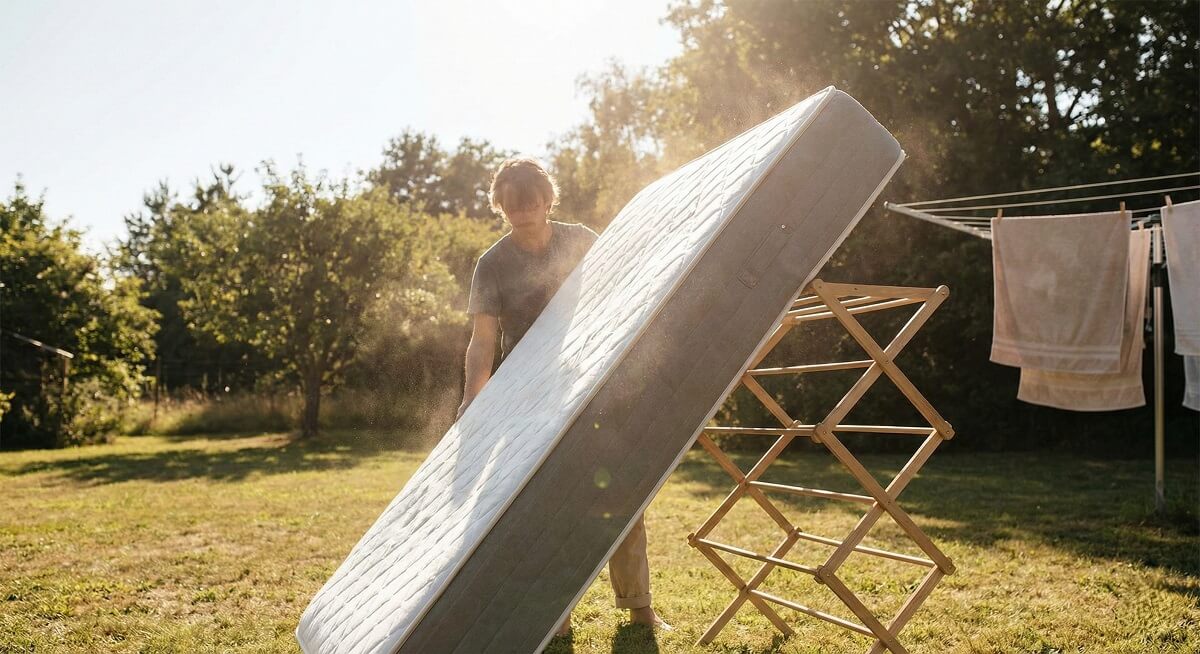
If your mattress is wet, the most effective recovery method combines immediate towel extraction, wet/dry vacuum suction, and continuous airflow from fans and a dehumidifier. This three-part approach removes surface moisture, pulls water from interior foam layers, and prevents the mold growth that starts within 24-48 hours according to EPA mold prevention guidelines.
The timeline depends on how wet your mattress got. Light dampness from a spilled drink dries in 8-12 hours with proper airflow. Heavy saturation from a plumbing leak or flood requires 24-48 hours of continuous drying. take longer than innerspring models because dense foam holds moisture in ways coil systems don’t.
DIY drying costs virtually nothing if you already own fans and towels. Renting a wet/dry vacuum runs $20-40 per day at Home Depot or Lowe’s. Professional water restoration services charge $200-800 for mattress-specific work, with costs climbing toward $1,400-6,400 for full bedroom restoration according to HomeAdvisor’s 2026 cost data. Handle clean water spills yourself. Call professionals for sewage contamination or floodwater.
Before you start, check what got your mattress wet. Memory foam can’t handle high heat without warping. Floodwater and sewage contamination mean immediate replacement per FEMA guidelines—no amount of drying makes these mattresses safe to sleep on again. Check your before applying heat or chemicals, as most manufacturers void coverage for water damage restoration attempts.
Quick Assessment: DIY vs Professional
When You Can DIY:
- Clean water source (spill, leak, pet accident)
- Caught it within the first 6-12 hours
- Wet area covers less than 50% of mattress surface
- No musty smell or visible mold spots yet
- Mattress is less than 5 years old
Call a Professional If:
- Floodwater or sewage contamination
- Already smells musty or shows black, green, or white mold spots
- Wet for more than 24 hours before you discovered it
- You lack equipment (wet/dry vacuum, fans, dehumidifier)
- Mattress is 8+ years old—replacement may cost less than restoration
- Previous mold issues in your home
What Causes Mattress Water Damage (And Why Time Matters)
Common Causes
Roof leaks and plumbing failures account for most mattress water damage. A slow leak behind your bedroom wall can saturate a mattress before you notice the problem. Burst pipes create immediate flooding that soaks everything in minutes.
Spilled drinks, pet accidents, and cleaning mishaps represent smaller-scale incidents that are easier to handle. Overusing a steam cleaner or carpet cleaner near your bed pushes more moisture into the mattress than the equipment can extract.
Condensation from improperly stored mattresses creates hidden dampness. If you stored a mattress in a basement or garage wrapped in plastic, moisture gets trapped against the fabric and can’t evaporate.
The 48-Hour Mold Deadline
According to the EPA’s mold prevention guidelines, drying wet materials within 24-48 hours prevents mold growth in most cases. Here’s what happens on that timeline:
- 0-12 hours: Water sits in foam layers but mold spores haven’t activated yet. This is your best window for complete recovery.
- 12-24 hours: Moisture creates ideal conditions for mold. Spores begin germinating in warm, damp areas.
- 24-36 hours: Visible mold colonies can appear on fabric surfaces. Interior foam layers may have hidden growth.
- 48+ hours: Mold establishes throughout mattress layers. Musty smell becomes noticeable. Health risks increase substantially.
Mold in mattresses creates concentrated exposure during the 6-8 hours you sleep each night. The CDC reports that mold exposure causes stuffy nose, wheezing, coughing, and eye irritation in otherwise healthy people, with severe reactions possible for those with asthma or compromised immune systems.
How to Dry a Mattress: 5-Step Process
Step 1: Extract Surface Water Immediately (0-15 Minutes)
Strip all bedding the moment you discover wetness. Sheets, mattress protectors, and blankets need washing separately on the hottest cycle your washer allows. Leaving them on the mattress traps moisture underneath.
Use the towel press method for initial extraction. Lay dry bath towels over wet areas and press down with your full body weight. This pushes water up into the towels rather than deeper into the foam. Replace towels as they become saturated—you’ll likely need 6-10 towels for a significant spill.
Blot instead of rubbing. Rubbing spreads the wet area and forces liquid deeper into foam layers. Press straight down, lift the towel, move to a dry section, and repeat.
Step 2: Deep Extraction with Wet/Dry Vacuum (15-30 Minutes)
A wet/dry shop vacuum is essential for removing water that towels can’t reach. Standard household vacuums aren’t built for liquid and will damage internal components if you try.
Budget-friendly wet/dry vacuums start around $50-100, with options from Amazon Basics, Craftsman, and Dirt Devil available at major retailers. Renting makes sense for one-time emergencies—expect to pay $20-40 per day at Home Depot or Lowe’s.
Use slow, overlapping passes across wet areas. Move the vacuum head at roughly the speed you’d vacuum carpet—about 1 foot per second. Fast passes don’t give the suction time to pull moisture from foam.
Make multiple passes until the vacuum stops pulling up water. The first pass removes obvious moisture. The second and third extract liquid from deeper layers. You’ll know you’re done when the vacuum sound changes—it gets higher-pitched when it’s only sucking air instead of water.
Step 3: Apply Moisture Absorbers (30 Minutes – 4 Hours)
Baking soda absorbs roughly its own weight in moisture under ideal conditions, though effectiveness varies with humidity levels. Sprinkle a liberal coating across all wet areas—you’ll need 1-2 standard boxes for a queen-size mattress.
Let the baking soda sit for at least 4 hours. Overnight works even better. The sodium bicarbonate pulls moisture from the mattress surface while neutralizing odors that develop from dampness.
Vacuum up all baking soda before moving to the airflow stage. Any residue left behind will feel gritty under sheets and can irritate skin.
For extreme saturation, clay-based cat litter provides stronger absorption than baking soda. Spread a thin layer over wet areas and remove it before clumping occurs—usually within 2-3 hours. This approach works for emergency situations but creates more mess than baking soda.
Don’t use rice (absorption capacity is too low to make a difference) or salt (can damage mattress fabric and leave stains).
Step 4: Maximize Airflow (8-48 Hours Continuous)
Position fans 2-3 feet away from wet areas, aimed directly at the mattress surface. Box fans move more air than oscillating models, making them more effective for drying. You want constant, focused airflow rather than gentle circulation.
Set up a dehumidifier in the same room with doors and windows closed. Target humidity below 50%—most dehumidifiers display current room humidity on their control panel. Lower humidity pulls moisture from the mattress into the air, where the dehumidifier removes it.
Prop the mattress vertically against a wall if possible. Laying it flat traps moisture in bottom foam layers where airflow can’t reach. If vertical positioning isn’t practical, lean one edge on your box spring or a chair so air can circulate underneath.
Open windows for cross-ventilation only if outside humidity is lower than inside humidity. In humid summer weather, outside air adds moisture to your room instead of removing it. Check weather conditions before opening windows.
Run fans and dehumidifiers continuously until drying is complete. Shutting equipment off overnight extends total drying time by 12-24 hours because moisture redistributes through foam layers when airflow stops.
Step 5: Verify Complete Dryness Before Using
Press your hand firmly against all areas of the mattress, especially the center and edges where foam is thickest. Completely dry mattresses feel room temperature. Damp areas feel cool or slightly clammy against your palm.
Smell the entire surface and sides. Any musty or mildew odor means moisture remains inside even if the surface feels dry. Interior foam layers hold water longer than exterior fabric.
Look for discoloration or watermarks that might indicate trapped moisture. Yellow or brown staining suggests water is still present in deeper layers.
Typical drying times:
- Light surface dampness (spilled drink): 8-12 hours
- Moderate saturation (small leak): 18-24 hours
- Heavy saturation (flood, burst pipe): 24-48 hours
- Memory foam (any level): Add 12-24 hours to above estimates
Sleeping on a damp mattress accelerates mold growth. Your body heat creates the warm, moist environment that mold spores need to colonize. If you’re unsure whether drying is complete, wait another 12 hours.
Mattress Type-Specific Drying Instructions
Memory Foam Mattresses
Never use hair dryers, heating pads, or direct sunlight on hot days when drying memory foam. Heat causes permanent warping and triggers off-gassing of chemicals used in foam manufacturing. Warped memory foam creates uncomfortable pressure points that won’t return to original shape. For routine maintenance of memory foam, check our .
Memory foam requires 24-48 hours of drying time even for moderate wetness because its dense cellular structure traps moisture. Standard polyurethane foam used in cheaper mattresses dries faster than high-density memory foam found in premium models.
Vertical drying is especially important for memory foam. Laying it flat during drying keeps the bottom third of the mattress compressed, preventing airflow from reaching interior layers.
Latex Mattresses
Follow similar precautions as memory foam—avoid high heat that can break down latex structure. Natural latex is more sensitive to heat damage than synthetic latex blends.
Latex generally dries faster than memory foam because its open-cell structure allows better air circulation. Expect 18-36 hours for thorough drying depending on saturation level.
Gentle morning sunlight won’t damage latex the way midday summer heat will. If outdoor drying makes sense for your situation, do it before 10 AM or after 4 PM when temperatures are moderate.
Innerspring Mattresses
Steel coils develop rust when they stay wet for extended periods. Rust weakens coil structure and can eventually poke through fabric layers. Most innerspring mattresses wrap coils in fabric or foam that provides some rust protection, but this protection fails when saturation is heavy.
The advantage of innerspring construction is faster drying—typically 12-24 hours for complete moisture removal. Air moves freely through the coil system in ways it can’t through solid foam.
Moderate heat from fans won’t damage innerspring mattresses the way it damages foam. You can use more aggressive airflow techniques without worrying about material degradation.
Flip the mattress if your model is double-sided. This exposes both fabric surfaces to air and prevents moisture from settling in one area.
Hybrid Mattresses
Hybrid mattresses combine innerspring coils with foam comfort layers. Follow the most conservative drying guidelines—treat it like memory foam even though it has coils inside.
The foam layers prevent you from using high heat, while the coils create rust risk if drying takes too long. This combination means you need efficient extraction methods (wet/dry vacuum) followed by patient, extended airflow drying.
Check manufacturer specifications if available. Some hybrid models use rust-resistant coatings on coils or waterproof barriers between foam and springs that affect drying strategy.
What NOT to Do When Drying a Mattress
These common mistakes slow drying, cause permanent damage, or create health hazards:
- Using a hair dryer or heat gun: Concentrating heat in one area creates warm moisture pockets that accelerate mold growth. Surface heat doesn’t reach interior foam where most water hides.
- Laying it flat during drying: Gravity pulls moisture to the bottom layers where it stays trapped. No amount of surface airflow reaches this water.
- Covering it with plastic: Plastic prevents evaporation—the entire point of airflow drying. Some people think plastic “protects” a drying mattress, but it creates the equivalent of a moisture greenhouse.
- Adding fabric freshener before the mattress is dry: Scented sprays mask the musty smell without solving the moisture problem. You’re training yourself to ignore the warning signal that indicates continued dampness.
- Putting sheets back on too early: Even a thin fitted sheet traps enough moisture to extend drying time by hours. The mattress needs to breathe during the entire drying process.
- Skipping the vacuum step: Towels only remove surface moisture. Without vacuum extraction, interior foam stays wet even when the top feels dry.
- Trying to use a clothes dryer: Mattresses don’t fit in residential dryers. Commercial dryers might accommodate a mattress but the heat and tumbling action will destroy foam and fabric structure.
When Professional Restoration Is Worth the Cost
What Professionals Do Differently
Commercial-grade dehumidifiers remove 10 times more moisture per hour than consumer models you can buy at Home Depot. This equipment cuts drying time substantially and reaches deeper moisture that household fans can’t address.
Thermal imaging cameras detect hidden moisture in areas that feel dry to touch. The camera shows temperature differences that indicate water presence—essential for confirming complete drying before you put sheets back on.
Antimicrobial treatments prevent mold from establishing during the drying process. Professional services apply these treatments to high-risk areas where moisture might persist longer than expected.
Ozone generators eliminate odors that develop from dampness. Ozone molecules break down organic compounds that create musty smells, though you can’t stay in the room during ozone treatment due to respiratory irritation.
Moisture meters provide objective measurements of water content in materials. Professionals use these devices to verify dryness levels meet industry standards before considering the job complete.
Cost Breakdown
Initial inspection typically costs $0-100, with many restoration companies waiving the fee if you hire them for the work. The inspection identifies moisture extent and determines whether restoration makes sense compared to replacement.
Mattress-specific restoration services run $200-800 depending on mattress size, contamination type, and whether mold is already present. Full bedroom restoration that includes carpet, walls, and furniture can reach $1,400-6,400 according to HomeAdvisor’s 2026 cost data.
Factors affecting cost include mattress size (king costs more than twin), water category (clean vs. contaminated), and mold presence (requires additional remediation). Geographic location matters too—services in major cities charge 20-30% more than rural areas.
Homeowner’s and renter’s insurance policies may cover water damage restoration depending on the cause. Burst pipes and sudden plumbing failures typically qualify for coverage. Gradual leaks from poor maintenance often don’t. Check your policy before filing a claim—some water damage claims increase future premiums even if the current claim is approved.
Finding IICRC-Certified Services
IICRC (Institute of Inspection, Cleaning and Restoration Certification) certification means technicians completed formal training in water damage restoration and passed industry exams. This certification isn’t legally required but indicates professional competence.
Verify credentials by asking for the technician’s certification number and checking it against the IICRC online directory. Legitimate certified professionals provide this information immediately without hesitation.
Questions to ask before hiring:
- Do you have current IICRC certification in water damage restoration?
- Will you provide a written estimate before starting work?
- What equipment will you use for this specific job?
- How will you verify complete dryness before finishing?
- Do you guarantee your work, and if so, what does the guarantee cover?
- Will you work with my insurance company on documentation?
How to Tell If Your Mattress Is Ruined
These red flags mean replacement is safer and more practical than restoration attempts:
Visible Mold Growth
Black, green, or white spots indicate established mold colonies. Mold roots (mycelia) penetrate deep into foam where cleaning can’t reach them. Surface cleaning removes visible growth but leaves the living organism intact.
Persistent Musty Smell After Drying
If your mattress still smells musty after 48 hours of proper drying (fans, dehumidifier, vertical positioning), moisture remains trapped in interior layers or mold has already established. Additional drying time won’t solve this problem. For odor issues that develop after successful drying, see our .
Contaminated Water Source
Sewage, floodwater, or water that flowed over potentially contaminated surfaces creates health risks that drying doesn’t eliminate. FEMA’s disaster assistance program may cover mattress replacement under the ‘room furnishings’ category for federally declared disasters.
Extended Wet Period
Mattresses that stayed wet for more than 48 hours before treatment started likely have mold growth already underway. The EPA’s 24-48 hour timeline for preventing mold makes restoration after that window risky.
Old Mattress
If your mattress is already 8+ years old, replacement makes more financial sense than heroic restoration efforts. Mattresses in this age range were approaching replacement anyway due to normal wear. Spending $200-800 on professional restoration doesn’t extend useful life enough to justify the cost.
Structural Damage
Sagging, split seams, or separated layers from waterlogging mean the mattress has suffered permanent structural failure. Drying removes moisture but doesn’t repair physical damage to foam or fabric.
Cost of Replacement vs. Restoration Decision Tree
| Scenario | Mattress Age | Damage Severity | Restoration Cost | Recommendation |
|---|---|---|---|---|
| Clean water spill | 0-3 years | Light (under 25%) | DIY ($0-50) | Restore |
| Clean water leak | 3-5 years | Moderate (25-50%) | DIY-Pro ($50-300) | Restore if high-quality mattress |
| Heavy saturation | 5-8 years | Heavy (50%+) | Pro ($300-800) | Replace unless premium mattress |
| Flood/sewage | Any age | Contaminated | N/A | Replace immediately |
| Mold present | Any age | Colonized | N/A | Replace immediately |
| Any damage | 8+ years | Any level | Not worth it | Replace |
Preventing Future Water Damage
Waterproof Mattress Protectors
Quality waterproof protectors use a barrier layer (typically polyurethane or vinyl backing) combined with an absorbent top surface. The barrier prevents liquid from reaching your mattress while the absorbent layer keeps you comfortable by managing perspiration.
Polyurethane backing breathes better than vinyl, reducing the plastic-y feel that makes some protectors uncomfortable. Vinyl creates a more complete waterproof seal but traps more heat during sleep.
Independent lab testing by Good Housekeeping in 2026 confirmed that quality waterproof protectors prevent liquid from penetrating to the mattress, even after multiple wash cycles. Their testing poured water directly on protector surfaces and verified zero seepage to materials underneath.
Expect to pay $30-100 for quality waterproof protectors depending on size and brand. This one-time expense prevents the $200-800 restoration cost or $500-2000 replacement cost that water damage creates.
Check labels carefully—”water-resistant” is not the same as “waterproof.” Water-resistant protectors slow liquid absorption but don’t prevent it completely. They work for minor perspiration but fail during actual spills.
Maintenance Tips
Conduct monthly visual inspections of areas above your bed. Look for water stains on ceilings, bulging paint that indicates moisture behind walls, or discolored spots that suggest slow leaks.
Check plumbing in walls near your bedroom annually. If your bed backs against a wall with bathroom plumbing on the other side, small leaks can saturate your mattress before you see obvious water damage in the bathroom.
Use plastic mattress bags only during transport and storage moves. Remove the plastic immediately when the mattress reaches its destination. Long-term plastic covering traps humidity from the room and creates condensation against the mattress surface.
Keep bedroom humidity below 50% year-round. Use a dehumidifier in humid climates or during summer months when air conditioning isn’t running constantly. High ambient humidity accelerates mold growth if any moisture reaches your mattress. Proper mattress selection also matters—some materials resist moisture better than others, as explained in our .
Comparison Table: Drying Methods Effectiveness
| Method | Speed | Effectiveness | Cost | Best For |
|---|---|---|---|---|
| Towel Press | Immediate (0-15 min) | Medium (surface only) | $0 (use what you have) | First response to any spill |
| Wet/Dry Vacuum | 15-30 minutes | High (deep extraction) | $20-60 rental, $50-100 purchase | All spill types, essential for heavy saturation |
| Baking Soda | 4-8 hours | Medium-High (absorption + odor control) | $5-10 (1-2 boxes) | Residual moisture and odor neutralization |
| Fans + Dehumidifier | 8-48 hours continuous | High (complete interior drying) | $0 if owned, $30-50 fan, $150-300 dehumidifier | Final drying stage for all scenarios |
| Sunlight (Outdoors) | 4-12 hours | Medium (UV kills mold, evaporates moisture) | $0 | Moderate weather only, avoid for memory foam in hot conditions |
| Professional Service | 1-3 days | Highest (commercial equipment, verification) | $200-800 mattress, $1,400-6,400 full room | Severe contamination, mold risk, valuable mattresses |
Frequently Asked Questions
Q1: How long does it take to dry a mattress completely?
Light surface dampness from a spilled drink dries in 8-12 hours with proper airflow. Moderate saturation from a small leak requires 18-24 hours. Heavy saturation from flooding or burst pipes needs 24-48 hours of continuous fan and dehumidifier operation.
Memory foam adds 12-24 hours to these estimates because dense foam holds moisture longer than innerspring or standard polyurethane foam. Latex falls between memory foam and innerspring for drying time—typically 18-36 hours for moderate wetness.
Q2: Can you use a hair dryer to dry a mattress?
No, not for memory foam or latex mattresses. Hair dryers concentrate heat in small areas, causing permanent warping and triggering chemical off-gassing from foam. The warped sections create uncomfortable pressure points that won’t return to original shape.
Innerspring mattresses can theoretically handle localized heat from a hair dryer without material damage, but this approach is still ineffective. Heat on the surface doesn’t reach interior moisture where most water accumulates after a spill. Use fans and dehumidifiers for gentle, thorough drying instead.
Q3: Will sleeping on a slightly damp mattress hurt you?
Yes. The CDC reports that mold exposure causes stuffy nose, wheezing, coughing, and eye irritation in otherwise healthy people. People with asthma or compromised immune systems face severe reactions including lung infections.
Your body heat creates the warm, moist environment that mold spores need to colonize. Sleeping on dampness accelerates mold growth substantially compared to letting the mattress air out unused. Skin contact with damp fabric also promotes dust mite populations that trigger allergies.
Q4: How can you tell if there’s still moisture inside?
Press your hand firmly against all mattress areas, especially the center and edges where foam is thickest. Completely dry mattresses feel room temperature. Dampness creates a cool or clammy sensation against your palm due to evaporative cooling.
Smell the entire surface and sides for musty or mildew odors. Any smell indicates interior moisture even if the surface feels dry. Visual checks for watermarks or discoloration provide additional confirmation—yellow or brown staining suggests trapped water in deeper layers.
Professional moisture meters provide objective measurements if you want certainty. These devices cost $20-50 for basic models and measure moisture content in materials by reading electrical resistance changes.
Q5: Does baking soda really work, or is it just for odor?
Baking soda absorbs roughly its own weight in moisture under ideal conditions, though effectiveness varies with humidity levels. This absorption capacity helps with residual dampness after you’ve removed the bulk of water with towels and a wet/dry vacuum.
The odor control benefit is substantial and shouldn’t be dismissed. Baking soda neutralizes the musty smell that develops from dampness, giving you an accurate read on whether your mattress is truly dry or just temporarily masked by fragrances.
Application technique matters. Spread a thin, even layer across wet areas rather than piling it in spots. Thin layers maximize surface contact with damp fabric. Leave it for at least 4 hours—overnight produces better results.
Q6: Can you put a wet mattress in the sun?
Yes, with careful attention to temperature and mattress type. Gentle morning sunlight (before 10 AM) or late afternoon sun (after 4 PM) provides UV exposure that kills mold spores without overheating foam. UV light damages mold at the cellular level, preventing colonization during drying.
Avoid midday summer sun or hot days above 85°F if you have memory foam or latex. High heat warps these materials permanently. Innerspring mattresses handle heat better and can tolerate full-day outdoor drying in moderate weather.
Check weather humidity before outdoor drying. If humidity is above 60%, outdoor air won’t dry your mattress effectively—you’re just moving it between two damp environments.
Q7: What’s the difference between water-resistant and waterproof protectors?
“Waterproof” protectors use a complete barrier layer that prevents liquid penetration entirely. Testing involves pouring water directly on the surface and verifying zero seepage after extended contact.
“Water-resistant” protectors slow absorption but don’t prevent it completely. They work for minor perspiration and very small spills if you act quickly, but they fail during significant liquid events like knocked-over drinks or pet accidents.
Water-resistant protectors cost $15-40 and provide basic protection for normal use. Waterproof versions run $30-100 but prevent the $500-2000 mattress replacement cost that major spills create. If you have kids, pets, or any spill risk, waterproof is worth the difference.
Q8: Will homeowner’s insurance cover water damage to a mattress?
Coverage depends on the cause of water damage. Sudden events like burst pipes, water heater failures, or appliance malfunctions typically qualify under standard homeowner’s or renter’s policies. The damage has to be accidental and unexpected.
Gradual leaks from poor maintenance, routine wear, or neglected repairs don’t qualify for coverage. Insurance companies classify these as preventable damage that proper home maintenance would have avoided.
Document everything if you plan to file a claim. Take photos of the wet mattress, the water source, and any property damage. Get written estimates from restoration services. Save receipts for any emergency purchases like dehumidifiers or replacement bedding.
Check your policy deductible before filing—if restoration costs $400 and your deductible is $500, filing creates claim history without financial benefit. Some water damage claims increase future premiums even when approved.
Q9: How do you dry a mattress topper vs the mattress itself?
dry faster and easier than full mattresses because they’re thinner and often removable. Remove the topper immediately when you discover wetness—leaving it on the mattress traps moisture between layers.
Some foam toppers can be washed in large-capacity washers if the care tag allows it. Use cold water and the gentlest cycle available. Never use hot water or high heat drying, as this destroys foam structure.
For toppers that can’t be washed, follow the same towel press and vacuum extraction method you’d use on a mattress. Toppers dry in roughly half the time due to reduced thickness—expect 6-12 hours for thorough drying with fans.
Hang toppers over a shower rod or clothesline for air drying if weather permits. The vertical position lets water drain to the bottom and drip off rather than redistributing through the foam.
Q10: Can a mattress that got moldy be saved?
Usually no. Mold roots (mycelia) penetrate deep into foam where cleaning solutions can’t reach them. Surface cleaning with bleach or antimicrobial sprays removes visible growth but leaves the living organism intact below the surface.
Professional mold remediation might work for very early-stage growth caught within hours of appearance, using commercial antimicrobial treatments and ozone generators. This service costs $300-800 and comes with no guarantee of complete mold elimination.
The health risk is too high to gamble on partial mold removal. The CDC’s health guidance makes clear that mold exposure during the 6-8 hours you sleep each night creates concentrated exposure that causes respiratory problems even in healthy people.
If you see black, green, or white spots on your mattress, or if it smells musty even after thorough drying attempts, replacement is the only safe option. Your mattress isn’t worth the health consequences of sleeping on mold.
Final Recommendations
Quick Reference Checklist
- Water extracted within first hour using towel press method
- Wet/dry vacuum used for deep extraction (multiple passes)
- Baking soda applied and left for 4+ hours, then vacuumed completely
- Continuous airflow established (fans positioned 2-3 feet away)
- Dehumidifier running in closed room (target below 50% humidity)
- Mattress positioned vertically or at angle for underside airflow
- 24-48 hours of drying completed before testing dryness
- Dryness verified with touch test (no cool/damp spots)
- No musty odor present anywhere on mattress
- All bedding materials (sheets, protector) washed separately on hot cycle
Where to Check Current Prices
Wet/dry vacuum rentals: Home Depot and Lowe’s rent shop vacs for $20-40 per day. Call your local store for current availability and pricing.
Wet/dry vacuum purchase: Budget models from Amazon Basics, Craftsman, and Dirt Devil start around $50-100 at Amazon, Home Depot, and Walmart.
Dehumidifiers: Home Depot, Lowe’s, and Amazon carry consumer-grade dehumidifiers from $150-300 for models suitable for bedroom drying. Look for units rated for at least 30-50 pints per day.
Waterproof mattress protectors: Quality protectors cost $30-100 and prevent the need for drying entirely. See our for protector recommendations.
Professional restoration: HomeAdvisor, Angi (formerly Angie’s List), and local IICRC directories connect you with certified water damage restoration services. Get at least three quotes before hiring.
If your mattress suffered water damage, you have a narrow window to prevent permanent mold and structural damage. Start extraction immediately, use proper equipment, and verify complete dryness before returning the mattress to regular use. When in doubt about whether your mattress is salvageable, replacement protects your health better than hoping incomplete drying will work out.
