


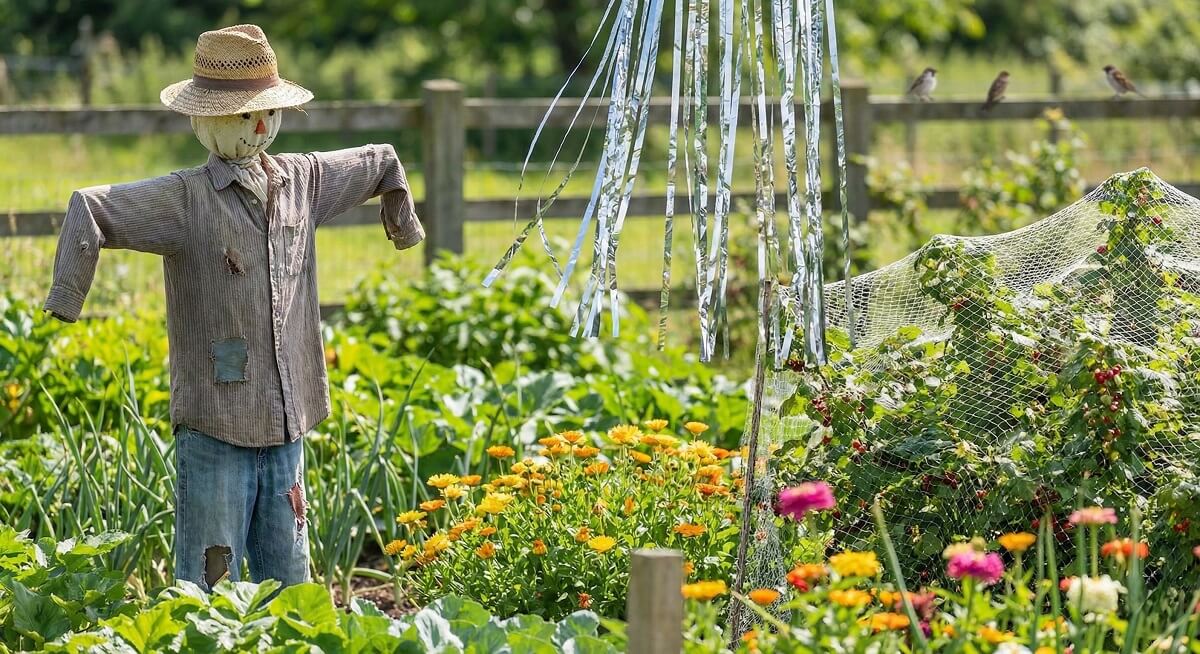
Bird netting provides the most reliable protection for your garden crops, with properly installed UV-resistant netting achieving near 100% effectiveness. Reflective deterrents and predator decoys work as short-term solutions but require frequent repositioning every 2-3 days to prevent birds from adapting. The best results come from combining two or three methods—typically netting for high-value crops plus visual deterrents along the perimeter.
Most garden birds are protected under the Migratory Bird Treaty Act, which means deterrents must be humane and non-lethal. You can’t harm birds or destroy active nests, but you can use physical barriers, visual scares, and sound devices to keep them away from your vegetables and berries. DIY methods start around $5-10 for aluminum foil and old CDs, while professional-grade UV-resistant netting runs $25-40 for a 100-foot roll.
The most vulnerable period is the first 2-3 weeks after seedlings sprout, when tender greens like lettuce, peas, and brassicas attract hungry birds. Protection during this window, combined with coverage during fruit ripening, gives you the best chance of a full harvest without losing crops to our feathered visitors.
Should You Use Bird Deterrents in Your Garden?
✅ Use Bird Deterrents If You:
- Grow vulnerable crops (lettuce, peas, strawberries, blueberries, corn, or brassicas)
- Notice seedlings disappearing within days of sprouting
- See birds actively feeding or digging in your garden beds
- Have small to medium gardens (under 2,000 square feet)
- Want humane, non-lethal wildlife solutions
- Can commit to weekly maintenance and repositioning of decoys
❌ Skip or Reconsider If You:
- Have massive acreage requiring commercial-scale protection
- Can tolerate 10-20% crop loss to support the local bird population
- Only grow bird-resistant plants (herbs, tomatoes, peppers, root vegetables)
- Face protected species nesting directly on structures (contact wildlife authorities)
- Don’t have time for regular maintenance and repositioning of deterrents
Why Birds Target Your Garden
Birds aren’t trying to ruin your gardening efforts—they’re just looking for an easy meal. Your garden offers tender seedlings, ripe berries, and freshly turned soil full of insects and grubs. Understanding what attracts birds helps you choose the right deterrents.
Food Sources Birds Seek
Tender young seedlings are like candy to garden birds. Brassicas (cabbage family plants), lettuce, peas, and beans get targeted heavily, especially in the first two weeks after sprouting. Research from the USDA Forest Service found that brassica and cucurbit crops showed significantly higher pest damage when protected from birds, proving these crops are prime targets.
Ripe berries and fruits are another major draw. Strawberries, blueberries, and blackberries can be stripped clean overnight by hungry robins, starlings, and blackbirds. Even your seed packets attract attention—birds will dig up freshly sown seeds before they germinate if they find the area.
Nesting Season Overlap
Spring planting coincides with nesting season, when parent birds need extra calories to feed their young. From April through July across most of the U.S., bird activity peaks right when your garden is most vulnerable. Birds also collect mulch and nesting materials from garden beds, disrupting your carefully placed coverings.
Common Bird Culprits
Different bird species cause different problems. Pigeons love brassicas and will systematically strip cabbage down to bare stems. Crows and blackbirds target corn and young plants, often pulling up seedlings to eat the seeds attached to roots. Robins and sparrows go after berries and insects, while finches can decimate leafy greens surprisingly fast for such small birds.
Bird Deterrent Methods Compared
Not all bird deterrents work equally well. Here’s how the most popular methods stack up based on effectiveness, cost, and maintenance requirements.
| Method Type | Effectiveness | Cost Range | Maintenance | Best For | Lifespan |
|---|---|---|---|---|---|
| Bird Netting | 85-100% | $25-45 | Low (seasonal check) | Berries, seedling rows | 3-5 years (UV-resistant) |
| Reflective Tape/Discs | 60-70% | $10-20 | High (weekly moves) | Short-term, small areas | 1-2 seasons |
| Predator Decoys | 50-65% | $15-35 | High (move every 3 days) | Open garden areas | 2-3 years |
| Scarecrows | 40-55% | DIY ($10) or $25-50 | High (weekly moves) | Large visible spaces | Varies |
| Garden Fleece | 75-85% | $15-30 | Medium | Frost + bird protection | 2-3 seasons |
| Aluminum Foil | 55-65% | $5-10 | Medium | Quick DIY solution | Single season |
| Sound Devices | 45-60% | $30-100 | Low | Specific species | 3-5 years |
Effectiveness ranges based on proper installation and maintenance. Prices as of February 2026; check current pricing as costs vary.
Physical Barriers: The Most Effective Long-Term Solution
If you want guaranteed protection, physical barriers are your best bet. They work 24/7 without requiring repositioning, and birds can’t adapt to them the way they do with visual scares.
Bird Netting — The Gold Standard
Bird netting is designed to provide 100% exclusion when properly installed, creating a physical barrier birds simply cannot cross. The key is choosing UV-resistant netting with the right mesh size and installing it correctly.
Look for UV-stabilized polypropylene or nylon netting that can withstand weather conditions. Products like the Bird-X Standard Bird Netting (100′ x 14′ with 3/4″ holes) offer UV protection and multi-season durability. For maximum bird safety, many experts recommend mesh sizes under 1 centimeter to prevent smaller birds from getting their beaks or feet caught.
Installation requires a framework to keep the netting 6-12 inches above your plants. Use PVC pipes, bamboo stakes, or metal hoops to create a tunnel or cage structure. Drape the netting over the framework and secure all edges to the ground with landscape staples, rocks, or stakes. Pull it tight to prevent sagging—loose netting invites birds to land on top and peck through.
The main downside is time investment. Setting up a proper netting system can take 1-2 hours for a small garden bed. But once in place, UV-resistant netting can last 3-5 years with minimal maintenance, making it a durable long-term investment. Standard cheap netting without UV protection typically breaks down after just one season of sun exposure.
Safety note: Check your netting daily for trapped wildlife, especially during the first week after installation. While properly installed netting is safe, loose or damaged netting can trap birds, snakes, and small mammals.
Chicken Wire and Hardware Cloth
Chicken wire works well for protecting newly sown seeds from birds that scratch up the soil. Pin it flat over freshly seeded areas for the first 1-2 weeks, then remove it once seedlings are established. You can also bend it over hoops to create a more permanent protective tunnel.
Hardware cloth (1/4″ or 1/2″ metal mesh) provides sturdier protection than chicken wire. It’s more expensive but lasts longer and doubles as protection against other pests like rabbits and groundhogs.
Garden Fleece and Row Covers
Garden fleece serves double duty—it protects from both frost and birds. This lightweight white fabric can be draped directly over shorter crops like lettuce, spinach, and chard. Weigh down the edges with rocks or garden staples.
Fleece works best for crops under 12 inches tall. For taller plants, use hoops to keep the fabric from crushing delicate leaves. The semi-transparent material allows sunlight and water to reach plants while keeping birds out. Effectiveness runs around 75-85% for ground-feeding birds.
Visual Deterrents: Moderate Effectiveness, High Maintenance
Visual deterrents scare birds through movement, reflection, or predator mimicry. They work well initially but lose effectiveness as birds adapt, typically after 1-2 weeks if not moved regularly.
Reflective Products
Reflective bird scare tape is one of the simplest and most cost-effective deterrents. The holographic surface produces unpredictable light patterns when moved by wind, creating an unsettling visual effect that birds naturally avoid. Reflective tape works better against larger birds like crows, pigeons, and seagulls than smaller songbirds.
You can also use old CDs, small mirrors, or aluminum foil strips hung from stakes or tree branches. String them close enough to clatter against each other in the wind for added audio deterrent. The combination of flashing light and noise can be quite effective for the first week or two.
The main limitation: birds adapt. After seeing the same reflective items in the same spots for several days, they realize there’s no real threat. Move your reflective deterrents every 3-5 days to maintain effectiveness. Change heights, angles, and locations to keep birds guessing.
Predator Decoys
Fake owl decoys tap into birds’ natural fear of predators. Products like the Galashield Owl Decoy (around $20 for a 3-pack as of February 2026) feature rotating heads that move with the wind, adding realism. Models range from 10-16 inches tall, with larger sizes generally working better for deterring crows and pigeons.
Plastic snakes laid along garden beds can also spook birds, especially when placed near entrances to garden rows. The key with any decoy is movement—birds quickly identify stationary objects as non-threats.
Critical maintenance: Move decoys every 2-3 days without fail. Change their position, orientation, and even swap between different types of decoys if you have multiple. Birds are clever; they’ll test a motionless “predator” after a few days of observation.
Scarecrows
The traditional scarecrow can work, but only with regular repositioning and updates. Birds realize scarecrows aren’t real humans if they stay in one place for weeks.
Build a simple DIY scarecrow with two wooden stakes, old clothes, and straw or rags for stuffing. Add a hat and gloves for extra “human” effect. Some gardeners report better results using bright colors like red and yellow, which may trigger flight responses in certain bird species.
Move your scarecrow every week minimum, and change its clothing or accessories periodically. Even better: combine it with other deterrents like reflective tape attached to the arms for movement.
Auditory Deterrents: Mixed Results
Sound-based deterrents range from simple homemade noise makers to sophisticated ultrasonic devices. Results vary significantly by bird species and local conditions.
Wind Chimes and Noise Makers
Hanging aluminum pie plates, kitchen utensils, or wind chimes can help deter birds through unexpected sounds. Tie them close enough to clang together in the breeze. The combination of noise and movement provides dual deterrence.
Effectiveness is limited—birds habituate to constant sounds quickly. Wind chimes work best when combined with other methods rather than as standalone solutions. Place them strategically around garden perimeters rather than throughout the beds where they might interfere with harvesting.
Ultrasonic and Audio Devices
Professional ultrasonic bird repellers emit sounds at frequencies uncomfortable for birds. More advanced models use species-specific distress calls or predator sounds. These devices typically cost $30-100 and can cover larger areas than visual deterrents.
The downside: effectiveness varies by species, and some neighbors may find audio deterrents annoying. Check local noise ordinances before installing sound-based systems. Battery life and weather resistance are also considerations for outdoor electronic devices.
Distraction and Exclusion Strategies
Sometimes the best defense is a good distraction. These methods give birds alternative food sources so they leave your main garden alone.
Sacrifice Planting
Plant extra crops specifically for birds to eat. Leave one or two berry bushes uncovered while protecting your main harvest. Grow a few extra rows of lettuce or spinach away from your primary beds as a “sacrifice zone.”
This approach works best in larger gardens where you have space to spare. The trade-off is intentional crop loss in exchange for protecting your main harvest.
Bird Feeders as Diversion
The theory: if birds have easy food elsewhere, they’ll leave your garden alone. The reality is more complicated. Feeders can attract more birds to your property overall, potentially increasing garden visits rather than decreasing them.
If you try this approach, place feeders at least 50 feet away from garden beds. Choose feeders that attract beneficial birds like bluebirds, nuthatches, and purple martins, which eat pests but cause less crop damage than species like pigeons or crows.
Protective Planting
Dense borders of annual flowers around vegetable beds can deter pigeons, which dislike crossing through tightly planted spaces. Thorny plants like roses or berberis create natural barriers along garden edges.
This method works best when combined with other deterrents rather than as a standalone solution.
Combining Methods for Maximum Protection
Professional bird control experts consistently recommend layered defenses. Using multiple methods simultaneously prevents birds from adapting and provides backup when one method fails.
The Layered Defense Approach
Start with bird netting as your primary defense for the most valuable crops—berries, seedlings, and high-value vegetables. Add reflective deterrents along the garden perimeter as a secondary layer. Finally, deploy predator decoys that you reposition weekly as a tertiary measure.
This combination can achieve 90% or better effectiveness. Birds that might eventually ignore your owl decoy still can’t penetrate the physical netting. The reflective tape catches birds before they even investigate the netted areas.
Crop-Specific Strategies
For berries: Build a netting framework over bushes 2-3 weeks before fruits ripen. The rigid structure keeps netting off delicate berries while providing complete coverage.
For seedlings: Use garden fleece or lightweight netting immediately after planting. Keep it in place for 2-3 weeks until plants are established enough to withstand some bird damage.
For corn: Combine netting over young plants with reflective deterrents and decoys once stalks reach 12+ inches. Crows are persistent, so multiple methods work better than any single approach.
For leafy greens: Small hoop houses covered with butterfly netting (smaller mesh than bird netting) protect lettuce, spinach, and chard while allowing beneficial insects access.
Seasonal Timing
Deploy deterrents before damage appears, not after. The first 2-3 weeks after seedlings sprout represent peak vulnerability—this is when birds do the most damage. For fruit crops, start protection 2-3 weeks before expected ripening.
Nesting season (April-July in most U.S. regions) overlaps with spring planting, creating a perfect storm of hungry parent birds and tender young plants. Extra vigilance during these months pays off.
Installation and Maintenance Guide
Proper installation makes the difference between effective bird protection and wasted money. Here’s how to do it right.
Netting Installation Step-by-Step
- Measure your area: Calculate how much netting you need, adding 2-3 feet extra on all sides for securing edges.
- Build support framework: Install PVC pipes, bamboo stakes, or metal hoops around the bed perimeter. Height should be 12-18 inches above mature plant height.
- Create structure: For row covers, use hoops every 3-4 feet. For berry bushes, create a cage structure with 4 corner posts and horizontal supports.
- Drape netting: Pull netting over framework with 6-12 inches clearance above plants. Don’t let it touch leaves—birds will peck through.
- Secure edges: Use landscape staples, rocks, or stakes to anchor all edges to the ground. No gaps.
- Inspect for entry points: Walk around checking for places birds could squeeze through. Seal any openings.
Daily and Weekly Maintenance Tasks
Daily (5 minutes): Check netting for trapped animals, especially in the first week. Look for tears or sagging spots.
Every 3 days (10 minutes): Move all decoys and reflective items to new locations. Change heights, angles, and positions.
Weekly (15 minutes): Inspect netting for UV damage or tears. Tighten sagging sections. Clean off debris that might weigh down netting.
Monthly: Check framework stability. Replace any damaged deterrents.
Common Installation Mistakes to Avoid
- Loose netting: The #1 failure point. Birds land on sagging netting and peck straight through to plants below. Keep it tight.
- Static decoys: Leaving owls and scarecrows in one spot for weeks destroys their effectiveness. Move them constantly.
- Shaded reflective items: Reflective tape in shade doesn’t flash. Place in areas with good sun exposure and wind movement.
- Wrong netting type: Standard cheap netting breaks down in weeks under UV exposure. Invest in UV-resistant products that last multiple seasons.
- Poor edge sealing: Birds find and exploit any gap. Secure every edge thoroughly.
What You’ll Actually Spend: Cost Analysis
Bird deterrent costs range from nearly free DIY solutions to professional installations costing hundreds. Here’s a realistic breakdown.
Budget DIY Solutions (Under $15)
- Aluminum foil strips and old CDs: $0-5 (repurposed household items)
- Homemade scarecrow: $5-10 (old clothes, straw, wooden stakes)
- Pie plate wind chimes: $3-8 (dollar store supplies)
- Garden hose fake snake: $0 (existing equipment)
These work best as short-term or supplementary methods. Don’t expect season-long effectiveness, but they’re good options for testing before investing in more expensive solutions.
Mid-Range Effective Options ($20-50)
- UV-resistant bird netting: $25-40 for 100′ x 14′ roll (prices as of February 2026)
- Owl decoy with moving head: $15-30 for quality models
- Professional-grade reflective tape: $12-25 for 500-foot roll
- Garden fleece row covers: $18-35 depending on size
This price range offers the best value for most home gardeners. Quality products in this category can last multiple seasons with proper care.
Premium Professional-Grade ($50-200+)
- Large netting kits with framework: $75-150 for complete systems
- Motion-activated sprinklers: $50-100 (also deters other pests)
- Ultrasonic bird repellers: $40-120 for quality electronic units
- Professional installation: $200-500+ for custom netting systems
Long-Term Cost Analysis
Consider cost per year of use:
- Quality netting: ~$30 initial cost ÷ 3-5 years = $6-10/year
- Owl decoys: ~$20 initial ÷ 2-3 years = $7-10/year
- Reflective tape: ~$15 per season = $15/year (needs replacement)
- DIY scarecrow: ~$10 initial, minimal ongoing costs
UV-resistant netting offers the best long-term value despite higher upfront costs. Cheap netting that fails after one season ends up costing more when you factor in replacement.
Legal and Safety Considerations
Before deploying bird deterrents, understand the legal framework and safety requirements.
Migratory Bird Treaty Act Overview
The Migratory Bird Treaty Act (MBTA) protects most wild bird species in the United States. The law prohibits “take” of protected birds, which includes killing, capturing, selling, trading, and transporting migratory birds without authorization from the U.S. Fish and Wildlife Service.
Protection covers species listed in four international treaties with Canada (1916), Mexico (1936), Japan (1972), and Russia (1976). The protected species list is maintained in Title 50 Part 10.13 of the Code of Federal Regulations and was updated in 2023.
What this means for gardeners: You can legally use deterrents to keep birds away from crops, but you cannot harm birds or destroy active nests. Non-native, human-introduced species (like house sparrows and European starlings) are not protected under the MBTA.
Safe Deterrent Practices
Netting safety rules:
- Check daily for trapped wildlife, especially during first week
- Use small-mesh netting (under 1cm holes) to prevent entanglement
- Keep netting pulled tight—loose netting is dangerous
- Remove damaged netting immediately to prevent wildlife injuries
General safety:
- Avoid toxic chemical repellents—they’re illegal for bird control and dangerous to pets
- Secure stakes and framework to prevent tripping hazards
- Don’t use fishing line or thin string that can entangle birds’ legs
- Keep children and pets away from newly installed deterrents until you confirm they’re secure
When to Call Professionals
Contact wildlife authorities or professional services when:
- Protected species are actively nesting on your property structures
- You face large-scale agricultural damage beyond home garden scope
- Multiple deterrent methods have failed after proper implementation
- You’re unsure about legal requirements for your specific situation
Professional wildlife management services typically cost $200-500+ depending on property size and problem severity, but they ensure legal compliance and often provide long-term solutions DIY methods can’t match.
Frequently Asked Questions
What is the most effective way to keep birds out of my garden?
UV-resistant bird netting with a proper framework provides 85-100% effectiveness when installed correctly. Create a structure that keeps netting 6-12 inches above plants, pull it tight to prevent sagging, and secure all edges to the ground. Netting works immediately and doesn’t lose effectiveness over time like visual deterrents do. For the best results, combine netting on high-value crops with reflective deterrents along the garden perimeter.
Will reflective tape and CDs really scare birds away?
Yes, reflective deterrents work initially with 60-70% effectiveness, especially against larger birds like crows and pigeons. The flashing light and movement created by wind unsettles birds and makes them avoid the area. However, effectiveness diminishes after 1-2 weeks as birds adapt to the patterns. To maintain effectiveness, move reflective items every 3-5 days to new locations and heights. They work best as part of a multi-method approach rather than as standalone solutions.
How often do I need to move scarecrows and decoys?
Move predator decoys and scarecrows every 2-3 days minimum to prevent birds from realizing they’re not real threats. Change both position and orientation—don’t just shift them a few feet. Birds are intelligent and quickly identify static objects as harmless. Some gardeners rotate between multiple types of decoys (owl one week, snake the next) to maintain unpredictability. The more frequently you move them, the better they work.
Is bird netting safe or will it trap birds?
Bird netting is safe when installed correctly using proper techniques. Use netting with holes less than 1 centimeter to prevent birds from getting beaks or feet caught, pull it tight so it doesn’t sag, and check it daily for trapped wildlife, especially during the first week after installation. UV-resistant netting designed specifically for bird control is safer than cheap alternatives that can degrade and create hazards. Wildlife rescue organizations report that properly maintained netting poses minimal risk when these safety practices are followed.
What smells keep birds away from gardens?
Strong scents like garlic, peppermint, and vinegar may irritate some birds, but their effectiveness is limited (40-50% at best) and temporary. Birds rely more on sight than smell for finding food, so visual and physical deterrents work much better. If you want to try scent deterrents, plant garlic around garden borders, use peppermint essential oil on cotton balls near vulnerable plants, or place shallow bowls of vinegar around the perimeter. Don’t expect reliable protection—use scents only as supplements to proven methods like netting.
Can I legally remove bird nests from my garden?
No, you cannot legally remove active nests (those containing eggs or chicks) under the Migratory Bird Treaty Act. Once birds begin nesting, you must wait until they abandon the nest naturally. However, you can dismantle incomplete nests before eggs are laid, and you can remove old abandoned nests from previous seasons. If you encounter a nest with eggs or baby birds, contact your state wildlife agency or the U.S. Fish and Wildlife Service for guidance. Non-native species like house sparrows and European starlings are not protected, but confirming species identification is important before removal.
How much does bird netting cost?
Quality UV-resistant bird netting costs $25-45 for a roll covering approximately 100 feet by 14 feet (enough for a 20-50 square foot garden bed) as of February 2026. Budget options without UV protection run $15-25 but typically last only one season versus 3-5 years for UV-resistant products. Professional installation for larger areas costs $200-500+ depending on garden size and complexity. DIY installation with basic framework materials (PVC or bamboo stakes) adds another $10-30 to your total cost.
Do ultrasonic bird repellers actually work?
Ultrasonic and audio bird repellers show mixed results with 45-60% effectiveness depending on the species and model. They work better when programmed with species-specific distress calls or predator sounds that target your particular problem birds. Electronic devices cost $30-100+ for quality models and require battery changes or electrical outlets. The main advantages are low maintenance and coverage of larger areas compared to visual deterrents. However, some neighbors may find audio devices annoying, and birds can habituate to repeated sounds over time, so they work best combined with other methods.
What crops are most vulnerable to bird damage?
Lettuce, peas, beans, berries (strawberries, blueberries, blackberries), corn, and brassicas (cabbage, broccoli, kale, Brussels sprouts) face the highest risk from bird damage. USDA research shows that brassicas and cucurbits (squash family) are particularly targeted. The seedling stage is most critical—the first 2-3 weeks after sprouting when plants are tender and birds can pull them up entirely. Berry crops need protection during the full fruiting season, typically 4-8 weeks. Root vegetables like carrots and potatoes are generally safer, though birds may dig up freshly planted areas.
How long do I need to keep bird deterrents up?
Protection timing depends on your crops. Seedlings need coverage for 2-3 weeks after sprouting until plants are established enough to tolerate some damage. Berry crops require protection throughout the entire fruiting season, typically 4-8 weeks from first ripe fruit until harvest ends. For year-round vegetable gardens, you can remove deterrents from mature plants that birds ignore (established tomatoes, peppers, mature brassicas) and redeploy them to protect new plantings. Keep netting and other deterrents stored during off-season to extend their lifespan.
Protecting Your Garden While Respecting Wildlife
Birds provide valuable services to gardens by eating pest insects and pollinating flowers, but they can also destroy crops when left unchecked. The key is finding the balance—protecting your harvest while maintaining humane, legal deterrents that don’t harm our feathered neighbors.
Bird netting remains the most reliable protection for high-value crops, approaching 100% effectiveness when properly installed. Visual deterrents like reflective tape and predator decoys work well for short-term protection or as supplementary measures, but they require consistent repositioning to prevent bird adaptation. Sound deterrents and scent repellents offer the least reliable results but can play supporting roles in multi-method strategies.
The most successful approach combines physical barriers on your most vulnerable crops with 1-2 rotating visual deterrents for backup protection. This layered defense achieves 90%+ effectiveness while spreading your investment across different deterrent types.
A small amount of sharing—accepting 10-15% crop loss to birds—supports local ecosystems while still protecting the bulk of your harvest. The same birds eating your lettuce also consume aphids, caterpillars, and other garden pests. Complete exclusion isn’t necessary for most home gardens.
Your action plan:
- Identify your most vulnerable crops (seedlings, berries, leafy greens)
- Choose bird netting as your primary protection method for these high-value areas
- Add reflective deterrents or predator decoys as secondary backup
- Install deterrents before birds establish feeding patterns in your garden
- Monitor daily and adjust your approach based on results
- Reposition visual deterrents every 2-3 days to maintain effectiveness
With consistent maintenance and the right combination of methods, you can protect your garden harvest while keeping birds safe and respecting the legal protections that ensure healthy bird populations for future generations.
Ready to protect your garden? Check current prices for UV-resistant bird netting and rotating head owl decoys on Amazon. For more garden protection tips, see our guides on and .
