


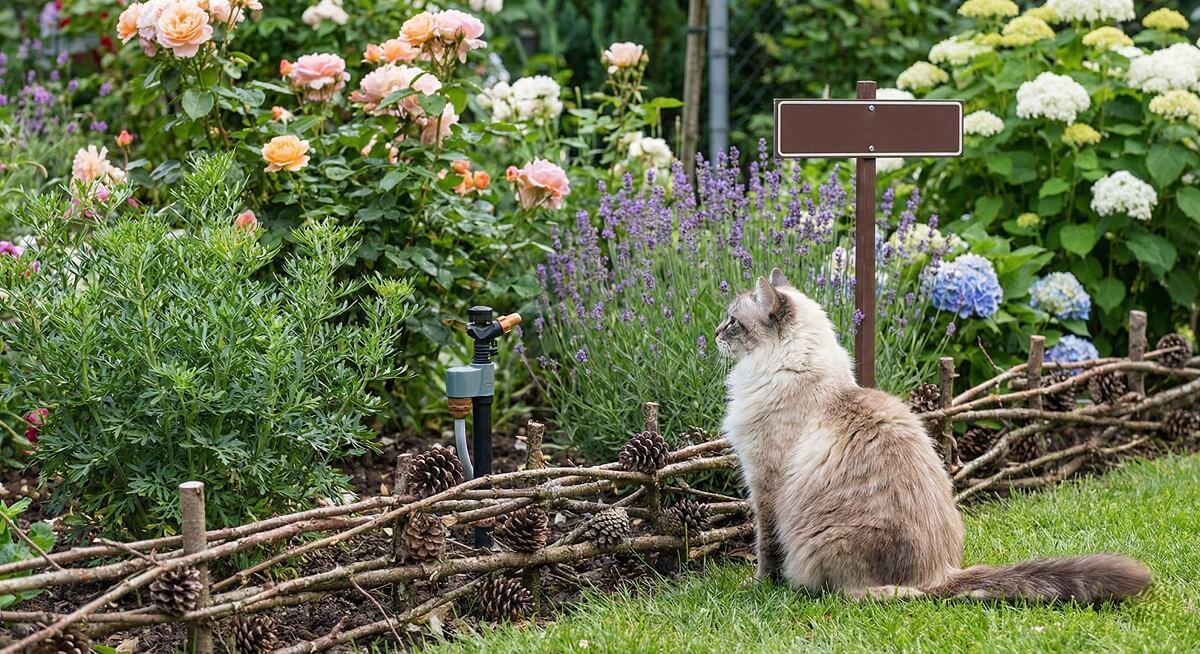
If you’ve ever walked outside to find your prized petunias dug up or discovered an unwelcome “gift” buried in your rose bed, you’re not alone. Cats are drawn to flower gardens because soft, loose soil makes the perfect scratching and bathroom spot. The good news: several proven methods can protect your flowers without harming the neighborhood kitties. (If you’re also dealing with other garden pests, our cover additional solutions.)
The most reliable approach combines physical barriers with scent deterrents. Laying chicken wire or plastic fencing flat on the soil stops cats from digging, while citrus peels or aromatic herbs like rosemary add an extra layer of protection. For larger gardens, motion-activated sprinklers offer hands-off defense that trains cats to stay away.
Before trying anything, know what to avoid: mothballs are toxic to cats, pets, and humans, while coffee grounds can harm cats if ingested. Stick with the safe, humane options covered here, and you’ll have your garden back in no time.
Why Cats Love Your Flower Garden
Understanding cat behavior helps you choose the right deterrent. Cats don’t use your garden to annoy you—they’re following instincts that have served them for thousands of years.
Freshly turned soil in a flower bed looks like an ideal litter box to a cat. It’s soft, easy to dig, and perfect for burying waste. Cats have an instinct to cover their droppings, and your mulched beds provide exactly what they’re looking for. Warm, sunny garden spots also make attractive napping locations.
Here’s something that works against you: cats have approximately 200 million scent receptors in their nasal cavity, compared to our measly 5 to 6 million. That makes their sense of smell roughly 14 times stronger than ours. Once a cat marks your garden with its scent, it’s likely to return—which is why cleaning affected areas matters.
Health note: Cat feces can contain Toxoplasma gondii, a parasite that causes toxoplasmosis. According to the CDC, this infection is especially risky for pregnant women and people with weakened immune systems. The parasite can survive in soil for up to 18 months. If you’re gardening where cats have been, wear gloves and wash your hands thoroughly afterward.
Who Should (and Shouldn’t) Use These Methods
Best For
- Homeowners with outdoor flower beds troubled by neighborhood or stray cats
- Gardeners growing vegetables who need to keep beds sanitary
- Anyone wanting humane, non-toxic solutions
- People willing to combine methods for best results
Skip If
- You only have indoor cats (problem already solved)
- You’re looking for a permanent one-time fix (most methods need some maintenance)
- You want to trap or harm cats (that’s not what this guide covers)
9 Ways to Keep Cats Out of Your Flower Garden
1. Lay Chicken Wire or Plastic Fencing Flat on the Soil
This is the most reliable long-term solution. Instead of using fencing vertically, cut it to size and lay it flat in your garden beds. Plants grow up through the holes just fine, but cats can’t scratch or dig through the mesh.
The reason it works: cats need an open patch of soft soil to do their business. Mesh under their paws feels wrong, so they move on to easier spots. You can use standard chicken wire or flexible plastic garden fencing—the plastic version is easier to cut and won’t rust.
Cost: Hardware cloth runs around $15-30 for a small roll at hardware stores. Standard chicken wire is often less. Check current pricing at your local for the best deals.
2. Use Citrus Peels as a Natural Repellent
Cats dislike strong citrus scents. Scatter orange, lemon, or grapefruit peels around your flower beds, and let their powerful noses do the rest.
The downside: peels decompose and lose their punch within a week or two, so you’ll need to replace them regularly. This works best as a supplement to other methods rather than your only line of defense.
Cost: Free, assuming you eat citrus anyway.
3. Plant Aromatic Herbs Around Garden Edges
Certain herbs create a living barrier that cats avoid. Effective options include lavender, rosemary, rue, and thyme. These plants overwhelm sensitive cat noses while adding beauty (and usefulness) to your garden.
Lavender thrives in USDA zones 5-9, while rosemary is hardy in zones 8-11. Both prefer well-draining soil and full sun. Once established, they’re low-maintenance perennials that come back year after year. Learn more about growing these and other useful plants in our .
Cost: $5-15 per plant at most nurseries, but they pay you back with years of protection and harvests.
4. Install a Motion-Activated Sprinkler
Cats hate getting wet. Motion-activated sprinklers detect heat and movement, then deliver a startling burst of water that sends feline visitors running.
Products like the Orbit Yard Enforcer detect movement up to 40 feet away. Solar-powered options are available if you don’t want to deal with batteries.
Fair warning: you will spray yourself at least once. Remember to turn it off before weeding.
Cost: $30-80 for most models, with premium options running higher. Check current Amazon pricing for the latest deals.
5. Scatter Pine Cones or Prickly Materials
Cats prefer smooth, even surfaces when they squat. Pine cones, holly clippings, or rough-textured mulch make the soil uncomfortable without causing harm.
This method works well for smaller beds and has a natural look that blends into the garden. Pine cones eventually decompose, adding organic matter to your soil.
Cost: Free if you have pine trees nearby. Otherwise, bags of pine cones run $10-15 at craft stores.
6. Try an Ultrasonic Cat Deterrent
These devices emit high-frequency sounds that cats find unpleasant but humans can’t hear. When the motion sensor triggers, cats get an earful of something they’d rather avoid.
Research backs this up: a peer-reviewed study found ultrasonic deterrents reduced cat intrusions by 46% and shortened visit duration by 78%. A separate University of Lincoln study showed cats learned to avoid protected areas over time rather than getting used to the sound.
That said, results vary. Bold cats or older cats with hearing loss may not respond as well. This works best combined with other methods.
Cost: $25-60 for basic models, up to $200 for premium units. Solar-powered versions save on battery costs.
7. Create a Decoy Litter Box
Sometimes the best defense is a good offense. Set up a designated spot where cats are welcome to dig—a small sandbox in an out-of-the-way corner, planted with catnip to draw them in.
Yes, you’ll need to clean it occasionally. But if it keeps cats out of your prized flower beds, that trade-off may be worth it. The Humane Society recommends this as an effective redirection strategy.
Cost: $10-20 for a basic sandbox and play sand.
8. Apply Commercial Cat Repellent Spray
Products like “Go Away!” use natural ingredients—typically cinnamon oil and thyme oil—to create scents cats dislike. Shake or spray around garden borders and problem areas.
The catch: these wash away in rain and need regular reapplication. They’re a quick fix while you set up more permanent solutions.
Cost: $10-20 per container.
9. Make a DIY Essential Oil Spray
Mix 10 drops of rosemary or citrus essential oil with 1 cup of water in a spray bottle. Apply around problem areas weekly or after rain.
This budget-friendly option uses the same scent principle as commercial products. Some gardeners report weeks of cat-free beds after a single application.
Cost: $5-10 for essential oils that last many applications.
Methods to Avoid (They’re Harmful or Ineffective)
Mothballs
Never use mothballs in your garden. They contain pesticides that are toxic to cats, dogs, wildlife, children, and adults. The Alley Cat Allies and other animal welfare organizations strongly advise against this method.
Coffee Grounds
While often suggested online, coffee grounds can harm or even kill cats if ingested. The caffeine is toxic to them. Put your coffee grounds in the compost pile instead—your plants will thank you, and no animals get hurt.
Plastic Forks Stuck in Soil
This Pinterest-popular method looks tacky, degrades into microplastics, and isn’t particularly effective anyway. Skip it.
Scat Mats with Sharp Spikes
These can injure cats and look terrible in a garden. There are plenty of humane alternatives that work just as well.
Cat Deterrent Methods at a Glance
| Method | Cost | Effectiveness | Maintenance | Best For |
|---|---|---|---|---|
| Chicken wire/fencing | $15-30 | High | Low | Long-term protection |
| Citrus peels | Free | Medium | High | Budget supplement |
| Aromatic herbs | $10-20 | Medium | Low | Perennial solution |
| Motion sprinkler | $30-80 | High | Medium | Large gardens |
| Pine cones | Free-$15 | Medium | Medium | Small beds |
| Ultrasonic device | $25-60 | Medium | Low | Hands-off approach |
| Decoy litter box | $10-20 | Medium | High | Redirection strategy |
| Commercial spray | $10-20 | Medium | High | Quick fix |
| DIY essential oil | $5-10 | Medium | Medium | Budget DIY |
How to Combine Methods for Best Results
One deterrent is good. Two or three working together is better. Here’s a proven combination approach:
- Start with physical barriers. Lay chicken wire or plastic fencing in your most vulnerable beds. This alone stops most cats.
- Add scent deterrents. Plant lavender or rosemary around bed edges, or scatter citrus peels as a backup.
- Consider technology for persistent cats. If a determined neighborhood cat keeps trying, a motion-activated sprinkler or ultrasonic device adds another layer.
- Clean marked areas. Wash spots where cats have sprayed with a hose and mild soap. Removing the scent discourages return visits.
The combination that works best depends on your garden size, budget, and how persistent your feline visitors are. Start simple and add methods until the problem stops. For more home and garden tips, browse our .
Frequently Asked Questions
What smell keeps cats away the best?
Strong citrus (lemon, orange, grapefruit), rosemary, lavender, and rue are most effective. With 200 million scent receptors, cats are easily overwhelmed by pungent smells that barely register to humans.
Are coffee grounds safe to use as a cat deterrent?
No. Coffee grounds contain caffeine, which is toxic to cats if ingested. Use citrus peels or essential oils instead—they work just as well without the risk.
Do ultrasonic cat repellers actually work?
Research says yes, with caveats. Studies show they reduce intrusions by 32-46%, with cats learning to avoid protected areas over time. They work best combined with other methods and may be less effective on bold or hearing-impaired cats.
Is cat poop in my garden dangerous?
It can be. Cat feces may contain Toxoplasma gondii, a parasite that causes toxoplasmosis. According to the CDC, this is especially risky for pregnant women and immunocompromised individuals. Always wear gloves when gardening in areas cats may have used, and wash your hands thoroughly afterward.
Will chicken wire hurt the cats?
Not when laid flat on the soil. It simply makes digging uncomfortable—cats step on it, don’t like the feeling, and walk away unharmed. It’s one of the most humane long-term solutions available.
How do I stop my neighbor’s cat from using my garden?
Start by having a friendly conversation with your neighbor—they may not know it’s happening. Then use physical barriers like chicken wire and add scent deterrents. Motion-activated sprinklers are effective for persistent visitors since they work even when you’re not home.
What plants do cats hate?
Lavender, rosemary, rue, Coleus canina (the “scaredy cat plant”), thyme, and geraniums all have scents cats avoid. Thorny plants like roses and holly also discourage cats from walking through an area. Check out our for more gardening product recommendations.
Do motion-activated sprinklers scare cats away permanently?
Not permanently, but they’re effective at training cats to avoid your garden. Most cats learn after a few unexpected showers and start going elsewhere. You may need to leave the sprinkler active for a few weeks to establish the pattern.
Protecting Your Garden Without Harming Cats
You can have a beautiful flower garden and coexist peacefully with neighborhood cats—it just takes the right approach. Physical barriers like chicken wire or plastic fencing deliver the most reliable results with minimal upkeep. Add scent deterrents for extra protection, and consider tech solutions like motion sprinklers for larger spaces or stubborn cats.
Whatever you do, skip the harmful methods. Mothballs and coffee grounds pose real dangers to cats and other animals. The humane options covered here work just as well and let you enjoy your garden without worry.
Ready to reclaim your flower beds? Check current prices on garden fencing and motion-activated sprinklers at Amazon, Home Depot, or your local garden center.
