


That picture-perfect lawn in the catalog? Let me tell you what it takes to keep rats from treating your yard like an all-you-can-eat buffet. I’ve watched customers ignore their yard maintenance for a few months, then show up asking why their outdoor equipment won’t start—only to find rat nests in the mower deck and chewed wiring in their generator. Prevention is cheaper than replacement. Here’s what actually works.
Why Rats Show Up (And What They’re Looking For)
Rats need three things: food, water, and shelter. Your yard offers all three if you’re not careful. According to the Oregon State University Extension Service, Norway rats (brown rats) weigh about 9-10 ounces and grow up to 16 inches long, while black rats are smaller at around 4.5 ounces and 5-6 inches. Both species reproduce every 28 days, which means a small problem becomes a major infestation fast.
Here’s what brings them to your property:
- Food sources: Pet food left outside, bird feeders, fallen fruit, unsealed garbage, compost piles, vegetable gardens
- Water sources: Leaky hose bibs, bird baths, standing water in old tires or equipment, clogged gutters
- Shelter: Overgrown vegetation, wood piles, brush piles, equipment stored under tarps, gaps under sheds, thick ground cover
The Brooklyn Botanic Garden’s pest management guide notes that rats need only one to two ounces of food daily and can dig burrows one to six feet deep. Once they establish territory, they’re difficult to evict. That’s why prevention beats elimination every time.
Remove Food Sources That Attract Rats
This is your first line of defense. Rats are opportunistic feeders, and your yard might be offering an unintentional feast.
Secure Your Garbage and Compost
Keep garbage can lids tight. If rats can flip the lid or squeeze through a gap, they will. I recommend metal cans with latching lids over plastic bins—rats chew through plastic like it’s nothing.
For composting, use rodent-resistant containers with tight-fitting lids. According to King County’s rodent prevention guidelines, you should never compost animal products (meat, dairy, bones). Stick to plant material, and turn your pile regularly to generate heat—rats prefer cold, undisturbed piles.
Manage Bird Feeders Properly
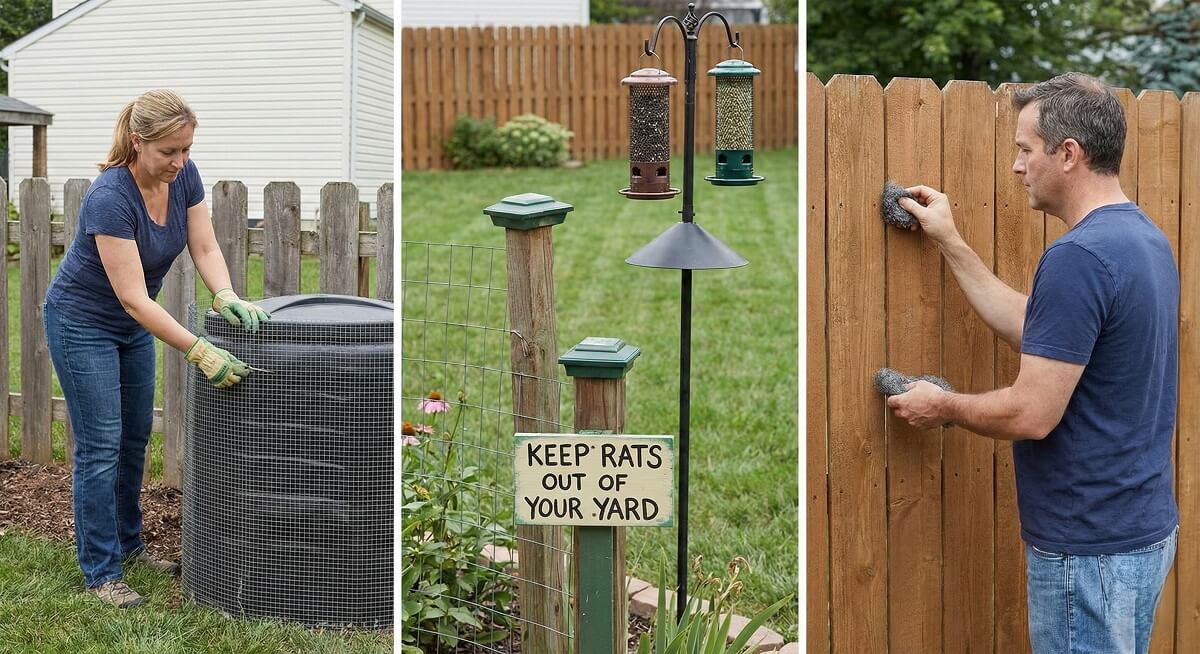
Bird feeders are rat magnets. If you’re going to keep them, mount feeders on poles with baffles that rats can’t climb. Use seed trays to catch spillage, and clean up fallen seed daily. Better yet, take feeders down entirely if you’re dealing with an active rat problem. The birds will be fine—the rats won’t.
Pick Up Fallen Fruit and Manage Gardens
If you’ve got fruit trees, harvest regularly and pick up anything that hits the ground. Rats will feast on apples, pears, citrus, and berries. Same goes for vegetable gardens—don’t leave overripe produce rotting on the vine.
Store Pet Food Indoors
Never leave pet food outside overnight. If you feed outdoor pets, put down only what they’ll eat in one sitting, then bring the bowl inside. Store bulk pet food in sealed metal containers, not the original bag. I’ve seen rats chew through 50-pound dog food bags stored in garages.
Eliminate Shelter and Hiding Spots
Rats need cover to feel safe. Remove their hiding spots, and they’ll move on to easier territory.
Keep Your Lawn Maintained
Mow regularly—at least once a week during growing season. Tall grass provides ground cover that rats use for travel corridors. Keep your mower deck set at 2.5 to 3 inches for most grass types. That’s short enough to discourage rats without stressing your lawn.
Use a string trimmer around fence lines, building foundations, and shed perimeters. The Brooklyn Botanic Garden recommends cutting vegetation back at least 18 inches from building walls. I’d go further—two feet if you’ve got the space. Creates a clear inspection zone and removes rat highways.
Manage Vegetation and Brush
Thin out dense shrubs and cut back tree branches that touch or overhang your roof. According to Smith’s Pest Management, tree branches should be at least 3 feet from your roofline—rats are excellent climbers and will use branches as bridges.
Remove brush piles, leaf piles, and yard waste promptly. Don’t let it sit for weeks. If you’re clearing heavy brush, a chainsaw makes quick work of larger branches, but smaller stuff just needs a good leaf blower to clear out debris from corners and fence lines.
Store Firewood and Materials Properly
Stack firewood at least 18 inches off the ground on racks or pallets, according to King County guidelines. Some experts recommend storing wood 100 feet from your house if possible. That might not be practical for everyone, but at minimum, keep it away from your home’s foundation.
Move wood piles at least twice a year to disrupt any nesting attempts. The same goes for building materials, lawn equipment, and anything else stacked outside.
Secure Your Outdoor Equipment
Here’s something most pest control guides miss: that lawn mower sitting under a tarp all winter is a five-star hotel for rats. They’ll nest in the deck, chew through wiring, and fill your air filter housing with acorns.
Store mowers, generators, and other equipment in a shed or garage when not in use. If you must leave equipment outside, elevate it at least 18 inches off the ground and 12 inches away from walls. Don’t use tarps as long-term covers—they create dark, protected spaces that rats love.
Seal Entry Points and Protect Your Property
Rats can squeeze through gaps as small as a quarter inch, according to the OSU Extension Service. Walk your property and seal any openings larger than that.
Common Entry Points to Address
- Foundation gaps: Seal with metal mesh or steel wool, then cover with caulk or expanding foam
- Crawl space vents: Install quarter-inch hardware cloth over vent openings
- Gaps around utility lines: Where pipes, cables, or wires enter your home, fill gaps with steel wool and caulk
- Door sweeps: Install on all exterior doors, especially garage doors
- Shed and outbuilding floors: Check for gaps where floors meet walls
For garden beds near foundations, the Brooklyn Botanic Garden recommends installing half-inch mesh hardware cloth that extends 8 to 12 inches underground. This prevents rats from burrowing under barriers.
Protect Chicken Coops and Pet Areas
If you keep chickens, rats will show up for the feed. Make coop openings smaller than a nickel, and bury hardware cloth several inches underground around the perimeter. Feed chickens only what they’ll eat in a few hours, and store bulk feed in sealed metal containers.
What Doesn’t Actually Work (Save Your Money)
Let’s talk about what the internet swears will work but actually won’t.
Ultrasonic Devices
Those plug-in devices that claim to repel rats with high-frequency sound? According to multiple sources including pest control experts at the NYC Department of Health, there’s no scientific proof they work. Rats might avoid them for a day or two, then ignore them completely. Save the $30.
Mothballs and Chemical Repellents
Mothballs, pepper sprays, peppermint oil, and other smelly deterrents have not been proven effective against rats. They might make your yard smell like a candy cane factory, but the rats won’t care. Industry data shows these products fail in field conditions.
Relying on Cats or Dogs
Some cats and dogs will hunt rats, but most won’t. Even good ratting cats can’t keep up with a breeding population. Don’t count on pets as your primary control method—they’re supplemental at best.
When to Call a Professional
If you’ve implemented these prevention steps and you’re still seeing rats after two months, it’s time to call a licensed pest control service. According to This Old House, professional intervention becomes necessary when DIY methods aren’t controlling the population.
Also call immediately if:
- You’re seeing rats during daylight hours (indicates large population)
- You find extensive burrow systems on your property
- Rats have entered your home or attic spaces
- You’ve got health concerns (pregnant, elderly, or immunocompromised household members)
Professional rodent control typically runs $300 to $500 or more depending on the severity of infestation and property size. That’s expensive, but it’s cheaper than the $1,000 to $3,000 in vehicle damage that can occur when rats nest in your car’s engine bay, according to Smith’s Pest Management.
The Cost of Prevention vs. Elimination
Here’s the math I show my customers: spending 2-4 hours monthly on yard maintenance costs you nothing but time. A professional extermination costs $300 minimum. Replacing chewed wiring in a generator or lawn mower runs $150-$400 in parts and labor. Fixing structural damage from rat burrows near your foundation? Easily $500-$2,000.
Prevention is maintenance. You do it now, or you pay for it later. Same as changing your mower’s oil.
FAQ
- How do I know if I have rats in my yard?
- Look for rat droppings (about half an inch long, dark brown, pellet-shaped), burrow holes about the size of a baseball near foundations or under vegetation, gnaw marks on wood or plastic, and greasy rub marks along walls and fence lines where rats travel regularly. You might also hear scratching or rustling sounds at dusk when rats are most active.
- What time of year are rats most active?
- Rats are active year-round, but you’ll notice increased activity in fall as they seek shelter before winter, and in spring when breeding ramps up. That said, prevention needs to be consistent throughout the year—there’s no off-season for rat management.
- Will removing bird feeders really help?
- Yes. Bird feeders are one of the most common attractants. If you’re dealing with an active rat problem, removing feeders eliminates a major food source. You can reintroduce feeders once the rat population is under control, but use baffles and seed trays to minimize spillage.
- How often should I mow to prevent rat habitat?
- Mow at least once a week during growing season, more often if growth is heavy. Keep grass at 2.5 to 3 inches—short enough to eliminate ground cover but not so short you stress the lawn. Use a string trimmer every 2-3 weeks around fence lines, foundations, and outbuildings.
- Can I use poison bait myself?
- You can purchase rodent bait at hardware stores, but use extreme caution if you have pets or children. Bait must be secured in tamper-resistant stations, and you risk poisoning non-target animals. Many experts, including those at the OSU Extension Service, recommend professional application or focusing on non-poison methods like traps and exclusion for residential properties.
- How long does it take to get rid of rats using prevention methods?
- If you’re removing attractants and shelter without active elimination (traps or poison), expect 4-8 weeks before you see significant reduction. Rats don’t leave immediately—they explore other food sources first. Consistent prevention combined with trapping speeds the process to 2-4 weeks in most cases.
