


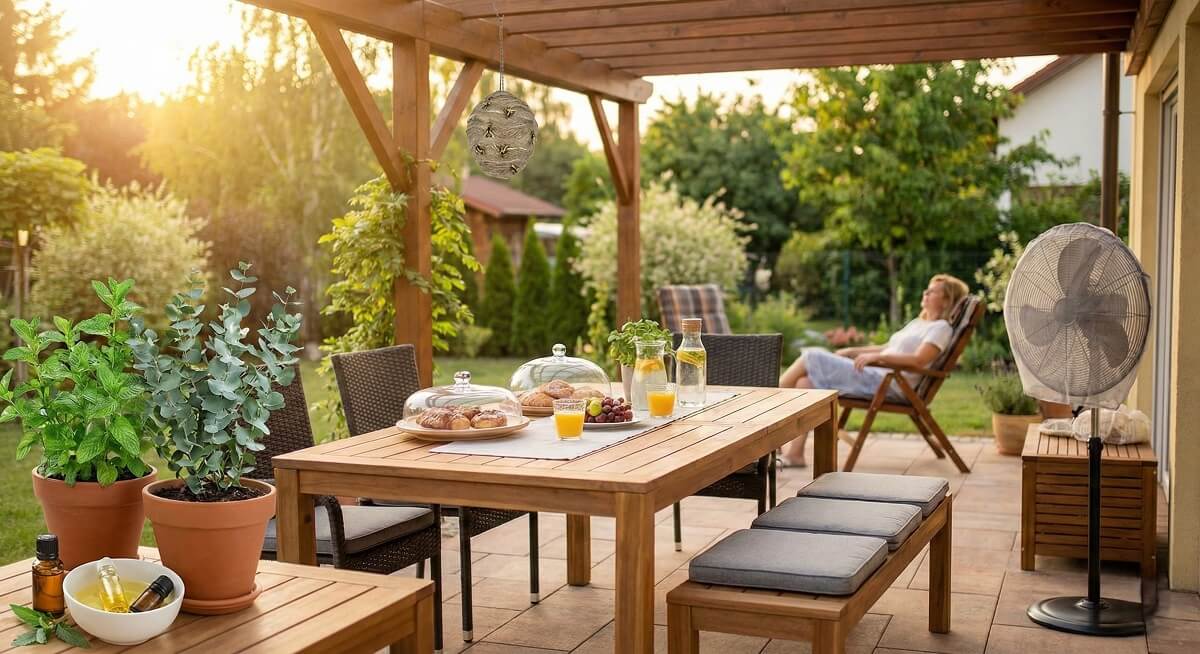
The most effective ways to keep wasps away from your patio include removing food attractants, using peppermint oil spray, hanging decoy nests, and sealing potential nesting spots. Prevention works best when you start in early spring—before queen wasps establish colonies. If you’re also dealing with other outdoor pests, check our for more solutions.
Natural methods like essential oils and wasp-repelling plants offer non-toxic alternatives that are safe around kids and pets. A 2013 study published in Pest Management Science found that 17 of 21 essential oils tested showed significant repellent effects on wasps, with blends of clove, geranium, and lemongrass performing best.
For active infestations or nests near high-traffic areas, professional removal is the safest option. This guide covers prevention strategies, DIY deterrents, product costs, and when to call in the pros.
Should You DIY or Call a Professional?
DIY Prevention Works Best If:
- You’re starting prevention before wasp season (early spring)
- You don’t have an active nest on your property
- You’re dealing with occasional visiting wasps, not a colony
- You prefer natural, non-toxic methods
- Your outdoor space has identifiable attractants you can remove
Call a Professional If:
- You’ve found an active wasp nest
- The nest is in a hard-to-reach location (walls, underground, high eaves)
- Anyone in your household has a wasp sting allergy
- You’ve been stung multiple times or wasps are aggressive
- DIY methods haven’t worked after 2+ weeks
Professional wasp removal typically costs between $100 and $1,300, with most homeowners paying around $375-$525 according to HomeAdvisor’s 2026 cost data. Yellow jacket removal tends to cost more ($500-$1,300) due to their aggressive nature and tendency to nest underground.
Why Wasps Keep Showing Up on Your Patio
Understanding what attracts wasps helps you remove the welcome mat. There are over 4,000 different wasp species in the United States, according to Dr. Jim Fredericks of the National Pest Management Association, but they’re all drawn to similar things.
Food sources: Wasps need both protein and sugar. In early summer, they hunt insects to feed protein-hungry larvae. By late summer, with fewer larvae to feed, adult wasps seek out sugary foods—which is why they become more aggressive around your barbecue and drinks as the season progresses.
Shelter opportunities: Overhangs, patio furniture gaps, grills, and umbrella folds all make attractive nesting spots. Wasps look for protected areas away from rain and direct sun.
Water sources: Pools, bird baths, and even condensation on cold drinks attract wasps. They need water to cool their nests and stay hydrated.
Flowers and fragrant plants: While wasps pollinate flowers, heavily fragrant blooms near your seating area can draw them in. For tips on garden planning, see our section.
11 Ways to Keep Wasps Away from Your Patio
1. Remove Food and Drink Attractants
The simplest prevention method is removing what draws wasps in. Cover food during outdoor meals, pour canned drinks into cups (wasps can crawl inside cans), clean up spills immediately, and keep trash bins sealed and positioned away from seating areas. If a wasp shows interest in a particular food item, move it away from your gathering—the wasp will return to that spot, effectively creating a decoy feeding station.
2. Use Peppermint Oil Spray
Research supports peppermint as an effective wasp deterrent. Mix 10-15 drops of peppermint essential oil with water in a spray bottle and apply it around patio edges, furniture legs, overhangs, and known problem areas. The menthol in peppermint disrupts wasps’ sense of smell. Reapply after rain or every few days for best results. This method is safe for most plants and won’t harm pets or children.
For better results, try combining peppermint with clove and lemongrass oils. The 2013 Pest Management Science study found this blend completely blocked wasp attraction in field tests.
3. Hang Decoy Wasp Nests
Wasps are territorial and typically avoid building nests near existing colonies. Decoy nests exploit this behavior—when wasps see what looks like an established nest, they’ll often move on to find territory elsewhere. Hang decoys under eaves, near seating areas, or in spots where you’ve had wasp problems before.
Timing matters: put decoys up in early spring when queen wasps are scouting for nesting sites. They won’t deter wasps from an existing nearby colony, so decoys work best as prevention rather than treatment. A 4-pack of decoy nests runs about $10-$20 on Amazon.
4. Plant Wasp-Repelling Plants
Certain plants emit scents that wasps find offensive. Consider adding these around your patio perimeter:
- Mint and peppermint: Easy to grow, but can spread aggressively—consider containers
- Eucalyptus: Strong scent; note it’s toxic to dogs and cats
- Citronella: Also repels mosquitoes; needs at least 6 hours of sun
- Basil: Dual purpose—keeps wasps away and seasons your food
- Marigolds: Colorful, easy to care for, and wasps avoid them
- Wormwood: Very effective but can harm nearby plants—keep it isolated
On the flip side, avoid planting fennel, yarrow, or Queen Anne’s lace near your patio—they attract wasps.
5. Make a DIY Wasp Trap
You can build an effective wasp trap in minutes. Cut the top third off a 2-liter bottle, invert it into the bottom portion (creating a funnel), and fill the base with sugar water, beer, or apple cider vinegar mixed with a drop of dish soap. Wasps crawl in for the bait but can’t find their way out.
Important: Position traps 20-30 feet away from your seating area. Traps attract wasps, so placing them too close defeats the purpose. Empty and refill traps every few days.
6. Try the Lemon and Cloves Hack
This low-effort method works well for outdoor dining. Cut a lemon in half and push whole cloves into the flesh. Place the studded lemon halves near your table. The combination of citrus and clove creates a scent barrier that wasps dislike but most people find pleasant. Replace when the lemon dries out, typically after a day or two.
7. Seal Entry Points and Nesting Spots
Prevention is easier than removal. Inspect your patio area for gaps and crevices where wasps might build nests:
- Gaps between deck boards
- Cracks in siding or fascia near the patio
- Openings around vents or soffits
- Hollow patio umbrella poles
- Gaps in outdoor furniture frames
- Inside grill covers and storage boxes
Use caulk, expandable foam, or weather-resistant sealant to close openings. According to the National Pest Management Association, the best time for this is late fall after worker wasps have died off, or early spring before queens establish new colonies.
8. Keep Your Yard Clean
Good yard maintenance reduces wasp habitat. Clear leaf litter (ground-nesting wasps love it), pick up fallen fruit from trees, fill abandoned animal burrows, and trim overgrown vegetation near your patio. Wasps prey on garden pests like aphids, so keeping plants healthy and pest-free makes your yard less attractive as a hunting ground. For more outdoor maintenance tips, browse our .
9. Manage Water Sources
Wasps need water to cool their nests and survive hot days. Cover pools when not in use, empty standing water from planters and saucers, and change bird bath water frequently. If you want to keep a bird bath, position it far from your main seating area to draw wasps away rather than toward you.
10. Use Commercial Wasp Sprays Carefully
For small, exposed paper wasp nests (under 3 inches), commercial sprays can be effective. Products like Raid or Hot Shot cost around $12 and spray up to 20 feet, killing wasps on contact. Spray at dusk when wasps are less active, aim for the nest entrance first, and check for activity the next day before removing the nest.
Caution: Don’t use sprays on large nests, underground nests, or nests inside walls—you’ll likely make the wasps more aggressive without eliminating the colony. These situations call for professional help.
11. Add a Screened Porch or Lanai
If wasps are a persistent problem and you use your outdoor space frequently, a screened enclosure provides a permanent solution. It’s a larger investment, but screens create a physical barrier that keeps wasps out while letting you enjoy the outdoors. For existing porches, check that screens are intact with no tears or gaps.
Prevention Methods Compared
| Method | Effectiveness | Cost | Safety | Best For |
|---|---|---|---|---|
| Peppermint oil spray | Moderate | $5-15 | High (non-toxic) | General deterrence |
| Decoy nests | Moderate-High | $10-20 | High | Preventing new colonies |
| Wasp traps | Moderate | $10-25 | Medium | Reducing population |
| Wasp-repelling plants | Low-Moderate | $20-50 | High | Long-term prevention |
| Commercial sprays | High (small nests) | ~$12 | Medium (chemicals) | Small exposed nests |
| Sealing entry points | High | $20-100 | High | Structural prevention |
| Professional removal | High | $100-1,300 | High | Active infestations |
When to Call a Professional
Some wasp situations require expert handling. Call a licensed pest control professional if:
- The nest is larger than a baseball
- You’ve found a yellow jacket nest (often underground and aggressive)
- The nest is inside a wall, attic, or other enclosed space
- Anyone who uses the patio has a wasp allergy
- Multiple nests are present on your property
- DIY attempts have failed or made wasps more aggressive
What to expect: A professional will identify the wasp species, locate all nests, and remove them safely. According to HomeAdvisor, costs typically run $275-$600 for outdoor nests, $400-$700 for attic nests, and $500-$1,000 for nests inside walls. Yellow jacket removal averages higher ($500-$1,300) because of their aggressive behavior and hidden nesting locations.
When hiring, ask about their treatment methods, guarantees, and whether they’ll return if wasps come back. Reputable companies will inspect your property to identify conditions that attract wasps and recommend prevention steps.
What to Do If You Get Stung
Most wasp stings cause temporary pain and swelling that resolves within a day or two. Here’s how to treat a mild sting, according to CDC and Mayo Clinic guidance:
- Move to a safe area to avoid more stings
- Remove the stinger if present (wasps usually don’t leave stingers, but scrape sideways with a card edge if you see one—don’t squeeze)
- Wash the area with soap and water
- Apply a cold compress for 10-20 minutes to reduce swelling
- Apply hydrocortisone cream or calamine lotion to relieve itching
- Take an antihistamine like Benadryl or Claritin if swelling or itching is bothersome
Seek emergency medical care immediately if you experience any of these symptoms after a sting:
- Difficulty breathing or swallowing
- Swelling of the face, lips, or throat
- Dizziness, fainting, or confusion
- Rapid or weak pulse
- Nausea, vomiting, or diarrhea
- Hives spreading beyond the sting site
These can be signs of anaphylaxis, a severe allergic reaction that requires immediate treatment. If you’ve had a severe reaction to a wasp sting before, carry an epinephrine auto-injector (EpiPen) and wear a medical alert bracelet.
Frequently Asked Questions
What smell do wasps hate the most?
Peppermint is the most commonly cited wasp repellent, and research backs it up. Other effective scents include clove, lemongrass, eucalyptus, and citronella. For best results, use a blend—studies show combinations work better than single oils.
Do fake wasp nests actually work?
They can, but timing matters. Decoy nests work best when hung in early spring before queen wasps choose nesting sites. They exploit wasps’ territorial instinct—most species avoid building near existing colonies. Decoys won’t drive away wasps that have already established a nest nearby.
What time of day are wasps least active?
Wasps are least active at dawn and dusk, and they don’t fly at night. If you need to spray a small nest or set up traps, dusk is the safest time. Cooler temperatures also slow wasp activity.
Why are wasps more aggressive in late summer?
In late summer, wasp colonies reach peak size and workers become more desperate for food. With fewer larvae to feed (larvae produce sugary secretions that adults eat), worker wasps seek sugar elsewhere—including your picnic. This dietary shift makes them bolder around human food sources.
Are wasps actually beneficial?
Yes. Wasps are pollinators and natural pest controllers—they eat aphids, caterpillars, flies, and other garden pests. The goal is to deter them from high-traffic areas, not eliminate them from your property entirely.
How far away should I place a wasp trap?
Position traps 20-30 feet away from your seating area. Traps work by attracting wasps, so placing them too close brings more wasps to your space before trapping them. Place traps at the perimeter of your yard or in areas where you’ve noticed wasp activity.
Can I remove a wasp nest myself?
Small, exposed paper wasp nests (under 3 inches) can sometimes be removed with commercial wasp spray applied at dusk. Larger nests, underground nests (yellow jackets), and nests inside walls should be handled by professionals. Never disturb a nest during the day when wasps are most active.
Do wasps return to the same spot every year?
Not typically the exact nest—wasp colonies die off in winter except for fertilized queens, who hibernate and establish new nests in spring. However, if your property has attractive features (shelter, food, water), new queens may choose similar locations year after year. Addressing these attractants helps break the cycle.
Getting Started
Keeping wasps away from your patio comes down to making your space less attractive to them. Start with the basics: remove food attractants, seal potential nesting spots, and consider adding some peppermint spray or wasp-repelling plants. Begin prevention in early spring for best results—by the time wasps are buzzing around your summer barbecue, it’s harder to discourage them.
If you’re dealing with an established nest or aggressive wasps, don’t take chances. Professional pest control is worth the cost for safety and peace of mind. Most local pest control companies offer free inspections and can advise on the best approach for your situation.
Check current prices on wasp deterrent products at major retailers like Amazon or Home Depot. For more home and garden tips, explore our on ChubbytIps.
