


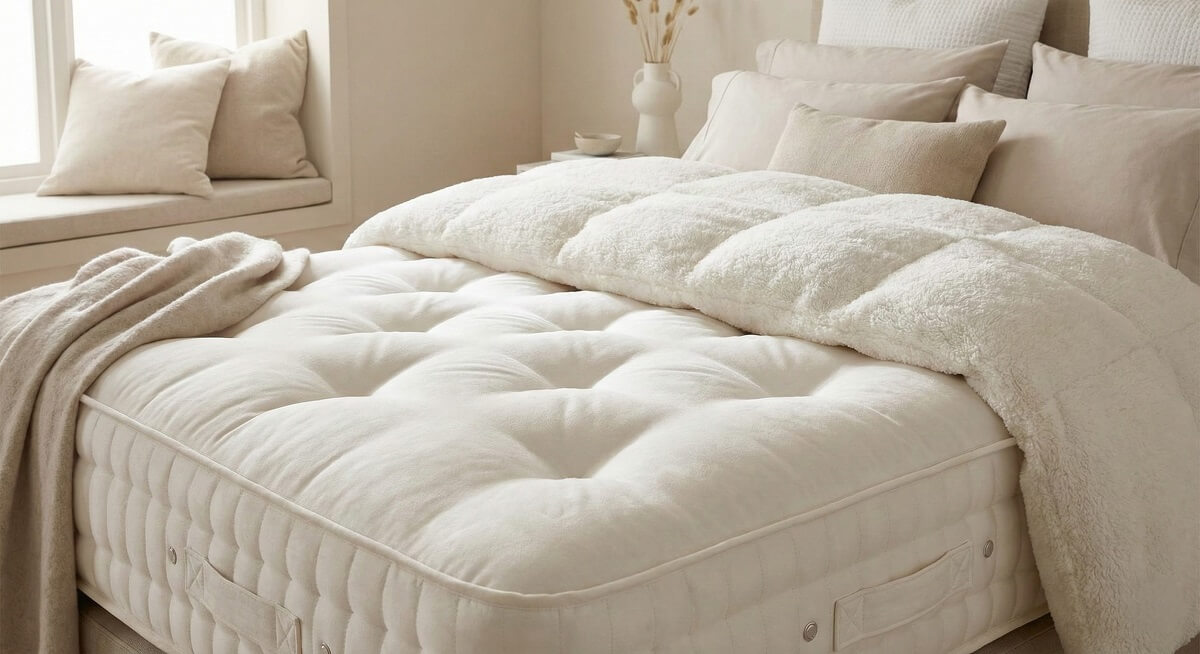
A plush mattress sits on the softer end of the firmness scale—typically around 3-5 out of 10—and features thick cushioning layers that let your body sink in for pressure relief. If you’ve ever heard someone describe their bed as feeling like “sleeping on a cloud,” they’re probably talking about a plush mattress. These soft beds work especially well for side sleepers, people under 130 pounds, and anyone who prefers feeling cradled rather than floating on top of their mattress.
That said, a soft bed isn’t the right choice for everyone. Stomach sleepers, people over 200 pounds, and those dealing with lower back pain often find better support from medium-firm or firm options. The trick is matching your mattress firmness to how you actually sleep—not just picking what sounds comfortable in a showroom. For a deeper comparison, check out our guide on .
This guide breaks down exactly what makes a mattress “plush,” explains the firmness scale, and helps you figure out if a soft bed makes sense for your situation. If you’re also exploring other sleep-related purchases, our cover everything from pillows to bed frames.
Quick Check: Is a Plush Mattress Right for You?
A Plush Mattress May Work For You If:
- You sleep primarily on your side
- You weigh under 130 pounds
- You wake up with shoulder or hip pain on firmer beds
- You prefer feeling “cradled” rather than resting on top of your mattress
- You share a bed and want minimal motion transfer
You Might Want a Firmer Mattress If:
- You sleep on your stomach or back
- You weigh over 200 pounds
- You have lower back pain
- You tend to sleep hot
- You prefer a “floating on top” sensation
What Does “Plush” Actually Mean in Mattresses?
When mattress companies use the word “plush,” they’re describing a soft comfort level with substantial cushioning. A plush mattress typically has comfort layers that are 4 or more inches thick, compared to just 1-3 inches on firmer models. These layers—made from materials like memory foam, latex, or polyfoam—compress when you lie down and contour around your body’s curves.
On the standard 1-10 firmness scale that most mattress reviewers use, plush beds generally fall between 3 and 5. According to the Sleep Foundation, mattresses rated 5 or below qualify as plush.
One thing worth clarifying: “plush” describes how a mattress feels, not its quality or durability. A well-built plush mattress can still provide excellent support—the softness comes from the comfort layers on top, while the support core underneath keeps your spine aligned. If you’re shopping for a new bed, understanding can help you make a smarter choice.
How the Mattress Firmness Scale Works
Understanding the 1-10 Firmness Scale
Most mattress manufacturers and reviewers use a 10-point scale to rate firmness. Here’s what each range typically means:
| Rating | Firmness Level | What It Feels Like |
|---|---|---|
| 1-2 | Extra Soft | Deep sinking, minimal resistance (rare) |
| 3-4 | Soft/Plush | Significant body-hugging, cushioned feel |
| 5 | Medium | Balanced sinkage and support |
| 6 | Medium-Firm | Slight cushioning with more pushback |
| 7-8 | Firm | Minimal sinking, sleeping “on top” |
| 9-10 | Extra Firm | Almost no give (uncommon) |
Keep in mind that there’s no universal standard across brands. A “plush” mattress from one manufacturer might feel different from another company’s version. Testing in person—or using a generous sleep trial—is the most reliable way to know if a specific firmness works for you.
Firmness vs. Support: They’re Not the Same Thing
A common misconception is that soft mattresses can’t provide proper support. That’s not accurate. According to the Sleep Foundation, “firmness and support are not the same thing. Support refers to a mattress’ ability to promote spinal alignment… Both soft and firm mattresses can and should offer good support.”
Firmness describes the surface feel—how hard or soft the mattress feels when you lie on it. Support refers to what’s happening underneath, specifically whether the mattress keeps your spine in proper alignment. A plush mattress with a quality coil system or high-density foam base can absolutely deliver solid support while still feeling soft on top.
Types of Plush Mattresses
Plush Memory Foam
Memory foam beds offer deep contouring and that distinctive “body hug” sensation. A soft memory foam mattress will let you sink in noticeably, cradling pressure points around your shoulders and hips. This type works particularly well for people who sleep on their side and want maximum cushioning. The downside? Memory foam tends to retain heat, which may be uncomfortable for warm sleepers. Learn more about foam options in our .
Plush Hybrid
Hybrid mattresses combine foam comfort layers with a coil support system. A plush hybrid gives you cushioning on top with better airflow than all-foam options—the coils allow heat to dissipate more easily. You’ll also get more bounce and responsiveness compared to pure foam. Popular plush hybrids include models like the Helix Midnight Luxe, which Consumer Reports rated highly in their lab tests.
Plush Innerspring
Traditional innerspring mattresses can also come in plush versions, usually featuring a soft pillow-top sewn onto the coil base. These tend to feel more responsive than foam beds and typically sleep cooler. However, innerspring mattresses often have shorter lifespans than foam or hybrid options.
Pillow-Top vs. Euro-Top: What’s the Difference?
You’ll often see these terms when shopping for plush mattresses. Both add extra cushioning, but they’re constructed differently:
- Pillow-top: A separate cushion layer sewn on top of the mattress, creating a visible gap between the topper and the main bed. Gives that puffy, cloud-like appearance.
- Euro-top: The cushion layer sits flush with the mattress edges, creating a more uniform look. Functionally similar to pillow-tops, just a different construction style.
Both types add plushness. The choice mostly comes down to aesthetics and personal preference, though some people find Euro-tops offer slightly better edge support since the cushioning extends to the very edge.
Who Benefits Most from a Plush Mattress?
Side Sleepers
When you sleep on your side, your shoulders and hips bear most of your weight. A plush mattress lets these pressure points sink into the cushioning, which can prevent numbness and pain. According to an SSRS poll conducted in 2024, about 69% of Americans usually sleep on their sides—making this the most common sleep position by far.
Mattress experts at Sleepopolis note that most side sleepers prefer firmness ratings between 4 and 6 on the 10-point scale, which falls into the soft to medium range.
Lightweight Sleepers (Under 130 Pounds)
If you weigh less than 130 pounds, firmer mattresses may not compress enough under your body weight. This can leave you feeling like you’re sleeping “on” the mattress rather than “in” it, creating uncomfortable pressure points. Plush beds compress more easily, allowing lighter individuals to experience proper contouring.
People with Shoulder or Hip Pain
The extra cushioning in plush mattresses can reduce pressure on joints. This makes them a reasonable option for people with arthritis or anyone who experiences discomfort in their shoulders or hips during sleep. However, if you have lower back pain, a medium-firm mattress is often a better choice—the extra support helps prevent your midsection from sinking too deep.
Couples Who Want Motion Isolation
Soft foam beds, in particular, absorb movement well. If your partner tosses and turns, you’re less likely to feel it on a cushiony mattress compared to a bouncy innerspring. This can mean fewer middle-of-the-night disruptions for both of you.
Who Should Probably Skip Plush Mattresses?
Stomach Sleepers
Sleeping on your stomach on a plush mattress can cause your hips to sink below your shoulders, creating an unnatural curve in your spine. Most stomach sleepers do better with a firmness rating of 7 or higher to keep their body properly aligned.
Most Back Sleepers
While back sleeping distributes weight more evenly than side sleeping, many back sleepers still find that medium-firm beds (around 6 on the scale) provide the right balance. A plush mattress might let your midsection sink too far, straining your lower back. That said, very lightweight back sleepers may still find plush comfortable.
Heavier Sleepers (Over 200-230 Pounds)
If you’re on the heavier side, you’ll likely sink deeper into any mattress. On a plush bed, this could mean “bottoming out”—compressing through the comfort layers and losing the support you need. Most mattress experts recommend that sleepers over 230 pounds look at firmer options (7-9 on the scale) for adequate support.
Hot Sleepers
Plush mattresses, especially all-foam models, tend to retain body heat. When you sink deeper into the mattress, more of your body contacts the surface, trapping warmth. If you already run hot at night, a plush foam bed might make things worse. Hybrid options with coils provide better airflow if you want softness without overheating.
Plush Mattress Pros and Cons
| Pros | Cons |
|---|---|
| Excellent pressure relief for side sleepers | Can trap body heat (especially foam) |
| Cushions shoulders and hips effectively | May lack support for heavier individuals |
| Good motion isolation for couples | Not ideal for stomach sleepers |
| Comfortable for lightweight sleepers | Edge support often weaker |
| Luxurious, “cloud-like” feel | Pillow-tops may develop impressions sooner |
How Long Do Plush Mattresses Last?
According to the Sleep Foundation, most mattresses last between 7 and 10 years, though lifespan varies by type:
- Latex: 7.5-8.5 years
- Memory foam: 6-7 years
- Hybrid: 6.5-7.5 years
- Innerspring: 5.5-6.5 years
Plush mattresses may show visible body impressions sooner than firm beds because the softer materials compress more readily. However, construction quality matters more than firmness when it comes to durability. A well-made plush mattress can outlast a cheaply built firm one.
To extend your bed’s lifespan: rotate it 180 degrees every 3-6 months to distribute wear evenly, and use a mattress protector to guard against spills and dust mites. For more maintenance tips, see our .
Can You Adjust a Plush Mattress Firmness?
Making a Plush Mattress Firmer
Unfortunately, adding a firm topper to a plush mattress doesn’t work well. The soft base underneath will still compress, so you won’t gain meaningful support. If your plush mattress feels too soft, your best option is exchanging it during the sleep trial period—which is why buying from a company with a generous trial policy matters.
Making a Firm Mattress Softer
Going the other direction is easier. A soft memory foam or latex topper (2-3 inches thick) can add plushness to a firm mattress base. This approach often works better than trying to firm up a soft bed.
Sleep Trial Policies
Most major mattress brands offer risk-free trials so you can test firmness at home:
- Casper: 100-night trial (30-night adjustment period before returns)
- Nectar: 365-night trial with lifetime warranty
- Helix: 100-night trial
- Saatva: 365-night trial
These policies give you time to determine if a plush (or any other) firmness level actually works for your sleep.
Frequently Asked Questions
What does plush mean in a mattress?
Plush describes a soft comfort level, typically rated 3-5 on a 1-10 firmness scale. Plush mattresses have thick cushioning layers (4+ inches) that let your body sink in for a cradled, “cloud-like” feel.
Is a plush mattress good for back pain?
It depends on where your pain is. Plush mattresses can help with upper back and shoulder discomfort by cushioning pressure points. However, for lower back pain, medium-firm mattresses (around 6 on the scale) are often recommended since they provide better lumbar support and prevent excessive hip sinking.
What’s the difference between plush and pillow-top?
Plush refers to overall softness level. Pillow-top describes a construction method where extra cushioning is sewn onto the mattress surface. Most pillow-top mattresses are plush, but not all plush mattresses have pillow-tops—some achieve softness through thick foam layers instead.
Are plush mattresses good for side sleepers?
Yes, people who sleep on their side often do well on plush mattresses. The soft surface cushions shoulders and hips, which bear the most weight in this position. Most lateral sleepers prefer firmness ratings between 4-6. Browse more to compare options.
How firm should a mattress be for a 200 lb person?
People around 200 pounds typically do best with medium to medium-firm mattresses (5-7 on the scale). Those over 230 pounds usually need even firmer options (7-9) to prevent excessive sinking and maintain proper support.
Do plush mattresses wear out faster?
Plush mattresses may show body impressions sooner than firm models, but this doesn’t necessarily mean they wear out faster. Quality construction—high-density foams, durable coils—matters more than firmness level for longevity. Most mattresses last 7-10 years regardless of firmness.
Can I flip a plush mattress?
Most modern plush mattresses are one-sided and cannot be flipped. However, you should rotate your mattress 180 degrees every 3-6 months to distribute wear evenly and extend its lifespan.
What is a plush firm mattress?
A “plush firm” or “luxury firm” mattress falls between soft and medium on the firmness scale—usually around a 5. It offers a softer surface feel with firmer underlying support. This middle-ground option appeals to people who want some cushioning without the deep sink of a true plush bed.
Ready to Try a Plush Mattress?
Most major brands offer sleep trials of 100+ nights, letting you test a soft bed at home risk-free. Check current prices and trial policies at retailers like Amazon, Mattress Firm, or directly from brands like Casper and Nectar. For more sleep product recommendations, explore our .
