


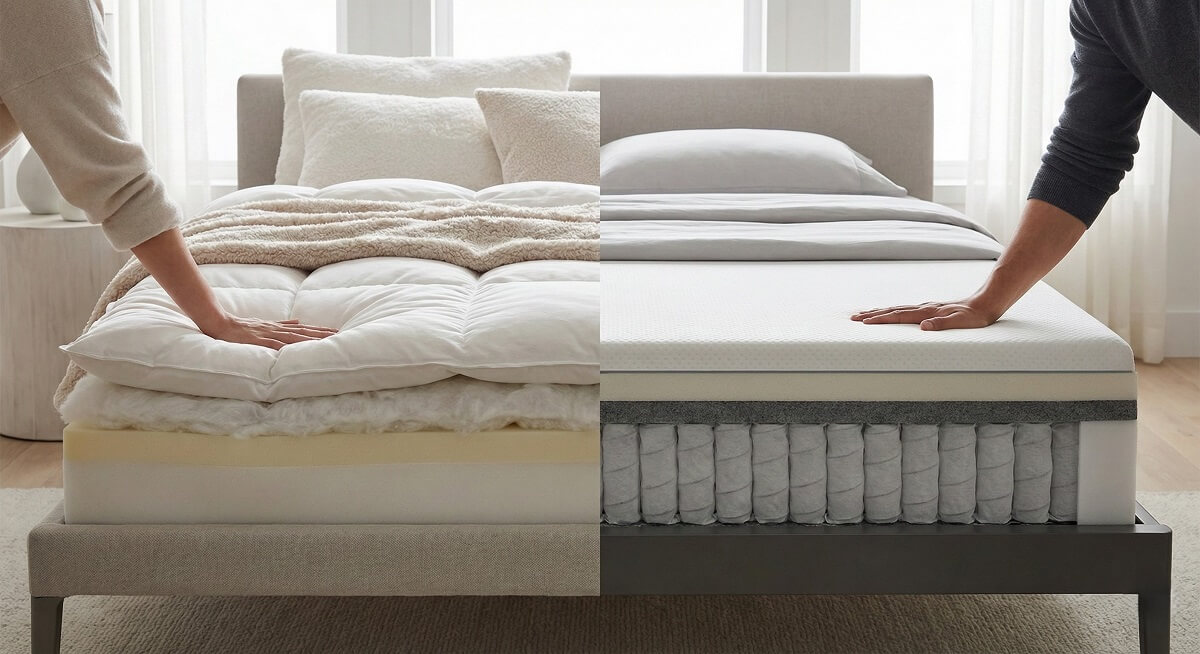
The right mattress firmness depends primarily on how you sleep and how much you weigh. If you’re a side sleeper or weigh under 130 pounds, a plush mattress will likely keep your spine aligned while cushioning pressure points at your shoulders and hips. Back sleepers, stomach sleepers, and people over 230 pounds typically sleep better on firm mattresses that prevent excessive sinking. (If you’re also considering other home comfort upgrades, firmness knowledge helps with pillows and seating too.)
Neither plush nor firm is inherently “better.” The goal is proper spinal alignment and adequate pressure relief for your body. If you wake up with aches, toss and turn frequently, or feel like you’re either sinking too deep or sleeping on a rock, your current firmness probably doesn’t match your needs.
Most people actually do well with medium or medium-firm mattresses, which balance cushioning with support. But understanding the difference between plush and firm helps you figure out which direction to lean—especially if you’ve been uncomfortable on your current bed.
Who Should Choose Plush vs Firm: Quick Guide
Choose a Plush Mattress If You:
- Sleep primarily on your side and need shoulder/hip cushioning
- Weigh under 130 pounds and find firm beds uncomfortable
- Have joint pain or arthritis and want pressure relief
- Switch positions frequently throughout the night
- Prefer the feeling of sleeping “in” the mattress rather than on top of it
Choose a Firm Mattress If You:
- Sleep on your stomach and need hip support to prevent lower back strain
- Sleep on your back and want your spine fully supported
- Weigh over 230 pounds and need resistance to prevent sinking too deep
- Prefer sleeping “on top” of your mattress with minimal give
- Share a bed and want less motion transfer
Consider Medium Firmness If You:
- Share a bed with someone who has different firmness preferences
- Aren’t sure which direction to go
- Change sleep positions throughout the night
- Want the flexibility that hotels rely on for varied guests
Understanding Mattress Firmness Levels
Mattress firmness is typically measured on a scale of 1 to 10, with 1 being extremely soft and 10 being extremely firm. According to the Sleep Foundation, most mattresses sold today fall between 3 (soft) and 8 (firm), with the majority landing somewhere in the middle range. If you’re also shopping for bedding accessories, understanding firmness helps you match pillows and toppers to your mattress.
Here’s how the scale breaks down:
- 1-3 (Soft/Plush): Significant sinking and body conforming. You feel cradled and “hugged” by the bed.
- 4-6 (Medium): Moderate balance of cushioning and support. Some conforming without excessive sinking.
- 7-10 (Firm): Minimal sinkage with a sturdy feel. You sleep on top of the surface rather than in it.
One thing worth understanding: firmness and support aren’t the same thing. Firmness describes how soft or hard a mattress feels when you lie on it. Support refers to whether the mattress keeps your spine properly aligned. A plush mattress can still be supportive, and a firm mattress can fail to support your spine if it’s poorly constructed.
Plush Mattresses: What to Know
What Makes a Mattress Plush
Plush mattresses have thicker comfort layers—typically 3 or more inches of softer foam, down, or fiberfill material on top of the support core. These layers compress under your body weight, letting you sink into the bed and feel cushioned.
You might see plush mattresses labeled as “soft,” “cushion soft,” or “pillow top.” While manufacturers use different terms, they all indicate beds that rate below 5 on the firmness scale.
Benefits of Plush Mattresses
Better for side sleepers: When you sleep on your side, your shoulders and hips bear most of your weight. A plush surface lets these areas sink in slightly, keeping your spine straight rather than kinked. If you’ve ever woken up with shoulder pain or hip soreness on a firm bed, this is likely why.
Pressure point relief: The cushioning in plush mattresses distributes your weight more evenly, reducing pressure on joints. People with arthritis or chronic joint pain often find softer surfaces more comfortable.
Better for lighter body weights: If you weigh under 130 pounds, you don’t compress a mattress as much as heavier individuals. A firm bed may feel like sleeping on a board because you’re not heavy enough to engage the comfort layers. Plush beds respond to lighter body weights more readily.
Drawbacks of Plush Mattresses
Can cause alignment issues for back and stomach sleepers: If you sleep on your back or stomach, a plush mattress may let your hips sink too far, curving your spine unnaturally. This often leads to lower back pain over time.
May sleep warmer: More foam layers tend to trap more body heat. If you already sleep hot, a plush memory foam mattress might make the problem worse.
Heavier people may “bottom out”: If you weigh over 230 pounds, you might sink through the comfort layers entirely and hit the firmer support core beneath. This negates the cushioning benefits and can feel uncomfortable.
Firm Mattresses: What to Know
What Makes a Mattress Firm
Firm mattresses have thinner comfort layers and denser materials. The support core sits closer to the surface, so you don’t sink much when lying down. Instead of conforming to your body’s curves, the mattress pushes back, keeping you on top of the sleep surface.
Benefits of Firm Mattresses
Better for stomach sleepers: Stomach sleeping already puts strain on your lower back because your hips tend to sink while your chest stays elevated. A firm mattress limits this sinking, helping keep your spine more neutral.
Good support for back sleepers: Back sleepers need their lumbar region (lower back) supported. A firm surface prevents your midsection from sagging into a hammock shape, which can cause morning backaches.
Better for heavier individuals: If you weigh over 230 pounds, a firm mattress provides the resistance you need to stay properly supported. What feels rock-hard to a 120-pound person may feel comfortably supportive to someone weighing 250 pounds.
Often sleeps cooler: With less foam material trapping heat, firm mattresses tend to sleep cooler than their plush counterparts.
Drawbacks of Firm Mattresses
Can create pressure points for side sleepers: Without adequate cushioning, your shoulders and hips press against a hard surface all night. This can lead to tingling, numbness, or joint pain.
Adjustment period needed: If you’re switching from a soft bed, a firm mattress may feel uncomfortable at first. Most people need 30 to 90 days to fully adjust to a new firmness level.
Not ideal for lighter body types: Light individuals may not compress firm mattresses enough to engage any comfort features, making the bed feel rigid and unforgiving.
How Your Sleep Position Affects Firmness Choice
Side Sleepers
Side sleeping is the most common position, and it requires the most pressure relief. Your shoulders and hips jut out from your body’s center line, and without adequate cushioning, you’ll wake up sore.
The Sleep Foundation recommends firmness levels between 2 and 7 for side sleepers, depending on body weight. Lighter side sleepers do better on the softer end; heavier side sleepers may need something in the medium range to prevent excessive sinking.
Back Sleepers
Back sleeping distributes weight more evenly, but your lumbar region still needs support. Without it, your lower back arches unnaturally, causing stiffness and pain.
Back sleepers typically do well with medium to firm options (5-8 on the scale). The key is finding a balance—enough cushioning for comfort, but enough firmness to prevent your midsection from sinking below your shoulders and legs. For more guidance on optimizing your sleep setup, check out our how-to guides.
Stomach Sleepers
Stomach sleeping is the trickiest position for spinal alignment. Your hips are the heaviest part of your body, and on a soft mattress, they sink while your chest stays elevated. This creates an unnatural arch in your lower back.
Most sleep experts recommend firm mattresses (6-9 on the scale) for stomach sleepers. The firmer surface keeps your body flat and your spine neutral.
Combination Sleepers
If you shift between positions throughout the night, you need a mattress that works reasonably well in multiple positions. Medium firmness (4-6) offers the most flexibility, providing enough cushioning for side sleeping without excessive sinkage for back or stomach positions.
How Body Weight Affects Mattress Firmness
Your weight significantly impacts how a mattress feels. The same bed feels softer to a heavier person and firmer to a lighter person because weight determines how much you compress the materials.
Under 130 Pounds
Lighter individuals don’t compress mattress materials as much, so firm beds often feel rigid and uncomfortable. Softer options (firmness levels 2-5) allow the comfort layers to actually engage and provide cushioning.
130 to 230 Pounds
This weight range has the most flexibility. Most mattresses are designed with this group in mind, so the full spectrum of firmness options (4-7) works depending on sleep position preference.
Over 230 Pounds
Heavier individuals need firmer mattresses (6-10) to prevent sinking too deep. Without adequate support, you may experience poor spinal alignment, excessive heat retention (from sinking into foam), and faster mattress wear.
Plush vs Firm Comparison Table
| Factor | Plush (1-4) | Medium (5-6) | Firm (7-10) |
|---|---|---|---|
| Best Sleep Position | Side sleepers | All positions | Back & stomach sleepers |
| Best Body Weight | Under 130 lbs | 130-230 lbs | Over 230 lbs |
| Pressure Relief | Excellent | Good | Limited |
| Spinal Support | Limited (for back/stomach) | Good | Excellent |
| Temperature | Tends warmer | Moderate | Tends cooler |
| Motion Transfer | More motion felt | Moderate | Less motion felt |
| Edge Support | Weaker | Moderate | Stronger |
| Queen Price Range (2026) | $500-$2,500+ | $400-$2,000 | $400-$1,800 |
What Firmness Do Hotels Use?
If you’ve ever wondered why hotel beds often feel comfortable regardless of your preferences, there’s a reason: most hotels use medium to medium-firm mattresses, typically rating 6-7 on the firmness scale.
According to hospitality industry sources, medium-firm mattresses are the standard because they accommodate the widest range of sleep positions and body types. A hotel can’t customize beds for every guest, so they choose a firmness that works reasonably well for most people.
This industry practice offers a useful benchmark. If you sleep well in most hotels but struggle at home, your mattress may be too far toward either extreme. Moving toward a medium-firm option might help.
Can You Change Your Mattress Firmness?
Making a Firm Mattress Softer
If your current mattress feels too firm, adding a mattress topper can help. A 2-3 inch memory foam or latex topper adds cushioning without replacing your entire bed. This is often the most cost-effective solution if the mattress itself is still in good condition.
Keep in mind that new mattresses often feel firmer than their long-term comfort level. Most beds soften somewhat during the first 30-90 days as the materials break in. If you just bought a firm mattress, give it at least a month before deciding it’s too hard.
Making a Plush Mattress Firmer
This is harder to accomplish. You can try placing a plywood board between the mattress and foundation for modest added firmness, but the results are limited. If your mattress is too soft and causing alignment problems, replacement is usually the better long-term solution.
Firmness Recommendations for Specific Conditions
Back Pain
Contrary to old advice recommending very firm mattresses for back pain, research now suggests medium-firm is typically better. A study published in medical literature found that patients with chronic low back pain reported greater improvement with medium-firm mattresses compared to firm ones.
According to Harvard Health, in surveys of people with low back pain, those sleeping on very hard mattresses reported the poorest sleep quality. The key is adequate support without excessive rigidity.
Joint Pain and Arthritis
Pressure relief matters most for joint conditions. Plush to medium mattresses typically work better because they cushion sensitive joints rather than pressing against them. However, if mobility is limited, a mattress that’s too soft can make getting in and out of bed difficult.
Couples with Different Preferences
If you and your partner prefer different firmness levels, consider a split-firmness mattress (different firmness on each side) or an adjustable air mattress where each side can be customized. Some couples also find success with medium-firm mattresses that work as a compromise.
Frequently Asked Questions
Is a plush or firm mattress better for back pain?
Research generally supports medium-firm mattresses for back pain rather than very soft or very firm options. A study of over 300 people with chronic low back pain found those using medium-firm mattresses reported better improvement than those on firm beds. However, individual responses vary—the best mattress is one that keeps your spine aligned in your preferred sleep position.
Do firm mattresses last longer than plush mattresses?
Durability depends more on construction quality and materials than firmness level. High-density foam lasts longer regardless of whether it’s configured as firm or plush. According to the Sleep Foundation, latex mattresses typically last 10-12+ years, memory foam 7-10 years, and innerspring 5.5-6.5 years on average. A well-made plush mattress can outlast a cheaply made firm one.
How long does it take to adjust to a new mattress firmness?
Most people need 30-90 days to fully adjust, with significant adaptation happening within the first 3-6 weeks, according to Tom’s Guide. New mattresses often feel firmer initially and soften as materials break in. Sleep experts recommend giving a new bed at least 30 nights before deciding it’s wrong for you.
What firmness do most hotels use?
Hotels typically use medium to medium-firm mattresses rating 6-7 on the firmness scale. This range accommodates the widest variety of guests and sleep positions, making it a practical choice for hospitality settings where personalization isn’t possible.
Can I make my mattress firmer or softer?
Making a firm mattress softer is easier—add a plush mattress topper (2-3 inches of memory foam or latex). Making a soft mattress firmer is more difficult. A plywood board under the mattress adds modest firmness, but if your bed sags or lacks support, replacement is usually the better solution.
Is a medium mattress better than plush or firm?
For many people, yes. Medium firmness (5-6 on the scale) offers a balance of pressure relief and support that works across different sleep positions and body types. It’s why hotels favor this range. However, if you strongly prefer side sleeping (lean plush) or stomach sleeping (lean firm), a more targeted firmness may serve you better.
How does body weight affect mattress firmness choice?
Weight determines how much you compress mattress materials. Lighter people (under 130 lbs) often need softer beds because they don’t sink enough into firm surfaces to engage comfort layers. Heavier people (over 230 lbs) typically need firmer beds to prevent excessive sinking and maintain spinal alignment.
Are plush mattresses bad for your back?
Not inherently. A plush mattress is fine for your back if it keeps your spine aligned—which it typically does for side sleepers and lighter individuals. Problems arise when a plush mattress lets your hips sink too far (common for stomach and back sleepers, or heavier individuals), causing spinal curvature. The match between firmness, sleep position, and body weight matters more than firmness alone.
Finding Your Perfect Firmness
The best way to find your ideal firmness is to test mattresses in person and take advantage of sleep trials. Many online mattress companies offer 100-night or longer trial periods, giving you real-world testing rather than quick showroom impressions.
Check current prices and firmness options at retailers like Amazon, Mattress Firm, or directly from brands like Amerisleep, Beautyrest, and Tempur-Pedic. Most offer multiple firmness levels within the same model line so you can find your match.
