


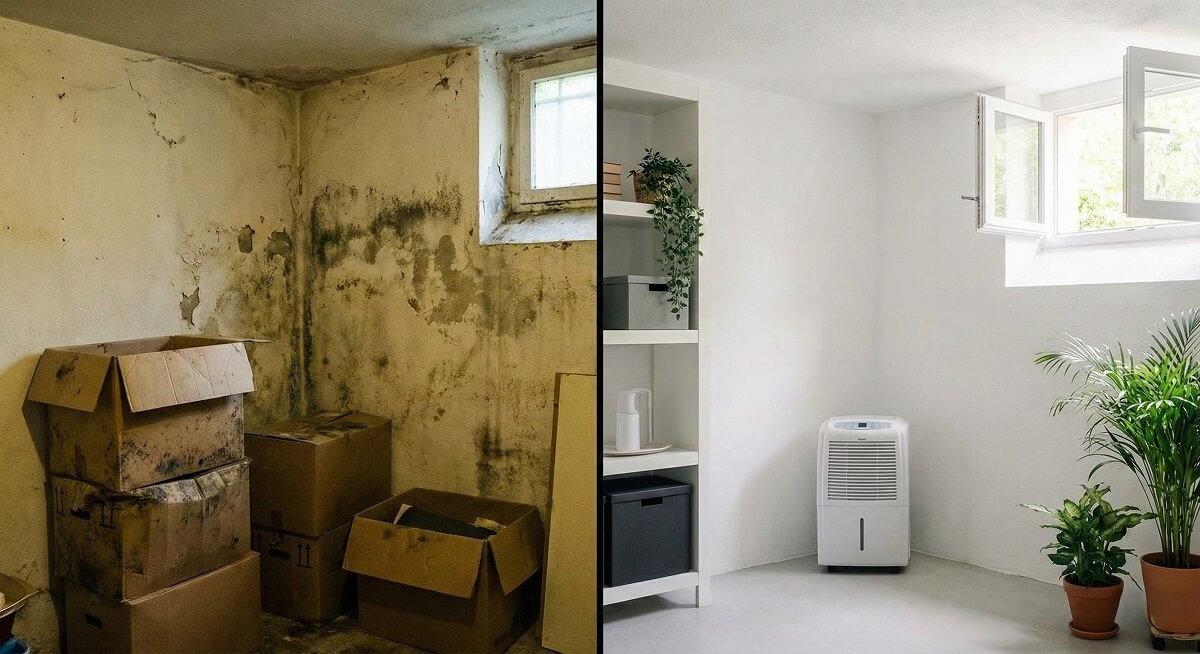
That musty basement smell almost always traces back to excess moisture feeding mold or mildew growth. The fastest fix? Get a dehumidifier running and bring humidity down to the 30-50% range. Once you’ve tackled the dampness, the odor typically fades within a week or two.
Most homeowners can handle this themselves: improve ventilation, scrub surfaces with a vinegar-water solution, scatter some baking soda around to absorb odors, and keep that dehumidifier running consistently. Give these methods one to two weeks before expecting major results. For more cleaning challenges around the house, check out our for practical solutions.
That said, there are times to call in the pros. According to the EPA’s mold cleanup guidelines, if you spot mold covering more than 10 square feet (roughly a 3-by-3-foot patch), the water damage came from sewage or contaminated sources, or you’re noticing health symptoms like persistent coughing or headaches, it’s time to get professional help.
Is This Guide Right for You?
This Guide Helps If:
- Your basement has that persistent earthy, damp odor
- You notice condensation on walls, pipes, or windows
- You want to try DIY solutions before spending on professionals
- You’re looking to prevent stale smells from coming back
Skip to “When to Call a Professional” If:
- You see visible mold covering large areas of wall or floor
- Anyone in your household has developed respiratory symptoms
- You’ve already tried these fixes without improvement
- There’s standing water or signs of active flooding
Why Your Basement Smells Musty: The 3 Main Culprits
Before grabbing the cleaning supplies, understanding the root cause helps target your efforts. That distinctive basement odor doesn’t appear out of nowhere.
Excess Moisture and Humidity
Basements sit below ground level, making them natural traps for dampness. Water seeps through foundation walls, condensation forms on cold pipes, and humid air gets trapped with nowhere to go. The CDC recommends keeping indoor humidity no higher than 50% to prevent mold growth. Once levels climb above 60%, you’ve created ideal conditions for mold to thrive.
Common moisture sources include groundwater seepage through cracks, condensation on cold-water pipes, leaky plumbing, and poor drainage around your foundation.
Mold and Mildew Growth
Here’s what’s actually causing that smell: mold and mildew release compounds called MVOCs (microbial volatile organic compounds) as they grow. These gases produce that distinctive earthy, stale odor. The tricky part is that mold often grows in hidden spots: behind stored boxes, under carpet padding, or inside walls where you can’t easily see it.
Health-wise, the CDC notes that mold exposure can trigger stuffy nose, sore throat, coughing, wheezing, and eye irritation. People with asthma or mold allergies may experience more severe reactions.
Poor Ventilation
Many basements simply lack adequate airflow. Stagnant air traps both moisture and odors, compounding every other problem. Without fresh air circulation, humidity builds up faster, and any mold spores floating around have more time to settle and grow.
7 Ways to Eliminate Musty Basement Smell
1. Find the Source First
Don’t just mask the odor; track it down. Walk through your basement with a flashlight and look for telltale signs: water stains on walls or floors, white mineral deposits (efflorescence) on concrete, visible mold patches, or condensation on surfaces.
Check these common trouble spots:
- Around windows and window wells
- Near exterior doors and bulkheads
- Under and behind stored boxes and furniture
- Along pipe runs, especially cold-water lines
- Floor drains and P-traps (pour water down unused drains; dry P-traps let sewer gases in)
Sometimes the culprit is obvious; other times the source hides behind walls or under flooring. If everything looks dry but the smell persists, the issue may run deeper than surface-level fixes can address.
2. Control Humidity with a Dehumidifier
This is often the single most effective step. A quality dehumidifier pulls excess moisture from the air, making your basement inhospitable to mold. Aim for relative humidity between 30% and 50%, following both EPA and CDC guidelines.
When choosing a dehumidifier, match capacity to your space:
| Basement Size | Capacity Needed | Price Range (2026) |
|---|---|---|
| Under 500 sq ft | 20-30 pints/day | $90-$200 |
| 500-1,500 sq ft | 35-50 pints/day | $200-$300 |
| Over 1,500 sq ft | 50-70 pints/day | $300-$400+ |
According to RTINGS.com testing, the Midea Cube ranks as a top performer, dropping humidity from 90% to 40% faster than competitors. For reliable everyday performance, the AlorAir Sentinel HD55 earns consistent high marks with a 4.8-star customer rating.
Pro tip: If your dehumidifier has a drain hose option, route it to a floor drain or sump pit. You won’t have to empty the tank, and the unit can run continuously. For more product comparisons, browse our .
3. Improve Ventilation
Moving air helps prevent that stale, damp feeling. On dry days (not during rain or high humidity), open windows to create cross-ventilation. Position a box fan near a window to push stuffy air out.
Other ventilation improvements:
- Keep the basement door open to the main house to share airflow
- Run ceiling fans if you have them
- Consider installing an exhaust fan for severe cases
- Keep vents and registers clear of furniture or boxes
One caution: opening windows during humid or rainy weather actually adds moisture to your basement. Save the fresh-air approach for dry, sunny days.
4. Clean and Disinfect Thoroughly
Once you’ve identified problem areas, it’s time to scrub. For general surface cleaning, mix equal parts white vinegar and water in a spray bottle. Vinegar is mildly acidic and helps kill mold spores on contact.
For heavier mold growth on hard, non-porous surfaces (concrete, tile, metal), you can use a diluted bleach solution: 1 cup of bleach per gallon of water. The EPA recommends scrubbing mold off hard surfaces with detergent and water, then drying completely.
Important safety notes:
- Wear rubber gloves and a mask (N95 recommended) when cleaning mold
- Never mix bleach with ammonia or other cleaners
- Ensure adequate ventilation while cleaning
- Bleach doesn’t penetrate porous materials; moldy drywall or carpet padding may need removal
5. Use Natural Odor Absorbers
While tackling the moisture issue, natural absorbers can help neutralize lingering odors. These won’t address the root cause, but they speed up the freshening process.
Baking soda: Place open boxes or bowls around the basement. Replace every few weeks. It’s inexpensive and effective for mild odors.
Activated charcoal: More powerful than baking soda. Charcoal bags or loose charcoal in mesh bags absorb odors and some moisture. Replace monthly.
Clean cat litter: The unscented, clumping kind works surprisingly well as a budget alternative. Spread it in shallow containers.
White vinegar: Leave bowls of undiluted vinegar in corners. The vinegar smell fades quickly, taking other odors with it.
6. Address Water Intrusion Issues
If water keeps seeping in, no amount of dehumidifying will permanently solve your odor problem. Target the source:
Seal foundation cracks: Use waterproof caulk or hydraulic cement for small cracks. Epoxy injection works for larger ones.
Check your drainage: Make sure gutters and downspouts direct water at least 4-6 feet away from your foundation. Grade the soil around your house so it slopes away from the walls.
Interior waterproofing: Waterproof paint on basement walls provides a moisture barrier. It’s not a substitute for proper drainage but adds a layer of protection.
For serious water intrusion, professional waterproofing may be necessary. According to HomeAdvisor data, basement waterproofing costs average $5,231, with most homeowners spending between $2,459 and $8,190. Interior waterproofing runs $4,500 to $10,000, while exterior work costs $10,000 to $15,000.
7. Consider an Air Purifier
An air purifier with a HEPA filter captures mold spores floating in the air, preventing them from settling and growing elsewhere. Models with activated carbon filters also help absorb odors directly.
Size the purifier to your basement’s square footage. Run it continuously for optimal results, especially during humid months. This works well alongside a dehumidifier for a one-two punch against basement mustiness. If you’re comparing air quality devices, see our for detailed breakdowns.
How Long Until the Smell Goes Away?
Results vary based on how severe your moisture situation is, but here’s a general timeline:
- 24-48 hours: With a dehumidifier running, you should notice the air feeling drier
- 3-5 days: Odor absorbers start making a noticeable difference
- 1-2 weeks: Significant improvement with a comprehensive approach
- Still smelly after 2 weeks? Time to investigate for hidden mold or call a professional
Patience matters here. Moisture that took months to accumulate won’t disappear overnight. Stick with your routine, keep the dehumidifier running, and the improvement will come.
When to Call a Professional
Some situations are beyond DIY territory. The EPA recommends professional help when:
- Mold covers more than 10 square feet (roughly 3 feet by 3 feet)
- Mold resulted from contaminated water (sewage, floodwater)
- Your HVAC system may be contaminated
- Anyone in the household has mold allergies or compromised immune systems
- The odor persists after thorough DIY treatment
What Professional Services Cost
Based on 2026 data from Angi:
| Service | Typical Cost | Notes |
|---|---|---|
| Mold Inspection | $300-$650 | Up to $1,000 for large homes |
| Mold Testing | $250-$500 | Air and surface samples |
| Mold Remediation | $1,200-$3,750 | Average $2,300; up to $15,000 for full basement |
| Basement Waterproofing | $2,459-$8,190 | Average $5,231 |
Finding a Qualified Professional
Look for mold remediators certified by the IICRC (Institute of Inspection, Cleaning and Restoration Certification). Get at least three quotes, and ask whether they’ll test before and after remediation to verify the problem is resolved.
Preventing Musty Smells From Returning
Once you’ve cleared the air, maintain it with ongoing attention to moisture control.
Monthly Maintenance Checklist
- Check dehumidifier water level (or ensure drain line is clear)
- Monitor humidity levels; keep between 30-50%
- Inspect for new water stains or condensation
- Replace odor absorbers as needed
Seasonal Tasks
- Run dehumidifier daily during humid months (May-September in most of the US)
- Clean gutters in spring and fall
- Check window wells before rainy season
- Inspect foundation for new cracks annually
Smart Upgrades Worth Considering
- Hygrometer: A digital humidity monitor costs under $15 and gives you real-time readings. Some models alarm when humidity spikes.
- Smart dehumidifier: Wi-Fi connected units let you monitor and control humidity from your phone
- Vapor barrier: Plastic sheeting on basement floors blocks ground moisture
- French drain: For persistent groundwater issues, interior drainage systems direct water to a sump pump
Browse our for humidity monitoring tools and other home maintenance essentials.
Frequently Asked Questions
Is a musty smell in my basement dangerous?
The odor itself isn’t harmful, but what causes it might be. According to the CDC, mold exposure can trigger allergic reactions, respiratory symptoms, and eye irritation. People with asthma or weakened immune systems face higher risks. If anyone in your household develops persistent symptoms, address the moisture issue promptly.
Can I just use air fresheners to cover up the smell?
Air fresheners only mask the odor temporarily. The underlying moisture and potential mold will keep growing, making things worse over time. Address the source rather than covering it up.
Will a dehumidifier alone fix the musty smell?
A dehumidifier is often the most important step, but it works best as part of a complete approach. You’ll still want to address any water intrusion, clean existing mold, and improve ventilation for lasting results.
How do I know if I have mold vs. just general mustiness?
Mold typically appears as fuzzy or slimy patches in white, green, gray, or black. Check corners, walls, and behind stored items. A stale smell without visible mold might mean hidden growth (behind walls, under flooring) or just damp conditions that haven’t progressed to mold yet.
Does opening windows help with basement smell?
Yes, but timing matters. Opening windows on dry, sunny days brings fresh air in and pushes stale air out. During humid or rainy weather, though, you’re actually adding moisture. Check outdoor humidity before opening up.
How much does a good dehumidifier cost?
Budget models for small spaces run $90-$200. Medium-capacity units (35-50 pints/day) cost $200-$300. Larger basement units with 50+ pint capacity range from $300-$400 or more. Higher-end models often include built-in pumps and smart features.
Will bleach kill mold permanently?
Bleach kills surface mold on non-porous materials like tile, glass, or sealed concrete. However, it doesn’t penetrate porous surfaces like wood or drywall where mold roots can survive. For porous materials with significant mold growth, removal or professional remediation may be necessary.
How often should I run my dehumidifier?
During humid seasons, run it continuously until humidity drops to 30-50%. Many modern units have built-in humidistats that cycle on and off automatically to maintain your target level. In drier months, you may only need to run it occasionally.
Ready to freshen up your basement? Start with the basics: get a hygrometer to check your current humidity levels (they’re under $15 at most hardware stores). If levels are above 50%, a dehumidifier should be your next purchase. Most homeowners see noticeable improvement within the first week.
If you’ve tried these methods for a couple of weeks without success, or if you spot visible mold larger than about 10 square feet, bring in a professional for an inspection. Catching problems early costs less than dealing with extensive damage later. Check out more practical solutions in our .
