


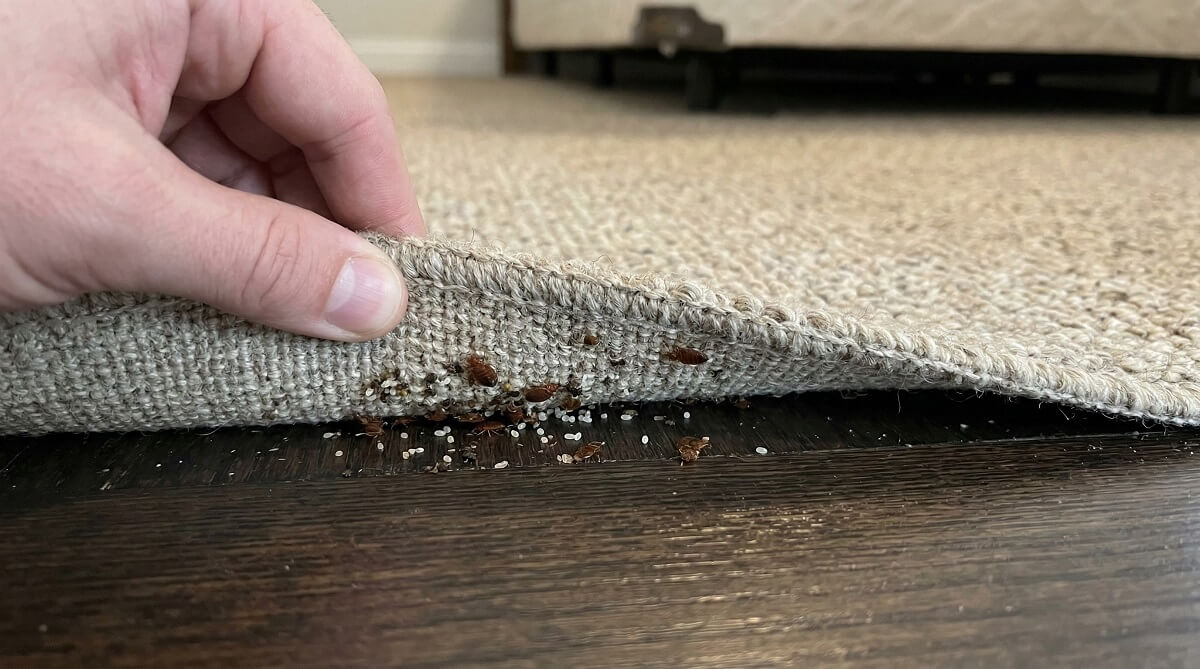
If you’ve spotted bugs in your carpet or woken up with mysterious bites, you’re probably wondering: do bed bugs actually live in carpets? The short answer is yes—bed bugs can and do infest carpets, though they don’t typically make them their first choice. They stay near the surface of carpet fibers rather than burrowing deep inside, which means they’re actually easier to treat than you might think.
Here’s what matters: bed bugs in your carpet usually signal a larger infestation spreading from or furniture. They prefer to stay within 6-8 feet of where people sleep, so finding them in carpeted bedrooms means they’re well-established and actively looking for meals. According to the National Pest Management Association’s 2025 survey, 99.6% of pest control professionals treated bed bug cases in the past year, with all 50 U.S. states reporting infestations.
This guide covers how to identify bed bugs in carpet, the most effective removal methods (both DIY and professional), and prevention strategies to keep them from coming back. I’ll walk you through the specific signs to look for, explain why carpets attract these pests, and show you which treatment approaches actually work based on current EPA guidelines and scientific research.
When to Tackle It Yourself vs. Call a Professional
✅ DIY Treatment May Work If:
- You’ve spotted only a few bugs in one carpeted room
- The infestation appears recent (less than a few weeks)
- You haven’t found bugs in walls, baseboards, or multiple rooms
- You can commit to weekly treatments for 3-4 weeks
- You have the right equipment (vacuum with bag, steam cleaner)
❌ Call a Professional Exterminator If:
- Bugs have spread to multiple rooms or living areas
- You’ve tried DIY methods for 2-3 cycles with no success
- You’re finding bugs in walls, electrical outlets, or baseboards
- You live in an apartment or multi-unit building
- Anyone in your home has severe reactions to bites
Understanding Why Bed Bugs Choose Carpets
Bed bugs don’t randomly pick carpets as their home base. They end up there for specific reasons, and understanding their behavior helps explain what you’re dealing with.
Proximity to Food Sources
The EPA notes that bed bugs will readily travel 5-20 feet from their hiding spots to feed on a sleeping person. Carpets in bedrooms or living rooms where people nap provide convenient hiding places while keeping them close enough to their next meal. They typically prefer to stay within 6-8 feet of where humans regularly spend time, which explains why bedroom carpets are prime real estate for these pests.
Why Carpets Make Good Hiding Spots
Carpet fibers create dark, undisturbed spaces where bed bugs can avoid light and detection. They particularly favor:
- Edges along baseboards and walls
- Carpet seams and transitions between rooms
- Areas under furniture that rarely gets moved
- Dark corners in closets or low-traffic zones
Bed bugs can survive and remain active at temperatures as low as 46°F (7°C) according to EPA data, so even carpets in cooler rooms can harbor them.
Do They Actually Burrow Into Carpet Fibers?
Here’s the good news: bed bugs don’t burrow deep into carpet like fleas do. They stay on or very near the surface, tucked between fibers where they can quickly move when needed. This surface-dwelling behavior makes them significantly easier to compared to pests that dig into carpet backing or padding.
How to Identify Bed Bugs in Your Carpet
Catching an infestation early makes treatment easier and less expensive. Here’s exactly what to look for during your inspection.
Visual Signs of Bed Bugs
The EPA describes adult bed bugs as flat, oval, wingless insects measuring about 1/4 inch (roughly the size of an apple seed). They’re reddish-brown normally, turning darker and more swollen after feeding. Check your carpet for these telltale indicators:
- Live bugs: Look along carpet edges, especially near baseboards in bedrooms
- Fecal spots: Small dark or rusty stains that show up clearly on light-colored carpet
- Eggs and shells: Tiny white or cream-colored specks (about 1mm—the size of a pinhead) often grouped together
- Shed skins: Pale yellow casings left behind as nymphs molt five times before reaching adulthood
- Blood stains: Small reddish marks where bugs were accidentally crushed
Where to Look in Carpeted Rooms
Don’t waste time inspecting every square inch of carpet. Focus your search on these high-probability areas:
- Carpet edges along all walls and baseboards
- Under and around furniture legs (beds, dressers, nightstands)
- Seams where carpet sections meet
- Transitions between carpet and other flooring
- Dark corners and areas under beds
- Closet floors, especially near clothing storage
Use a flashlight and examine these spots closely. Bed bugs often cluster together, so finding one usually means more are nearby.
The Musty Odor Test
Heavy bed bug infestations produce a distinctive sweet, musty smell. If your carpeted room has an unexplained odor that lingers even after cleaning, it’s worth investigating further for bed bugs.
Bed Bugs vs. Carpet Beetles: How to Tell Them Apart
Carpet beetles are frequently confused with bed bugs since both live in similar locations. Here’s how to distinguish between them:
| Feature | Bed Bugs | Carpet Beetles |
|---|---|---|
| Shape | Flat and oval | Round, like tiny ladybugs |
| Color | Reddish-brown (darker after feeding) | Black, brown, or yellow with spots/stripes |
| Size | 1/4 inch (4-5mm) | 1/8 inch (3mm) or smaller |
| Can they fly? | No | Yes |
| Diet | Blood (bites humans) | Natural fibers, fabrics (doesn’t bite) |
| Larvae appearance | Small white worms | Fuzzy, caterpillar-like |
If you’re seeing flying insects or noticing damage to wool rugs and natural fiber carpets, you’re more likely dealing with . If you’re getting bitten and see non-flying bugs, bed bugs are the culprit.
How to Remove Bed Bugs From Carpet: Step-by-Step
Once you’ve confirmed bed bugs in your carpet, quick action prevents the infestation from spreading. This systematic approach combines the most effective methods based on EPA recommendations and scientific research.
Step 1: Isolate the Infested Area
Don’t move items from the affected room—you’ll just spread bed bugs to other areas. If you must remove something, seal it in a plastic bag immediately. Keep doors closed and seal any gaps under doorways with towels to contain the infestation while you work.
Step 2: Vacuum Thoroughly
Use a vacuum with a bag (not bagless models) and strong suction. Here’s the process:
- Start along baseboards and carpet edges where bugs concentrate
- Work your way across the entire carpet surface
- Make multiple slow passes over each area (2-3 times minimum)
- Use the crevice attachment for corners and edges
- Vacuum under and around all furniture
- Immediately seal the vacuum bag in plastic and dispose of it outside
Regular vacuuming can remove bed bugs and eggs, but it won’t eliminate a full infestation on its own. You’ll need to combine this with other methods for complete control.
Step 3: Apply Diatomaceous Earth
The EPA registers food-grade diatomaceous earth (DE) for bed bug control. This natural powder contains less than 1% crystalline silica, making it safer than pool-grade versions which should never be used for pest control.
Application method:
- Put on a dust mask, gloves, and goggles (DE can irritate lungs if inhaled)
- Apply a thin, even layer across carpet surfaces using a dust applicator
- Focus on carpet edges, seams, and under furniture
- Avoid clumps or piles—a light coating works best
- Leave it on for several hours (or overnight)
- Vacuum up all residue thoroughly
DE works by dehydrating bed bugs when they walk through it, but the process takes time. Don’t expect instant results.
Step 4: Steam Clean Your Carpet
Heat treatment is one of the most effective ways to eliminate bed bugs at all life stages. According to EPA guidelines and published scientific research, bed bugs die when exposed to temperatures of 118-120°F (48-49°C) for at least 90 minutes. Eggs are more heat-resistant and may require higher temperatures—research shows temperatures of 135-145°F virtually guarantee complete eradication.
Most consumer reach temperatures sufficient to eliminate bed bugs on contact if used properly:
- Use a steam cleaner that maintains consistent heat
- Move slowly across the carpet (not quick passes)
- Pay extra attention to edges, seams, and areas under furniture
- Let the carpet dry completely before replacing furniture
Professional heat treatments can reach higher sustained temperatures than consumer equipment, making them more reliable for severe infestations.
Step 5: Treat Surrounding Areas
Bed bugs don’t stay confined to carpet. Clean baseboards, furniture legs, and nearby areas with hot, soapy water. Wash any removable rugs or carpet sections on the hottest setting your washing machine allows, followed by high-heat drying for at least 30 minutes.
Step 6: Repeat the Treatment Cycle
Here’s the crucial part most people miss: one treatment isn’t enough. Entomological research from the Virginia Department of Agriculture shows that bed bugs develop from egg to adult in approximately 37 days under optimal conditions, with eggs hatching in 6-17 days.
This means you need to repeat your treatment regimen weekly for 3-4 weeks minimum to catch newly hatched nymphs before they can reproduce. Most bed bug infestations require 2-4 treatments over a 3-6 week period for complete elimination according to industry standards.
What Doesn’t Work: Common Myths
Save yourself time and money by avoiding these ineffective approaches:
- Rubbing alcohol: Only kills bugs it directly contacts; doesn’t affect eggs or hidden bugs
- Bug bombs/foggers: Bed bugs hide too well for these to reach them effectively
- Outdoor pesticides: Dangerous indoors and not formulated for bed bugs
- Throwing carpet away: Bugs are likely in mattresses, furniture, and walls too
When Professional Treatment Makes Sense
DIY methods can work for small, recent infestations, but many situations call for professional help. Here’s what you need to know about the costs and what pros can offer.
Professional Treatment Costs (2026 Data)
According to 2026 industry data from major home services platforms, professional bed bug extermination typically costs between $1,000 and $2,500 for an average home. Here’s the breakdown:
- Single room chemical treatment: $270-$775
- Whole home treatment: $2,500-$5,000
- Heat treatment: $400-$5,500 depending on home size
- Severe or multi-unit infestations: Can exceed $4,000
Urban apartments may cost up to three times more due to the risk of bugs spreading between units. Most treatments include 2-4 visits over 3-6 weeks to address the complete bed bug lifecycle.
What Professionals Offer That DIY Can’t
Pest control experts bring several advantages:
- Industrial equipment: Professional steam cleaners and heat systems reach higher sustained temperatures than consumer models
- EPA-restricted pesticides: Access to commercial-grade insecticides not available to homeowners
- Thorough inspection training: Experience finding hidden colonies in walls, electrical outlets, and furniture
- Treatment guarantees: Most companies offer follow-up visits and warranties
- Multi-unit coordination: In apartments, pros can treat connected units to prevent reinfestation
Questions to Ask Before Hiring
Get clear answers on these points before committing:
- Which treatment method do you recommend for my specific situation?
- How many visits are included in the quoted price?
- Do you offer a guarantee or warranty on your work?
- What preparation do I need to do before treatment?
- How long before we can safely return to the treated areas?
How Long Can Bed Bugs Survive in Carpet?
Understanding bed bug survival times helps you gauge the urgency of treatment and explains why abandoned homes can still have active infestations.
According to a peer-reviewed study published in PMC (PubMed Central), adult bed bugs can survive 2-5 months without feeding under typical indoor conditions. The research found that adults survived between 73.9 and 92.9 days on average in controlled studies, though some laboratory conditions with low temperatures documented survival up to 400 days or more.
Temperature plays the biggest role in survival time—it directly controls the bed bug’s metabolic rate. High humidity combined with low temperatures helps prevent moisture loss and extends how long they can go without blood meals. This means bed bugs hiding in your carpet can wait months for their next opportunity to feed, making it critical to address infestations promptly rather than assuming they’ll die off on their own.
Younger bed bugs (first instar nymphs) are more vulnerable to starvation, typically surviving only 13.8-36.3 days. But by the time they reach the fifth instar stage, they can last 116.4-142.6 days—nearly as long as adults.
Preventing Bed Bugs in Carpet
Once you’ve eliminated an infestation, prevention becomes your focus. These strategies reduce the risk of bed bugs returning to your carpeted areas.
Post-Treatment Prevention
- Use mattress and box spring encasements: Zippered covers trap any remaining bugs and prevent new ones from hiding in bedding
- Keep furniture away from walls: A few inches of space makes it harder for bugs to travel between hiding spots and feeding areas
- Reduce clutter: Less stuff on floors means fewer hiding places
- Vacuum regularly: Weekly vacuuming of carpet edges and under furniture catches potential hitchhikers before they establish colonies
- Use bed bug interceptors: Place these under furniture legs to trap bugs trying to climb up
Travel Precautions
Bed bugs often arrive via luggage and clothing after travel. A 2025 survey by the National Pest Management Association revealed that only 28% of Americans check hotel rooms for bed bugs before staying—a missed opportunity for prevention. If you travel frequently, check out our for more tips on avoiding pests.
Protect yourself when traveling:
- Inspect hotel mattresses, headboards, and carpet edges before unpacking
- Keep luggage on hard surfaces (luggage racks, bathroom counters) never on carpeted floors or beds
- Wash all clothing in hot water immediately after returning home
- Dry clothes on high heat for at least 30 minutes (heat kills bugs and eggs)
- Vacuum suitcases thoroughly before storing them
Secondhand Furniture Checks
Used furniture and rugs can harbor bed bugs. Inspect any secondhand items carefully before bringing them into your home, paying special attention to seams, crevices, and underneath surfaces. When in doubt, treat suspicious items with heat ( or hot water washing) before placing them on your carpet.
Where Are Bed Bugs Most Common?
According to the National Pest Management Association’s 2025 survey, all 50 U.S. states now have bed bug infestations. The pests appear fairly evenly distributed across regions: 17% in the Northeast, 20% in the Midwest, 20% in the South, and 19% in the West.
The most affected cities in 2025-2026 include Philadelphia (ranked #1), New York, and Cleveland-Akron. States with the highest concentrations of infested cities are Ohio, Texas, Florida, California, and Pennsylvania. Whether you live in an urban hotspot or suburban area, vigilance remains your best defense.
Frequently Asked Questions
Can bed bugs live in carpet without a bed nearby?
Yes, bed bugs can survive in carpet even without a bed in the immediate area. According to a peer-reviewed study, adults can survive 2-5 months without feeding under typical indoor conditions. However, they strongly prefer to stay within 5-20 feet of where people regularly rest or sleep. If you’re finding bed bugs in carpet far from sleeping areas, it usually means a large established population is spreading to find new hiding spots.
How do I know if bed bugs are gone from my carpet?
Monitor for signs over 6-8 weeks after treatment. Check carpet edges, baseboards, and under furniture weekly using a flashlight. Look for live bugs, new fecal spots, shed skins, or eggs. Place bed bug interceptors under furniture legs—if they stay empty for two months after treatment and you have no new bites, the infestation is likely eliminated. Keep in mind that eggs can take up to 17 days to hatch, so premature celebration can lead to disappointment.
Will shampooing or steam cleaning alone kill bed bugs?
Steam cleaning can kill bed bugs if done correctly. The EPA recommends temperatures of at least 120°F (49°C) for 90 minutes, and research shows that 135-145°F virtually guarantees eradication. However, standard carpet shampooing without heat typically doesn’t reach lethal temperatures. Steam cleaning alone also won’t kill eggs hidden deep in carpet padding or bugs that crawl away before being exposed to steam. It works best as part of a multi-method approach including vacuuming and diatomaceous earth.
Do I need to throw away my carpet if it has bed bugs?
No, you don’t need to discard carpet for bed bugs. Unlike termites or beetles that burrow deep and cause structural damage, bed bugs stay on or near the surface of carpet fibers. They’re removable through combination treatment methods (vacuuming, heat, diatomaceous earth). Throwing away carpet won’t solve your problem anyway—bed bugs live primarily in mattresses, furniture, and wall voids, not carpet. Focus on treatment, not replacement.
What temperature kills bed bugs in carpet?
According to EPA guidelines and published scientific research, bed bugs die when exposed to temperatures of 118-120°F (48-49°C) for at least 90 minutes. Research indicates that 48.3°C kills adults immediately, while eggs require 54.8°C for immediate mortality. If using lower temperatures around 48°C, eggs need at least 71.5 minutes of exposure. Commercial heat treatments using 135-145°F virtually guarantee complete eradication of all life stages including eggs.
Can you vacuum bed bugs out of carpet effectively?
Vacuuming removes visible bed bugs and many eggs from carpet surfaces, but it’s not a complete solution on its own. Use a vacuum with strong suction and a bag (not bagless), making multiple slow passes over affected areas. The key limitations: vacuums can’t reach bugs hiding in baseboards, walls, or furniture; some eggs may survive in carpet padding; and the vacuum must be emptied outside immediately or bugs can escape. Use vacuuming as the first step in a multi-method treatment approach.
Do bed bugs prefer certain types of carpet?
Bed bugs don’t show strong preferences based on carpet material or pile height—they’re equally comfortable in plush, berber, or low-pile carpeting. What matters more is location: carpets near beds or furniture where people spend time offer proximity to food sources. Darker carpets may provide better concealment, making it harder for you to spot infestations early, but this doesn’t mean bugs prefer them. Focus your prevention efforts on carpet edges and areas under furniture regardless of carpet type.
Are bed bugs in carpet a sign of poor housekeeping?
No. Bed bugs are not attracted to dirt or clutter—they’re attracted to the carbon dioxide and body heat humans produce. According to the EPA, bed bugs can thrive equally in the cleanest homes and the messiest spaces. They spread through travel, secondhand furniture, and moving between apartments, not through poor hygiene. The only advantage of a tidy home is that fewer hiding spots make bed bugs easier to detect and treat early.
How do bed bugs get into carpet in the first place?
Bed bugs typically arrive in homes by hitchhiking on luggage, clothing, furniture, or other fabric items from infested locations. Once inside, they initially colonize mattresses and box springs. As populations grow, they spread outward looking for additional hiding spots—that’s when they move into nearby carpet, particularly along edges near beds. In multi-unit buildings like apartments, bed bugs can also travel through wall voids and emerge through carpet edges near baseboards.
Should I use pesticides on my carpet for bed bugs?
The EPA advises using pesticides labeled specifically for bed bugs and approved for indoor carpet use. Outdoor pesticides should never be used indoors. Many homeowners find that heat treatment, vacuuming, and food-grade diatomaceous earth work effectively without chemical pesticides. If you choose pesticides, carefully follow all label instructions, especially regarding ventilation and how long to stay out of treated rooms. Professional exterminators have access to EPA-restricted products that aren’t available to consumers and know how to apply them safely.
Key Takeaways
Bed bugs can and do live in carpets, but they stay near the surface rather than burrowing deep, which makes treatment more manageable than with some other pests. They typically end up in carpet after spreading from mattresses and furniture as populations grow, favoring edges along baseboards and areas under furniture within 6-8 feet of sleeping humans.
Effective removal requires a combination approach: thorough vacuuming with a bagged vacuum, food-grade diatomaceous earth application, and steam cleaning at temperatures of at least 120°F. Treatment must be repeated weekly for 3-4 weeks to address the complete lifecycle, as eggs hatch up to 17 days after initial treatment.
Professional help makes sense for severe infestations, multi-room spread, or when DIY methods fail after 2-3 cycles. Industry data from 2026 shows typical costs range from $1,000-$2,500 for whole-home treatment, with single rooms running $270-$775.
Prevention focuses on vigilance during travel (inspecting hotel rooms and washing clothes in hot water), checking secondhand furniture before bringing it home, and maintaining regular vacuuming schedules. With all 50 states affected and 99.6% of pest professionals treating bed bugs in 2025, understanding how to identify and address carpet infestations protects you from a problem that’s more common than most people realize.
Finding bed bugs in your carpet is stressful, but you now have the information to address it effectively. Start with the inspection steps outlined above, use the appropriate treatment methods for your situation, and don’t hesitate to call a professional if the infestation proves too widespread for DIY control.
