


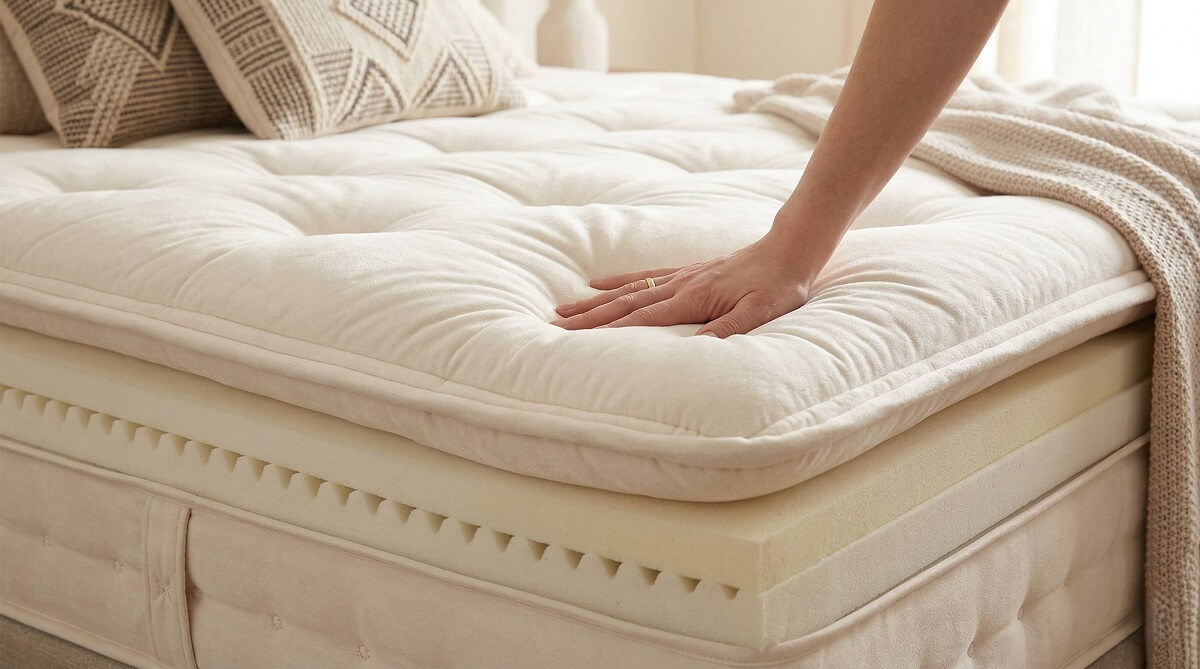
A plush mattress is a soft mattress with thick comfort layers—typically 4 or more inches—that allows your body to sink in and provides a “cloud-like” sleeping experience. According to Sleep Foundation, while firmer mattresses have comfort systems that are 1 to 3 inches thick, plush mattresses feature substantially thicker comfort layers that create that signature soft feel. These mattresses are positioned at 3-4 on the standard 1-10 firmness scale, where 1 represents the softest option and 10 is the firmest.
Plush mattresses work best for side sleepers, lightweight individuals under 130 pounds, and people with shoulder or hip pain who need pressure point relief. If you weigh less than 130 pounds, you’ll likely find a plush mattress comfortable regardless of your sleep position, since your body weight won’t compress the comfort layers excessively. However, plush options aren’t ideal for everyone—stomach sleepers, heavier individuals over 230 pounds, and hot sleepers who tend to overheat at night should consider firmer alternatives that offer better support and temperature regulation.
This guide explains what makes a mattress plush, compares different firmness levels and mattress types, and helps you decide if a plush mattress is the right choice for your sleep needs. We’ll cover everything from construction details to pricing, backed by verified data from independent testing organizations and mattress manufacturers.
Quick Decision Checklist
✅ A plush mattress is best for:
- Side sleepers who need cushioning for shoulders and hips
- Lightweight sleepers under 130 pounds
- People with joint or shoulder/hip pain
- Those who prefer a “sleeping in” vs. “sleeping on” feel
- Combination sleepers who change positions frequently
❌ Skip a plush mattress if:
- You sleep primarily on your stomach
- You weigh over 230 pounds
- You tend to sleep hot and overheat easily
- You have lower back pain that requires firmer support
- You prefer a firmer, more “on top of the bed” feel
What Makes a Mattress “Plush”?
The defining characteristic of a plush mattress is its thick comfort layers. While a firm mattress might have just 1-3 inches of cushioning on top of the support core, plush mattresses feature 4 or more inches of soft materials that cradle your body. This extra thickness allows for significant sinkage and body contouring, creating that distinctive soft feel.
Manufacturers use various materials to create plush comfort layers. Memory foam is popular for its pressure-relieving properties and body-hugging feel. Latex offers a softer, more responsive cushioning that doesn’t trap as much heat. Polyfoam provides an affordable option for budget-conscious shoppers. Many premium plush mattresses combine multiple materials in zoned layers to balance comfort and support.
You’ll also encounter different construction styles. Pillow-top mattresses feature an extra cushion layer sewn on top of the mattress, adding 1-2 inches of plushness. Euro-top designs integrate this soft layer under the mattress cover for a sleeker appearance. Some mattresses use integrated comfort systems without a visible top layer, relying on internal foam layers to create the plush feel.
Here’s an important distinction many shoppers miss: firmness and support are not the same thing. Firmness describes how the mattress feels when you lie on it—the initial softness or hardness you experience. Support refers to how well the mattress maintains proper spinal alignment. A plush mattress can still provide adequate support if its base layer (the support core) is firm enough to prevent your body from sinking too deeply.
Understanding the Mattress Firmness Scale
The mattress industry uses a 1-10 firmness scale to help shoppers understand how soft or firm a bed feels. This scale is fairly standardized across manufacturers and review sites, making it easier to compare different models. Sleep Foundation considers mattresses with a rating of 5 or below to be plush, with scores of 2-3 classified as “soft” and 4 as “medium soft.”
Plush mattresses typically fall in the 3-4 range on this scale. According to multiple industry sources, plush options tend to rank around the 3 or 4 mark, providing significant cushioning without the extreme sinkage you’d experience with an extra-soft mattress rated 1-2.
| Firmness Level | Scale Rating | Feel Description | Best For |
|---|---|---|---|
| Extra Soft | 1-2 | Extreme sinkage, minimal resistance | Very lightweight sleepers |
| Plush/Soft | 3-4 | Significant cushioning, body-hugging | Side sleepers, light sleepers |
| Medium | 5-6 | Balanced comfort and support | Back sleepers, combination sleepers |
| Firm | 7-8 | Minimal sinkage, strong pushback | Stomach sleepers, heavy sleepers |
| Extra Firm | 9-10 | Hard surface, almost no give | Specific medical needs |
Consumer Reports tested over 300 mattress models and identified seven soft mattresses with a firmness rating of 3 or lower that scored well in their overall performance testing. This demonstrates that while plush mattresses represent a smaller segment of the market, quality options are available for those who prefer softer sleeping surfaces.
Types of Plush Mattresses
Plush mattresses come in several construction types, each with distinct characteristics and price points. Understanding these differences helps you select the right bed for your needs and budget.
Plush Memory Foam
All-foam construction using multiple layers of memory foam creates excellent pressure relief and motion isolation. These mattresses conform closely to your body and absorb movement, making them ideal for couples. The main drawback is heat retention—memory foam can trap body heat, causing some sleepers to feel uncomfortably warm. Prices for quality plush memory foam mattresses typically range from $900 to $2,000 for a queen size in the mid-tier category.
Plush Hybrid
Hybrid mattresses combine innerspring coils with thick foam comfort layers on top. The coil base provides better airflow than all-foam designs, helping you sleep cooler. You’ll also get more bounce and edge support compared to memory foam options. The Casper Snow hybrid, for example, retails for $1,995 for a queen size as of February 2026 (down from an MSRP of $2,595), offering a premium plush feel with cooling technology. Hybrids generally cost more due to their complex construction and tend to be heavier, making them harder to move.
Plush Innerspring
Traditional coil mattresses with thicker padding on top offer a more affordable entry into plush territory. These beds provide a familiar, bouncy feel and better temperature regulation than foam options. Budget plush innerspring mattresses start around $400-$800 for a queen size. However, they typically offer less contouring than foam or hybrid options and may have shorter lifespans, often showing wear within 5-7 years compared to 8-12 years for quality foam or hybrid models.
Pillow-Top and Euro-Top
These aren’t separate mattress types but rather additional features that can be added to any base construction. A pillow-top mattress has an extra cushion layer sewn on top, creating a puffy appearance and adding 1-2 inches of plushness. Euro-top designs integrate this soft layer under the mattress cover for a more streamlined look. Both provide extra softness and a luxurious feel, but the sewn-on layers may compress faster than integrated comfort systems. Most pillow-top and Euro-top mattresses can’t be flipped, limiting your options for extending the mattress’s lifespan.
| Type | Construction | Price Range (Queen) | Pros | Cons |
|---|---|---|---|---|
| Memory Foam | All foam layers | $900-$2,000 | Best pressure relief, motion isolation | Can sleep hot, less bounce |
| Hybrid | Coils + foam layers | $1,200-$2,500 | Cooler sleep, responsive, durable | Higher price, heavier |
| Innerspring | Coils + padding | $400-$1,200 | Affordable, traditional feel | Less contouring, shorter lifespan |
| Pillow-Top | Any base + sewn layer | +$200-$500 | Extra softness, luxurious | Can compress faster, harder to flip |
| Euro-Top | Any base + integrated layer | +$200-$500 | Sleeker look, soft feel | Similar to pillow-top issues |
Benefits of a Plush Mattress
Pressure Point Relief
The thick comfort layers in plush mattresses cushion your shoulders and hips, reducing pain in these high-pressure areas. This is particularly important for side sleepers, who concentrate their body weight on relatively small contact points. The soft surface allows these areas to sink in, distributing pressure more evenly across your body.
Motion Isolation
Sharing your bed with a partner? Plush mattresses absorb movement effectively. The thick foam layers prevent motion from transferring across the bed, so you’re less likely to be disturbed when your partner shifts positions or gets up during the night. Memory foam plush mattresses excel at this, while hybrid options offer slightly less motion isolation due to their coil systems.
Body Contouring
Plush mattresses conform to your natural curves, promoting spinal alignment for side sleepers. When you lie on your side, your shoulders and hips need to sink into the mattress while your waist remains supported. A properly designed plush mattress allows this to happen, maintaining the natural S-curve of your spine.
Comfort for Lightweight Sleepers
According to Sleep Foundation, if you weigh less than 130 pounds, you may prefer sleeping on a plush mattress regardless of your sleep position. Lightweight individuals often don’t compress firmer mattresses enough to experience adequate contouring. A plush surface provides the sinkage needed for comfort without the risk of bottoming out that heavier sleepers might face.
Luxurious Feel
There’s something undeniably appealing about the “sleeping on a cloud” sensation that plush mattresses provide. The soft, enveloping feel creates a cozy sleep environment that many people find relaxing. This luxurious comfort can help you unwind before bed and may contribute to faster sleep onset.
Suitable for Side Sleepers
Given that 69% of Americans sleep on their side according to a 2024 SSRS national survey, plush mattresses serve a significant portion of the population. Side sleeping is the most common sleep position, and the pressure relief and body contouring that plush mattresses offer make them a natural fit for this sleeping style.
Drawbacks to Consider
Heat Retention
Thick foam layers can trap body heat, causing you to feel uncomfortably warm during the night. Memory foam is particularly notorious for this issue, though newer gel-infused and open-cell foams have improved temperature regulation. If you’re a hot sleeper, consider a hybrid plush mattress with better airflow or look for models with cooling technologies built in.
Weak Edge Support
Soft mattresses often sag at the sides, providing less stable support when you sit on the edge of the bed or sleep near the perimeter. This can reduce the usable sleeping surface and make getting in and out of bed more difficult, particularly for older adults or those with mobility issues. Hybrid plush mattresses typically offer better edge support than all-foam options due to their reinforced coil systems.
Durability Concerns
Pillow-top plush mattresses may compress faster than integrated designs. Most mattresses last 7-10 years according to Sleep Foundation, with quality plush models lasting 8-12 years with proper care. However, the extra-thick comfort layers in pillow-top designs can develop body impressions more quickly, potentially reducing the mattress’s effective lifespan.
Not Ideal for Heavier Sleepers
If you weigh over 230 pounds, you risk bottoming out on a plush mattress—sinking through the comfort layers until you hit the firm support core. This defeats the purpose of the plush design and can lead to inadequate support and discomfort. Heavier individuals typically need firmer mattresses with stronger support systems.
May Cause Lower Back Pain
For stomach and some back sleepers, plush mattresses can allow the hips to sink too much, creating an unnatural arch in the lower back. This spinal misalignment can lead to back pain and poor sleep quality. If you sleep primarily on your stomach or have existing lower back issues, a medium-firm or firm mattress usually provides better support.
Higher Price
Plush options often cost more due to the extra materials required for thick comfort layers. Premium plush mattresses from brands like Tempur-Pedic are priced in the range of $5,199 to $6,399 for a queen size as of February 2026, though promotions can offer up to $500 off. Even mid-tier plush options typically cost $900-$2,000, compared to $600-$1,200 for comparable firm mattresses.
| Pros | Cons |
|---|---|
| ✅ Excellent pressure relief | ❌ Can sleep hot |
| ✅ Cloud-like comfort | ❌ May lack edge support |
| ✅ Great for side sleepers | ❌ Not ideal for stomach sleepers |
| ✅ Good motion isolation | ❌ Can wear out faster (pillow-tops) |
| ✅ Reduces shoulder/hip pain | ❌ May cause back pain for some |
Who Should Use a Plush Mattress?
Side Sleepers
Side sleeping creates concentrated pressure on your shoulders and hips, requiring substantial cushioning to prevent discomfort. A plush mattress allows these pressure points to sink into the surface while supporting your waist, helping maintain proper spinal alignment. The soft comfort layers reduce the stress on your joints, potentially alleviating shoulder and hip pain that firm mattresses might cause.
Lightweight Sleepers (Under 130 lbs)
If you weigh less than 130 pounds, firmer mattresses often don’t compress enough under your body weight. You might feel like you’re sleeping “on” the bed rather than “in” it, missing out on the contouring and pressure relief that mattresses are designed to provide. A plush surface gives you adequate sinkage and conforming without the risk of bottoming out that heavier sleepers might experience.
Back Sleepers (Some)
While medium-firm mattresses are typically recommended for back sleepers, some individuals in this category prefer a softer feel. If you’re a lightweight back sleeper or simply enjoy more cushioning, a plush mattress can work well. Look for options with zoned support that provides extra firmness in the lumbar area to prevent your lower back from sinking too deeply.
People with Joint Pain
Arthritis sufferers and those with shoulder or hip pain often benefit from the cushioning that plush mattresses provide. The soft surface reduces pressure on sore joints and allows painful areas to settle into the mattress rather than bearing uncomfortable levels of force. This can lead to reduced pain and better sleep quality.
Who Should Avoid a Plush Mattress?
Stomach Sleepers
When you sleep on your stomach on a plush mattress, your hips tend to sink too deeply while your chest and legs remain higher. This creates an unnatural arch in your lower back, leading to spinal misalignment and pain. Stomach sleepers need firmer support to keep their spine in a neutral position, making firm or medium-firm mattresses better suited to this sleeping style.
Heavier Sleepers (Over 230 lbs)
If you weigh over 230 pounds, you risk compressing the comfort layers so much that you sink through to the firm support core beneath. This “bottoming out” defeats the purpose of having thick comfort layers and can lead to inadequate support and discomfort. Most mattress manufacturers design their plush models with weight capacities of 250-300 pounds per person for innerspring and memory foam, and 250-350 pounds for hybrid options. Exceeding these limits can reduce the mattress’s effectiveness and lifespan.
Hot Sleepers
Thick foam layers trap heat against your body, which can cause uncomfortable warmth during the night. If you already tend to sleep hot, a plush memory foam mattress will likely exacerbate this issue. Consider a hybrid plush mattress for better airflow, or opt for a firmer mattress with thinner comfort layers that allow more heat dissipation.
People with Lower Back Pain
While plush mattresses can help with shoulder and hip pain, they may allow too much lumbar sag for those with lower back issues. Your spine needs proper support to maintain its natural alignment, and a mattress that’s too soft can let your midsection sink excessively. Most back pain sufferers find better relief with medium to firm mattresses that provide more substantial support.
Plush vs. Firm vs. Medium: What’s the Difference?
Understanding how plush compares to other firmness levels helps you make an informed decision about which choice suits your needs. The differences go beyond just how soft the bed feels—they affect everything from pressure relief to temperature regulation.
A plush mattress with 4+ inches of comfort layers provides significant sinkage and excellent pressure relief, making it ideal for side sleepers and those under 130 pounds. In contrast, a firm mattress with just 1-2 inches of cushioning offers minimal sinkage and strong pushback, better suited for stomach sleepers and heavier individuals over 230 pounds. Medium firmness strikes a balance with 2-3 inches of comfort layers and moderate sinkage, working well for back sleepers and combination sleepers who change positions throughout the night.
Temperature is another key consideration. Plush beds tend to sleep warmer due to their thick foam layers, which can trap body heat. Firm models with minimal foam allow better airflow and typically sleep cooler. Medium choices fall in between, offering moderate temperature regulation.
| Feature | Plush (3-4) | Medium (5-6) | Firm (7-8) |
|---|---|---|---|
| Comfort Layer Thickness | 4+ inches | 2-3 inches | 1-2 inches |
| Sinkage | Significant | Moderate | Minimal |
| Best Sleep Position | Side | Back, Combo | Stomach, Back |
| Best Body Weight | Under 130 lbs | 130-230 lbs | Over 230 lbs |
| Pressure Relief | Excellent | Good | Fair |
| Support Feel | Softer pushback | Balanced | Strong pushback |
| Temperature | Warmer | Moderate | Cooler |
Plush mattresses are typically 12-14 inches thick overall, compared to 10-12 inches for firm mattresses. This extra thickness comes from the comfort layers—about 2 inches are dedicated to the comfort system in soft mattresses according to mattress construction specifications from multiple manufacturers.
How to Choose the Right Plush Mattress
1. Assess Your Sleep Position
Your primary sleep position should guide your firmness decision. If you sleep on your side most of the night, a plush mattress works well. Stomach sleepers should avoid plush options. Back sleepers can go either way depending on body weight and personal preference, though medium firmness is often the safest choice.
2. Consider Your Body Weight
Weight plays a crucial role in mattress selection. Under 130 pounds, plush is ideal for most sleepers. Between 130-230 pounds, medium firmness typically works better unless you’re a dedicated side sleeper. Over 230 pounds, plush mattresses generally provide inadequate support, and you should opt for firmer options.
3. Evaluate Temperature Preferences
Hot sleepers should choose a hybrid plush mattress for better airflow, or consider adding a cooling mattress topper to an all-foam plush bed. Look for features like gel-infused foam, phase-change materials, or breathable cover fabrics that help regulate temperature.
4. Set a Budget
Quality plush mattresses range from budget-friendly options at $400-$800 for basic innerspring models, to mid-tier choices at $900-$2,000 for quality memory foam or hybrid constructions, up to luxury models at $2,000-$6,400 from premium brands like Tempur-Pedic or organic mattress makers. Decide what you’re willing to spend, but remember that you’ll use this mattress for 8-12 years, making it worth investing in quality.
5. Check for Trial Periods
Most online mattress companies offer 100-night trial periods that let you test the mattress at home before fully committing. This is essential when buying a plush mattress, since firmness preferences are highly personal and you need time to adjust to a new sleeping surface. Make sure the return policy doesn’t charge excessive fees.
6. Read Reviews
Look for verified customer experiences that mention durability. Pay attention to reviews from people with similar body types and sleep positions to yours. Watch for patterns in complaints—if multiple reviewers mention heat retention or sagging after six months, those are red flags.
7. Test In-Store If Possible
Visiting a mattress store gives you the chance to lie down in your typical sleep position for at least 10 minutes. This gives you time to feel how the mattress supports your body and whether you experience any discomfort. Don’t just sit on the edge or lie down for 30 seconds—a proper test requires time.
Popular Plush Mattresses to Consider (2026)
Sleep Foundation tested dozens of plush mattresses and identified several top performers. The Helix Sunset Luxe earned a 9.0/10 rating as the best option for lightweight side sleepers, featuring pillow-top construction that provides exceptional pressure relief. The Leesa Sapira Chill Hybrid also scored 9.0/10 and was recognized as the best plush mattress for multiple sleeping positions, offering versatility for combination sleepers.
The WinkBed (Softer) received an 8.9/10 rating from Sleep Foundation and was highlighted as the best plush mattress for back pain relief. Its zoned support system provides extra firmness in the lumbar region while maintaining soft cushioning for shoulders and hips. The Saatva Classic in the Plush Soft option earned an 8.8/10 rating, delivering a luxury hotel feel at a more accessible price point than ultra-premium brands.
For those interested in the Casper Snow mentioned earlier, this hybrid model combines cooling technology with plush comfort layers. As of February 2026, it retails for $1,995 for a queen size (down from $2,595 MSRP), positioning it in the premium mid-tier category.
| Mattress Model | Type | Firmness | Key Features | Sleep Foundation Rating |
|---|---|---|---|---|
| Helix Sunset Luxe | Hybrid | 3-4 | Pillow-top, lightweight side sleeper focus | 9.0/10 |
| Leesa Sapira Chill Hybrid | Hybrid | 3-4 | Multi-position versatility, cooling | 9.0/10 |
| WinkBed (Softer) | Hybrid | 3-4 | Zoned support, back pain relief | 8.9/10 |
| Saatva Classic (Plush Soft) | Hybrid | 3-4 | Luxury hotel feel, dual coil system | 8.8/10 |
These ratings come from Sleep Foundation’s comprehensive testing process, which evaluates mattresses based on pressure relief, motion isolation, edge support, temperature regulation, and overall value. Remember to check current pricing and availability, as these models are available from both manufacturers’ websites and major retailers like Amazon.
Frequently Asked Questions
How long do plush mattresses last?
Most mattresses last 7-10 years according to Sleep Foundation, with quality plush models lasting 8-12 years when properly maintained. The lifespan depends on construction quality, materials used, and how well you care for the mattress. Hybrid plush mattresses with durable coil systems tend to last longer than budget all-foam options. Most manufacturers offer warranties ranging from 10-25 years, with premium brands providing up to 25-year warranties on their organic latex models. Rotate your mattress every 3-6 months and use a mattress protector to extend its lifespan.
Can I make a plush mattress firmer?
You can add a firm mattress topper to increase support, but this has limitations. A 2-3 inch firm topper can reduce sinkage and provide a slightly firmer feel, but it won’t fundamentally change the mattress’s support characteristics. If the mattress is too soft for your needs, you’ll likely still experience issues with spinal alignment and bottoming out. It’s generally better to choose the right firmness level from the start rather than trying to modify a plush mattress after purchase.
Are plush mattresses bad for your back?
It depends on your sleep position and body type. Plush mattresses can cause back pain for stomach sleepers and some back sleepers because they allow the hips to sink too deeply, creating an unnatural arch in the lower back. However, side sleepers and lightweight individuals often find that plush mattresses reduce back pain by properly cushioning pressure points and maintaining spinal alignment. If you have existing lower back issues, consult with your doctor or physical therapist before choosing a plush mattress.
Do plush mattresses sleep hot?
Many plush mattresses do sleep warmer than firmer options, particularly all-foam memory foam models. The thick comfort layers trap body heat against you, which can cause discomfort for hot sleepers. However, hybrid plush mattresses with coil support systems offer better airflow and temperature regulation. Look for cooling features like gel-infused foam, breathable cover materials, or phase-change technology if temperature is a concern. Some newer plush mattresses specifically address heat retention with advanced cooling systems.
What’s the difference between plush and pillow-top?
Plush refers to a firmness level (typically 3-4 on the 1-10 scale), while pillow-top describes a construction feature. A pillow-top is an extra cushion layer sewn on top of the mattress, adding plushness to the feel. You can have a pillow-top mattress that’s firm, medium, or plush depending on the materials used. In other words, pillow-top is a type of construction that can create a plush feel, but not all plush mattresses have pillow-tops.
Is a plush mattress good for side sleepers?
Yes, plush mattresses are excellent for side sleepers. When you sleep on your side, your shoulders and hips bear most of your body weight, creating pressure points that need cushioning. A plush mattress allows these areas to sink into the surface, distributing pressure more evenly and reducing discomfort. The soft comfort layers help maintain spinal alignment by letting your shoulders and hips settle while supporting your waist. Given that 69% of Americans sleep on their side according to SSRS survey data, plush mattresses serve this large population well.
Do hotels use plush or firm mattresses?
Most hotels use medium to medium-firm mattresses rather than plush or firm extremes. This firmness level accommodates the widest range of guests with different sleep preferences and body types. Some luxury hotels offer pillow-top mattresses that provide a plush feel on the surface while maintaining medium-firm support underneath. A few hotel chains let guests request firmer or softer mattresses, but the default option is typically in the 5-6 firmness range.
Can I flip a plush mattress?
Most modern plush mattresses can’t be flipped because they’re designed with specific layers that only work in one orientation. The comfort layers go on top, and the support core goes on the bottom. Flipping these mattresses would put the firm base against your body and the soft layers underneath, defeating the design. However, you should rotate your mattress 180 degrees every 3-6 months to promote even wear. Check your manufacturer’s care instructions, as some older innerspring models are designed to be flippable.
What is a plush firm mattress?
A plush firm (or “luxury firm”) mattress sits between plush and firm on the scale, typically rating around 5-6. It features a soft top comfort layer that provides initial cushioning, combined with a firm support core that prevents excessive sinking. This creates a “soft yet supportive” feel that some people find ideal. The term can be confusing because it seems contradictory, but think of it as a firm mattress with a plush surface layer—you get the support of a firm bed with some of the pressure relief of a plush option.
How thick should a plush mattress be?
Plush mattresses typically measure 12-14 inches thick overall. This total thickness includes both the comfort layers (4+ inches) and the support core (8-10 inches). By comparison, firm mattresses usually measure 10-12 inches thick because they have thinner comfort layers. The extra thickness in plush mattresses comes primarily from the additional comfort materials that create the soft feel. Some ultra-plush models can reach 16 inches or more, particularly luxury pillow-top designs with multiple comfort layers.
Final Thoughts
Plush mattresses offer cloud-like comfort and excellent pressure relief for side sleepers and lightweight individuals who weigh less than 130 pounds. The thick comfort layers—typically 4 or more inches—create a soft, body-hugging feel that can reduce shoulder and hip pain while providing luxurious comfort. Options range from budget-friendly innerspring models starting around $400 to premium hybrid and memory foam mattresses that can cost several thousand dollars.
However, plush mattresses aren’t one-size-fits-all. Your sleep position, body weight, and temperature preferences all play crucial roles in determining whether a plush mattress will work for you. Stomach sleepers and heavier individuals over 230 pounds typically need firmer support to maintain proper spinal alignment and avoid bottoming out. Hot sleepers should carefully consider hybrid plush options with better airflow or look for cooling technologies that address heat retention.
Trial periods are essential when shopping for a plush mattress. Since firmness preferences are highly personal and your body needs time to adjust to a new sleeping surface, take advantage of the 100-night trials most online mattress companies offer. Test the mattress for at least 30 days before deciding if it’s right for you. Pay attention to how you feel when you wake up—reduced pain and better sleep quality are signs you’ve made the right choice.
Ready to find your ideal plush mattress? Check current prices and customer reviews on Amazon, visit manufacturer websites for detailed specifications, or stop by a local mattress store to try before you buy. Remember that you’ll spend roughly a third of your life on your mattress, making it worth the time and investment to choose wisely. For more mattress guidance, explore our buying guides and reviews.
