


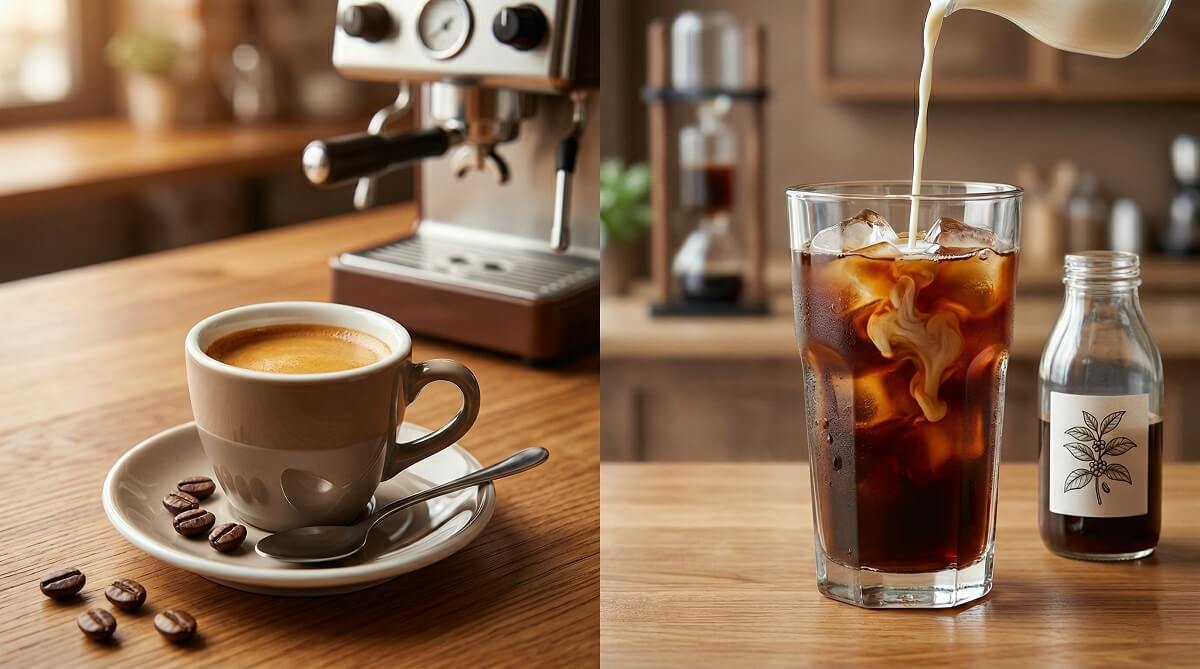
These two drinks are nothing alike — and that’s the whole point. Espresso is a 1-oz shot pulled in 30 seconds under high pressure. Cold brew is coarsely ground coffee steeped in cold water for 12 to 24 hours. Different tools, different timelines, completely different outcomes.
On caffeine: a single espresso shot has roughly 63–75 mg of caffeine. A 16-oz cold brew — like Starbucks’ Grande — clocks in at 205 mg. So cold brew wins on total caffeine per serving, but espresso is far more concentrated per ounce. On flavor: espresso is bold and slightly acidic; cold brew is smooth and low-acid. On cost: espresso has high upfront equipment costs; cold brew needs almost nothing to get started at home.
Below, we break down all five factors that matter — caffeine, flavor, acidity, time, and cost — so you can make a clear call without wading through the usual back-and-forth. And if you’re also weighing equipment options, our buying guides cover everything from entry-level machines to high-end setups.
Espresso vs. Cold Brew: Who Should Pick Which?
✅ Reach for espresso if you:
- Want coffee ready in under a minute
- Prefer a bold, intense, complex flavor
- Drink hot coffee or make lattes and cappuccinos regularly
- Want a small, high-concentration caffeine hit
- Are willing to invest in equipment upfront
❌ Skip espresso if you:
- Have a sensitive stomach or acid reflux
- Don’t want to spend $100–$600+ on a machine
- Prefer cold or large-serving coffee drinks
✅ Reach for cold brew if you:
- Want smooth, low-acid coffee that’s easy on your stomach
- Don’t mind prepping ahead (or buying bottled)
- Prefer cold drinks or need a big-cup caffeine load
- Want coffee that keeps in the fridge for up to two weeks
❌ Skip cold brew if you:
- Need coffee immediately — steeping takes 12–24 hours
- Want a hot drink
- Are caffeine-sensitive (cold brew can easily push past 200 mg per serving)
How Each One Is Actually Made
Espresso: Pressure, Heat, 30 Seconds
Making espresso means forcing hot water — between 195 and 205°F — through very finely ground coffee at around 9 bars of pressure. The whole extraction takes 25 to 30 seconds and produces 1 to 2 ounces of concentrated coffee with a layer of golden crema on top.
You need an espresso machine for this. There’s no real workaround. The pressure is what makes espresso distinct — it’s not just strong coffee, it’s coffee extracted under entirely different conditions. See our buying guides if you’re shopping for your first machine.
Cold Brew: Coarse Grind, Cold Water, Time
Cold brew flips everything. You use coarsely ground coffee, cold or room-temperature water, and patience. The grounds steep for 12 to 24 hours, then you strain out the coffee and you’ve got a concentrate. Most people dilute it with water or milk before drinking.
The main equipment you need is a container and a filter — a mason jar and a fine-mesh strainer will work. Once made, cold brew keeps in the fridge for up to two weeks, which makes batch brewing genuinely practical.
One important distinction: “cold brew concentrate” and “ready-to-drink cold brew” are not the same thing. Concentrate is meant to be diluted 1:1 with water or milk. Drinking it straight roughly doubles the caffeine you’re getting.
The Caffeine Question (The Answer Is More Complicated Than You Think)
Per Ounce vs. Per Serving — Why Both Numbers Matter
Espresso wins on caffeine concentration per ounce — roughly 63 to 75 mg in a single 1-oz shot, according to data from CNET and Starbucks’ own nutrition listings. That’s about 63–75 mg per fluid ounce.
Cold brew, by contrast, contains roughly 10–20 mg of caffeine per ounce in ready-to-drink form. That sounds like less — until you account for serving size. A standard 16-oz cold brew from Starbucks contains 205 mg of caffeine. A Stumptown Cold Brew 10.5-oz stubby bottle clocks in at 257 mg, according to Stumptown’s own support FAQ.
So the honest answer: espresso is more concentrated, but cold brew usually delivers more total caffeine because you drink more of it.
What About Cold Brew Concentrate?
This is where a lot of people get tripped up. Cold brew concentrate is sold undiluted, and the caffeine content on the label reflects that undiluted form. Chameleon Cold Brew’s 32-oz concentrate contains around 2,160 mg total — but it’s meant to be diluted 1:1 before serving, which cuts the effective caffeine roughly in half. Drinking it straight means a very different caffeine experience than the label might suggest.
How Much Caffeine Is Too Much?
According to the FDA, the safe daily caffeine ceiling is 400 mg for healthy adults. To put that in context: two double-shot lattes from Starbucks or one large cold brew can get you most of the way there. People who are pregnant, have heart conditions, or take certain medications should stick to a much lower amount — check with your doctor if you’re unsure.
Flavor Face-Off: Bold vs. Smooth
What Espresso Actually Tastes Like
Hot water and pressure extract a lot from coffee quickly — oils, acids, aromatic compounds. The result is a dense, layered flavor: dark chocolate, caramel, sometimes a slight fruitiness, and a persistent bitterness. The crema adds a creamy texture that makes a well-pulled shot feel almost velvety for its size.
The trade-off is acidity. Espresso has a higher concentration of organic acids, which gives it that sharp, bright quality. For most drinkers, that’s part of the appeal. For sensitive stomachs, it’s a problem.
What Cold Brew Actually Tastes Like
Cold water extracts coffee slowly and selectively — it pulls caffeine and sugars effectively but leaves most of the harsh acids behind. Cold brew tends to taste smooth, slightly sweet, and mellow. Chocolate and caramel notes come through, but the bitterness is softer.
See our how-to guides for tips on dialing in your cold brew steep time to adjust sweetness and strength.
Which Is Easier on Your Stomach?
Cold brew, clearly. A 2018 peer-reviewed study published in Scientific Reports found that cold-brewed coffee has approximately 67% lower titratable acidity compared to hot-brewed equivalents. That means fewer of the acid compounds linked to stomach irritation and acid reflux.
If you deal with GERD or a sensitive stomach and you’re not ready to give up coffee entirely, cold brew is worth a try. Espresso, with its high-acid extraction, tends to be a harder sell for that group.
Espresso vs. Cold Brew: Quick Comparison
| Factor | Espresso | Cold Brew |
|---|---|---|
| Brew time | 25–30 seconds | 12–24 hours |
| Water temperature | 195–205°F | Cold / room temp |
| Grind size | Fine | Coarse |
| Serving size (typical) | 1–2 oz | 8–16 oz (diluted) |
| Caffeine per serving | ~63–150 mg (1–2 shots) | ~150–260 mg |
| Caffeine per oz | ~63–75 mg | ~10–25 mg |
| Acidity | Higher | ~67% lower (vs. hot brew) |
| Flavor | Bold, intense, complex | Smooth, mellow, slightly sweet |
| Served | Hot (usually) | Cold / over ice |
| Shelf life (homemade) | Minutes | Up to 2 weeks (refrigerated) |
| Equipment needed | Espresso machine (~$149+) | Mason jar + filter (~$10–20) |
The Real Cost of Each
Espresso: High Upfront, Lower Per-Cup Cost
An entry-level espresso machine — something like the De’Longhi Stilosa — runs around $149 on Amazon as of March 2026. That’s before a grinder, which you’ll want for freshness — budget another $30–$80 for a decent burr grinder. Mid-range semi-automatic machines from Breville or Rancilio climb to $300–$600.
Per-cup costs, once you have the equipment, are low. A quality bag of espresso beans runs $12–$18 for 12 oz. At roughly 18–20 grams per double shot, a 12-oz bag yields around 16 to 19 double shots — call it $0.75 to $1.10 per shot at home.
Cold Brew: Low Upfront, Higher Coffee Use
Getting started with cold brew requires almost nothing. A mason jar, a fine-mesh strainer or paper filter, and ground coffee — under $20 total. The ongoing cost is where it creeps up: cold brew uses a much higher coffee-to-water ratio than drip (typically 1:4 to 1:8 compared to drip’s 1:15). You’re using more coffee per batch.
Bottled cold brew offers a middle ground. Stumptown Cold Brew runs about $4–5 for a 10.5-oz bottle at most retailers — not cheap, but convenient, and you know exactly what’s in it (257 mg of caffeine, per Stumptown’s own support data). Check our coffee equipment reviews for cold brew maker recommendations if you’d rather skip the bottled route.
What If You Want Both? (Red Eye Cold Brew)
Some coffee drinkers add a shot of espresso directly to cold brew — sometimes called a “Shot in the Dark” or “Red Eye Cold Brew.” You get the smooth, low-acid base of cold brew with the intensity of a freshly pulled shot on top. The flavor is complex and the caffeine content is, frankly, not for the faint of heart.
The option exists before you commit to one or the other. Our coffee how-to section has guides on home espresso and cold brew techniques if you want to experiment.
Frequently Asked Questions
Does cold brew have more caffeine than espresso?
By total caffeine per serving, yes — usually. A 16-oz cold brew typically delivers 150–260 mg of caffeine, while a single espresso shot has about 63–75 mg. However, espresso is far more concentrated per ounce (~63–75 mg/oz vs. ~10–25 mg/oz for cold brew). Two or three espresso shots can match or exceed a standard cold brew serving.
Is espresso just concentrated coffee?
Not exactly. Espresso is made using a specific process — very fine grind, high pressure, hot water, short extraction — that produces something chemically distinct from drip or cold brew coffee. The pressure extraction pulls different compounds and creates crema, which you can’t replicate by just brewing coffee stronger.
Can I use espresso beans for cold brew?
Yes. “Espresso beans” just refers to how they’re roasted and marketed — there’s no rule against using them in a cold brew setup. Many people enjoy cold brew made with dark roast espresso beans because the chocolate and caramel notes come through well in cold extraction.
Is cold brew better for acid reflux?
For most people with acid reflux or a sensitive stomach, yes. A peer-reviewed study found cold brew has around 67% lower titratable acidity than hot-brewed coffee — meaning fewer of the compounds that tend to irritate the esophagus and stomach lining. That said, cold brew still contains caffeine, which can relax the lower esophageal sphincter. If you have severe GERD, check with your doctor.
How long does homemade cold brew keep in the fridge?
Most sources put the window at one to two weeks when kept refrigerated in a sealed container. The concentrate form tends to last longer than ready-to-drink. When in doubt, trust your nose — coffee past its prime tastes flat and slightly off.
What’s the cheapest way to make espresso at home?
The De’Longhi Stilosa at around $149 is one of the more accessible entry points for a proper pump espresso machine. If you want to spend less, a stovetop Moka pot produces a very strong, espresso-style concentrate for under $30 — it’s not true espresso (no crema, different pressure), but it’s a reasonable budget substitute for milk drinks.
Is nitro cold brew stronger than regular cold brew?
Nitro cold brew is regular cold brew infused with nitrogen gas under pressure, giving it a creamy texture and a slight natural sweetness. Caffeine content depends on the base cold brew, not the nitrogen. Stumptown’s Nitro 10.3-oz can contains 252–289 mg, which is comparable to their regular cold brew bottles.
How many espresso shots equal one cold brew?
A rough estimate: a 16-oz cold brew has about the same caffeine as two to three double espresso shots (depending on the cold brew brand). But the caffeine hits differently — espresso delivers it in a concentrated dose, while cold brew spreads it across a larger drink you sip more slowly.
Ready to experiment? Check current prices on espresso machines on Amazon or grab a bottled cold brew at your local grocery store before committing to a home setup. Browse our buying guides on ChubbytIps for more detailed equipment recommendations.
