


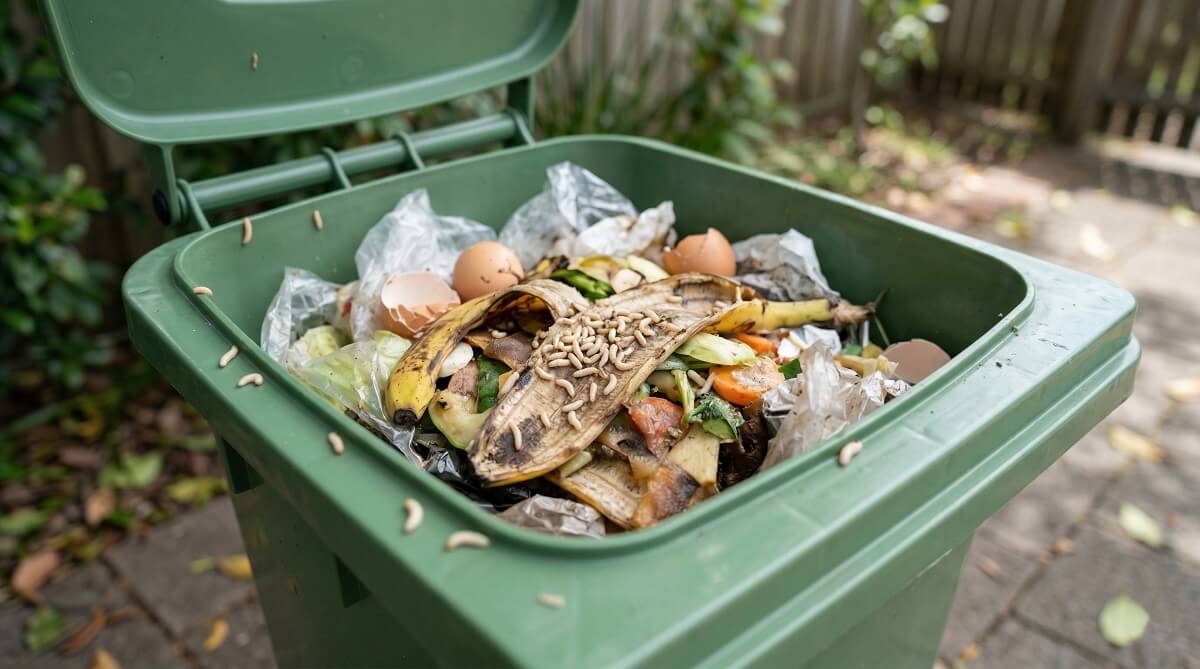
Found maggots in your trash can? Here’s the short version: they’re fly larvae that show up when flies get access to decomposing food. The fastest fix is boiling water — pour it directly on the maggots, scrub the bin, and you’re done. No chemicals required, and it costs nothing.
For prevention, the formula is simple: seal your bags, close the lid, and rinse the bin every couple of weeks. That takes care of the problem for most households. If you want a more hands-off solution, the is a vapor strip that hangs inside your lid and kills insects for up to four months without any effort on your part.
Below, you’ll find a full breakdown of every reliable method — including a comparison table so you can pick the right approach for your situation — plus a set of prevention habits that actually work.
Is This Guide Right for You?
✅ Read This If You:
- Just discovered maggots in your outdoor or kitchen trash can
- Have dealt with this before and want to stop it from happening again
- Want a verified product recommendation, not guesswork
❌ Skip Ahead If:
- You’ve already killed the current batch — jump to Prevention
- You want the product fix only — jump to Terro T800 section
Why Maggots Show Up in Your Garbage Bin
Maggots are the larval stage of flies — specifically house flies and blow flies. Flies are attracted to rotting organic matter because it releases gases (including methane) that signal a food source. When a fly detects that smell from your trash, it lands and lays eggs. Those eggs hatch fast.
According to Terminix’s fly biology resource and Orkin’s housefly lifecycle page, fly eggs hatch into maggots within 8 to 20 hours at temperatures between 64°F and 90°F. That means if a fly gets into your bin on a warm day, you could have a visible maggot problem by the next morning.
The usual culprits: meat scraps, seafood waste, unclosed bags, lids left ajar, or a bin sitting in direct summer sun where heat speeds up decomposition. A clean house doesn’t make you immune — one fly through a loose lid is all it takes.
Why Summer Is the Worst Time
Maggots develop fastest at 75°F to 80°F. Below 64°F, development slows significantly. Near or below freezing, larvae die. That’s why maggot complaints spike in summer and mostly disappear in winter — temperature drives the entire cycle. A bin sitting in afternoon sun can easily hit the internal temperatures where fly activity and decomposition accelerate together.
How to Kill Maggots in Your Trash Can Right Now
You have several solid options. Pick the one that fits what you have on hand and the scale of the problem.
Method 1: Boiling Water (Fastest, Free, No Chemicals)
This is the go-to for a reason. Boiling water at 212°F kills maggots on contact — instantly. If you’re not comfortable handling a full boil, you only need water at 140°F (60°C) minimum to kill them, according to entomology references cited by Mill’s pest guide. That’s hot from most kettles or the stove before a rolling boil.
How to do it: Empty the bin as much as possible. Boil water and pour it carefully and thoroughly over the maggot-infested area, making sure you get every visible cluster. Let it cool, then clean and rinse the bin. That’s it.
Best for: Concentrated maggot clusters in a visible area. Less practical if maggots have spread across a large bin.
Method 2: Vinegar and Hot Water (Kills + Deodorizes)
Combine one part white vinegar with three parts hot water (140°F+). Pour the mixture into the bin and let it sit for 30 minutes with the lid closed. The acidity kills the larvae and breaks down fly eggs, and the vinegar neutralizes the odor that attracted the flies in the first place — a practical two-for-one.
After 30 minutes, dispose of the liquid in a toilet or drain (not a garden bed — maggot water can carry bacteria), then rinse the bin thoroughly.
Best for: Anyone who wants to kill maggots AND clean and deodorize in one step.
Method 3: Salt or Diatomaceous Earth (Dry, Slow, Chemical-Free)
Both salt and diatomaceous earth work by dehydrating maggots. Salt is free and already in your kitchen. Diatomaceous earth (DE) goes a step further — it’s a fine powder made from fossilized algae that physically cuts through the maggots’ outer layer as it dries them out. Sprinkle generously over the affected area, leave it in direct sunlight for an hour or two, then sweep up the remains and clean the bin.
(4 lb with powder duster) is available on Amazon for around $17–18 and works on many other household pests too. It’s OMRI certified for organic use.
Best for: Mild infestations or ongoing bin maintenance. Requires dry conditions to work.
Method 4: Bleach Solution
A 1:1 mix of bleach and warm water handles heavy infestations reliably. Spray or swirl the solution inside the bin, let it sit for 10 minutes, then rinse thoroughly. Wear gloves and a mask — bleach fumes in an enclosed space are harsh.
One important caveat: don’t pour bleach water down a drain that connects to a garden or near a storm drain if you can avoid it. It can damage plants and harm local waterways. Flush it down the toilet instead.
Best for: Severe infestations or a bin that’s heavily contaminated. Skip this if you prefer eco-friendly options.
Method 5: Insecticide Spray
Standard fly or crawling insect sprays work on maggots. Spray thoroughly across the bin interior, wait 30 minutes, then clean. Wear a mask and protective gloves. This is the fastest option for a large-scale spread, but it’s also the least environmentally friendly and shouldn’t be your first choice if the other methods are available.
Method Comparison Table
| Method | Speed | Cost | Eco-Friendly | Best For |
|---|---|---|---|---|
| Boiling water | Instant | Free | Yes | Small, concentrated batch |
| Vinegar + hot water | 30 min | ~$1 | Yes | Killing + deodorizing |
| Salt / diatomaceous earth | 1–2 hrs | $0–$18 | Yes | Mild infestations, dry conditions |
| Bleach solution | 10–30 min | $2–$3 | No | Heavy infestation |
| Insecticide spray | 30 min | $8–$15 | No | Large spread infestation |
What to Do After You Kill the Maggots
Killing the maggots is step one. Cleaning the bin properly is what prevents them from coming back within a week, because fly eggs can survive in hidden corners and seams even after you’ve treated the obvious spots.
- Empty the bin first. If possible, time your treatment for the morning of trash pickup so the bin is already empty.
- Scrub with hot soapy water. Use a stiff brush on the interior, especially the corners, lid underside, and drainage holes — that’s where eggs hide.
- Rinse with diluted vinegar. A quick spray neutralizes odors and discourages flies from returning.
- Dry in direct sunlight. UV exposure kills remaining microbes. A fully dry bin is also less hospitable — maggots need moisture to survive.
- Dispose of maggot water responsibly. Flush it down a toilet or interior drain, not into the yard or garden. Maggot-laden water can harbor bacteria.
How to Prevent Maggots From Coming Back
Once you’ve dealt with an infestation, these habits are what actually keep maggots from returning. None of them require special equipment or much effort — they just need to be consistent.
Seal Your Bags Properly
Double-bag meat scraps, seafood, diapers, or anything that rots quickly. Knot the inner bag closed before putting it in an outer bag. A single torn bag is often enough to start the cycle. in your roll-away cart keeps the can itself clean and makes for easier trash day.
Keep the Lid Closed — Always
A female house fly lays up to 150 eggs per batch and produces 5 to 6 batches, according to Orkin’s housefly biology page. One fly that gets in through an open lid can produce hundreds of maggots within 24 hours. Check that the lid fits properly — cracked or warped lids on older bins often cause recurring problems.
Rinse the Bin Every Few Weeks
You don’t need a full scrub every time. A quick hose-down to remove residue, followed by a light spray of diluted vinegar, takes less than five minutes and removes the odor buildup that attracts flies. Do it more often in summer when temperatures are high.
Keep Bins Out of Direct Sun
Heat speeds decomposition, which intensifies the smell that draws flies in. A shaded bin location significantly slows this process. If shade isn’t available where you put your trash, rinse it more often during warm months.
Use a Trash Can Insect Killer Strip
The Terro T800 Garbage Guard is a passive prevention option worth considering if you deal with recurring infestations. You peel the backing and stick the pod to the underside of your trash can lid. It releases an odorless vapor that fills the enclosed space of the bin, killing flies, maggots, beetles, and roaches before they establish. One pod covers up to 50 cubic feet and lasts up to four months. It’s available at Amazon, Walmart, Lowe’s, and Ace Hardware — check current pricing at your preferred retailer.
This isn’t a substitute for keeping the bin clean, but it’s a solid backup layer if you have a persistent fly problem near your trash area.
Are Maggots in Your Trash Can a Health Risk?
Maggots themselves don’t bite or sting, but the flies that produce them are a legitimate sanitation concern. Research published in Applied and Environmental Microbiology (via NIH/PubMed Central) found that house flies carry pathogens including Salmonella enterica, E. coli O157:H7, Listeria monocytogenes, and Campylobacter on their body surfaces, legs, and mouthparts. In that study, 6% of individual flies tested positive for Salmonella.
The risk isn’t from the maggots in your bin specifically — it’s from the adult flies those maggots will become. Flies that breed in a contaminated bin can then land on food preparation surfaces, utensils, or uncovered food, potentially transferring bacteria. reduces that pathway significantly.
In short: a maggot problem in your trash can isn’t an emergency, but it’s worth addressing promptly for sanitation reasons, not just aesthetics.
When to Call a Professional
DIY methods handle the vast majority of trash can maggot problems. Consider calling a pest control professional if: you’re seeing flies emerging from inside walls or flooring (indicating a larger infestation in hidden spaces), the problem recurs weekly despite proper bin maintenance, or you suspect a dead animal is the source rather than food waste.
Frequently Asked Questions
How long does it take for fly eggs to turn into maggots?
In warm weather (64°F to 90°F), fly eggs hatch into maggots within 8 to 20 hours. The larvae then feed for 3 to 5 days before moving into the pupal stage. The entire fly lifecycle from egg to adult takes about 7 to 10 days under ideal conditions.
Does boiling water kill fly eggs too?
Yes. Boiling water at 212°F destroys both larvae and eggs on contact. Even water at 140°F kills them, though boiling is more reliable for hidden eggs in seams or corners. Follow up with a thorough scrub to remove any residue where eggs might be hiding.
Is bleach safe to use in a trash can?
It’s effective and generally safe for the bin itself, but use it with caution. Wear gloves and a mask, keep the area ventilated, and never mix bleach with ammonia or vinegar. Don’t pour the rinse water into a garden, near plants, or into storm drains — flush it down a toilet instead.
Why do I keep getting maggots even after cleaning?
Usually it comes down to one of three things: the lid isn’t closing completely (allowing flies in), food scraps are still leaving residue in the bin, or the bin is in a hot, sunny spot that accelerates decomposition. Check the lid seal and consider moving the bin to a shadier spot.
What’s the best product to prevent maggots in a trash can?
The Terro T800 Garbage Guard is the most-cited passive prevention product. It attaches inside the lid, releases a vapor that kills insects for up to four months, and treats up to 50 cubic feet. Check current pricing at Amazon or your local hardware store.
Can maggots crawl out of a sealed trash bag?
Small maggots can squeeze through loosely tied bags or thin plastic, which is why double-bagging food waste matters. Heavy-duty liners that fit snugly inside a roll-away cart prevent this entirely — the bag gets collected with the trash on pickup day, maggots and all.
Do maggots only appear in summer?
Mostly, yes. Maggots develop fastest at 75°F to 80°F and die at or near freezing. You can get them in spring and fall during warm spells, but they’re rare in winter unless you live in a consistently warm climate. The combination of heat, humidity, and food odor is what drives infestations.
Should I call a pest control company for maggots in my trash can?
Rarely necessary for a standard bin infestation. Boiling water, a thorough cleaning, and better bin hygiene resolve almost every case. Call a professional if the problem recurs weekly despite your best efforts, or if you’re seeing adult flies emerging from inside walls or structural spaces.
If you’re dealing with a recurring maggot problem, the Terro T800 Garbage Guard on Amazon is worth checking out — it’s a passive fix that works for up to four months per pod. For more home maintenance and pest prevention tips, browse the .
