


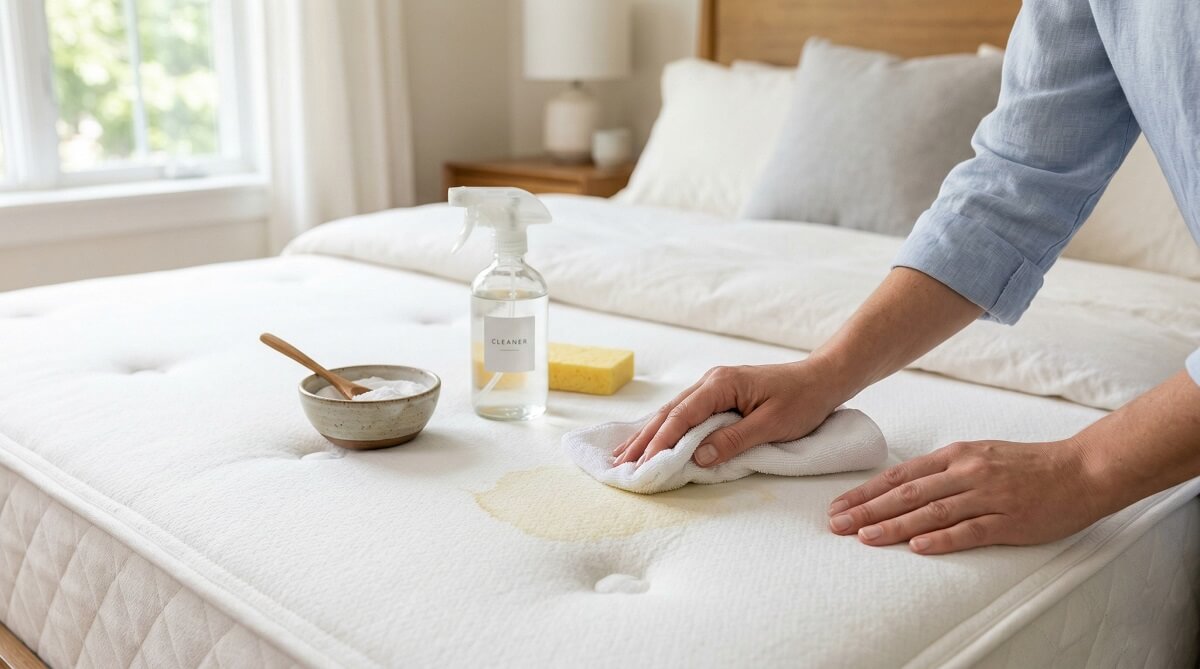
Sweat marks on a mattress are protein-based — that’s why hydrogen peroxide works so well on them. The same chemistry that lifts blood stains breaks down the fatty acids and proteins in dried perspiration, which is what turns your bed yellow over time. A simple mixture of 3% hydrogen peroxide, dish soap, and baking soda clears most fresh discoloration in under an hour. For older, set-in marks, an enzyme cleaner is the more reliable option. on ChubbytIps if you’re tackling multiple problem areas.
Speed is your biggest advantage. Fresh sweat stains come out far more easily than dried ones. If you’re dealing with yellowing that’s been sitting for weeks or months, expect to run through the process two or three times — that’s normal, not a sign the method isn’t working.
One note for memory foam owners: use significantly less liquid than you think you need. Memory foam absorbs moisture and takes 12–24 hours to dry fully. Rushing that step trades a yellow stain for a mold problem, which is a much harder fix.
Who This Guide Is For
✅ Best For
- Anyone dealing with yellow or discolored perspiration marks on a mattress
- Hot sleepers and night sweaters who need a reliable cleaning routine
- People tackling old, dried stains (covered specifically below)
- Memory foam mattress owners — a dedicated section covers the modified approach
❌ Skip This If
- You have visible mold or mildew growth inside the mattress — that’s a replacement situation
- Your mattress is 8–10+ years old and heavily damaged — cleaning won’t address structural issues
- You’re dealing with chemical or dye stains — those require a completely different approach
Why Sweat Stains Turn Your Mattress Yellow
Sweat isn’t just water. It contains proteins, salts, urea, and fatty acids — and when those compounds oxidize over time, they leave behind the yellowish discoloration you’re trying to lift. The longer a sweat stain sits untreated, the deeper it penetrates the fabric and bonds with the fibers, which is why older marks take considerably more effort to clear.
There’s also a health angle worth knowing. A typical used mattress can harbor 100,000 to 10 million dust mites, according to the American Lung Association. Sweat residue — proteins and moisture — feeds that population directly. The average person sheds about 1.5 grams of skin flakes daily, which is enough to sustain a million mites. Roughly four out of five US homes have dust mite allergens in at least one bed. Regular cleaning isn’t just about aesthetics — it cuts the allergen load you’re breathing in every night.
The upside: treating sweat stains also knocks back dust mite populations. Baking soda deodorizes and pulls moisture; hydrogen peroxide kills surface bacteria. A single cleaning session does double duty.
What You Need to Remove Sweat Stains
Most of what you need is probably already under your sink.
For Fresh Stains
- Hydrogen peroxide (3%) — the standard drugstore bottle; do not use a stronger concentration
- Clear dish soap — uncolored and mild; Dawn or similar works
- Baking soda — for odor absorption and pulling out residual moisture
- Spray bottle
- Clean white cloths — white prevents color transfer to the mattress
- Vacuum with upholstery attachment
For Old, Set-In Yellow Stains
Add an enzyme cleaner to the list. These products contain biological enzymes that specifically break down proteins — they’re purpose-built for the job in a way that vinegar and dish soap aren’t. Look for one rated for protein stains; pet stain removers like Rocco & Roxie Professional Strength (check current pricing on Amazon — the 32 oz bottle has 78,600+ five-star ratings) handle sweat, urine, and blood well. Apply generously, let it sit 20–30 minutes, then blot and follow up with the baking soda step. See our buying guides for more product recommendations across home cleaning categories.
What NOT to Use
- Bleach — damages mattress fabric and degrades foam materials
- Colored or heavily scented soaps — can stain or discolor the fabric
- Excessive water — soaking a mattress invites mold, especially in foam
- Heat sources (hairdryers, irons) — heat permanently sets protein stains
- Steam cleaners on memory foam — heat degrades foam structure over time
How to Remove Sweat Stains from a Mattress (Step-by-Step)
These steps work for standard innerspring, hybrid, and most latex mattresses. Memory foam owners: follow along but refer to the next section for the modifications — you’ll use noticeably less liquid throughout.
Step 1: Strip the Bed and Vacuum
Pull off all bedding — sheets, pillowcases, mattress protector, everything — and run them through the washing machine on hot. While those are going, run the vacuum over the mattress surface with your upholstery attachment. Work in overlapping rows and don’t skip the sides. This removes surface debris and loosens dried material around the stain before you introduce any cleaning solution.
Step 2: Mix Your Cleaning Solution
Combine in a spray bottle:
- 2 tablespoons of 3% hydrogen peroxide
- 1 tablespoon of clear dish soap
- Optional: 5–10 drops of tea tree or lavender essential oil (both carry antimicrobial properties)
Hydrogen peroxide clears sweat stains by releasing oxygen that breaks down protein bonds in perspiration — the same mechanism that tackles blood stains, per Tom’s Guide’s mattress cleaning research. The dish soap lifts the oily residue that proteins leave behind after the peroxide does its work.
Step 3: Apply and Wait
Lightly mist the stained area — you’re not trying to soak it. Work from the outer edge of the mark inward; starting from the center pushes the stain outward and makes it wider. Let the solution sit for 15–20 minutes undisturbed. Rubbing during this phase pushes liquid deeper into the foam and spreads the discoloration further.
Step 4: Blot, Then Rinse-Blot
Press a clean white cloth firmly onto the treated area — blot, don’t rub. You’re pulling loosened material out of the fabric, not grinding it deeper. Once you’ve absorbed the cleaning solution, dampen a second cloth with plain cold water and blot again to remove soap residue. Repeat both passes until the mark lifts. Most fresh perspiration stains clear in one or two rounds; older yellow spots may need three passes.
Step 5: Deodorize with Baking Soda
Cover the treated area with a generous layer of baking soda — don’t be stingy with it. The powder is alkaline, which neutralizes the acidic compounds in dried sweat, and it draws moisture out of the fabric as it sits. Leave it a minimum of 30 minutes; 6–8 hours is better; overnight is ideal if you have a spare bed. Vacuum it up completely when done.
Step 6: Dry Thoroughly Before Making the Bed
Skip this and you create a new problem. After spot cleaning, a standard mattress takes 6–12 hours to air out fully; memory foam needs 12–24 hours. Open windows, point fans at the surface, or run a dehumidifier in the room. Putting bedding back on a damp mattress gives mold exactly the conditions it needs — a moist, dark environment. Mold can take hold within 24–48 hours. Wait.
Cleaning Sweat Stains from a Memory Foam Mattress
Memory foam needs a lighter touch than other mattress types. The foam’s open-cell structure absorbs liquid readily and releases it slowly — that’s what makes it pressure-relieving, and it’s also what makes cleaning without creating new problems more difficult.
Per Nectar Sleep’s official care guidelines, spot cleaning is the only recommended approach: a damp cloth with mild detergent, taking care not to let liquid reach the underlying foam layers. The mattress cover is not machine washable on most memory foam models, and removing it may void your warranty.
Practically speaking:
- Use a mist, not a full spray — one or two pumps of the bottle at most
- Blot immediately after applying — don’t let liquid pool or soak in
- Avoid steam cleaners entirely — heat degrades memory foam over time
- Allow 12–24 hours minimum for drying with fans running
- Enzyme cleaners are fine for memory foam but apply them lightly and blot quickly
If you’re dealing with a heavily stained memory foam mattress and DIY hasn’t worked after two or three attempts, a professional cleaning service is worth the cost — they use extraction equipment that pulls liquid back out of foam, which you can’t replicate with household tools.
Sweat Stain Removal Methods Compared
| Method | Best For | Effort | Approximate Cost | Memory Foam Safe? |
|---|---|---|---|---|
| Hydrogen peroxide + dish soap | Fresh and recent marks | Low | Under $5 | Yes (use sparingly) |
| Baking soda alone | Odor absorption, light discoloration | Very low | Under $2 | Yes |
| Enzyme cleaner | Old, set-in protein stains | Low–medium | $18–$23 (32 oz) | Yes (light application) |
| White vinegar + water (50/50) | Deodorizing, surface marks | Low | Under $2 | Yes |
| Professional cleaning service | Severe staining, large areas, foam beds | None (hire out) | $65–$200 (size-dependent) | Yes (extraction equipment) |
Professional cleaning cost data sourced from Angi’s 2026 mattress cleaning cost guide. Costs vary by location, bed size, and provider — check current rates in your area.
How to Prevent Sweat Stains Going Forward
Cleaning a stain is a one-time fix. Keeping the mattress stain-free is the more practical long-term play — and most of it comes down to a couple of cheap habits.
1. Get a Waterproof Mattress Protector (Non-Negotiable)
A waterproof protector sits between your sheets and your mattress, blocking perspiration before it soaks through. The best ones are thin enough that you won’t notice them and machine-washable for easy upkeep. SafeRest’s waterproof cotton blend model is a consistently top-rated pick on Amazon — see our buying guides for what to look for, and check current pricing for Queen size options at Amazon. Quality fitted protectors typically run $25–$45 in Queen size.
2. Wash Your Bedding Weekly
Sheets and pillowcases absorb the first wave of moisture before it reaches the bed. Weekly washes in hot water remove that buildup before it has a chance to soak through. Hot water also addresses dust mites — the American Lung Association recommends washing bedding at 120°F or higher for effective allergen reduction.
3. Shower Before Bed on Hot Nights
Body oils are part of what makes sweat stains adhere. A quick shower before bed reduces the oil and bacteria transferred to your sheets and sleeping surface — a simple habit that compounds over time.
4. Choose Breathable Bedding Materials
Cotton, linen, and bamboo fabrics allow airflow and pull moisture away from your skin, keeping you cooler overnight. Polyester sheets and comforters trap heat and meaningfully increase how much you sweat. The fabric choice matters more than most people realize.
5. Keep Your Bedroom Cooler
Sixty-five to 68°F (18–20°C) is the ideal sleep temperature range. A room running warmer pushes most people into sweating — even those who don’t identify as hot sleepers. A ceiling fan, window AC unit, or cooling mattress topper can all help. Check our reviews section for cooling toppers if you consistently run hot at night.
6. Rotate Your Mattress Every 3 Months
Sleeping in the same position every night concentrates body weight and moisture in one spot, which leads to faster staining and uneven material breakdown. A 180° rotation every three months distributes that wear more evenly and helps your mattress last longer.
When to Call a Professional (or Replace the Mattress)
DIY methods handle the vast majority of sweat stains. But some situations call for outside help — or a new mattress entirely.
Call a professional when: The staining is widespread rather than spot-based; home cleaning hasn’t produced results after two or three complete attempts; or you have a high-value mattress (hybrid, latex, or premium memory foam) worth protecting with extraction equipment rather than household supplies.
According to Angi’s 2026 data, professional mattress cleaning runs $65–$150 for a standard deep clean and $150–$200 for memory foam. A twin runs around $50; a King can hit $120 or more. Add-ons like UV sanitizing or antimicrobial treatment add $10–$15.
Replace the mattress when: It’s 8+ years old; visible mold growth won’t clear after cleaning; the foam or springs are breaking down visibly; or you wake up sore despite the bed being otherwise clean. Yellow stains alone aren’t a reason to replace — a sound mattress with a few discolored spots and no structural damage has plenty of life remaining.
Frequently Asked Questions
Does hydrogen peroxide remove yellow sweat stains from a mattress?
Yes. 3% hydrogen peroxide — the standard drugstore variety — is reliable on protein-based stains including sweat. It releases oxygen that breaks down the protein bonds in dried perspiration, the same process that clears blood stains. Apply lightly, let sit 15–20 minutes, blot clean. Spot-test on a small area first if your mattress has a colored fabric cover, since hydrogen peroxide can lighten some materials.
Will baking soda remove sweat stains, or just the odor?
Primarily the odor. Baking soda is alkaline and absorbs moisture, which neutralizes acidic compounds in dried sweat and pulls residual liquid from the fabric. It won’t lift a set-in yellow mark on its own. For visible discoloration, use hydrogen peroxide or an enzyme cleaner first, then apply baking soda to deodorize and draw out remaining moisture.
How do I remove old, dried yellow sweat stains from a mattress?
Stubborn, dried stains need more dwell time and a stronger formula. An enzyme cleaner — products like Rocco & Roxie that use biological enzymes to break down proteins — outperforms hydrogen peroxide alone on months-old discoloration. Apply generously, let it sit 20–30 minutes, then blot. Plan on two or three complete passes. Baking soda between rounds helps with odor and pulls moisture.
Can sweat stains make a mattress unhealthy to sleep on?
Over time, yes. Perspiration residue creates ideal habitat for dust mites and bacteria. The American Lung Association reports that a typical used mattress can harbor 100,000 to 10 million dust mites — and four out of five US homes have mite allergens in at least one bed. For anyone with asthma, allergies, or respiratory sensitivities, regular cleaning carries real health value.
How long does a mattress take to dry after cleaning?
After spot cleaning, standard mattresses take 6–12 hours to air out fully. Memory foam needs 12–24 hours minimum. In humid conditions or if you applied more liquid than intended, give it the full 24 hours before making the bed. Fans pointed at the surface and a dehumidifier in the room speed things up considerably. Replacing bedding too soon is how mold problems start.
Is it safe to use white vinegar on a mattress?
Yes, diluted 50/50 with water. White vinegar carries about 5% acetic acid, which kills bacteria and handles odors well. The smell is sharp when first applied but fades fully as the mattress dries. Some people prefer hydrogen peroxide because it leaves no residual scent. Both are safe for most mattress fabrics — don’t apply undiluted vinegar directly to the fabric.
What type of mattress protector is best for preventing sweat stains?
Look for a waterproof protector with a breathable top layer — polyurethane backing for moisture blocking, with cotton, Tencel, or bamboo on the sleeping surface. That combination stops liquid from reaching the mattress while keeping airflow going, which matters for temperature regulation. Machine-washable is a practical non-negotiable. If you run hot, protectors with phase-change cooling technology are worth the premium.
Can I use OxiClean on a mattress?
OxiClean Versatile Stain Remover (the powder, dissolved in water) can work on mattress fabric stains — mix a small amount with water, apply lightly, blot, and let it dry fully. Do not use bleach-based OxiClean formulas. Always spot-test on an inconspicuous area first. It’s capable on organic stains but can affect some fabric dyes, so the spot-test is not optional here.
For enzyme cleaners and mattress protectors, check current prices and availability on Amazon. A solid waterproof protector in the $25–$45 range handles prevention permanently — the most cost-effective move you can make after clearing the current stains.
