


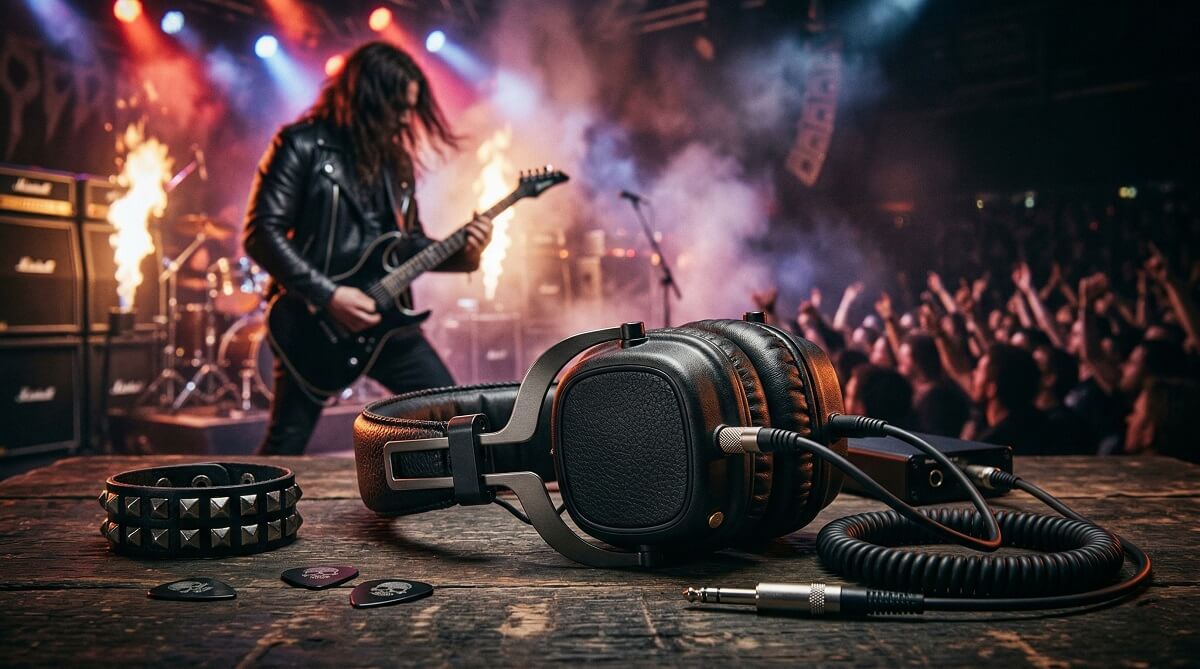
Metal has specific demands that most headphones fail to meet. You need controlled bass that doesn’t mud up around 200–300Hz, enough mid-range presence for guitar crunch to come through clearly, and treble that adds energy without shredding your ears after an hour. Most consumer headphones boost bass in exactly the wrong places, turning a tight riff into a blurry low-end mess.
After testing and researching dozens of options, here’s the short version: the Sennheiser HD25 ($149.95) is the top pick for most metal listeners — intense, precise, and built like a tank. For budget listeners, the Sony MDR-7506 ($114.99) punches well above its price. If you prefer open-back, the Beyerdynamic DT990 Pro ($199.99) is hard to beat for home listening. And if you’ve never heard planar magnetic drivers, the HIFIMAN HE400se is the cheapest way to find out what you’ve been missing.
Below, we break down what makes a headphone actually good for metal, walk through the top picks with verified pricing, and help you decide whether you need an amp — without making it more complicated than it needs to be.
Who Should (and Shouldn’t) Buy Audiophile Headphones for Metal
✅ Best For
- Home listeners who want to hear the full detail in their favorite albums
- Guitarists monitoring through amp modelers (Fractal Axe-FX, Neural DSP Quad Cortex, etc.)
- Audiophile beginners ready to step up from stock earbuds or cheap consumer cans
- Anyone who listens to well-mastered metal, prog, or doom and wants it to sound exactly right
❌ Skip If
- You mostly stream at the gym or on your commute — a wireless option like the Sony WH-1000XM5 is more practical
- You want heavy consumer bass that emphasizes slam and V-shaped energy over accuracy
- Your library is mostly heavily compressed 2000s metal — transparent headphones will make the compression more obvious, not less
- Budget is under $75 — the Philips SHP9500 (~$99.99) is your realistic entry point for quality sound
What Makes a Headphone Actually Good for Metal?
The short answer: it’s not about more bass. Metal listeners get burned by this assumption more than any other genre.
Bass Control, Not Bass Quantity
The trouble zone for metal headphones sits around 200–300Hz — the “mud” frequencies. Bass guitar, kick drum, and thick rhythm guitar all stack up in this range. Headphones that boost here (which describes most consumer models) make metal sound congested and indistinct. The best headphones for metal actually cut or leave this region flat, letting each instrument breathe.
What you want is tight, punchy sub-bass below 100Hz — the kind that gives kick drums and bass lines physical impact — without the bloat. The Beyerdynamic DT990 Pro and Sennheiser HD25 both nail this.
Mid-Range Presence for Guitar Crunch
Guitar body, pick attack, and that distinctive metal crunch live between roughly 500Hz and 4kHz. A headphone with a V-shaped signature — exaggerated bass and treble with a recessed mid-range — makes metal sound hollow. All the aggressive detail gets sucked out. You want the mids to be present and slightly forward, not hidden.
This is one reason the Sennheiser HD600 and HD650 remain popular with guitarists monitoring amp modelers: their mid-range presentation is honest without coloring what’s there.
Treble — Enough Air, Not Too Much
Metal benefits from air in the upper frequencies. Cymbal shimmer, pick transients, and vocal harmonics all live above 8kHz, and a headphone that rolls off too early in the treble makes everything sound dull. But overly bright headphones cause fatigue fast, especially with harshly mastered recordings.
A slight treble emphasis is generally good for metal — but keep in mind that bright headphones will make poorly compressed recordings sound harsh. If your library leans toward brickwalled 2000s metal, a warmer signature like the HD650 is more forgiving than something like the DT990 Pro’s bright treble extension.
Soundstage and Instrument Separation
Metal is dense. Drums, bass, two rhythm guitars, lead guitar, and vocals all compete for space. A headphone with a congested, small soundstage — everything crammed in the center — makes complex arrangements exhausting to follow. Open-back headphones generally have wider, more natural soundstage than closed-back, which is one reason audiophiles prefer them for home listening.
That said, closed-back options like the HD25 and MDR-7506 are no slouches here — they just present things differently.
Our Top Picks for Metal Headphones in 2026
Seven solid options across three price tiers, each chosen for how they actually handle metal’s demands — not just because they look good on a spec sheet.
Under $120 (Closed-Back): Sony MDR-7506
Price: $114.99 (as of March 2026, per Sony Pro official page — check current pricing) | Impedance: 63Ω | Sensitivity: 106dB/W/m
The MDR-7506 has been a studio standard since the early 1990s, and it remains the benchmark for what ~$100 can buy in a closed-back headphone. It’s crisp and revealing, with a slight brightness in the 2.5–5kHz range that works in metal’s favor — guitar attack and vocal clarity come through with real definition. According to SoundGuys’ review (7.7/10), it maintains bass presence past 30Hz while avoiding the low-mid bloat that kills metal recordings.
At 63Ω and 106dB sensitivity, it runs fine from any phone or laptop — no amp required. The non-removable coiled cable is annoying for portable use, but for home or studio listening it’s a non-issue.
Ideal for: Progressive, Heavy, Alternative, Thrash Metal
Skip if: You mostly listen on the go — the heavy coiled cable isn’t commuter-friendly
Under $100 (Open-Back): Philips SHP9500
Price: ~$99.99 (as of March 2026, check current pricing) | Impedance: 32Ω | Sensitivity: 101dB
For home listeners on a tight budget who want the open-back soundstage experience, the SHP9500 is hard to argue with. It has a smooth, airy presentation with genuine resolution, slightly emphasized lower mids and upper treble that help guitar crunch come through well, and a sub-bass roll-off that keeps mud frequencies clean. The comfort is excellent for long sessions.
At 32Ω and 101dB, it works straight from a phone without any additional gear. The soundstage is wider than most closed-backs at twice the price.
Suits: Power, Thrash, Gothic, Symphonic, Black Metal
Worth noting: Open-back design leaks sound — don’t use these in shared or quiet spaces
$100–$200 (Closed-Back, Top Overall Pick): Sennheiser HD25
Price: $149.95 (as of March 2026, per Sennheiser US official page) | Impedance: 70Ω | Max SPL: 120dB | Weight: 140g (5 oz)
If you could only buy one headphone for metal, this would be it. The HD25 is a professional DJ headphone that happens to be nearly perfect for heavy music. It’s compact and closed-back, with a thumping but controlled bass response, excellent mid-range presence, and sparkling treble that makes aggressive recordings come alive.
At 70Ω and an impressive 120dB max SPL, it drives easily from a phone or any standard headphone jack. The build is practically indestructible — every component is replaceable — and at 140g it’s one of the lighter headphones on this list. The detachable cable is a practical bonus.
The only real drawback: on-ear comfort isn’t for everyone. It can dig in during long sessions. Take breaks, or swap in the velour pads (sold separately) if your ears need relief.
Works for: Alternative, Progressive, Heavy, Death, Thrash — nearly every sub-genre
Less suited to: All-day marathon sessions without breaks; the on-ear fit fatigues some listeners
Check current price on Amazon | Best Buy
$150–$200 (Closed-Back): Beyerdynamic DT770 Pro
Price: ~$150 for 80Ω version (as of March 2026, check current pricing) | Impedance: 80Ω | Sensitivity: 96dB
The DT770 Pro is the closed-back choice for listeners who need isolation — apartment walls, shared spaces, or studio recording where sound leakage isn’t an option. It’s notably bass-heavy, but the reason it works for metal is that it cuts the mud region around 200–300Hz rather than boosting it. The result is a headphone that sounds punchy and driven without becoming congested.
The 80Ω version works from phones and laptops without an amp; the 250Ω version needs external amplification but sounds marginally cleaner. For most listeners, the 80Ω hits the practical sweet spot.
Strong pick for: Doom, Industrial, Black, Thrash Metal; studio recording
Skip if: You prefer a neutral or bright signature — the DT770’s bass emphasis isn’t for everyone
$150–$200 (Open-Back): Beyerdynamic DT990 Pro
Price: $199.99 (as of March 2026, per Beyerdynamic North America official page) | Impedance: 250Ω | Sensitivity: 96dB | Freq response: 5–35,000Hz
Think of the DT990 Pro as the open-back version of the DT770’s character but tuned brighter and more energetic. It shares that same trait of cutting the mud frequencies around 200–300Hz, which means bass lines and kick drums come through tight and clear rather than bloated. The treble is genuinely bright — it adds air and excitement to well-recorded metal, but it will make compressed, over-limited recordings sound harsh.
The 250Ω impedance means you’ll want an amp for best results (a budget-friendly option like the FiiO E10K or JDS Labs Atom will do). The 80Ω version is available for phone-direct use if that’s your setup. Comfort is excellent — Beyerdynamic’s velour pads and spring-steel headband make it one of the more comfortable all-day headphones available.
Best suited to: Progressive, Thrash, Death, Alternative Metal; home listening
Keep in mind: Needs an amp for 250Ω; the bright treble will expose harshly mastered recordings
$150–$350 (Open-Back): Drop HD6XX / Sennheiser HD650
Drop HD6XX Price: ~$199 (per Drop.com, check availability — out of stock at time of writing) | Impedance: 300Ω | Weight: 260g (9.2 oz)
The HD6XX is Drop’s version of the Sennheiser HD650, made in Ireland at a lower price. It’s the headphone for listeners who want accuracy over coloration — balanced, transparent, and excellent at pulling out detail in bass lines and acoustic elements. At 300Ω, it absolutely requires a headphone amp; running it direct from a phone will produce anemic sound.
For guitarists monitoring amp modelers, the HD6XX/HD650 is a reference standard. It won’t flatter a bad preset, but it will show you exactly what the simulation sounds like. For music listening, it works best on well-mastered albums — poorly compressed metal will sound exposed.
Top choice for: Audiophile listeners across all metal styles; guitarist monitoring; Prog, Black, Sludge/Stoner, Doom
Skip if: You plan to run it direct from a phone — at 300Ω it will sound thin without an amp
$100–$150 (Planar Magnetic Pick): HIFIMAN HE400se
Price: Check current pricing (was $109–$149 as of March 2026) | Impedance: 32Ω | Sensitivity: 91dB | Weight: 385g
Planar magnetic headphones use a different driver technology than standard dynamic headphones — a thin membrane suspended between magnets rather than a cone driver. The result is typically faster transient response, lower distortion, and more natural timbre. The HIFIMAN HE400se brings this technology to a budget price point, and for metal listeners it means guitar detail and pick attack sound more realistic.
The 91dB sensitivity is lower than dynamic alternatives, meaning it needs more power to get loud. Most laptops and phone headphone jacks will drive it adequately at moderate volumes, but a small amp improves clarity. At 385g it’s heavier than the other picks here, so long sessions are best with neck support.
Recommended for: Progressive, Death, Alternative/Rap Metal; anyone curious about planar sound on a budget
Worth knowing: At 385g it’s the heaviest option here — long sessions may require a break
Quick Comparison: Good Headphones for Metal
| Model | Price (March 2026) | Type | Impedance | Sensitivity | Needs Amp? | Best Metal Sub-genre |
|---|---|---|---|---|---|---|
| Sony MDR-7506 | $114.99 | Closed | 63Ω | 106dB | No | Progressive, Heavy, Alternative |
| Philips SHP9500 | ~$99.99 | Open | 32Ω | 101dB | No | Power, Thrash, Gothic, Symphonic |
| Sennheiser HD25 ⭐ | $149.95 | Closed | 70Ω | 120dB max | No | Most sub-genres |
| Beyerdynamic DT770 Pro | ~$150 (80Ω) | Closed | 80Ω | 96dB | No (80Ω) | Doom, Industrial, Black |
| Beyerdynamic DT990 Pro | $199.99 (250Ω) | Open | 250Ω | 96dB | Yes (250Ω) | Progressive, Thrash, Death |
| Drop HD6XX / HD650 | ~$199 | Open | 300Ω | 97dB | Yes | All; reference use |
| HIFIMAN HE400se | $109–$149 | Open (Planar) | 32Ω | 91dB | Marginal | Progressive, Death, Rap Metal |
⭐ Top overall pick. Prices as of March 2026; check retailers for current deals.
Open-Back vs. Closed-Back: Which Should You Choose for Metal?
The honest answer: it depends on where you listen.
Open-back headphones (DT990, SHP9500, HD600/650, HE400se) leak sound in both directions — you can hear the room, and anyone nearby can hear your music. In exchange, you get a wider, more natural soundstage that makes complex metal arrangements easier to follow. The instrument separation tends to be better, and long listening sessions feel less claustrophobic. These are home headphones.
Closed-back headphones (MDR-7506, HD25, DT770) seal against your ears, providing isolation from outside noise. They typically have a more intimate, focused sound. The bass can feel more impactful in a closed cup. These work for commutes, shared apartments, or recording where you don’t want bleed through the mic.
For metal specifically, neither type is objectively better. The HD25 (closed) is many people’s favorite precisely because its intense, direct sound pairs well with the genre. But open-back fans point out that the DT990’s wider presentation helps progressive and technical metal sound more spacious and accurate.
Do You Need an Amp for Metal Headphones?
Short version: only if your headphone has high impedance (above ~150Ω) or unusually low sensitivity (below ~95dB). Most of the budget picks on this list don’t need one.
Here’s a practical reference table:
| Headphone | Impedance | Sensitivity | Verdict |
|---|---|---|---|
| Sony MDR-7506 | 63Ω | 106dB | No amp needed |
| Philips SHP9500 | 32Ω | 101dB | No amp needed |
| Sennheiser HD25 | 70Ω | 120dB max | No amp needed |
| Beyerdynamic DT770 Pro (80Ω) | 80Ω | 96dB | No amp needed (80Ω version) |
| Beyerdynamic DT990 Pro (250Ω) | 250Ω | 96dB | Amp recommended |
| Drop HD6XX / HD650 | 300Ω | 97dB | Amp required |
| HIFIMAN HE400se | 32Ω | 91dB | Amp improves performance |
If you do need an amp, you don’t have to spend much. A FiiO E10K (~$75) covers most headphones in this guide. The JDS Labs Atom is a step up for the HD6XX/HD650 at around $100. For portable use, the FiiO BTR5 adds Bluetooth + wired amp functionality in a small form factor.
A Note on Metal Mastering Quality
Here’s something most headphone guides skip: metal is frequently recorded and mastered badly. The loudness war hit the genre hard. Many popular albums from the 2000s and 2010s have severely limited dynamic range — everything pushed to maximum volume, compression artifacts baked into the mix. Metallica’s Death Magnetic is the famous example, but it’s far from alone.
Transparent, accurate headphones don’t fix bad mastering — they reveal it. If you upgrade from cheap earbuds to a quality open-back headphone and your favorite albums suddenly sound harsh and fatiguing, the headphone isn’t broken. It’s showing you what was always there.
The practical takeaway: if your library leans toward heavily compressed recordings, a warmer, more forgiving headphone (HD650, DT770) will be more enjoyable than a clinical, bright one (DT990, MDR-7506). If you have well-mastered material — vinyl rips, audiophile releases, or modern well-produced metal — the honest headphones will reward you.
Frequently Asked Questions
What headphone sound signature is best for metal?
A neutral-to-slightly-bright signature with controlled bass that avoids boosting the 200–300Hz mud zone. You want mid-range presence for guitar body and crunch, and enough treble air for cymbal shimmer and pick attack without listener fatigue. Avoid heavily V-shaped headphones (exaggerated bass + recessed mids) — they’re popular for electronic music and EDM but work against metal.
Are open-back or closed-back headphones better for metal?
Neither is objectively better — it depends on your listening context. Open-back provides wider soundstage and more natural instrument separation, great for progressive and technical metal at home. Closed-back offers isolation and a more focused, impactful sound that suits home listening and commuting. The Sennheiser HD25 (closed-back) is many metal listeners’ top pick despite — or maybe because of — its intimate, intense presentation.
Do I need to spend a lot to get good headphones for metal?
No. The Sony MDR-7506 at $114.99 and the Philips SHP9500 at ~$99.99 are both strong performers that beat most consumer headphones twice their price. The biggest quality jump happens between cheap consumer gear and the $100–$150 tier, not between $200 and $500.
Why do my metal tracks sound harsh on audiophile headphones?
Metal is often heavily compressed with limited dynamic range, and quality headphones reveal that compression rather than hiding it. This is expected behavior — not a defect. If harshness is a consistent problem, try a warmer headphone (Sennheiser HD650, Beyerdynamic DT770) or use a free EQ tool to tame the brightness.
Are bass-heavy consumer headphones good for metal?
Generally not. Most consumer headphones boost the 100–300Hz range, which is exactly where metal congests most easily. You end up with a boomy, muddy low end where bass guitar and kick drum lose definition. What metal needs is tight, extended sub-bass below 100Hz — not a broad mid-bass boost.
What headphones do guitarists use with amp modelers?
The Sennheiser HD600/650 and Drop HD6XX are the most common choices for monitoring Fractal, Neural DSP, and similar processors. Their flat, balanced response means you hear what the preset actually sounds like without extra coloration. The HD25 and DT990 Pro are also popular. Avoid V-shaped headphones for this use case — they’ll make your presets sound distorted when they’re actually correct.
Can I use wireless headphones for metal?
Yes for casual listening. The Sony WH-1000XM5 and similar ANC headphones are fine for streaming metal on the go. For critical listening, wired is preferred — lower latency, no Bluetooth compression, and generally higher fidelity at equivalent price points.
What’s the difference between the DT770, DT880, and DT990 for metal?
The DT770 is closed-back and bass-forward — best for isolation and Doom/Industrial sub-genres. The DT880 is semi-open and more balanced — a good compromise if you want some isolation without going full open-back. The DT990 is fully open-back and notably bright — the most energetic of the three, suited for home listening across most metal sub-genres. All three cut the 200–300Hz mud zone, which is why Beyerdynamic products consistently show up in metal headphone discussions.
Prices shift frequently on headphones — especially Beyerdynamic and Sennheiser lines during sales. Check current prices on Amazon or Best Buy before buying. For the Beyerdynamic line specifically, Sweetwater often carries competitive pricing with free tech support.
