


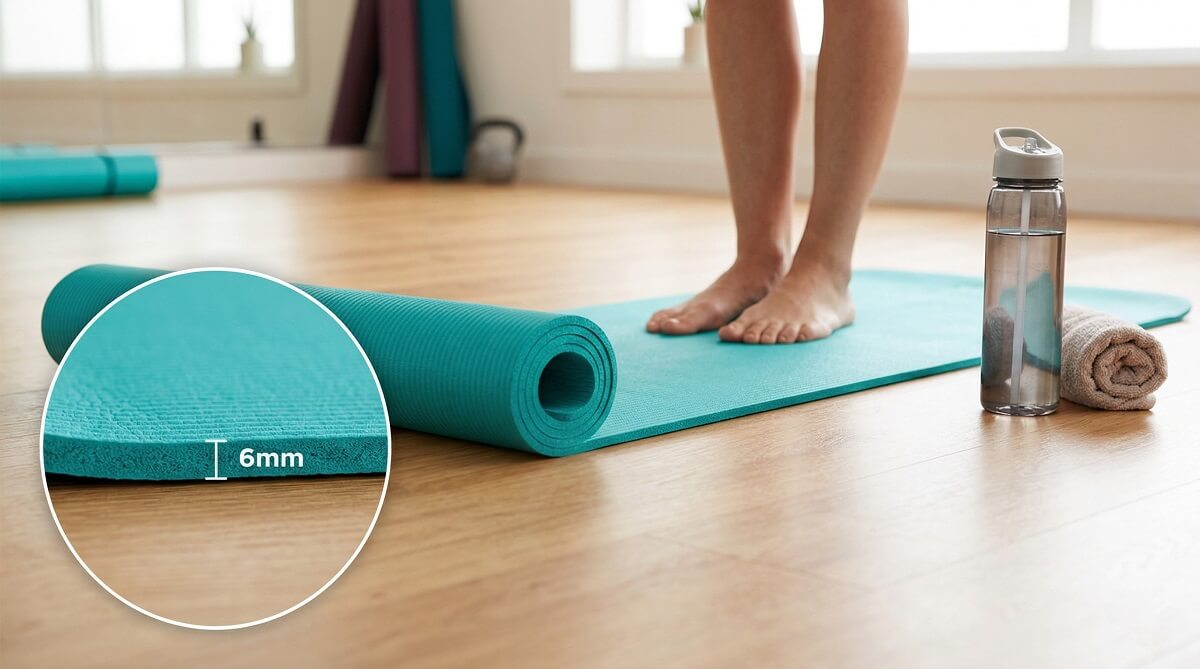
For most people doing yoga at home or in a studio, a 6mm mat is the right call. It gives your knees and wrists enough cushioning to stay comfortable through longer holds and kneeling poses, while still keeping you close enough to the floor to hold your balance in standing sequences. Thinner mats feel more connected to the ground but leave your joints exposed on hard floors. Thicker ones pad you out further but can make balance poses noticeably wobblier.
If you want the straightforward answer on what to buy: the Manduka PRO 6mm ($156 on Amazon and manduka.com) is the top choice if you practice regularly and want a mat that holds up for years. If budget is a priority, the Gaiam Premium 6mm (from $19.98 on Gaiam’s site) is a solid starting point. The rest of this guide covers what makes 6mm different from other thicknesses, how materials affect performance, and who specifically benefits most from this size.
are available on ChubbytIps if you’re outfitting a home gym beyond just a yoga mat.
Who Should (and Shouldn’t) Use a 6mm Yoga Mat
✅ Best For
- Beginners who are still building body awareness and haven’t owned a mat before
- Practitioners with knee, wrist, or hip sensitivity who need extra cushioning in floor poses
- Home practice on hardwood, tile, or laminate floors where hard surfaces transmit pressure
- Restorative yoga, Hatha, Yin, and gentle flows with longer-held poses
- Anyone using one mat for multiple activities — yoga, Pilates, stretching, and light core work
❌ Skip If
- You travel frequently and need something that packs light — a 4mm or travel mat is a better fit
- You practice advanced balance poses and want maximum floor contact — try 4mm
- You have severe joint issues that need serious padding — consider 8mm or a specialty mat
- You do hot yoga in a studio daily and carry your mat everywhere — a 7.5 lb mat gets old fast on a commute
What “6mm” Actually Means for Your Practice
The Cushion-vs.-Ground-Feel Trade-Off
Yoga mat thickness comes down to one central tension: more padding protects your joints, but less padding keeps you grounded and balanced. On a very thin mat, you can feel the floor clearly beneath your feet during a Warrior sequence, which helps with proprioception — your sense of where your body is in space. On a thicker mat, that signal gets dampened.
At 6mm, most practitioners find a workable middle ground. You get enough cushion to kneel comfortably, hold low lunges for time, and rest in poses like Child’s Pose without your knees pressing into a hard surface. Standing poses still feel stable for the majority of practitioners, though anyone who’s used a 4mm mat for years may notice the difference in how much their feet “sink” into the surface.
How 6mm Compares to Other Thicknesses
According to independent fitness equipment guides, the main differences between thickness levels break down like this:
| Thickness | Cushion Level | Stability | Typical Weight | Best Suited For |
|---|---|---|---|---|
| 4mm | Low | High | 2–3 lbs | Travel, experienced practitioners, balance-focused styles |
| 6mm | Medium | Medium-High | 4–8 lbs | Most practitioners, beginners, joint sensitivity, home practice |
| 8mm | High | Medium | 5–9 lbs | Restorative yoga, floor-heavy workouts, seniors, maximum joint padding |
According to Aeromats’ yoga mat thickness guide, “thicker mats excel at protecting joints but might reduce stability during standing poses, while thinner mats offer excellent ground feel though they provide less cushioning.” The 6mm range sits squarely in the middle of that trade-off.
cover a range of home workout topics if you’re looking to expand your setup beyond a mat.
What Your 6mm Mat Is Made Of — And Why It Matters
Thickness is only half the story. The material determines grip, weight, durability, environmental impact, and how the mat holds up over time. Most 6mm mats fall into one of three camps.
PVC — The Most Common Option
PVC (polyvinyl chloride) is what the majority of 6mm yoga mats are made from, including the Manduka PRO. According to material comparisons from independent editorial sources, PVC offers the best grip and traction of any mat material. It’s relatively affordable, easy to wipe clean, and holds its shape well over years of use.
The downside is environmental: PVC is not biodegradable, and its production involves chemicals that raise sustainability concerns. That said, some manufacturers — like Manduka — put their PVC mats through third-party safety certification (OEKO-TEX STANDARD 100) to verify the finished product is free from harmful substances.
TPE — Lighter and More Earth-Friendly
TPE (thermoplastic elastomer) mats are lighter than PVC and more eco-friendly — the material is recyclable and doesn’t involve the same chemical concerns in production. If you’re carrying your mat to class regularly and want something you can feel good about from an environmental standpoint, TPE is worth considering.
The trade-off: TPE can slide on smooth floors and tends to lose grip faster than PVC or rubber over time. Some practitioners report TPE mats “curling up” along the edges, which affects both grip and aesthetics. For a home practice on carpet or a textured floor, this matters less.
Natural Rubber — The Premium Eco Pick
Natural rubber mats offer something neither PVC nor TPE can match: grip that actually gets better as you sweat. Rubber has a natural tackiness that’s particularly valued in dynamic or heated practices. The JadeYoga Harmony (check current pricing) is one of the more popular natural rubber options, and for every mat sold, the company plants a tree.
The caveats are real though. Rubber mats are heavier than their counterparts, tend to cost more, and — critically — are not suitable for anyone with a latex allergy. Rubber mats also degrade faster when exposed to direct sunlight, so storage matters.
— including mat bags, blocks, and straps — can round out your practice space if you’re setting up at home.
The Best 6mm Yoga Mats to Consider in 2026
Best Overall: Manduka PRO 6mm
The Manduka PRO has earned a legitimate reputation as one of the most durable yoga mats on the market. According to independent reviewers at Outdoor Gear Lab, some PRO mats remain in usable condition after 5–20 years of regular practice. That’s not marketing — it’s what their lifetime guarantee backs up in practice.
Here’s what you get for $156:
- Dimensions: 71″ × 26″ × 6mm (standard); extra-long version at 85″ × 26″ available
- Weight: 7.5 lbs (standard) — heavier than most mats, which means it stays put
- Material: PVC, OEKO-TEX STANDARD 100 certified, made in Germany
- Surface: Closed-cell — does not absorb sweat or moisture, which keeps it hygienic and easier to wipe down
- Bottom: Proprietary dot pattern for floor grip
- Warranty: Lifetime guarantee — Manduka replaces the mat if it wears out from regular use
One honest note from Manduka’s own product page: the closed-cell surface can feel slippery when you’re sweating. They recommend pairing it with a hand towel or their yoga grip gel during heated or vigorous sessions. For hot yoga specifically, a full mat towel over the PRO makes more sense than going without.
Check current pricing on Amazon or directly at Manduka.com.
Best Budget: Gaiam Premium 6mm
Gaiam’s 6mm lineup runs from $19.98 (Essentials) to $44.98 (Performance), making them the most accessible entry point in this thickness range. The mats are PVC, available in a wide range of prints and solid colors, and weigh significantly less than the Manduka PRO — which makes them easier to carry if you’re going to a studio.
You’re trading durability for price. Gaiam mats are adequate for regular practice but won’t match the longevity of a Manduka or natural rubber mat. For someone starting out or practicing a few times a week, the Essentials or a mid-tier Premium model is a reasonable way to begin without committing heavily upfront.
Browse Gaiam’s 6mm options at Gaiam.com or search for current Amazon listings for your preferred style.
Best Natural Rubber: JadeYoga Harmony
If sustainable materials and exceptional grip are your priorities, natural rubber mats like the JadeYoga Harmony are the category to look at. Note that the Harmony runs slightly thinner than 6mm (most versions are 4–5mm), so if you specifically want 6mm in rubber, check the current JadeYoga lineup for available thicknesses. Prices typically fall around $100–$110 — check current pricing before purchase as these can shift.
for more head-to-head comparisons across yoga and exercise equipment.
Who Benefits Most from a 6mm Mat — Specific Situations
If You Have Bad Knees or Wrist Sensitivity
The extra cushioning at 6mm makes a real difference in poses where you’re loading joints directly into the floor — low lunges, Cat-Cow, Child’s Pose, Downward Dog held for time. The key factor isn’t just thickness, though; it’s density. A cheap 6mm foam mat may compress under your weight and deliver less cushioning than advertised. A high-density mat like the Manduka PRO stays firm enough to provide actual support rather than just squishy give.
If knee pain is significant, talk to a physical therapist about whether additional knee padding makes sense for specific poses — a thick mat helps, but it’s not a substitute for modified technique when needed.
If You’re Just Starting Out
Beginners benefit from the extra cushion because they’re still learning where their weight lands in unfamiliar positions. A 6mm mat is forgiving when your form isn’t yet dialed in — less pressure on wrists during planks, more comfort during seated stretches. The wider margin of comfort lets you focus on learning the poses rather than managing discomfort.
If You Practice at Home on Hard Floors
Hardwood, tile, and concrete floors transmit pressure directly upward in a way carpet doesn’t. A 6mm mat provides a meaningful buffer. It also tends to stay in place better on smooth floors compared to thinner mats, because there’s more surface area creating friction with the floor beneath it.
If You Use One Mat for Multiple Activities
Yoga, Pilates, stretching, bodyweight core work, foam rolling preparation — a 6mm mat handles all of these comfortably. Thinner mats work fine for yoga-specific movements but can feel inadequate for exercises that put more direct pressure on hips and spine during floor-based movements.
What to Check Before You Buy
Beyond thickness and material, a few other factors are worth confirming:
- Length: Standard mats run 68″–72″. If you’re 6 feet or taller, look for extra-long options (Manduka offers an 85″ version). Feet hanging off the edge during Savasana is genuinely annoying.
- Weight: If you’re carrying the mat to a studio regularly, anything over 5–6 lbs becomes a real consideration. The Manduka PRO at 7.5 lbs is heavy for daily transport.
- Surface texture: Some mats use embossed patterns for grip; others rely on material tackiness. Test how the mat feels under bare feet, particularly in the heel-and-palm positions you’ll use most.
- Closed-cell vs. open-cell: Closed-cell mats (like the Manduka PRO) don’t absorb sweat, so they’re easier to wipe down and more hygienic over time. Open-cell mats absorb moisture, which can mean better initial grip but also more odor over time if not deep-cleaned regularly.
- Certifications: OEKO-TEX STANDARD 100 means the finished product has been tested for harmful substances. Worth looking for on PVC mats especially.
- Warranty: A lifetime guarantee like Manduka’s is genuinely rare. Most budget mats offer 90 days to one year — factor that into the cost-per-use calculation over time.
at ChubbytIps for additional context on building a home workout space.
How to Keep Your 6mm Mat Clean and Long-Lasting
A yoga mat collects sweat, skin oils, and whatever’s on your floor — regular cleaning extends its life and prevents the kind of grip degradation that makes mats feel slippery after a few months.
After Each Session
Wipe down the surface with a damp cloth or a mat-safe spray. For PVC and TPE mats, a diluted mild soap solution works fine — avoid harsh detergents or alcohol-based cleaners that can break down the surface. For natural rubber, skip anything too acidic or heavily chemical, as it can degrade the material.
Monthly Deep Clean
Lay the mat flat, apply a cleaning solution appropriate for your material, scrub gently with a soft brush or cloth, and rinse thoroughly. The critical step: let it air-dry completely before rolling it up. Rolling up a damp mat traps moisture and creates the conditions for mold and odor.
Storage Notes
Natural rubber mats degrade under UV exposure — keep them out of direct sunlight when not in use. All mats store best rolled up (not folded) in a breathable mat bag rather than a sealed container that traps moisture.
Frequently Asked Questions
Is 6mm too thick for yoga?
For most yoga styles, no. A 6mm mat works well for Hatha, Yin, Restorative, and gentle Vinyasa flows. If you practice advanced balance poses or faster, more dynamic styles like Ashtanga where floor connection matters a lot, some practitioners prefer the firmer feel of a 4mm mat. Six millimeters becomes a problem mainly when someone needs maximum floor contact for balance — and that’s more about preference than hard limits.
What is the difference between a 4mm and 6mm yoga mat?
The two extra millimeters add joint cushioning and reduce stability slightly. A 4mm mat gives you more ground feel underfoot, which helps with balance in standing poses and is lighter to carry. A 6mm mat adds a buffer that protects knees, wrists, and hips during floor work. Most beginners and practitioners with any joint sensitivity find 6mm more comfortable for extended practice.
Are 6mm yoga mats good for bad knees?
Better than thinner options, yes — but mat density matters as much as thickness. A high-density 6mm mat (like the Manduka PRO) provides firmer support than a cheap 6mm foam mat that compresses under your weight. For significant knee issues, look at dense 6mm mats specifically, and consider additional knee pads for particularly demanding poses.
Is the Manduka PRO 6mm worth the price?
If you practice regularly — several times a week — the math works out over time. At $156, the cost-per-use over five or ten years of daily practice is lower than replacing two or three cheaper mats. The lifetime guarantee also removes the replacement risk. If you practice occasionally or are just starting out, a Gaiam or similar mid-range mat at $20–$45 is a more sensible starting point.
Can I use a 6mm yoga mat for Pilates?
Yes. A 6mm mat is actually a good fit for Pilates — the extra cushioning helps during spinal rolling exercises, supine work, and any pose that puts your spine or hips in contact with the floor. The thickness doesn’t interfere with the standing or seated Pilates work either.
How do I clean a 6mm yoga mat?
Wipe it down after each session with a damp cloth and mild soap or a mat-safe spray cleaner. Air-dry completely before rolling it up — this prevents mold and odor. For PVC and TPE mats, avoid alcohol or harsh chemicals. For rubber mats, keep away from direct sunlight and acidic cleaners. Deep clean monthly for mats used frequently.
Does a thicker mat affect balance in standing poses?
Slightly, yes. The softer surface of a thicker mat means your feet compress into the material a bit more, which reduces the ground-contact precision you’d have on a firmer, thinner mat. Most practitioners adapt to this quickly and don’t notice it in everyday standing poses. It becomes more noticeable in challenging single-leg balance poses or inversions.
How long does a 6mm yoga mat last?
It depends heavily on the material and how often you practice. Budget PVC mats typically last 1–3 years with regular use before they start to peel or lose grip. Mid-range mats generally hold up 3–5 years. The Manduka PRO is independently reviewed as lasting 5–20 years with daily practice — and is the only consumer yoga mat backed by a full lifetime guarantee.
Ready to Pick Your Mat?
For most practitioners, a 6mm mat is the right call. If budget is no concern and you’re committed to a long-term practice, the Manduka PRO on Amazon is the standout option — check current pricing before buying. For an accessible starting point, browse Gaiam’s 6mm lineup for solid entry-level options at a fraction of the cost. are available on ChubbytIps.
