


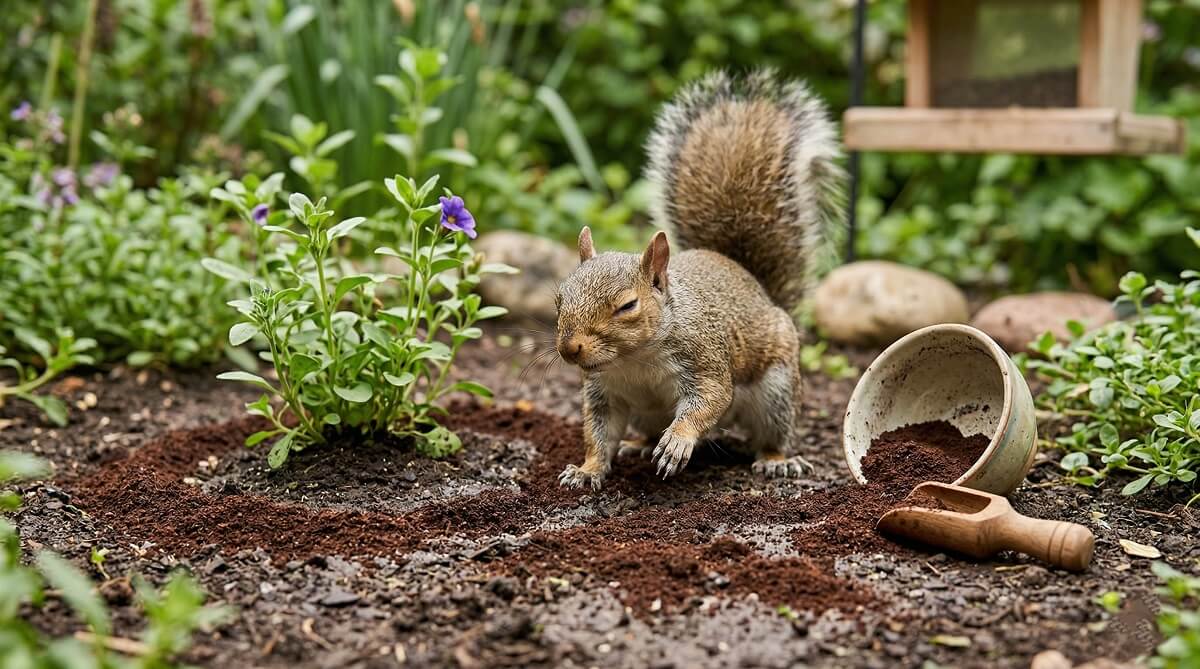
Coffee grounds can make your garden less appealing to squirrels — but only for a few days, and only in spots where you’ve applied them directly. The strong smell disrupts their ability to sniff out buried food, which is enough to send some of these critters looking elsewhere. Whether it actually works in your yard depends on the weather, the individual animal, and how consistently you reapply.
The honest take: Extension expert Dr. Dana Sanchez states there’s “no evidence that coffee grounds will deter squirrels” in any reliable, scientifically confirmed way. Plenty of gardeners swear by it anyway — and it does offer real benefits for soil health as a bonus. Just go in knowing it’s a short-term, high-maintenance tactic, not a one-and-done fix.
If you’re already drinking coffee daily, using your spent grounds is essentially free. That makes it worth trying as part of a — especially when combined with cayenne pepper, physical barriers, or a motion-activated sprinkler. Used alone, it’s unlikely to solve a persistent squirrel problem.
Should You Bother With Coffee Grounds? A Quick Guide
Use coffee grounds if:
- You brew coffee daily and have grounds to spare (free and zero waste)
- You want a non-toxic, garden-safe option with no chemicals
- You’re protecting specific spots — potted plants, raised beds, bulb plantings
- You’re willing to reapply every 2–3 days (or after every rain)
- You’re using it alongside other deterrents, not as your only strategy
Skip it (or don’t rely on it alone) if:
- You have a heavy, persistent squirrel problem across your whole yard
- You live somewhere rainy — the scent washes out within hours
- You grow geraniums, rosemary, lilacs, asparagus, or young seedlings nearby (more on this below)
- You want a hands-off solution that doesn’t need constant attention
Why Squirrels React to Coffee Grounds
Squirrels Are Nose-First Animals
Squirrels find food, assess threats, and navigate their territory almost entirely by smell. They can locate nuts buried under inches of dirt and snow — their olfactory system is described by wildlife experts as “highly advanced” and central to every aspect of their daily survival. When something overwhelming hits that system, squirrels get uneasy and tend to move on.
Coffee’s volatile compounds — particularly chlorogenic acids released from spent grounds — create a strong, unfamiliar odor that can mask the scent of seeds, bulbs, and buried food stashes these rodents are hunting. That’s the mechanism. It doesn’t hurt them; it just makes your garden smell like nothing worth investigating.
The Science Is Thin, Though
Here’s what the research actually says: there’s not much of it. Extension expert Dr. Dana Sanchez, responding to a gardener’s question on Ask Extension, said plainly, “I know of no evidence that coffee grounds will deter squirrels.” One study frequently cited online found that coffee grounds did not significantly deter squirrels or other rodents in testing. The anecdotal record is mixed — many gardeners report partial success, others see no effect at all.
What the research does confirm is that squirrels respond to scent-based deterrents in general — particularly predator odors. Coffee grounds aren’t in that category. They’re more of a sensory irritant than a genuine threat signal.
How to Use Coffee Grounds Against Squirrels
Where to Apply Them
Focus your grounds where squirrels are actually causing damage, not scattered randomly:
- Around the base of potted plants and container gardens
- Along the perimeter edge of raised garden beds
- Near newly planted bulbs in fall
- On the ground directly below bird feeders
- At entry points to vegetable garden beds
How to Apply Them Correctly
Sprinkle a thin layer — about 1/2 to 1 inch deep — directly on the soil surface. Don’t pile them on thicker than that. A dense, wet mound of grounds will compact into a moisture barrier that repels water from the soil and can turn moldy. A light layer breaks down naturally within a week, aided by rain and soil microbes.
For slightly longer-lasting results, work the grounds lightly under a thin layer of mulch. This keeps them moist longer, which preserves the scent slightly better. Reapply every 2–3 days in dry weather, or immediately after any significant rain.
Where to Get Free Coffee Grounds
If you’re a daily coffee drinker, you’ve already got a supply. But if you want more, Starbucks has run a “Grounds for Your Garden” program since 1995 — participating stores bag up spent grounds and make them available at no charge, first-come-first-served. According to Starbucks’ own archive, the program is available at over half of U.S. company-operated locations. Your local independent coffee shop will often hand them over for free if you just ask.
How Long Do Coffee Grounds Keep Squirrels Away?
In dry conditions, a fresh application might keep squirrels at bay for 2–7 days before the scent degrades enough to stop working. After rain, that window shrinks to a day or less. Wind accelerates the degradation too.
There’s also habituation to consider. These animals, like most rodents, can adapt to a consistent smell over time. If coffee grounds are the only thing you’re using, some individuals may stop responding after a few weeks of repeated exposure. Rotating between deterrents — swapping spent grounds for cayenne pepper one week, then back again — helps reduce this effect.
The upshot: coffee grounds require consistent upkeep. If you’re not reapplying every few days, you’re not really using this method.
Coffee Grounds vs. Other Squirrel Deterrents
Here’s how common DIY and store-bought options stack up:
| Deterrent | How It Works | Duration | Cost | Garden-Safe? |
|---|---|---|---|---|
| Coffee grounds | Masks food scent | 2–7 days (dry); hours (rain) | Free | Yes (most plants) |
| Cayenne pepper | Capsaicin irritation | 2–5 days | Low (~$5) | Yes (avoid flowers) |
| Peppermint oil spray | Scent aversion | 3–7 days | Low–Medium | Yes |
| Predator urine granules | Threat signal (fear) | 7–14 days | Medium (~$15–20) | Yes |
| Hardware cloth/wire mesh | Physical block | Permanent | Medium ($10–30) | Yes |
| Motion-activated sprinkler | Startles squirrels | Ongoing (batteries) | Medium ($30–60) | Yes |
As Homes and Gardens notes, cayenne pepper is often considered more reliable than coffee grounds because capsaicin creates a physical sensation — pests that touch it get a burning reaction, not just an unpleasant odor they might choose to ignore.
One Catch: Some Plants Don’t Like Coffee Grounds
This is something most articles on this topic skip over, so it’s worth knowing: coffee grounds contain allelopathic compounds — chemicals that can inhibit germination and slow the growth of certain plants. The caffeine in spent grounds acts as a natural pesticide, which is part of what makes them smell bad to pests, but that same property can be hard on sensitive plants.
According to horticultural advice from Homes and Gardens and Epic Gardening, avoid using coffee grounds around:
- Geraniums — coffee grounds can inhibit seed germination
- Rosemary — prefers neutral to slightly alkaline soil
- Lilacs — also prefer near-neutral pH
- Asparagus — alkaline-preferring; grounds’ acidity harms growth
- Young seedlings and quick-growing lettuce — sensitive to allelopathic chemicals
Plants that do well with coffee grounds include tomatoes, blueberries, roses, azaleas, camellias, and rhododendrons — all acid-tolerant. If you’re protecting one of these, you’re getting a bonus fertilizer alongside the deterrent.
The Better Approach: Layering Deterrents
No single scent-based tactic holds up on its own. These critters are smart, persistent, and adaptable. What works is combining multiple approaches so that when one loses potency, others are still in play. Here’s a straightforward layered setup that most gardeners can pull together:
- Coffee grounds (base layer) — scatter on soil surface around target plants; reapply every 2–3 days
- Cayenne pepper — dust on top of grounds or at garden edges; adds physical deterrence via capsaicin
- DIY spray — mix peppermint or garlic in water, spray surrounding surfaces every few days
- Gravel or stones on pot soil — adds a physical digging barrier squirrels have to work through
- Hardware cloth over bulbs — for fall-planted bulbs, a layer of wire mesh under soil is the most reliable protection
If you’ve tried scent deterrents and still have persistent issues, are worth looking into. They take more effort upfront but require far less ongoing maintenance than reapplying coffee grounds every few days.
Frequently Asked Questions
Do coffee grounds repel squirrels from bird feeders?
You can scatter grounds on the ground directly beneath the feeder. This won’t affect the birds (they don’t forage on the surface there anyway) and may discourage squirrels from hanging around below. It’s not a perfect solution — squirrels approaching from tree branches won’t be deterred at all — but it’s worth trying as part of a broader bird feeder protection setup.
Do squirrels get used to coffee grounds over time?
Yes, anecdotally. Most rodents can habituate to consistent smells within a few weeks. If you’ve been using coffee grounds for a month and they seem to have stopped working, try switching to cayenne pepper for a couple weeks before rotating back. Variety helps.
Can coffee grounds hurt my plants?
For most garden plants, a thin layer of used grounds is safe and even beneficial (adds nitrogen, improves drainage, attracts earthworms). But geraniums, rosemary, lilacs, asparagus, and young seedlings are sensitive to the allelopathic chemicals in coffee. If you’re growing any of these, keep the grounds away from them.
Is fresh or used coffee grounds better for repelling squirrels?
Used grounds are fine and free. The difference in potency is minimal for deterrence purposes. Fresh grounds are more acidic and higher in caffeine, which theoretically makes them stronger — but they’re also something most people would rather just drink.
How much coffee grounds should I use?
A thin layer of 1/2 to 1 inch is the sweet spot. More than that causes problems: the grounds compact, block water absorption, and can develop mold. A light application breaks down naturally within days, which is why you need to reapply consistently.
Do coffee grounds also repel chipmunks and rabbits?
Chipmunks, yes — anecdotally, they seem just as bothered by the smell as squirrels. Rabbits are a different story. Their reaction to coffee grounds is more mixed; many gardeners report rabbits ignoring them entirely. For rabbits, cayenne pepper and physical fencing tend to be more effective.
What’s the most effective natural squirrel repellent overall?
The combination of scent deterrents plus physical barriers consistently outperforms any single method. Coffee grounds plus cayenne pepper, plus gravel or wire mesh over vulnerable plants, is more reliable than any one ingredient alone. If you can add a motion-activated sprinkler, even better.
Where can I get free coffee grounds in bulk?
Ask at your local coffee shop — most are happy to hand over used grounds rather than toss them. Starbucks has offered free bagged grounds through their “Grounds for Your Garden” program since 1995; check with your nearest location to see if they’re participating.
If you’re dealing with particularly persistent squirrels or want to skip the daily reapplication routine, a weather-resistant commercial repellent spray may be worth adding to your toolkit. Check current options and reviews on Amazon or your local garden center. For bulb protection specifically, hardware cloth is the most reliable physical barrier you can buy.
