


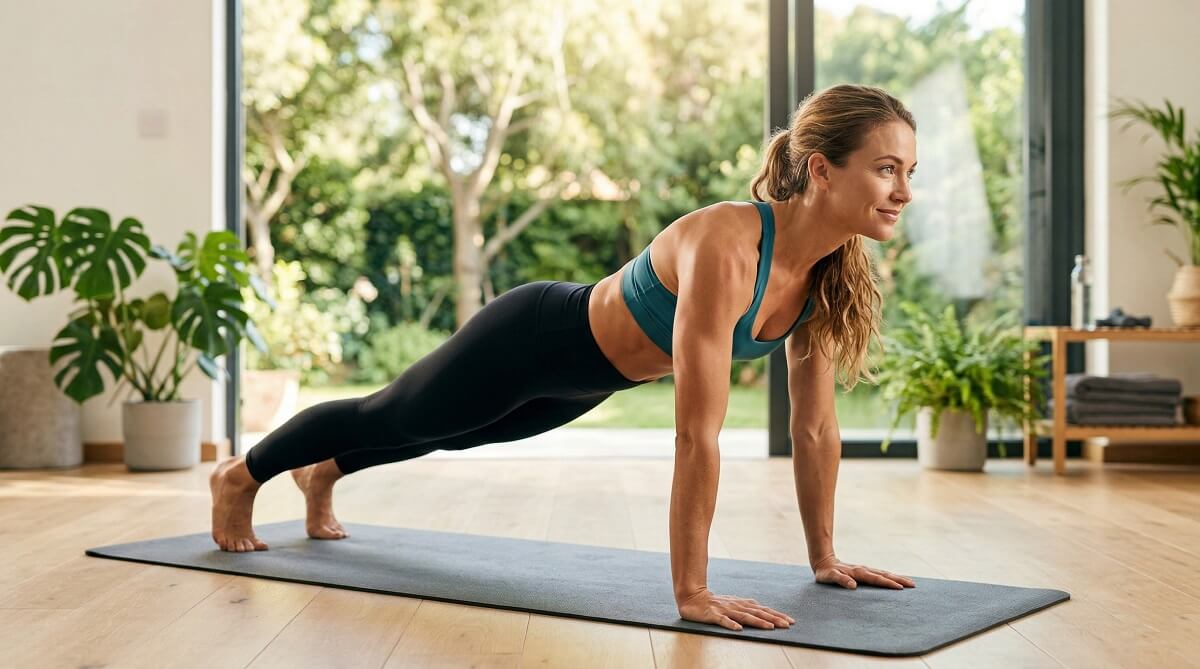
Short answer: yes, yoga can tone your body — but only certain kinds of yoga, done consistently enough. If you’re rolling out a mat for yin yoga once a week and expecting a visible six-pack in a month, that’s not going to happen. But if you’re running through three or four vinyasa sessions a week and holding your planks until your arms shake, the toning effects are real and research-backed.
A 24-week study published in the Asian Journal of Sports Medicine had participants perform 24 cycles of sun salutations six days a week. At the end of the study, male participants’ bench press strength jumped from roughly 29 kg to 36 kg — a statistically significant gain. Their shoulder press strength improved right alongside it. That’s not a fluke; that’s progressive bodyweight resistance working the way it’s supposed to.
Below you’ll find what toning actually requires, which yoga styles deliver results (and which ones don’t), the specific poses that do the most work, and a realistic timeline for what to expect. are also available if you want to round out your routine.
Is Yoga Right for Your Toning Goals?
Yoga for toning IS a good fit if you:
- Want lean muscle definition without adding bulk
- Prefer low-impact workouts that are easier on your joints
- Like building flexibility and strength in the same session
- Can commit to three or more sessions per week
- Are a beginner looking for an accessible way to start strength training
Yoga alone may not be enough if you:
- Want significant muscle mass (hypertrophy) — progressive overload with weights is more efficient for that
- Expect visible results in two or three weeks (yoga toning takes longer)
- Can only practice once a week — frequency matters here
- Have a current injury that prevents weight-bearing poses like plank or chaturanga
What “Toning” Actually Means
Muscle definition vs. muscle bulk
Toning refers to building lean muscle while reducing enough body fat for that muscle to show. It’s not the same as bodybuilding. You’re not trying to add significant size — you’re trying to define what’s already there. The visual result is firmer arms, a more defined core, shapelier legs.
To get there, two things need to happen: your muscles need to get stronger, and your body fat percentage needs to drop enough for the definition to be visible. Yoga handles the first part well. The second part depends heavily on what you eat and whether you’re also getting some cardio in.
Why yoga’s approach to muscle building is different
When you lift weights, your muscles contract concentrically — they shorten as they work, which is why heavy lifting builds dense, compact muscle. Yoga works differently. Most yoga postures use eccentric contraction, where the muscle stretches as it activates. Think of holding a warrior pose — your quads are firing hard, but they’re also lengthening. This tends to produce a longer, leaner physique rather than bulk, which is exactly what most people who want muscle definition are after.
The Science Behind Yoga and Muscle Strength
Your body is the weight
In poses like chaturanga, you’re performing a push-up while supporting your full bodyweight — that’s a real resistance exercise. Plank, chair pose, boat pose, and high lunge all require your muscles to hold significant load for extended periods. As ACE-certified trainer Kelly Turner explains on Gaiam, yoga engages both large and small muscle groups simultaneously in ways that isolated machine exercises often miss.
Research that backs it up
The sun salutation study mentioned above isn’t the only evidence. A 12-week Hatha yoga intervention studied 173 adults with an average age of 52. Compared to a waitlist control group, the yoga participants showed statistically significant improvements in both push-ups (P<0.001) and curl-ups (P<0.05), along with better cardiovascular endurance. The study had a 89% adherence rate — so these weren’t just results for the most motivated participants.
Dr. Adam Perlman, an integrative health and well-being expert at the Mayo Clinic, puts it plainly: “There’s no doubt about it — yoga will strengthen your muscles. It just may not be the fastest route to a stronger physique.” That’s a fair summary. Yoga works. It’s just not a shortcut.
The progressive overload principle in yoga
One knock against yoga is that you can’t keep adding weight the way you can with dumbbells. That’s true. But you can increase difficulty by holding poses longer, adding dynamic repetitions, choosing harder variations, and moving through more challenging sequences. The principle of progressive overload still applies — you just do it differently.
Which Yoga Styles Actually Tone Your Body?
Not all yoga is equally effective for toning. The style you choose matters almost as much as how often you practice. Ceasar Barajas, a yoga trainer quoted in Greatist, summarizes it well: “The greater the intensity and the longer the poses are held, the more they will ultimately tone.”
| Style | Intensity | Toning Potential | Calories/Hour (est.) | Best For |
|---|---|---|---|---|
| Power Yoga | High | Very High | 350–600 | Maximum muscle work + calorie burn |
| Vinyasa / Flow | Medium-High | High | 300–500 | Cardio + muscle endurance |
| Ashtanga | High | High | 300–450 | Advanced practitioners; structured series |
| Hot Yoga (Bikram) | Medium-High | Moderate-High | 400–600 | Flexibility + endurance |
| Hatha | Low-Medium | Moderate | 175–300 | Beginners; building a foundation |
| Yin | Low | Low | 100–200 | Recovery, flexibility, stress relief |
Calorie estimates are approximate and vary significantly based on body weight and effort level. A 155-pound person doing vinyasa can expect around 400 calories burned per hour; at a heavier weight or higher effort, that can push toward 500. Power yoga tends to edge higher because the transitions are faster and the postures more demanding. Yin yoga, with its long passive holds and minimal muscle activation, simply won’t produce the stimulus needed for sculpting.
If you’re new to yoga, for recommendations on equipment and beginner-friendly programs to get you started.
7 Yoga Poses That Tone the Most Muscle
These poses earn their place not just because they show up in every yoga class, but because they load multiple muscle groups at once. More muscles working simultaneously means more total stimulus for development — and more visible results over time.
1. Plank Pose — Core, Shoulders, and Glutes
Muscles targeted: Transverse abdominis, obliques, glutes, anterior deltoids, and serratus anterior.
Plank is a static hold that forces your entire stabilizer system to engage at once. The core isn’t just your abs — it’s everything from your hips to your shoulders working together to keep you flat. Hold for 45–60 seconds to start, and build toward 90 seconds or longer. Once the static hold feels manageable, add shoulder taps (lift one hand at a time) to increase instability and core demand.
2. Chaturanga (Four-Limbed Staff Pose) — Triceps, Chest, and Core
Muscles targeted: Triceps, pectorals, anterior deltoids, and core stabilizers.
Chaturanga is a tricep-focused push-up at full bodyweight. In a vinyasa class you might flow through it dozens of times — each repetition loads your arms, chest, and shoulders in a way that produces real strength over time. If you’re building up to it, drop to your knees until you can control the descent fully. The slow-motion version (lower over four counts) is significantly harder and more effective than rushing through it.
3. Chair Pose — Quads, Glutes, and Core
Muscles targeted: Quadriceps, gluteus maximus, erector spinae, and core stabilizers.
Chair pose is an isometric squat hold. Your quads and glutes work continuously to hold you up, which is exactly the kind of sustained load that builds muscle endurance and definition. “Chair Pose is the ultimate quads burner,” says Jill Drowne, a learning specialist at Southwest College of Naturopathic Medicine. To increase intensity, pulse 10 times at the bottom before holding.
4. Crescent / High Lunge — Glutes, Hamstrings, and Hip Flexors
Muscles targeted: Gluteus maximus, hamstrings, hip flexors, and obliques for stabilization.
A high lunge demands full-leg stability from front to back. The front quad holds an isometric contraction while the rear leg extends — this combination targets the posterior chain in a way few bodyweight exercises match. For more toning stimulus, do 10 dynamic reps (lower the back knee toward the floor and return) before holding. Bethany Lyons, founder of Lyons Den Power Yoga, calls crescent lunge “a dynamic, full-body posture that creates functional flexibility, core strength, and stability and toning for the legs, butt, and upper body.”
5. Bridge Pose — Glutes, Hamstrings, and Lower Back
Muscles targeted: Gluteus maximus, hamstrings, erector spinae, and transverse abdominis.
Bridge pose is the yoga version of a hip thrust — one of the most effective glute exercises in any format. For building visible definition, repetitions outperform a long static hold. Aim for 15–20 slow, controlled reps, squeezing the glutes at the top of each lift and lowering with control. Adding a dumbbell across your hips takes it closer to the weight-training equivalent.
6. Boat Pose — Deep Core and Hip Flexors
Muscles targeted: Rectus abdominis, hip flexors, and transverse abdominis.
Boat pose forces your core to hold your torso and legs in a V shape against gravity — a genuine challenge even for people who are otherwise fit. The hip flexors do the heavy lifting to keep your legs raised, while your abs work as stabilizers. For extra intensity, move between high boat and low boat (lower your legs and torso to hover a few inches off the floor, then return) — this creates a crunch-like effect that directly targets the rectus abdominis.
7. Side Plank — Obliques, Shoulder Stabilizers, and Glutes
Muscles targeted: Obliques, gluteus medius, deltoids, and serratus anterior.
Side plank is probably the most underrated posture for building visible definition. The obliques are notoriously hard to target in standard movements, and side plank loads them directly. It also requires shoulder stability in a way that few other yoga poses do. Start with the modification (bottom knee on the ground) if you’re new to it, and work toward lifting the top leg for an added glute challenge. “This delivers toning for the arms, back, shoulders, core, and legs,” says Lyons.
How to Actually See Toning Results from Yoga
Frequency is the biggest variable
Once a week yoga is great for stress relief. Three times a week is where real changes start to happen. Four to five sessions — mixing power or vinyasa with one recovery class — is where you’ll see the clearest shifts in muscle definition. According to multiple fitness sources including , significant strength gains typically show up within 4–8 weeks when you’re consistent at 3+ sessions per week.
What a realistic timeline looks like
- Weeks 1–3: Better posture, improved flexibility, less muscle soreness after sessions
- Weeks 4–8: Noticeable strength gains; poses that felt hard start feeling manageable
- Months 2–3: Visible muscle definition — arms, core, and legs showing more shape
- Month 3+: Measurable body composition changes; lean mass increases, body fat decreases with consistent nutrition
These timelines assume you’re practicing 3–5 times per week with vinyasa or power-style classes. Hatha once a week will produce slower results. Consistency beats intensity for most people starting out.
Don’t skip the nutrition piece
Yoga builds the muscle. Diet determines whether you can see it. Keeping protein intake adequate (most fitness sources recommend 0.7–1g per pound of body weight for active adults) helps your muscles recover and develop between sessions. You don’t need to overhaul your diet — just make sure you’re not training hard and then undercutting the muscle-building signal with a caloric deficit that’s too aggressive.
Progress your practice to keep results coming
The reason yoga can plateau is that once you adapt to a pose, it stops being a stimulus. The fix is the same as in any strength program: progress. for more on this principle. Start with 20–30 second holds, move to 45–60 seconds, then add variations (side plank with leg lift, chaturanga push-ups, pulsing in chair pose). Switching between yoga styles — adding a harder class as your base level improves — also keeps your muscles challenged.
Frequently Asked Questions
Does yoga tone your body or just improve flexibility?
Both. More intense styles — vinyasa, power yoga, ashtanga — build real muscle strength alongside flexibility. Yin and restorative styles focus more on joint mobility and recovery. If toning is your goal, choose dynamic styles with challenging poses and longer hold times.
How long does it take for yoga to tone your body?
With consistent practice of 3–5 sessions per week using vinyasa or power yoga, most people notice strength improvements in 4–8 weeks and visible muscle definition by months 2–3. Body composition changes (lower body fat, more lean mass) typically show up after 3–4 months. Results vary by starting fitness level, diet, and how challenging your sessions are.
Can yoga replace the gym for toning?
For lean definition and functional strength, yoga can absolutely replace gym machines. For significant muscle mass or rapid strength gains, weights remain more efficient — you can keep adding load in ways yoga can’t match. Many people get the best results combining both: yoga 3–4 times a week plus two weight sessions.
What type of yoga is best for toning?
Power yoga and vinyasa offer the highest toning potential due to their intensity and continuous movement. Ashtanga is also effective but better suited to intermediate and advanced practitioners. Hatha is a good starting point for beginners. Yin yoga, while valuable for recovery, doesn’t produce enough muscle stress for toning.
Can yoga tone your stomach?
Yes — poses like plank, side plank, boat, and chaturanga target the core muscles directly. However, visible abs also require reducing body fat, which means your diet and overall activity level matter alongside the yoga practice itself.
How many calories does yoga burn?
It depends heavily on the style and your body weight. Vinyasa burns roughly 300–500 calories per hour for most adults; power yoga can reach 350–600 calories per hour in an intense session. Hatha runs around 175–300 calories, and yin yoga sits at 100–200. These estimates vary — a heavier person or someone working at higher effort will be at the upper end of those ranges.
Can beginners do yoga for toning?
Yes. Start with Hatha or beginner vinyasa classes to build familiarity with the poses and body alignment. Form matters more than intensity at first — a properly held plank for 20 seconds is more effective (and safer) than a sloppy plank for 90. Once the foundational poses feel solid, move toward faster-paced or more challenging classes.
What equipment do I need for yoga toning at home?
A yoga mat is the only essential. Yoga blocks and a strap are helpful for modifying poses as you build flexibility, but not required. A basic mat runs about $25–$30 for entry-level options like the Gaiam Essentials; premium mats from brands like Manduka or JadeYoga range from $100–$110. Check current pricing on Amazon for current options.
Ready to get started? A quality mat is all the gear you need. Check current yoga mat options on Amazon — options available from $25 to $110+ depending on thickness and material. For more fitness content, browse and on ChubbytIps.
