


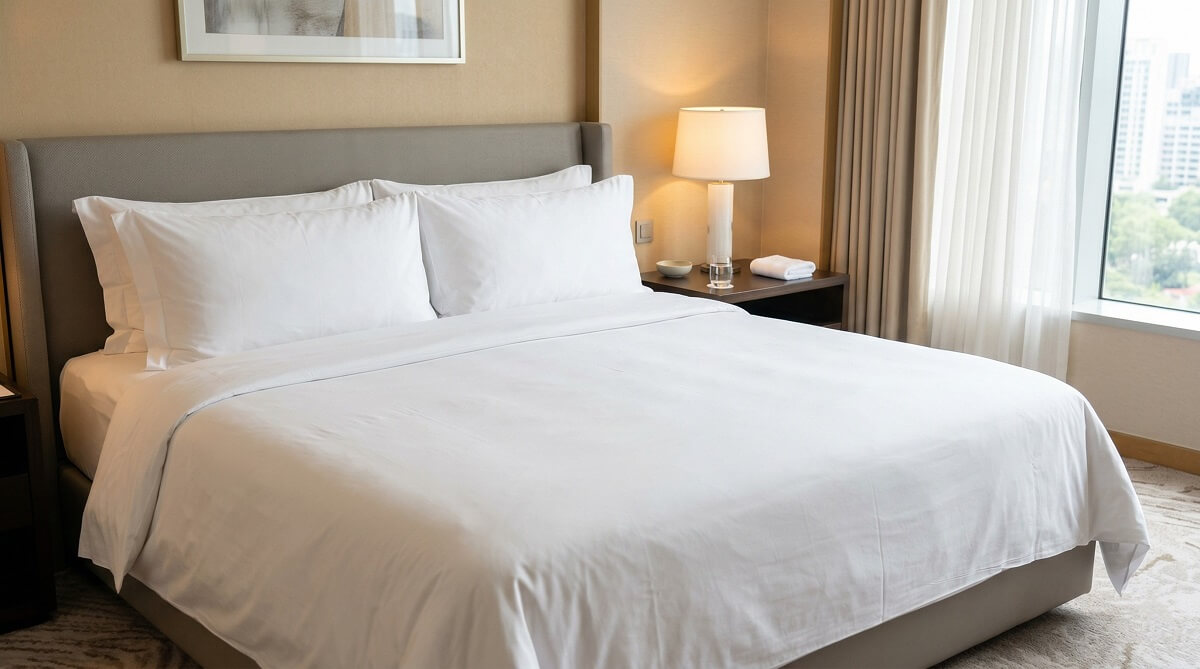
Hotels keep their linens so brilliantly white through a combination of pre-treatment, peroxide-based detergents with optical brighteners, hot commercial wash cycles running at 140–160°F (60–70°C), and quick intervention on any stain before it sets. Their biggest advantage is equipment — industrial machines with programmatic detergent dosing that home washers can’t match. But the chemistry? You can get surprisingly close. for more home care tips from the ChubbytIps team.
The methods that actually translate to home use: OxiClean or oxygen bleach as your brightener, baking soda or white vinegar as a rinse booster, pre-soaking yellowed bedding before the main wash, and skipping fabric softener most of the time. Paired with a regular washing schedule — once a week is the standard — your sheets can stay close to that crisp hotel brightness without industrial equipment.
One thing to avoid: regular chlorine bleach. Hotels don’t rely on it as often as you’d think, and for good reason — it reacts with body oils already embedded in the textile and can actually turn white fabric more yellow over time, not less.
Is This Guide for You?
✅ Read on if you:
- Have white sheets that have gone yellow, gray, or dull
- Want hotel-quality brightness without buying new bedding
- Are deciding between OxiClean, bleach, baking soda, or vinegar
- Want a simple, consistent routine rather than a one-time fix
❌ This isn’t the right guide if you:
- Have colored or patterned sheets (different care rules apply)
- Are hoping for a single-wash miracle that fixes years of buildup
Why Hotels Choose White Sheets in the First Place
The choice of white linen is deliberate — and it actually makes the laundry job easier, not harder. White bedding signals cleanliness instantly. Any stain stands out immediately, which forces housekeeping staff to treat problems rather than let them slide.
There’s a practical angle to it too. When everything in the linen closet is white, you can wash all of it together, treat any piece with oxygen bleach without worrying about color bleeding, and replace individual items without tracking matching sets. From a hotel operations standpoint, it’s the obvious call.
Westin Hotels is often credited with cementing white bedding as the industry standard when the brand introduced its all-white “Heavenly Bed” in 1999, according to hospitality industry sources. The concept was so popular that guests started asking to purchase the bedding to recreate the experience at home — which tells you something about how strongly people associate that crisp white look with genuine comfort and cleanliness.
What Hotels Actually Do (That You Can’t Fully Replicate at Home)
Commercial Machines and Temperatures
Hotel laundry runs at 140–160°F (60–70°C). That’s hot enough to sanitize fabric and kill bacteria, and well above what most home machines deliver. According to the US Department of Energy, factory-default home water heater settings are often 140°F, but the department recommends setting them to 120°F for safety and energy savings — which means your home “hot” wash is typically running at 120°F or below.
Beyond temperature, hotel machines use programmatic dosing: the precise amount of detergent, stain remover, and water is measured automatically and added at the exact right point in the cycle. As one StayCotswold housekeeper described to The English Home: “The machine then downloads the best-fit washing instructions, and the exact amount of detergent, stain remover and water required for the load is sent into the machine at exactly the right time.”
High-spin cycles extract more water, which means more even and faster drying — less chance of moisture settling in and creating that musty smell that can haunt white material.
Peroxide Detergents and Optical Brighteners
Hotels lean on peroxide-based formulas rather than chlorine bleach for regular cycles. As Beata Pett, head of housekeeping at Links House at Royal Dornoch, explained to The English Home: “Most hotels use a good quality washing powder which contains peroxide. Peroxide is great at very effectively preventing linens and towels from greying or yellowing.”
Commercial formulas also contain optical brighteners — UV-reactive compounds that absorb invisible ultraviolet light and re-emit it as visible blue-white light, making material appear brighter than it actually is. Many consumer detergents include optical brighteners too, though typically at lower concentrations than the commercial versions hotels use. for a breakdown of consumer detergent options.
Enzyme-based detergents, which break down protein and fat molecules (sweat, body oil, food), are also standard in hotel laundry rooms. These enzymes work particularly well on the buildup that drives the most yellowing over time, according to Alsco Uniforms, a commercial laundry services provider.
Pre-Treatment Before Every Wash
Hotel housekeeping doesn’t just throw stained sheets in the machine and hope for the best. Stains are spotted and pre-treated first — a peroxide or OxiClean solution applied directly to the mark, left to work for 10–30 minutes before the main wash cycle. Linens are also sorted by soil level, with heavily stained items handled separately.
This step alone accounts for a significant portion of the brightness difference between hotel and home results. Pre-treating is the part most people skip at home, and it shows.
Hotel-Level White Sheets Without Industrial Equipment
Choosing Your Whitening Agent
You have more options than chlorine bleach, and most of them are gentler on material. Here’s how the main choices compare:
| Method | Best For | Fabric Safety | Typical Cost | Eco-Friendly |
|---|---|---|---|---|
| OxiClean White Revive | General brightening + stain removal | ✅ Safe for cotton; not silk or wool | Check current price on Amazon | Moderate |
| Hydrogen Peroxide (3%) | Yellowing, mild stains | ✅ Safe at 1 cup per load | ~$1–$3/bottle | Good |
| Baking Soda | Odor + mild brightening | ✅ Very safe | ~$1–$2/box | Excellent |
| White Vinegar | Rinse brightener + natural softener | ✅ Very safe | ~$2–$4/gallon | Excellent |
| Lemon Juice | Natural bleaching, fresh scent | ✅ Safe; avoid very hot water | ~$1–$2/lemon | Excellent |
| Borax | Stain removal, hard water softening | ✅ Generally safe | ~$5/box | Good |
| Chlorine Bleach | Fast whitening (occasional use only) | ⚠️ Degrades fibers over time; can yellow sheets with regular use | ~$3/bottle | Poor |
The Home Laundry Routine (Step-by-Step)
No exotic products needed here — just consistency and the right order of operations:
- Pre-treat visible stains before laundering. Apply OxiClean or hydrogen peroxide directly to the mark, let it sit for 15–30 minutes, then proceed.
- Pre-soak for yellowed bedding (optional but effective): submerge in warm water with a capful of OxiClean or half a cup of borax for 1–6 hours, then drain before washing.
- Add your brightening agent to the drum or detergent dispenser — a quarter to half cup of baking soda works well for regular loads.
- Wash warm (not scalding). A warm cycle at around 104°F (40°C) handles most laundry. Save the hot setting for heavily soiled sheets — and keep in mind that even your machine’s “hot” cycle is likely running cooler than a hotel’s commercial boiler.
- Use vinegar in the rinse dispenser instead of fabric softener. About half a cup. It flushes out residue, softens naturally, and skips the waxy buildup that fabric softener leaves behind.
- Dry promptly. Low to medium heat, don’t overload the drum. Pull sheets out slightly damp and make the bed — fewer wrinkles, less ironing.
- Sun-dry when you can. UV light has a natural bleaching effect on cloth. Even an hour outside makes a difference, and the linen will smell fresher too.
Why Your Sheets Turn Yellow (and How to Stop It)
Yellow patches on white bedding almost always trace back to one of a handful of causes:
- Sweat and body oils. These build up with every night of sleep and react with laundry detergent residue left in the cloth, creating that familiar yellow-brown tint over time.
- Benzoyl peroxide in skincare products. Less obvious but surprisingly common. If you use an acne treatment, face wash, or toothpaste containing benzoyl peroxide, the residue on your pillowcase can bleach away color in concentrated spots. According to the US National Library of Medicine, benzoyl peroxide should be kept away from fabrics because of its bleaching properties.
- Fabric softener buildup. Softener deposits a waxy coating on fibers that traps sweat and oil residue rather than washing it away. Switching to vinegar in the rinse cycle removes this source of discoloration entirely.
- Hard water deposits. Mineral buildup from calcium and magnesium can make cloth appear gray or dingy. Borax in the wash helps counteract this by softening the water.
- Improper storage. Keeping sheets in plastic bins, cardboard boxes, or near raw wood creates conditions for mildew and odor. A breathable fabric storage bag on a cool, dry shelf is a better option.
- Regular chlorine bleach use. Paradoxically, frequent chlorine bleach application can cause yellowing. The compound reacts with body oils and proteins already embedded in the material, producing yellow byproducts that standard washing won’t remove. for oxygen-bleach alternatives that are safer for regular use.
Start With the Right Sheets — or Make the Most of What You Have
Not all white bedding holds its brightness equally. The textile composition matters more than most people realize.
100% cotton — particularly percale or sateen weaves — resists yellowing far better than poly-cotton blends. As one hotel housekeeper noted in The English Home: “steer clear of poly/cotton blends, as they tend to grey and discolour faster than their 100% cotton counterparts.” Long-staple varieties like Egyptian cotton and Pima hold up through more wash cycles without losing their brightness.
Thread count is a real factor, but not an infinite one. The hotel-quality sweet spot runs between 200 and 400 TC. Above 400, manufacturers often use multi-ply yarns that trap more heat and residue — and the soft, crisp feel you’re paying for diminishes rather than improves.
Pillow protectors and mattress protectors are an underrated prevention tool. They reduce direct contact between body oils and your sheets, extending the time between washes that need heavy brightening treatment. Washing the protectors more often than the sheets themselves is one of the simplest upkeep habits you can build. for protector and bedding options.
Restoring Yellowed Sheets vs. Replacing Them
The Intensive Restore Method
If your bedding has gone significantly yellow, try this before giving up on it:
- Fill a tub or basin with warm water.
- Add 1 cup white vinegar, juice of one lemon, and 2 tablespoons dish soap.
- Submerge the linens and soak overnight.
- Drain and run a normal cool-water machine wash (no additional detergent needed).
Alternatively, soak overnight in a borax solution — half a cup of borax per gallon of warm water — before a standard machine cycle.
Keep this in mind: how well it works depends on how far gone the fabric is. Yellow staining from years of accumulated buildup may not fully reverse. If two treatment attempts don’t produce a meaningful result, replacement is the practical call.
When to Replace
A 100% cotton sheet set washed weekly typically lasts 2–3 years. Linen can run 4–5 years or longer with good care. The clearest signs it’s time for a new set: fabric is pilling, thinning in spots, or stains won’t respond to treatment after two tries.
Old white sheets don’t have to go straight in the trash. They work well as dust covers during home projects, car windshield frost shields, or raw material for simple sewing projects.
Frequently Asked Questions
What detergent do hotels use to keep sheets white?
Hotels typically use commercial-grade peroxide-based detergents that contain optical brighteners and stain-removing enzymes. These aren’t the same formulas sold at grocery stores — they’re designed for industrial machines at higher concentrations. For home use, the closest consumer equivalent is OxiClean White Revive or any oxygen-bleach laundry booster used alongside your regular detergent.
Is OxiClean safe for white cotton sheets?
Yes. OxiClean (oxygen bleach) is safe for white and colorfast cotton fabrics. It’s not suitable for silk, wool, or dry-clean-only materials. Follow the package instructions — typically a capful per gallon of water for soaking, or the recommended dose for machine washing. It performs better in warm water than cold.
Can I use chlorine bleach on my white sheets?
Occasionally, in small amounts, on 100% cotton with no special finishes. But regular use is a problem: chlorine bleach degrades cotton fibers over time, and it can react with body oils in the cloth to produce the same yellow staining you’re trying to eliminate. Reserve it as a last resort, not a routine brightening step.
How often should I wash white sheets?
Once a week is the standard. Hotels launder linens after every guest stay — sometimes every 3 nights during extended stays — because preventing buildup is far easier than reversing it. At home, weekly washing with a mild brightening agent beats occasional deep cleans by a wide margin.
Does vinegar actually whiten sheets, or is it just a myth?
Vinegar doesn’t bleach — it contains no whitening agents. What it does is strip out detergent and mineral residue that cause dullness and graying, leaving material looking cleaner as a result. Use half a cup in the rinse dispenser in place of fabric softener, not as a substitute for your main detergent or a brightening product.
What’s the best way to get yellow stains out of white sheets?
Pre-soak in warm water with OxiClean White Revive or a borax solution for 1–6 hours before a standard wash. For stubborn staining, try the intensive overnight soak with vinegar, lemon juice, and dish soap. Acting fast on new spots matters — the sooner you treat them, the better the outcome.
Why do my white sheets turn gray after washing?
Gray usually points to one of two issues: hard water mineral deposits building up in the cloth, or whites getting washed with faintly colored items. Borax in the wash addresses hard water. Washing only whites together handles the second problem. Also check detergent quantity — excess residue that doesn’t fully rinse out creates a grayish film over time.
Do hotels use fabric softener on their sheets?
Generally not as a routine step. Commercial hotel laundry avoids fabric softener for the same reason you should: it accumulates in fibers, reducing absorbency and locking in residue that causes yellowing. Some properties use a small amount occasionally for texture, but a half cup of white vinegar in the rinse cycle delivers the softening benefit without those downsides.
Need new bedding? Browse white cotton sheet options on Amazon. For hotel-quality results at home, stick with 100% percale or sateen cotton in the 300–400 thread count range.
