


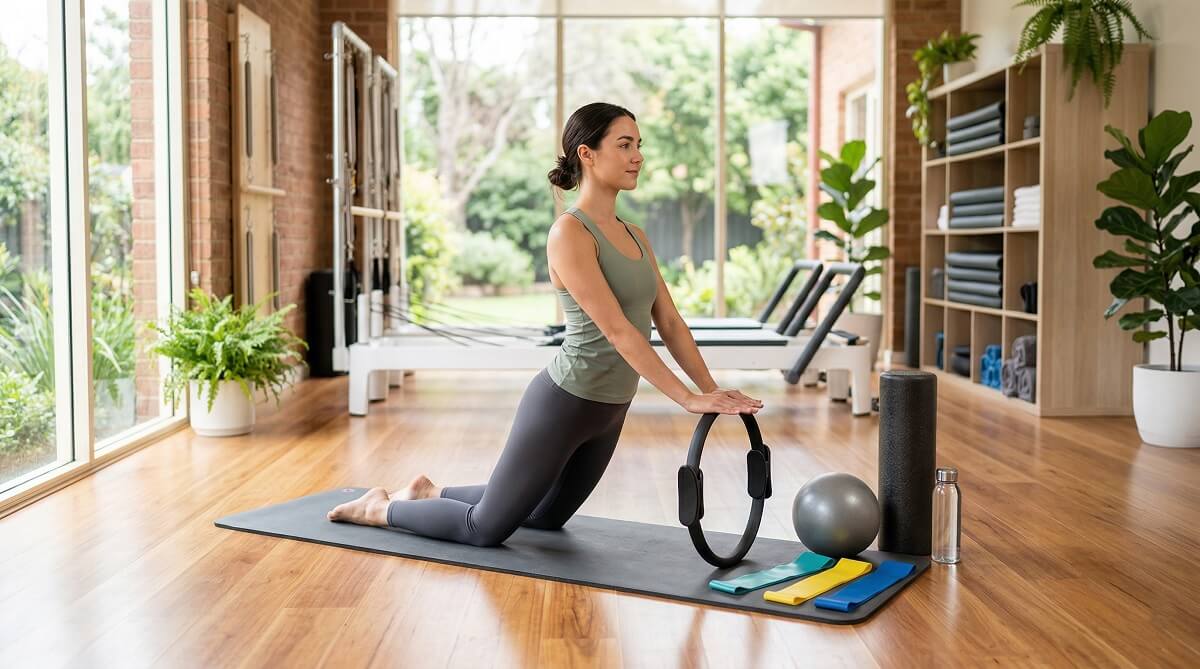
A solid pilates starter kit comes down to four items: a pilates ring, a mini exercise ball, a set of resistance bands, and grip socks. Those four props cover the vast majority of beginner and intermediate mat pilates exercises. If you see a kit with those four things, you’re good to go.
On Amazon, the top-selling pilates sets run $22–$35 and typically include all four. If you’d rather buy individual pieces from a studio-quality brand, budget closer to $60–$80 total. The difference between a $25 kit and a $75 one is mostly build quality and brand name — not dramatically different for someone starting out. As of March 2026, the best-sellers in the Amazon Pilates Sets category range from $9.99 to $45.99, with the sweet spot sitting around $28–$35.
to find similar breakdowns for home gym gear, yoga equipment, and workout accessories.
Who Should (and Shouldn’t) Build a Pilates Starter Kit
✓ Best For
- Complete beginners trying mat pilates at home for the first time
- People following structured online pilates classes — most instructors call for these exact props
- Anyone adding resistance to an existing yoga or barre routine
- Those who want effective home fitness without a reformer machine
✗ Skip the Kit If
- You’re focused on reformer pilates — a mat kit won’t replicate spring resistance
- You already own resistance bands and a mat; you may only need a ring and a ball
- You prefer a pure bodyweight practice — none of this equipment is mandatory to begin
The 4 Core Items in Any Pilates Starter Kit
Every reputable pilates kit — whether it’s a $25 Amazon bundle or a $65 studio set — is built around these four pieces. Here’s what each one does and what to look for.
1. Pilates Ring (Magic Circle)
The ring is the most recognizable piece of pilates equipment, and for good reason. You squeeze it between your inner thighs, press it between your palms, or use it to add resistance during chest and arm exercises. According to , the ring forces you to engage your core even when you’re targeting other muscle groups — which is exactly what pilates is about.
According to Merrithew, a professional studio equipment brand, the fitness circle “challenges core engagement, activates the inner thighs and refines upper body alignment” — all from one lightweight prop.
Size guide: Standard rings are 14–15 inches in diameter. A 12-inch mini option exists for smaller frames or limited mobility. Per NBC Select’s 2026 pilates ring review, all three fitness professionals they consulted recommended the Balanced Body Ultra-Fit Circle ($34–$35) as the top pick — described as “very sturdy and durable, with comfortable handles.” The budget pick is the Gaiam Pilates Ring at $14.99, which works fine for beginners. Handles should be padded with neoprene or foam.
2. Mini Exercise Ball
This is not a yoga stability ball. The mini pilates ball is 8–9 inches in diameter — roughly the size of a cantaloupe — and it’s soft and squishy. You place it behind your lower back for support, squeeze it between your knees during core work, or sit on it to challenge balance.
Merrithew describes the mini stability ball as creating “instability that wakes up deep stabilizer muscles,” specifically the core and hip stabilizers. That instability is the point — your body has to work harder to stay steady, which means more muscle activation from the same movement.
BetterMe specifies an 8-inch diameter as standard for their pilates ball, and most kits follow suit. Anything in the 8–9 inch range works.
3. Resistance Bands
Most starter kits include two types of bands, and they serve different purposes.
Loop bands (also called booty bands or mini bands) are short, closed loops — typically around 15 inches — placed around your ankles or above your knees during glute, hip, and lateral leg work. They’re the most-used prop in lower-body pilates sequences.
Long flat bands (78 inches or so) are open-ended and used for rows, chest presses, arm work, and assisted stretching. Less common in pure pilates but useful for variety.
Resistance levels are usually labeled light, medium, and heavy. Beginners should start light — the goal in pilates is controlled movement, not muscle exhaustion. Most kits include two or three resistance levels so you have room to progress.
4. Grip Socks
Grip socks are optional if you practice on carpet, but basically required on hardwood floors or smooth yoga mats. The rubber dots or grips on the sole prevent your feet from sliding mid-exercise, which matters a lot for standing balance work and footwork sequences.
BetterMe includes 100% cotton grip socks (size 5–9) in their Pilates Essential Kit. Most grip socks in starter kits follow a similar spec. If your kit doesn’t include them, a separate pair typically runs $10–$15.
What’s Optional (But Worth Knowing About)
Ankle Weights
Ankle weights show up in a lot of pilates content, especially for leg lifts, donkey kicks, and the side-lying leg series. The standard weight for pilates is 1–2 lbs per ankle — heavier is not better here. The practice emphasizes precision and control, and too much weight throws off your form.
They’re worth adding after a few weeks once basic exercises feel manageable. Female Fit House, for example, includes 1kg (about 2.2 lb) Sculpt Cuffs in their starter kit, which is right in the sweet spot.
Hand Weights (Light Dumbbells)
1–3 lb dumbbells appear during standing arm sequences and some pilates-inspired strength work. Most budget kits don’t include them — which is fine. Add a pair of 1–2 lb weights once you’ve established a regular practice. They’re inexpensive ($8–$20 on Amazon) and easy to find.
Core Sliders
Sliders are small plastic discs that go under your feet or hands on smooth floors to create Reformer-style gliding movements: pike presses, sliding lunges, hamstring curls. They’re genuinely useful if you have hardwood floors. On carpet, they mostly don’t slide — which defeats the purpose. Skip them unless you know your workout surface works.
Pilates Starter Kit Comparison by Price Tier
Here’s how the options break down by budget. These prices reflect Amazon bestseller data as of March 2026.
| Tier | Price Range | Typical Contents | Best For | Example |
|---|---|---|---|---|
| Budget | $10–$35 | Ring + ball + loop bands + bag | First-timers, casual practice | Nuplot Pilates Kit ($22.99, 4.4★) |
| Mid-Range | $35–$65 | Ring + ball + bands + socks + workout guide | Regular home practice | kure.fit Kit ($39.99, 4.8★) or YourReformer Prop Kit ($62.73) |
| Premium | $65–$200+ | Studio-grade individual pieces | Serious practitioners, instructors | Balanced Body ring ($34–$35 standalone) + Bala Power Ring ($89) |
The Blogilates Starter Fit Kit at Target — designed by instructor Cassey Ho — is one of the most popular in the US: 4.7 stars from 3,782 reviews. It’s a slightly different configuration (yoga mat + strap + exercise band), making it a good pick if you need a mat more than a ring.
How to Use Your Starter Kit Without Overcomplicating It
You don’t need to pull out every item each session. A 30-minute beginner class might only use the ring and ball. A lower-body focused session might only call for loop bands. Follow your instructor’s lead — most online pilates classes specify which prop to grab.
A simple approach for your first few weeks: start with the ring and ball for the first two to three sessions. Get comfortable with the basic movements before adding bands. Once you’re there, a regular practice of two to three sessions per week is enough to feel a real difference — most fitness instructors suggest 20–30 minute sessions as a solid starting point for beginners. See for beginner-friendly routines that put these props to use.
One thing most kits don’t include: a pilates-specific mat. A standard yoga mat works, but a 5–6mm thickness gives better cushioning for spine-rolling and floor work. If you’re practicing on hardwood, it’s worth the upgrade. cover mat recommendations separately.
Frequently Asked Questions
What is in a pilates starter kit?
Most starter kits include a pilates ring (magic circle), a mini exercise ball (8–9 inch), loop resistance bands, and sometimes grip socks. Higher-priced kits may add long flat bands, a carry bag, a workout guide, or light hand weights. A yoga mat is rarely included — that’s usually purchased separately.
Do I need a pilates ring to start pilates?
No — you can absolutely start without one. Mat pilates is designed for bodyweight work. That said, the ring adds resistance quickly and makes a noticeable difference for inner thigh, chest, and arm exercises. Most beginner online classes introduce it within the first few sessions.
What size pilates ring should I get?
Most adults do well with a 14–15 inch ring. A 12-inch mini is better for petite frames or limited mobility. NBC Select’s 2026 roundup found 14 inches to be the standard recommendation from fitness professionals. The ring should have padded handles — neoprene or foam — on both the inside and outside.
Can I do pilates without any equipment?
Yes. Classical mat pilates was designed without props — just a mat and your bodyweight. Equipment adds challenge and variety, but you can follow plenty of beginner classes with nothing but a mat and floor space.
Is a pilates ball the same as a yoga ball?
No. A yoga stability ball (or Swiss ball) is 55–75 cm in diameter — large enough to sit on. A pilates mini ball is 8–9 inches, soft, and used for supporting the lower back, squeezing between the knees, or adding instability to floor exercises. They’re completely different tools.
How much should I spend on a pilates starter kit?
A $22–$35 Amazon bundle covers the basics for a beginner. If you want better build quality or individual pieces from studio brands, $60–$80 is a reasonable budget. Spending more than $100 on a starter kit before you know whether you’ll stick with the practice is hard to justify — start affordable and upgrade specific pieces later.
What’s the difference between loop bands and long resistance bands?
Loop bands are short, closed circles (about 15 inches) placed around your ankles or thighs for leg and glute work. Long flat bands are open-ended (usually 78 inches or so) and used for arm rows, chest exercises, and stretching. Most kits include both, but loop bands get used more in standard pilates routines.
Do I need grip socks for pilates at home?
Depends on your floor. On carpet, bare feet or regular socks work fine. On hardwood floors or smooth mats, the rubber-dotted sole of grip socks prevents sliding — which matters for balance exercises and standing work. A separate pair costs $10–$15 if your kit doesn’t include them.
Check current prices on Amazon’s Pilates Sets bestsellers for the most up-to-date options, or look for the Blogilates Starter Fit Kit at your nearest Target store.
