


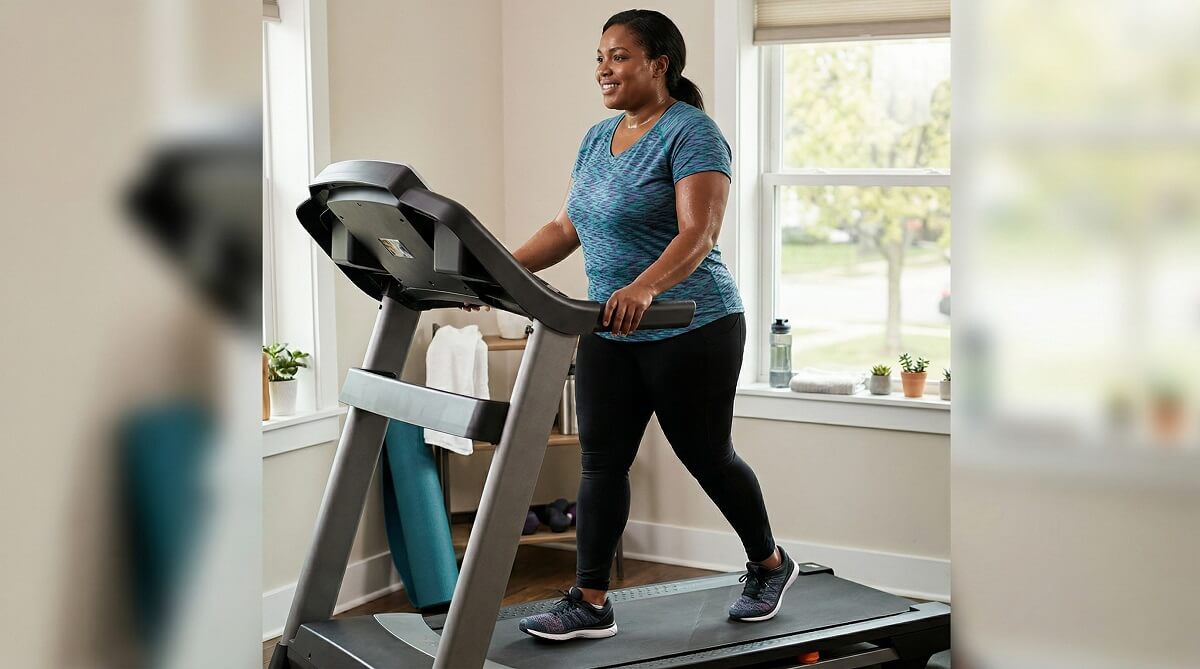
Here’s the short version: if you weigh between 200 and 350 pounds and want a treadmill that won’t give out on you in six months, the Sole F80 is the right call for most people. It carries a 350-pound weight limit, folds up, runs on a solid 3.5 CHP motor, and comes with a lifetime warranty on the frame, motor, and deck — all for $1,799.99 (on sale from $1,899.99 at soletreadmills.com as of March 2026). If you’re closer to the 400-pound mark, the NordicTrack Commercial 1750 steps up with a bigger motor and higher capacity.
One thing most buyers don’t know: the weight capacity printed on a treadmill is based on static load — someone standing still. When you actually walk or run, the impact force on the belt and deck is two to three times your body weight per stride, according to research published in PLOS One. That means a 250-pound person running generates up to 750 pounds of force with every step. A machine rated to 300 lbs can struggle well before you hit that number. The four specs that really matter are motor horsepower, roller diameter, deck thickness, and frame construction — not the brand name on the side panel.
cover this kind of nuance across product categories. Below, we break down what actually separates a capable machine from one that’s going to smoke its motor after three months of use.
Who Should (and Shouldn’t) Buy a Heavy-Duty Treadmill
✅ Best For
- Anyone weighing 200–400 lbs who wants cardio equipment built for their body
- Walkers and low-impact users dealing with knee, hip, or ankle pain — cushioned decks make a real difference
- People focused on long-term weight loss who need a machine that can log consistent miles for years
- Households where multiple people will use the treadmill, including heavier family members
❌ Skip If
- You weigh under 200 lbs — a standard treadmill with a 300-pound limit will handle your needs
- Your budget is under $800 — at that price point, quality heavy-duty frames don’t exist; you’d be better off buying used commercial gym equipment
- You have a small apartment with limited floor space — these machines run large even when folded
- You’re hoping for an under-desk walking pad (see the FAQ section below for why those generally don’t work for heavier users)
Why the Number on the Box Doesn’t Tell You Enough
Manufacturers test weight ratings with someone standing still on the belt. That’s the static load. Running is a different story entirely. Research published in PLOS One found that the ground reaction force generated while running is two to three times body weight. For a 280-pound person, that’s 560 to 840 pounds of force hitting the deck with every stride. Do that 4,500 times in a 30-minute jog (a reasonable step count at 6 mph), and you start to see why cheaply made machines fail fast.
A treadmill rated to 300 lbs isn’t necessarily safe for someone who weighs 250 and actually runs. The motor strains, the belt drags, the deck can flex. Over time, the motor burns out or the frame cracks — and that’s not just frustrating, it’s a fall risk. A reasonable rule of thumb: buy a machine rated at least 50 pounds above your body weight, and prioritize the five specs covered in the next section over flashy screens or app integrations.
The 5 Specs That Determine Whether a Treadmill Can Handle Your Weight
Before you look at a single model, understand what makes one treadmill structurally capable and another a liability for heavier users.
1. Motor Size (CHP)
You want continuous horsepower (CHP), not peak horsepower — those are different numbers, and budget brands often advertise the inflated peak figure. At 200–300 lbs, you need a minimum of 3.0 CHP. At 300–400 lbs, target 3.5–4.0 CHP. The more you weigh, the harder the motor works to keep the belt moving, especially at walking speeds where friction is highest.
2. Roller Diameter
Rollers are the cylinders at each end of the deck that pull the belt. Bigger rollers reduce belt wear, distribute load more evenly, and put less strain on the motor. Under 2.0″ is acceptable for lighter users only. At 200–300 lbs, look for 2.0–2.4″. At 300–400 lbs, according to , you want 2.5″ or larger. The Sole F80 uses 2.36″ rollers; the NordicTrack 1750 steps up to 2.5″.
3. Deck Thickness and Material
Standard MDF (medium-density fiberboard) decks work fine for most users; target at least 3/4″ thick, closer to 1″ if you’re above 300 lbs. The Sole F80’s Cushion Flex Whisper Deck is 13/16″ thick and phenolic-resin coated — that coating reduces friction between belt and deck, which matters a lot when significant weight is pounding on it for months at a time. Some decks are reversible, which effectively doubles their lifespan.
4. Belt Ply
A 1-ply belt is fine for lighter casual users. Above 300 lbs, you want a 2-ply belt — the extra layer handles friction drag and extends how long the belt lasts before needing replacement. The NordicTrack 1750 includes a 2-ply belt as standard.
5. Frame Weight and Construction
Counter-intuitively, a heavier treadmill is often a better treadmill — the extra steel means a more rigid frame that doesn’t flex or wobble underfoot. The Sole F80 tips the scale at 274 lbs; the NordicTrack X24 at 445 lbs. Look for robot-welded or reinforced steel frames over bolt-together assemblies. When a machine feels planted, you can actually focus on your workout instead of white-knuckling the handrails.
Top Treadmills for Heavy People in 2026
Best Overall — Sole F80
The Sole F80 is the most consistently recommended treadmill for heavier users across independent review sources including Garage Gym Reviews, and for good reason. The combination of a 350-pound weight limit, foldable frame, reversible cushioned deck, and lifetime warranty on the frame, motor, and deck is hard to beat at this price point.
The Cushion Flex Whisper Deck reduces joint impact by up to 40% compared to outdoor running — a meaningful number if your knees or hips are already carrying strain. The 10.1″ Android touchscreen is functional without being the main selling point; you can connect to Sole’s free app or your own fitness platform (Apple Health, Fitbit, etc.) without a mandatory subscription. The 2.36″ rollers and 3.5 CHP motor handle sustained walking and running for users up to 350 lbs.
One honest downside: the side rails are on the shorter side, and a few users have noted difficulty reaching customer support. Neither is a dealbreaker at this price, but worth knowing.
- Weight capacity: 350 lbs
- Motor: 3.5 CHP continuous duty
- Deck: 22″ × 60″ reversible, 13/16″ thick, reduces impact up to 40%
- Rollers: 2.36″
- Folding: Yes
- Top speed: 12 MPH | Incline: 0–15%
- Warranty: Lifetime frame, motor, deck; 3-year electronics/parts; 1-year labor
- Price: $1,799.99 (sale from $1,899.99) at soletreadmills.com — check Amazon for current pricing
Best for 400-Lb Capacity — NordicTrack Commercial 1750
If you’re in the 300–400 lb range, the NordicTrack Commercial 1750 is the step up you need. The 4.25 CHP motor and 2.5″ rollers are sized for that weight bracket in a way that the Sole F80 isn’t quite engineered for. The 2-ply belt adds durability, and the fold-up frame keeps it practical in a home gym without requiring permanent floor space.
The iFit integration is genuinely useful — trainers can remotely adjust incline and speed during workouts, which works well for people using the unit as part of a structured cardio program. The 30-day free trial gives you a real sense of whether it’s worth the ongoing ~$39/month subscription. If you prefer not to pay for a streaming service, the machine still works as a standalone, though you lose most of what the 16″ HD screen is designed for.
As of March 2026, NordicTrack was running a spring sale: $500 off plus free shipping, with an additional $300 rebate available through 03/30/2026. That brings the effective price significantly below the $2,499 list price.
- Weight capacity: 400 lbs
- Motor: 4.25 CHP
- Deck: 22″ × 60″, 2-ply belt
- Rollers: 2.5″
- Folding: Yes
- Incline/decline: -3% to +12%
- Warranty: Lifetime motor; 10-year frame; 2-year parts; 1-year labor
- Price: ~$2,499 list (spring sale active March 2026) at nordictrack.com
Best Value — Horizon 7.4 AT
The Horizon 7.4 AT hits a useful middle ground: 375-pound capacity, 3.5 CHP motor, and a 3-Zone Variable Response Cushioning system that adapts shock absorption across the front, middle, and rear of the belt. That last feature matters for heavier users whose stride puts uneven stress on the deck — and it’s something most competitors at this price don’t offer.
At $1,799 from Horizon directly, it’s similar in price to the Sole F80, but with 25 more pounds of rated capacity. The tradeoff is the 9.3″ LCD screen — it’s fine as a basic display, but most people will mount a tablet or phone above it. Horizon built the machine explicitly for that setup, which keeps the cost down without compromising the mechanical side. The lifetime warranty on the frame and motor is among the strongest in this price range.
- Weight capacity: 375 lbs
- Motor: 3.5 CHP
- Deck: 22″ × 60″, 3-Zone Variable Response Cushioning
- Rollers: 2.36″ / 1.811″ tapered
- Folding: Yes
- Incline: 0–15%
- Warranty: Lifetime frame & motor; 5-year parts; 2-year labor
- Price: $1,799 at horizonfitness.com
Best for Incline Walking — NordicTrack X24
The X24 is the machine for heavier users who physically can’t run yet — or who want a running-level calorie burn without the joint impact. Its -6% to +40% incline range is unmatched; walking at a steep incline lets you hit heart rates and caloric burn comparable to jogging flat, with far less stress on your knees and hips. For someone carrying significant extra weight, that trade is often worth making.
The frame weighs 445 lbs and uses commercial-grade construction — you’ll feel it the moment you step on. The 4.25 CHP motor doesn’t stutter under load. The 24″ touchscreen is the largest available on any home treadmill and gives you iFit access in the most usable format. The downsides: it doesn’t fold, it’s heavy to move, and the price at Dick’s Sporting Goods was listed at $2,999.98 (down from $3,999.99) as of March 2026.
- Weight capacity: 400 lbs
- Motor: 4.25 CHP
- Deck: 22″ × 60″
- Incline/decline: -6% to +40%
- Machine weight: 445 lbs
- Folding: No
- Warranty: Lifetime motor; 10-year frame; 2-year parts; 1-year labor
- Price: $2,999.98 at Dick’s Sporting Goods
Side-by-Side Comparison
| Model | Capacity | Motor | Deck | Rollers | Folding | Warranty (Frame/Motor) | Price (March 2026) |
|---|---|---|---|---|---|---|---|
| Sole F80 | 350 lbs | 3.5 CHP | 22″×60″ | 2.36″ | Yes | Lifetime / Lifetime | $1,799.99 |
| NordicTrack 1750 | 400 lbs | 4.25 CHP | 22″×60″ | 2.5″ | Yes | 10-yr / Lifetime | ~$2,499 |
| Horizon 7.4 AT | 375 lbs | 3.5 CHP | 22″×60″ | 2.36″ | Yes | Lifetime / Lifetime | $1,799 |
| NordicTrack X24 | 400 lbs | 4.25 CHP | 22″×60″ | N/A | No | 10-yr / Lifetime | $2,999.98 |
Prices current as of March 2026. Check retailer sites for the most recent deals — sales on these models are common.
What About Under-Desk Treadmills for Heavy People?
Most of them won’t work — at least not for users above 265 lbs. The majority of under-desk walking pads and compact machines max out at 220–265 lbs, and the rare options rated higher typically run smaller drive motors (1.5–2.5 HP) that wear out quickly under sustained load from larger users.
If you’re over 300 lbs and want to use a treadmill at a standing desk, the more practical setup is a full-size machine (like the Sole F80 or Horizon 7.4 AT) paired with a height-adjustable desk placed nearby. You get the durability and safety of a machine rated for your weight, and the standing desk gives you the workspace flexibility you’re after. It’s less compact, but it actually holds up. for desk setups that pair well with this approach.
Frequently Asked Questions
What is the best treadmill for heavy people?
For most people in the 200–350 lb range, the Sole F80 is the strongest option — it combines a 350-pound weight limit, solid 3.5 CHP motor, reversible cushioned deck, and a lifetime warranty. For users closer to 400 lbs, the NordicTrack Commercial 1750 or NordicTrack X24 offer the right specs for that weight class.
What treadmill has a 400 lb weight limit?
Several models carry a 400-pound rated capacity: the NordicTrack Commercial 1750, NordicTrack X24, and NordicTrack Ultra 3. The Life Fitness T5 and 3G Cardio Elite Runner X also hit 400 lbs. If you’re at or near that limit, prioritize machines with 2.5″+ rollers and 4.0+ CHP motors.
Can a 300-pound person use a folding treadmill?
Yes, but you need to choose carefully. The Sole F80 (350 lb capacity) and NordicTrack 1750 (400 lb capacity) are both folding machines that are genuinely rated for that weight range. Avoid budget folding treadmills — the folding mechanism on cheaper units often uses plastic hardware that fails under heavier users over time.
What motor size do I need if I weigh over 300 lbs?
At 300–350 lbs, a 3.5 CHP motor is the minimum for regular use. At 350–400 lbs, target 4.0–4.25 CHP. The motor has to work harder at slower walking speeds (where belt friction is greatest), so headroom matters — a motor running at 70% capacity will outlast one running near its limit every session.
How thick should a treadmill deck be for a heavy user?
Aim for 3/4″ to 1″ thick MDF or solid wood deck. The Sole F80 uses a 13/16″ reversible deck — the reversible feature effectively doubles the deck’s lifespan, since you can flip it when one side wears down. Above 300 lbs, also look for phenolic resin coating, which reduces friction and prevents warping.
Is the Sole F80 good for heavy people?
For users up to 350 lbs, yes. The 3.5 CHP motor, 2.36″ rollers, cushioned reversible deck, and lifetime warranty on the frame, motor, and deck make it one of the most complete packages at its price point. Independent testers at Garage Gym Reviews rank it the top pick for heavy people. It’s not right for users above 350 lbs — for that, you’d want the NordicTrack 1750 or similar 400-lb rated machine.
What is the best treadmill for heavy people who can’t run yet?
The NordicTrack X24 is worth serious consideration here. Its 40% incline allows you to get a high-intensity cardio workout at a walking pace — you can hit running-equivalent calorie burns and heart rates without the joint stress of jogging. That makes it particularly useful for heavier users who are starting out and need to protect their knees, hips, and ankles while still building cardiovascular fitness.
How long do treadmills last for heavy users?
A quality machine used regularly by a heavier user should last 7–10 years with proper maintenance (lubrication, belt tension checks, motor cleaning). Cheap treadmills can fail in under a year under similar conditions. The machines on this list — Sole F80, NordicTrack 1750, Horizon 7.4 AT — all have warranties reflecting that expected lifespan. A lifetime motor warranty from a brand like Sole or Horizon is meaningful; they wouldn’t offer it if the motors failed routinely.
Ready to Pick One?
For most heavier users, the Sole F80 remains the easiest recommendation — solid specs, honest warranty, no mandatory subscription. Check the current price at soletreadmills.com or on Amazon. If you’re in the 350–400 lb range, compare the NordicTrack 1750 at nordictrack.com — the spring sale through March 2026 makes it considerably more affordable than the sticker price suggests.
on fitness equipment and home gym setups.
