


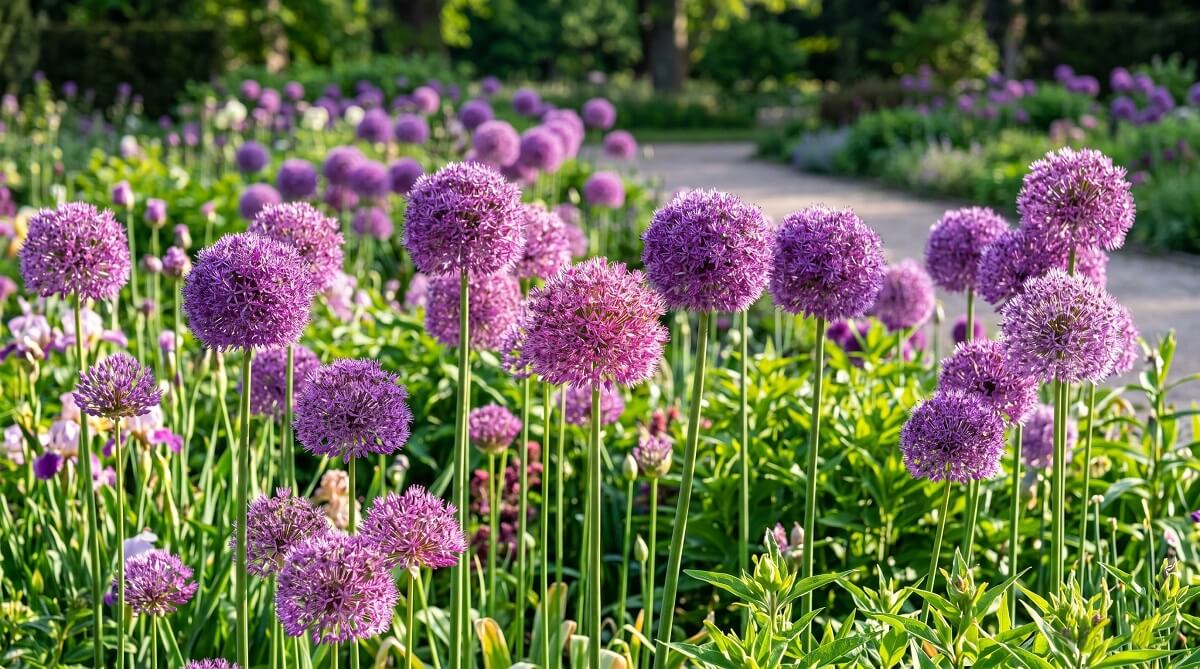
Most alliums bloom from mid-May through late June if you’re in USDA Zones 5 or 6. Zone 7 and warmer, figure on mid-April through late May for the early types. Cooler zones push everything back a few weeks. The catch: “alliums” isn’t one plant — it’s a family of over 900 species, and bloom times spread across a six-month window depending on which cultivar you’re growing. A few types don’t open until July or August. Plant the right varieties and you can have alliums in flower from May straight through to September.
What Affects When Alliums Bloom?
Variety Is the Biggest Variable
Pick up two different allium varieties at the garden center and you might get one that opens in late May and another that won’t show a flower until the middle of July. That’s not a mistake — that’s how the genus works. ‘Purple Sensation’ is a classic early-to-mid bloomer, coming on in late May or early June across most of the country. Drumstick allium (Allium sphaerocephalon) sits at the other end, holding off until late June and often running well into July.
There’s also a chilling requirement at play. Most alliums need a cold dormancy period — a winter where soil temperatures drop well below 40°F — to trigger spring growth. That’s why bulbs planted in fall bloom on schedule the following spring, but bulbs planted in March (without that cold period) often produce foliage and no flower.
Your USDA Zone Shifts the Calendar
Think of zone as a timing multiplier. For every zone warmer, bloom time tends to run about two to three weeks earlier. For every zone cooler, it shifts later. Here’s a rough guide for the most common large-flowered varieties:
- Zone 4: Large alliums typically bloom late May to mid-June; Drumstick and Millennium push into July–August
- Zone 5–6: Late May through late June for most popular varieties; Drumstick/Millennium July–August
- Zone 7: Mid-May through mid-June for early and mid-season types; late-season types into July
- Zone 8–9: Late April to late May for many spring-blooming alliums; some varieties struggle due to insufficient winter chill
According to the Kellogg Garden guide on alliums, most alliums are hardy in Zones 3–10, but warm-climate gardeners (Zone 8+) may find the variety selection narrower because fewer cultivars get the chill hours they need.
Soil, Sun, and Drainage
Alliums in soggy soil don’t bloom — they rot. Well-drained ground isn’t optional. The bulbs sit dormant through winter and early spring, and standing water during that window kills them before the season starts. If you’ve had alliums that simply didn’t come up, poor drainage is the first thing to check.
Sun matters too. Alliums need at least six hours of direct sun per day; eight is better. A semi-shady spot won’t kill them outright, but it delays flowering and produces weaker, shorter stems. If your alliums are producing foliage but no flowers, consider whether something nearby has grown up and is now shading them.
Allium Bloom Times by Variety
This table covers the most widely grown alliums in the US, organized by when they typically flower in Zones 5–6. Warmer zones will run two to four weeks earlier; cooler zones, two to three weeks later. Bloom duration is included — a detail most sources skip, but one that matters when you’re planning a border.
| Variety | Bloom Month (Zone 5–6) | Height | Flower Size | USDA Zones | Bloom Duration |
|---|---|---|---|---|---|
| A. neapolitanum (Naples Onion) | May | 12 in | Small white clusters | 6–10 | 2–3 weeks |
| A. ‘Purple Sensation’ | Late May–early June | 24–30 in | 3–4 in globe | 3–8 | 3–4 weeks |
| A. christophii (Stars of Persia) | Late May–early June | 18–24 in | 8–10 in globe | 5–8 | 3–4 weeks |
| A. giganteum (Giant Onion) | June–July | 36–72 in | 5–6 in umbel | 4a–8b | 2–3 weeks |
| A. ‘Globemaster’ | Late May–early July | 36–48 in | 8–10 in globe | 5–9 | 4–6 weeks |
| A. caeruleum (Blue Globe) | June–July | 24 in | 1–2 in blue globe | 4–10 | 3 weeks |
| A. sphaerocephalon (Drumstick) | Late June–July | 24–36 in | ~1.5 in oval head | 4–8 | 3–4 weeks |
| A. ‘Millennium’ | July–August | 12–18 in | ~2 in globe | 5–8 | 6–8 weeks |
| A. cernuum (Nodding Onion) | July–August | 8–18 in | Small drooping clusters | 4–8 | 3–4 weeks |
| A. tuberosum (Garlic Chives) | August–September | 12–18 in | Small white star clusters | 4–9 | 3–4 weeks |
Sources: NC State University Extension (A. giganteum); Missouri Botanical Garden (A. ‘Millennium’, A. sphaerocephalon); Cornell Cooperative Extension (summer alliums); Fine Gardening (species zones); Pith + Vigor (bloom windows by season).
How to Plan for Alliums From May Through August
Here’s the thing most gardeners don’t realize until their third or fourth season: alliums are most rewarding when you layer them. Plant one variety and you get three or four weeks of flowers. Plant three well-chosen varieties and you get four months of something interesting.
A straightforward starter combination that works across most of the country:
- ‘Purple Sensation’ — opens late May, carries you into early June with classic purple globes on 24-inch stems
- ‘Globemaster’ — takes over in June and often runs into early July; the 8–10 inch flower heads are the biggest show in the genus
- ‘Millennium’ — a true summer bloomer, July through August, shorter at 12–18 inches but an exceptionally long bloom period of 6–8 weeks; named Proven Winners’ 2018 Perennial Plant of the Year
Add Drumstick allium (A. sphaerocephalon) into that mix and you’ve got coverage from late May through August with almost no gaps.
One thing worth knowing about the spent heads: ‘Globemaster’ and A. christophii both hold their dried seedheads through fall and into winter. They go from deep purple to a pale straw color and stay structural in the border well past frost. That’s not nothing — it’s months of additional value from a bulb you already bought.
When to Plant for the Blooms You Want
Plant allium bulbs in fall. That’s not a preference — it’s a requirement for proper root establishment and the chilling cycle that triggers spring flowers.
The practical planting window in most of the US:
- Zones 3–7: September through October is ideal; you can push into November if the ground isn’t frozen
- Zones 8–10: October through November; wait until soil temperatures drop below 60°F
How deep? The standard formula is three to four times the diameter of the bulb. For a large A. giganteum bulb — which can run 3–4 inches across — that means planting 9–12 inches down. The NC State Extension page on Allium giganteum recommends 8 inches as a practical minimum for that species. Drumstick bulbs are smaller; 3–5 inches deep is sufficient per the Missouri Botanical Garden plant finder.
After planting, the math works out to roughly 12–14 weeks from bulb-in-ground to first flowers — though that depends on your climate and how favorable the winter was. Plant in October, expect flowers the following May or June.
Can You Grow Alliums in Containers?
Yes, with caveats. The main issue is depth. Larger varieties like A. giganteum need a container at least 14–16 inches deep to give the roots room to develop properly. Smaller varieties — Drumstick, ‘Millennium’, ‘Purple Sensation’ — work well in pots with 10–12 inches of depth. Use a fast-draining potting mix, make sure the container has drainage holes, and plant bulbs at the same depth you would in the ground. Container alliums sometimes need a cold period in an unheated garage or shed if you’re in Zone 8+ and winters stay too mild for adequate chilling.
Why Your Alliums Might Not Be Blooming
If you planted bulbs and got foliage but no flowers — or nothing at all — run through this list:
- Planted too shallow. Bulbs that sit too close to the surface get disturbed by frost heave, dry out faster, and don’t anchor well. Check the depth rule: 3–4x the bulb’s diameter.
- Not enough sun. Six hours of direct sun is the floor. Less than that, you’ll get leaves and a weak or absent flower.
- Drainage problem. If the soil stays wet, the bulb rots before it flowers. This is the most common failure mode in clay-heavy gardens.
- Not enough chill hours. In Zone 8 and warmer, winters are sometimes too mild for the bulb to complete its dormancy cycle. The flower stalk simply doesn’t form. This is why variety selection matters more in the South.
- Freshly divided clumps. Alliums divided in fall sometimes skip a season. It’s normal. Give them another year.
- Exhausted bulbs. After 3–4 years without division, the clumps get crowded. Each individual bulb gets smaller and weaker, and bloom quality drops. Divide when flowering noticeably declines.
After the Blooms Fade — What to Do Next
Allium foliage looks rough by the time the flowers open. The leaves start yellowing before the blooms are even done, which is why gardeners pair alliums with plants like nepeta, echinacea, or salvia — those fill in around the fading foliage without crowding the bulb.
Leave the foliage alone until it’s fully yellow. This takes six to eight weeks after bloom ends. Think of the leaves as a charging cable — they’re pulling energy from the sun and pushing it down into the bulb to fuel next year’s flower. Cut them early and you weaken the bulb. Once they’re completely yellow and papery, cut them to the ground.
A few other things to handle after blooming:
- Fertilize with a balanced 10-10-10 fertilizer after the flowers fade, not during bloom. Feeding during bloom doesn’t help; the energy goes to the flower, not the bulb.
- Reduce watering as foliage yellows. Alliums want to go dry as they go dormant.
- Deadhead or don’t — your call. Removing spent heads prevents self-seeding if you don’t want seedlings coming up. Leaving them gives you ornamental seedheads through fall.
- Divide every three to four years. Do it in fall when the bulbs are dormant. Replant at the same depth.
- Mulch after the first frost in cold climates — two to three inches of straw or shredded leaves helps the bulbs through hard winters.
One disease to know about: allium white rot. It’s a soil fungus that attacks the bulbs and has no effective treatment once it’s established. If you get it, avoid planting any alliums — or any other member of the onion family — in that spot for at least five years. It’s not common in well-drained soil, but it’s worth knowing about before you move bulbs around.
Who Should Grow Alliums (and Who Might Want to Think Twice)
Good Fit For:
- Gardeners who want perennials that come back year after year without much fuss
- Anyone dealing with deer — alliums are reliably deer-resistant; deer tend to leave them alone because of the onion-family smell
- Cut flower growers — alliums last well in a vase, often a week or more
- People who want a long season of interest with some upfront planning
- Gardeners in Zones 4–8, where the widest variety selection is available
Worth Thinking Through:
- Households with cats or dogs — alliums are toxic to both. Not a reason to avoid them entirely, but plant thoughtfully if your pets have access to garden beds.
- Gardeners in Zone 9–10 — options narrow considerably. Stick to garlic chives, nodding onion, and a few other heat-tolerant species; most of the big-flowered cultivars need more chill than the South provides.
- Anyone with heavy clay — you’ll need to amend the soil or build raised beds. Alliums in waterlogged clay are a losing proposition.
- Gardeners who hate untidy foliage — plan your companion planting before you plant the bulbs, not after. The foliage issue is real and predictable.
Where to Buy Allium Bulbs
Allium bulbs are sold fall-planted, typically available from August through early November. Major US retailers include Longfield Gardens, Dutch Gardens, White Flower Farm, Breck’s, and Holland Bulb Farms. Amazon carries them as well, through third-party sellers — pack sizes and quality vary, so check seller ratings and reviews before ordering.
For small packs (8–12 bulbs), expect to pay roughly $12–$25 depending on variety and retailer. Larger-flowered varieties like ‘Globemaster’ and A. giganteum tend to run more per bulb than common varieties like Drumstick. Bulk packs of 25 or more typically drop the per-bulb cost significantly.
One affordable option if you want to test the season-layering strategy: look for mixed allium collections that bundle three to five varieties. Several online bulb houses sell these specifically for continuous bloom.
Frequently Asked Questions
When do alliums bloom in Zone 5?
Most large-flowered varieties open in late May and run through late June in Zone 5. Drumstick allium typically comes on in late June and extends into July. Allium ‘Millennium’ blooms July through August and is one of the best options for extending the season. Zone 5 is about as reliable as it gets for the widest allium variety selection.
How long does an allium bloom last?
It varies by variety. Most alliums bloom for three to four weeks. ‘Globemaster’ is on the longer end at four to six weeks. Allium ‘Millennium’ is the standout for duration — six to eight weeks of flowers is typical, which is why it earns a spot in almost every well-planned allium border.
Do alliums bloom the first year after planting?
Usually yes, if you plant quality bulbs in fall at the right depth. A few things can prevent first-year bloom: bulbs that were dried out at purchase, planting too late (after ground freeze), or soil that doesn’t drain well. Most healthy fall-planted bulbs will flower the following spring or summer.
Can I plant alliums in spring for summer blooms?
Not reliably. Alliums need a cold dormancy period to set their flower stalks. Spring-planted bulbs will often produce foliage but skip the flower. For blooms that season, you need to plant in fall. There’s no workaround for most species — the chilling requirement is non-negotiable.
What alliums bloom in July or August?
Several. Allium ‘Millennium’ is the most widely recommended late-summer bloomer — hardy in Zones 5–8, flowers July through August for up to two months. Drumstick allium (A. sphaerocephalon) typically opens in late June and runs through July. Nodding onion (A. cernuum) blooms July through August and is a good option for more naturalistic plantings. Garlic chives (A. tuberosum) flowers August through September and will often self-seed prolifically if you let it.
How do I get alliums to come back every year?
Leave the foliage until it yellows completely after bloom — this is the single most important thing. The leaves recharge the bulb. Beyond that: make sure drainage is good, divide the clumps every three to four years when they get crowded, and avoid planting in spots that had allium white rot in the past. Most alliums will return reliably in Zones 4–8 with minimal input.
Are alliums perennials or annuals?
Perennials. Plant them once and they come back each year. BBC Gardeners’ World notes individual allium bulbs live up to four years before the clump benefits from division. Most gardeners find their alliums multiply and spread slowly over time, giving them a bigger display each season without replanting.
What should I plant with alliums to hide the dying foliage?
The classic companions are nepeta (catmint), salvia, and echinacea. All three fill in at the base and grow up around allium foliage as it starts yellowing in late spring. Ornamental grasses work well too — they’re just getting going in May and June when allium leaves start to look tired. The goal is to let something else take over visually without crowding the bulbs underground.
Do alliums spread on their own?
Slowly, yes. Most ornamental alliums will gradually multiply as the bulb produces offset bulblets over several years. Some species — garlic chives in particular — also self-seed aggressively if you leave the spent heads on. For controlled spreading, deadhead after bloom; for naturalizing, let them go to seed.
Why does my allium have leaves but no flower?
The most common reasons: planted too shallow, not enough sun, drainage issues, or a winter that wasn’t cold enough to complete the chilling requirement. If the bulbs were freshly divided last fall, they may simply need another season to settle in. Check depth, sun exposure, and soil drainage before assuming the bulbs are bad.
Have a question about your specific alliums? Drop it in the comments below.
