


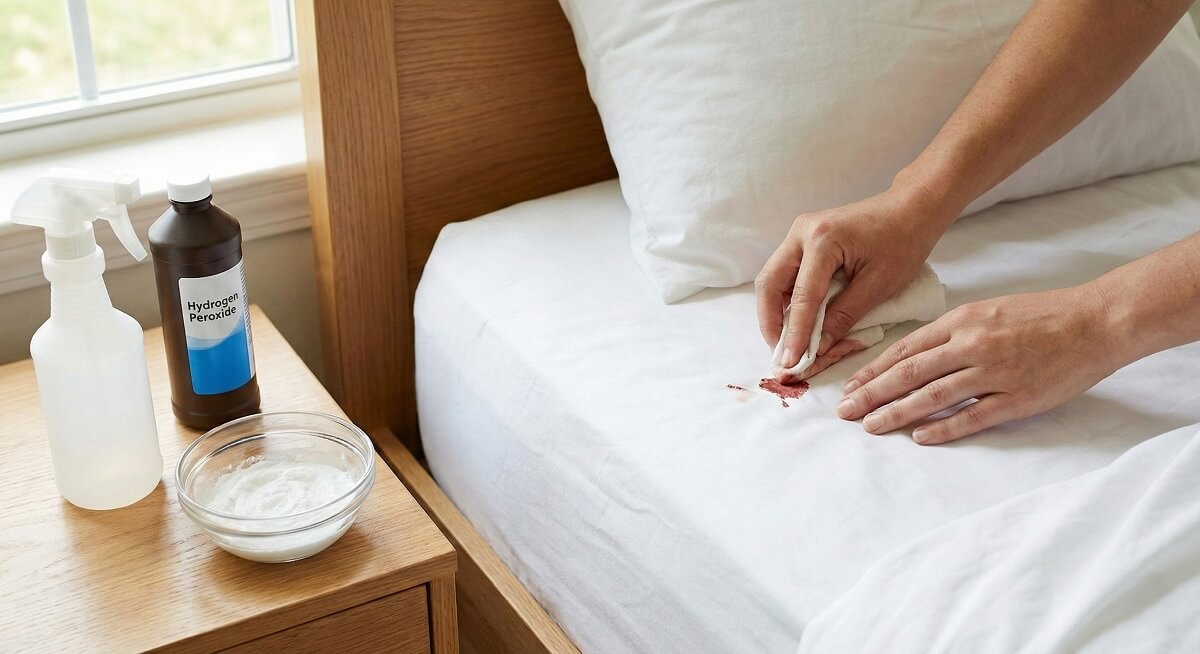
Waking up to blood on your sheets is frustrating, whether from a nosebleed, minor cut, or menstrual surprise. The good news: most blood stains come out completely if you act quickly and use the right approach.
The most effective method combines cold water rinsing with hydrogen peroxide treatment ($3-6 for a 16 oz bottle on Amazon). Fresh stains typically respond within 15-30 minutes, while dried stains require overnight soaking but remain salvageable in most cases.
This guide covers the science behind why blood stains set, the fastest removal method backed by cleaning experts at the Good Housekeeping Institute, alternative household solutions for different situations, and prevention strategies to protect your bedding investment.
Quick Action Guide: What to Do Right Now
✅ If the stain is FRESH (under 2 hours)
- Rinse immediately with cold water
- Apply hydrogen peroxide or salt paste
- Machine wash within 1 hour
- Expected results: Near-complete removal
⏰ If the stain is DRIED (2+ hours to overnight)
- Soak overnight in cold water first
- Use hydrogen peroxide + soft brush method
- May require 2-3 treatment cycles
- Expected results: Most stains respond with patience
❌ If the stain is SET-IN (days to weeks old)
- Professional cleaning may be needed
- Try enzyme cleaner + extended soaking
- Results vary – success less likely
- Cost to replace often lower than professional cleaning ($18-30+ per sheet)
🚫 NEVER do this
- Use hot or warm water (sets the stain permanently)
- Rub or scrub aggressively (spreads and embeds stain)
- Put in dryer before confirming stain is gone (heat permanently sets it)
Why Cold Water Matters: The Science Behind Blood Stains
Understanding why certain methods work helps you make better decisions when treating stains. Blood stains aren’t like other fabric marks – the chemistry of blood creates unique challenges.
What Makes Blood Stain Fabric
Blood contains hemoglobin, a protein that carries oxygen in your bloodstream. When blood contacts fabric, these proteins begin bonding with the fibers almost immediately. As blood dries, the proteins oxidize (darken) and form stronger bonds, making removal increasingly difficult.
According to research published in medical journals on protein denaturation, plasma proteins begin to change structure when exposed to temperatures above 40-42°C (104-108°F) – which is why even warm water can cause problems.
Why Heat Is Your Enemy
Heat causes blood proteins to coagulate irreversibly – just like cooking an egg white. Once the proteins denature and bond with fabric fibers, the stain becomes permanent. This happens through “excessive thermal agitation of the peptide chains and the resulting cleavage of hydrogen bonds,” as described in biochemistry research.
Even warm tap water (typically 90-110°F) can begin this process. This is why every cleaning expert, including the Good Housekeeping Institute Cleaning Lab, emphasizes cold water only.
The 2-Hour Window
Fresh blood stains (under 2 hours) respond well to treatment. Once blood dries and oxidizes, it darkens and bonds more deeply with fabric. The Good Housekeeping Institute notes that “blood is easiest to remove when it’s fresh,” though they add that “waiting doesn’t necessarily mean it’s permanent – all you need is a little patience and a heavy-duty stain remover.”
Emergency Response: Getting Fresh Blood Out Fast
For fresh blood stains, speed matters more than having the perfect product. Follow these steps and you can achieve near-complete removal in 30 minutes.
Step 1 — Strip and Contain (30 seconds)
Remove the sheets immediately to prevent blood from transferring to your mattress or spreading to clean areas of the fabric. If you don’t have a waterproof mattress protector, consider adding one to your shopping list – SafeRest makes highly-rated options for $25-35 on Amazon depending on mattress size.
Step 2 — Cold Water Flush (2-3 minutes)
Run the stained area under cold tap water, positioning the fabric so water flows through from the back of the stain. This pushes blood out of the fibers rather than deeper into them. Keep rinsing until water runs mostly clear. Cold running water works better than immediate soaking because it actively flushes blood away.
Step 3 — The Dab Method (2-3 minutes)
Use a cold, wet cloth to dab the remaining stain. Never rub or scrub – this grinds blood deeper into the fabric and spreads it to clean areas. Gentle dabbing lifts excess blood without making things worse. Check your progress by looking at the cloth; when it stops picking up blood, move to the next step.
Step 4 — Cold Water Soak (30 minutes)
Fill a basin or bathtub with cold water and submerge the stained area completely. Let it soak for at least 30 minutes. During this time, blood continues to loosen from the fibers. You can gently agitate the fabric occasionally, but avoid harsh treatment.
Step 5 — Hydrogen Peroxide Treatment (5 minutes active, 24 hours total)
Hydrogen peroxide is the method recommended most often by cleaning professionals. A 16 oz bottle of 3% hydrogen peroxide solution costs $3.01-6.29 on Amazon (Amazon Basics offers the most affordable option).
Place the stained section in a bowl and pour about 1/2 cup of hydrogen peroxide directly on the stain. Add some cold water to dilute it slightly. You’ll see fizzing – this is the peroxide breaking down the blood proteins. Let it soak for up to 24 hours. For white or light-colored sheets, this method is highly effective.
Important: Hydrogen peroxide can lighten dark fabrics. Always test on a hidden seam first. For dark sheets, skip to the salt water method in the alternatives section below.
Step 6 — Machine Wash (standard cycle)
After the hydrogen peroxide treatment, wash your sheets in a regular cold-water cycle. Use a protein-fighting detergent – testing shows that Persil performs best against protein stains, though Tide Ultra Stain Release is also effective. These detergents contain enzymes specifically designed to break down blood proteins.
Step 7 — Air Dry and Check
Never put sheets in the dryer until you’ve confirmed the stain is gone. Heat will permanently set any remaining blood. Instead, air dry your sheets by hanging them outside, laying them flat, or hanging them over a drying rack near a fan.
Once dry, check the previously stained area in good light. If a faint stain remains, repeat the process. Never consider a stain “good enough” before using heat – those final traces will become permanent in the dryer.
Total time for fresh stains: 15-30 minutes of active work, plus soaking and drying time.
Tackling Dried Blood: The Overnight Method
Dried blood requires more time and patience, but it’s not a lost cause. The key is extended soaking to rehydrate and loosen the oxidized proteins.
Why Dried Blood Needs Different Treatment
As blood dries, oxidation darkens it from bright red to brown. The proteins form stronger bonds with fabric fibers. You can’t simply rinse these out – you need to break down the protein structure first.
The 3-Step Overnight Process
Step 1: Extended Cold Water Soak (8+ hours)
Fill a basin with cold water and submerge the stained sheets completely. Let them soak overnight – 8 hours minimum. Check in the morning; you’ll likely see the water has taken on a pink or brown tint as blood releases from the fabric. This extended soaking is essential for dried stains.
Step 2: Hydrogen Peroxide + Soft Brush Technique
After soaking, pour hydrogen peroxide on the stain. Use a soft-bristled brush (like a clean toothbrush) to gently pat – not scrub – the area. Let it sit for 10 minutes while the peroxide fizzes and breaks down proteins. Then dab with a cold, wet cloth.
Step 3: Wash and Repeat if Necessary
Machine wash with cold water and a protein-fighting detergent. Air dry completely, then check the results. For stubborn dried stains, you may need to repeat this process 2-3 times. Each cycle weakens the stain further.
When to Try Enzyme Cleaners
For particularly stubborn dried stains, enzyme-based cleaners offer another option. True enzyme cleaners contain protease, amylase, and other enzymes that specifically target protein bonds.
Important clarification: Regular OxiClean uses oxygen-based bleach, not enzymes. Look for products specifically labeled as enzyme cleaners, or choose OxiClean MaxForce which does contain enzymes. Generic enzyme laundry cleaners cost around $15-20 on Amazon.
Apply the enzyme cleaner according to package directions and let it work for 4-6 hours before washing. These products excel at breaking down set-in protein stains.
The Bleach Option for White Sheets
If you have white sheets and other methods haven’t worked, diluted bleach is a last resort. Mix 4 tablespoons of bleach with 1/4 cup water. Apply to the stain and let soak for 30-45 minutes.
⚠️ CRITICAL SAFETY WARNING: Never mix bleach with ammonia or vinegar. According to the CDC, this combination produces toxic chloramine gas that can cause severe respiratory damage and can be fatal. If you accidentally mix these chemicals, evacuate the area immediately and call 911 if you’re having trouble breathing, then call poison control at 800-222-1222.
Bleach should only be used on white fabrics as a final attempt before replacing the sheets.
Alternative Methods: When to Use What
Hydrogen peroxide isn’t your only option. Different situations call for different approaches.
Household Solutions Effectiveness Table
| Method | Best For | Time Required | Cost |
|---|---|---|---|
| Hydrogen peroxide | White/light sheets, fresh stains | 30 min | $3-5 |
| Salt water | Delicate fabrics (silk, bamboo) | 45 min | $0.50 |
| Baking soda paste | Light-colored cotton | 1-2 hours | $2 |
| White vinegar | Dried stains, all fabrics | 2-4 hours | $3 |
| Lemon juice | Light sheets, natural bleaching | 1-2 hours | $2-4 |
| Meat tenderizer | Protein-heavy dried stains | 30 min | $4-6 |
| Enzyme cleaner | Set-in stains | 4-6 hours | $15-20 |
| Cola | Dried stains (surprisingly effective) | 2-3 hours | $2 |
How to Choose the Right Method
Your best option depends on three factors: fabric type, stain age, and what you have available.
For white or light sheets: Hydrogen peroxide, bleach (last resort), or lemon juice work well without color concerns.
For dark or colored sheets: Salt water, white vinegar, or enzyme cleaners won’t cause fading. Test any product on a hidden seam first.
For delicate fabrics: Stick with gentle options like salt water or mild enzyme cleaners. Skip anything harsh.
When you’re traveling or don’t have supplies: Cola actually works – the phosphoric acid helps break down proteins. It sounds odd, but it’s effective in a pinch.
Fabric-Specific Considerations
Not all sheets tolerate the same treatment. Match your method to your fabric type for best results.
Cotton Sheets (Most Common)
Cotton is durable and handles most cleaning methods well. Hydrogen peroxide, baking soda, and enzyme cleaners all work safely on cotton. Avoid excessive bleach as it weakens cotton fibers over time. For heavily soiled cotton sheets, you can use slightly warmer water during the final rinse (after the stain is out), but stick with cold for the actual stain treatment.
Microfiber and Synthetic Blends
Synthetics respond well to enzyme cleaners and hydrogen peroxide. Heat is especially damaging to synthetic fabrics – even warm water can cause issues. Keep everything cold and air dry only.
Linen Sheets (Delicate)
Linen consists of fine fibers from flax plants. While durable for daily use, these fibers don’t tolerate harsh chemicals well. Use gentle approaches: salt water, mild detergent, or careful application of diluted white vinegar. Skip enzyme cleaners unless specifically labeled safe for linen.
Bamboo and Tencel Sheets
Bamboo-derived fabrics have fragile fiber structures. Stick with cold water and mild detergent only. For stubborn stains, try salt water (1 teaspoon salt per 1 cup cold water) applied with a towel. Let sit for 10 minutes, then rinse.
Silk and Satin (Highest Risk)
Silk requires professional cleaning for blood stains. If you must try DIY: use only salt water, test extensively in a hidden area, and proceed with extreme caution. Given that silk sheets often cost $100-300+, professional cleaning ($18-30) is the safer choice for valuable items.
Preventing Blood Stains: Products and Strategies
Prevention costs less than constant stain fighting. A few practical steps reduce the chances you’ll wake up to a blood-stained sheet.
Mattress Protectors Worth the Investment
Waterproof mattress protectors create a barrier between any spills and your mattress. They also protect your sheets by containing moisture. SafeRest makes top-rated waterproof protectors available on Amazon for $25-35 depending on mattress size – significantly cheaper than their official website pricing of $49.95-89.95.
Look for true waterproof (not just water-resistant) protectors. The small investment pays off the first time you avoid a mattress stain, which can be nearly impossible to fully remove.
Dark-Colored Sheet Sets
If you frequently deal with menstrual bleeding or nosebleeds, dark-colored sheets (navy, dark gray, burgundy) hide stains better. This doesn’t mean skipping treatment, but it reduces visible evidence and anxiety. Many people keep one set of dark sheets for higher-risk nights.
Backup Sheet Sets
Having 2-3 sheet sets means you can strip the bed immediately without worrying about quick turnaround. Budget sheet sets under $50 are widely available at Target, Walmart, and Amazon. The ability to treat stains without time pressure significantly improves results.
Emergency Supplies to Keep on Hand
Stock these items so you’re ready when accidents happen:
- Hydrogen peroxide 3% solution ($3-6 for 16 oz)
- Cold water access (obvious but critical)
- Enzyme cleaner for backup ($15-20)
- Baking soda and salt (you likely have these)
For travel, portable stain pens provide emergency treatment when you don’t have access to your usual supplies.
Troubleshooting: When Nothing Works
Sometimes stains won’t budge despite your best efforts. Here’s what to do next.
If the Stain Won’t Budge After 3 Attempts
Three treatment cycles with proper technique should remove most blood stains. If you’re still seeing visible staining after three tries, you’re dealing with either a permanently set stain or an extremely stubborn case.
Professional dry cleaners charge $18-30+ per sheet for blood stain removal (biohazard surcharge adds 50% to base cleaning costs). Compare this to replacement costs for your sheets. Budget sets cost $20-40, mid-range $40-80, premium $80-150+.
For budget sheets, replacement often makes more sense than professional cleaning. For high-quality or expensive sheets, professional treatment is worth trying.
When to Replace Instead of Restore
Consider replacement when:
- The stain is large or in a prominent location
- Your sheets are already worn or aged
- You’ve tried 3+ methods without improvement
- Replacement cost is lower than professional cleaning
- The emotional stress outweighs the sheet’s value
There’s no shame in replacing blood-stained sheets. Sometimes moving on is the practical choice.
Salvaging for Other Uses
Even permanently stained sheets have value. Cut around stained areas to create:
- Cleaning rags for household use
- Drop cloths for painting or messy projects
- Pet bedding (wash thoroughly first)
- Fabric for craft projects
This reduces waste and gets more life from the fabric.
Quick Reference Guide
The 60-Second Cheat Sheet
Fresh blood: Cold water + hydrogen peroxide + machine wash = nearly complete removal
Dried blood: Overnight cold soak + hydrogen peroxide + soft brush + machine wash = good results with patience
Never: Hot water, dryer heat, or aggressive rubbing
What to Keep on Hand
Must-have: Hydrogen peroxide 3% solution, cold water access
Nice-to-have: Enzyme cleaner, baking soda, salt, soft-bristled brush
Prevention: Waterproof mattress protector, backup sheet set
Frequently Asked Questions
Will period blood come out of sheets completely?
Yes, period blood typically comes out completely if you treat it within 2 hours using cold water and hydrogen peroxide. According to cleaning experts, fresh stains respond very well to proper treatment. Even dried period blood usually responds to overnight cold soaking followed by hydrogen peroxide treatment, though you may need to repeat the process 2-3 times for complete removal.
Can I use hot water if cold water isn’t working?
No, never use hot water on blood stains. Heat causes blood proteins to permanently coagulate and bond with fabric fibers through a process called denaturation. Research shows plasma proteins begin denaturing at just 40-42°C (104-108°F) – even warm tap water can start this irreversible process. If cold water isn’t working, the solution is longer soaking time or stronger products (enzyme cleaners), not warmer water.
Does hydrogen peroxide bleach colored sheets?
Hydrogen peroxide can lighten or fade dark-colored fabrics. Always test on a hidden seam first – apply a small amount, wait 10 minutes, and check for color change. For dark sheets, use safer alternatives like salt water (1 teaspoon salt per cup cold water) or enzyme cleaners labeled color-safe. White and light-colored sheets handle hydrogen peroxide without issues.
How long should I soak blood-stained sheets?
Fresh stains need minimum 30 minutes of cold water soaking. Dried stains require extended soaking – at least 8 hours, preferably overnight. The Good Housekeeping Institute recommends that dried blood needs “a lot of time to remove, with repeated attempts often needed.” If you don’t have 8 hours, start with 2-3 hours and assess progress.
Can old blood stains (weeks or months old) be removed?
Old set-in stains are difficult but sometimes removable. Success depends on fabric type, how many times the sheets have been washed with the stain, and whether they’ve been heat-dried. Try enzyme cleaners with extended soaking (6+ hours) and multiple treatment cycles. Success rates drop significantly for old stains – be realistic about whether professional cleaning or replacement makes more sense.
Is it safe to use bleach on blood stains?
Bleach is safe only on white sheets and only as a last resort. Use a diluted solution: 4 tablespoons bleach mixed with 1/4 cup water. Never use bleach on colored fabrics. More importantly: never mix bleach with ammonia or vinegar – this creates toxic chloramine gas that can cause severe respiratory damage and can be fatal according to CDC warnings. If accidental mixing occurs, evacuate immediately.
What’s the fastest method when you’re in a hurry?
Cold water rinse (2 minutes) + hydrogen peroxide applied directly to stain (5 minutes) + immediate machine wash = fastest approach at about 15 minutes of active work. This works for fresh stains only. There’s no fast method for dried blood – it requires extended soaking regardless of which product you use.
Do enzyme cleaners work better than hydrogen peroxide?
Enzyme cleaners excel at dried and set-in stains because they’re specifically designed to break down protein bonds. For fresh stains, hydrogen peroxide works faster and costs less ($3-5 vs. $15-20). For dried stains that haven’t responded to hydrogen peroxide, enzyme cleaners offer a different chemical approach and are worth trying. Consumer testing shows both are effective; choice depends on stain age and what you have available.
Should I wash blood-stained sheets separately?
Yes, wash blood-stained sheets separately from other laundry. This prevents potential transfer of blood traces to other fabrics and allows you to use cold water, which might not be ideal for your regular laundry. Once the stain is completely removed and you’ve verified it’s gone, you can return to washing sheets with your normal laundry.
Can I prevent blood from staining in the first place?
Complete prevention isn’t possible, but you can minimize damage. Use a waterproof mattress protector ($25-35 for quality options like SafeRest). Keep dark-colored backup sheets for higher-risk nights. Have hydrogen peroxide and cold water readily accessible. Most importantly, strip the bed immediately when accidents occur – the faster you treat blood, the more likely complete removal becomes.
Final Thoughts
Blood stains are manageable with the right approach. Keep hydrogen peroxide and cold water as your first line of defense. Act quickly when possible, but don’t give up on dried stains – they often respond to patient treatment. The science is simple: cold preserves, heat destroys.
For prevention, consider investing in a and keeping backup sheets on hand. These small steps save significant stress when accidents happen.
Looking for more bedding care tips? Check out our guides on and .
