


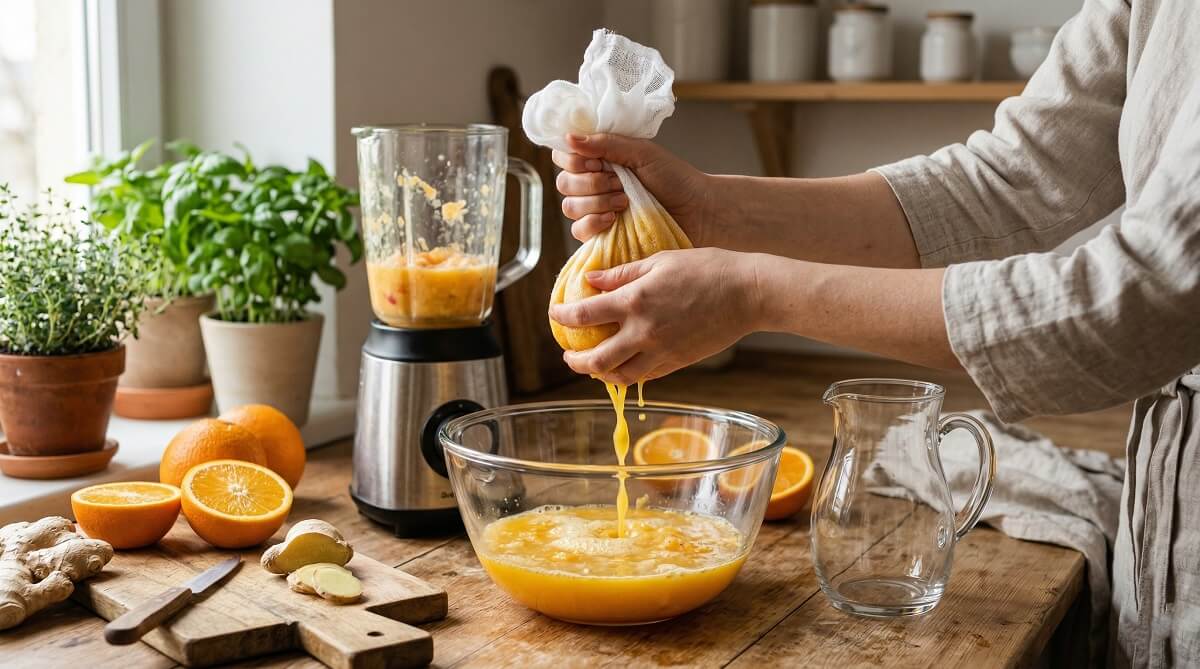
Here’s the short version: you don’t need a juicer to make real, fresh juice at home. A standard blender and something to strain through — a nut milk bag or fine-mesh strainer — is all it takes. The process runs about 10 minutes start to finish, and the result is genuine fresh juice, not a smoothie.
A 16-ounce glass of juice from a juice bar typically costs $7–$15. Making the same amount at home with fresh produce runs roughly $2.50–$5, according to cost analyses from The Kitchn and Goodnature. One nut milk bag costs $8–$15 and pays for itself after three or four homemade glasses.
This guide walks you through the method step by step, helps you pick the right straining tool, shows you what your blender can actually handle, and covers what you’ll gain — and lose — compared to a dedicated juicer.
Is the Blender Method Right for You?
✅ Use This Approach If:
- You already own a blender
- You juice a few times a week or less
- You don’t want another appliance taking up counter space
- You’re not ready to spend $50–$400+ on a dedicated juicer
❌ Skip It If:
- You juice daily and speed matters above all else
- You want crystal-clear, maximum-yield juice (a cold-press juicer wins)
- You’re regularly making five or more servings at once
What You Need (No Juicer Required)
The Blender: Any Will Work, But Power Matters
A basic blender can handle most soft fruits and leafy greens just fine. For denser ingredients — raw beets, carrots, frozen items — more motor power makes a real difference in yield and texture.
| Tier | Example Model | Price (as of March 2026) | Power | Best For |
|---|---|---|---|---|
| Budget | Magic Bullet (11-piece) | Under $30 | 250W | Soft fruit, spinach, citrus |
| Mid-range | NutriBullet Pro 900 | $89.99 | 900W | Leafy greens, apples, carrots |
| Mid-range | Ninja BL610 | $70–$90 | 1000W | Harder produce, frozen fruit |
| High-power | Vitamix A2300 | $549.95 | 2.2HP | All produce, maximum juice yield |
Prices sourced from official manufacturer pages (NutriBullet.com, Vitamix.com) and Amazon. Check current pricing before purchasing.
For most occasional juicers, the NutriBullet Pro 900 at $89.99 — per NutriBullet’s official page — hits the sweet spot between price and performance. The Vitamix A2300 at $549.95 (2.2-peak HP, 10-year warranty) is a serious long-term investment, but a complete overkill if you’re making a glass of carrot juice once a week.
The Straining Tool: Your Real Secret Weapon
The blender converts your fruits and vegetables into liquid. The straining tool separates the juice from the pulp — this is the step that makes the difference between juice and a smoothie.
Nut milk bag — The most effective option. The fine mesh lets you wring the cloth strainer completely, extracting maximum liquid. Available as 3-packs on Amazon for $8–$15, such as the Bellamei Nut Milk Bag 3-Pack (fine nylon mesh, food-grade, BPA-free, reusable). Rinse after each use; a quality bag holds up for years.
Fine-mesh strainer — Most kitchens already have one. Works well, but you’ll need to press the fiber-packed pulp with a spoon to extract all the liquid. Slower than a nut milk bag but perfectly functional.
Cheesecloth — Gets the job done but is messier to manage. Harder to squeeze tightly. Use it if that’s what you have on hand.
How to Make Juice Without a Juicer: Step by Step
- Wash and prep your produce. Rough-chop everything into large chunks. Peeling cucumber, apple, and carrot before blending creates a smoother yield. Remove kale stems and most citrus peel (a bit of lemon peel is fine — too much turns bitter).
- Load the blender. Add your produce, then pour in water. Start with ½ cup for soft fruit; go up to 1 cup for harder vegetables like beets or carrots. The water helps the blades do their job without straining the motor.
- Blend on high for at least 60 seconds. The mixture will look like a thick, murky puree — that’s correct. Keep going until no large chunks remain. If your blender is struggling, add a splash more water.
- Strain into a bowl or pitcher. Place your nut milk bag or fine-mesh strainer over a large bowl. Pour the blended mixture in slowly.
- Press or squeeze until dry. This step extracts the most juice. With a nut milk bag, gather the top and wring firmly. With a strainer, use a spoon to push the pulp against the mesh. Don’t rush — most juice comes out in the last few squeezes.
- Pour and serve. Over ice immediately, or transfer to a sealed jar and refrigerate. Shake before drinking since the juice will separate as it sits.
Produce-Specific Tips
| Produce Type | Prep Notes | Water to Add | Blend Time |
|---|---|---|---|
| Leafy greens (spinach, kale) | Remove stems; pack loosely | ½–1 cup | 60 sec |
| Soft fruit (apple, pear, peach) | Core and rough-chop | ¼–½ cup | 30–45 sec |
| Hard vegetables (beets, carrots) | Peel, cut into small chunks | ½–1 cup | 60–90 sec |
| Citrus (lemon, orange) | Remove most peel; squeeze in juice if preferred | None needed | 30 sec |
| Cucumber | Peel for smoother result | ¼ cup | 30–45 sec |
Does It Actually Taste Like Real Juice?
Close enough that most people can’t tell the difference, especially with a nut milk bag. The main variance is a slight cloudiness compared to crystal-clear cold-press juice — not a flavor issue, just an appearance one. Add a double strain if clarity matters to you.
What You Keep vs. What You Lose
Straining removes the insoluble fiber from the produce, which stays in the pulp. This is the same trade-off with any juicing method, including a dedicated juicer. What remains in the liquid — water-soluble vitamins C, B vitamins, potassium, antioxidants — transfers into the juice regardless of how it’s extracted.
According to a University of Colorado Anschutz Medical Campus health article featuring registered dietitian Haley Stevens (RD), “Blending retains vitamins, minerals, and antioxidants that are naturally present in whole foods.” When you strain blended produce, you sit somewhere between blending and traditional juicing — you get a concentrated liquid rich in water-soluble nutrients.
The fiber concern is real but manageable: if you’re worried about losing it, save the pulp. Stir it into oatmeal, add it to muffins, or mix it into soups.
Greens like kale and Swiss chard supply vitamins A and K; citrus contributes vitamin C and antioxidants, per Healthline’s registered dietitian-reviewed guide on green juice.
The Real Cost Breakdown
Juice bar prices for a 16-ounce cold-pressed green juice typically run $7–$15. Making the equivalent at home costs roughly $2.50–$5 in produce, based on pricing data from The Kitchn and Kuvings USA. That’s roughly half the cost, even at the high end of ingredient prices.
The one-time equipment cost: a nut milk bag ($8–$15) or fine-mesh strainer (most households have one). If you need a new blender, a NutriBullet Pro 900 at $89.99 recoups its cost after 6–10 homemade juices compared to juice bar prices. After that, you’re saving money on every glass.
Three Good Starting Points
These aren’t rigid recipes — they’re flavor frameworks. Adjust ratios to taste, swap produce based on what’s in season, and use them as a baseline for your own combinations.
Classic Green
Cucumber + apple + baby spinach + squeeze of lemon. Lightly sweet, refreshing, and easy to drink. The cucumber adds volume without bitterness; the lemon keeps it from tasting flat. Good starting point for anyone new to green juice.
Carrot-Ginger Citrus
Carrot + apple + fresh ginger + lemon. Earthy and slightly spicy. The apple rounds out the carrot’s sweetness; ginger adds warmth. A tablespoon of apple cider vinegar makes a solid addition if you want an immune-boost angle. Shelf life is shorter — drink within 24 hours.
Simple Orange (No Citrus Press Required)
Peel most of the skin from 2–3 oranges, leaving a little of the white pith. Add a splash of water. Blend, strain well, and serve immediately. The peel’s bitterness amplifies quickly, so this one doesn’t store well — make and drink fresh.
Don’t Throw Out the Pulp
Pressed vegetable pulp is fiber-rich and full of flavor. A few practical uses: stir carrot-ginger pulp into oatmeal, fold apple pulp into muffin or quick bread batter in place of applesauce, or mix green juice pulp into a hummus recipe for extra body.
If the pulp comes out noticeably wet, that means more juice is still trapped inside. Press again, or do a second strain. Dry, crumbly pulp is your signal that you’ve gotten most of what’s available.
Cleanup: Honestly, How Much Work?
Blender + nut milk bag: rinse both immediately after use, and cleanup takes about 2–3 minutes. The blender jar rinses clean easily; the nut milk bag needs a good rinse under hot water and air-drying. Do it right away before the pulp dries, and it stays easy.
Compare that to a centrifugal juicer: multiple plastic components, a mesh basket packed with compressed pulp, and a blade assembly that requires scrubbing. Typically 10–15 minutes of post-juice cleanup. The blender method’s biggest practical win isn’t the cost — it’s the cleanup.
Blender Method vs. Buying a Juicer: Quick Comparison
| Factor | Blender + Strainer | Centrifugal Juicer | Cold-Press Juicer |
|---|---|---|---|
| Upfront cost | ~$0 (if you have a blender) or $30–$90 | $50–$150 | $200–$400+ |
| Juice quality | Good (slight cloudiness) | Good | Best (crystal clear) |
| Cleanup time | 2–5 minutes | 10–15 minutes | 10–20 minutes |
| Counter space | Uses existing blender | Dedicated appliance | Dedicated appliance |
| Best for | Occasional juicing, small batches | Regular juicing (3–5x/week) | Daily juicing, max yield |
Frequently Asked Questions
Can you make juice without a blender?
Yes, though it’s more work. A box grater and cheesecloth works for hard produce like carrots and beets — grate finely, then squeeze the pulp through the cloth. A food processor can substitute for the blender step. Yield will be lower and the process slower, but both methods produce real juice.
Do you have to strain the juice after blending?
No — but if you skip straining, you end up with a smoothie, not a juice. The fiber stays in, the texture is thick, and the drinking experience is completely different. If you want actual juice, straining is the step that makes it happen.
What’s the best blender for making juice without a juicer?
Any blender works for soft produce. For a regular juicing habit with harder vegetables, the NutriBullet Pro 900 ($89.99) handles most produce without breaking a sweat. If you want the absolute best results and plan to juice long-term, the Vitamix A2300 ($549.95) with its 2.2HP motor and 10-year warranty is the top choice for serious home juicers.
How long does homemade juice keep in the fridge?
Up to 48 hours in a sealed jar or airtight container. Best within 24 hours — flavor and nutrient content both decline after that. The juice will separate naturally; shake or stir before drinking. Don’t store it in an open container.
Can I freeze homemade juice?
Yes. Pour into ice cube trays or leave headspace in a jar. Freeze for up to 3 months. Thawing degrades the flavor slightly and the texture becomes a bit watery — it’s fine for a quick morning drink but not at its peak. Best to make fresh and drink within a day.
Does blender juice have fewer nutrients than juicer juice?
Not significantly. Water-soluble vitamins (C, B vitamins) and minerals transfer into the juice regardless of extraction method. What changes between methods is mostly yield and clarity. According to a University of Colorado Anschutz dietitian-reviewed article, blending retains the full nutritional profile of whole foods; straining then removes the fiber but leaves most water-soluble nutrients in the liquid.
What produce is hardest to juice in a blender?
Very dense root vegetables — raw beets, parsnips, and firm carrots straight from the fridge — put the most strain on the motor. Cut them smaller than you think you need to, and add extra water. A budget 250W blender may struggle; a 900W+ model handles them without issue.
Is a nut milk bag reusable?
Yes. Rinse thoroughly under hot water after each use, hand-wash weekly with mild dish soap, and air-dry. Quality bags — like the nylon food-grade options available on Amazon for $8–$15 per 3-pack — hold up for years with normal care.
If the blender method fits your routine, a $10–$15 nut milk bag from Amazon is all you need to get started today. If you eventually decide a dedicated juicer makes sense, check current prices at Amazon or Best Buy.
