


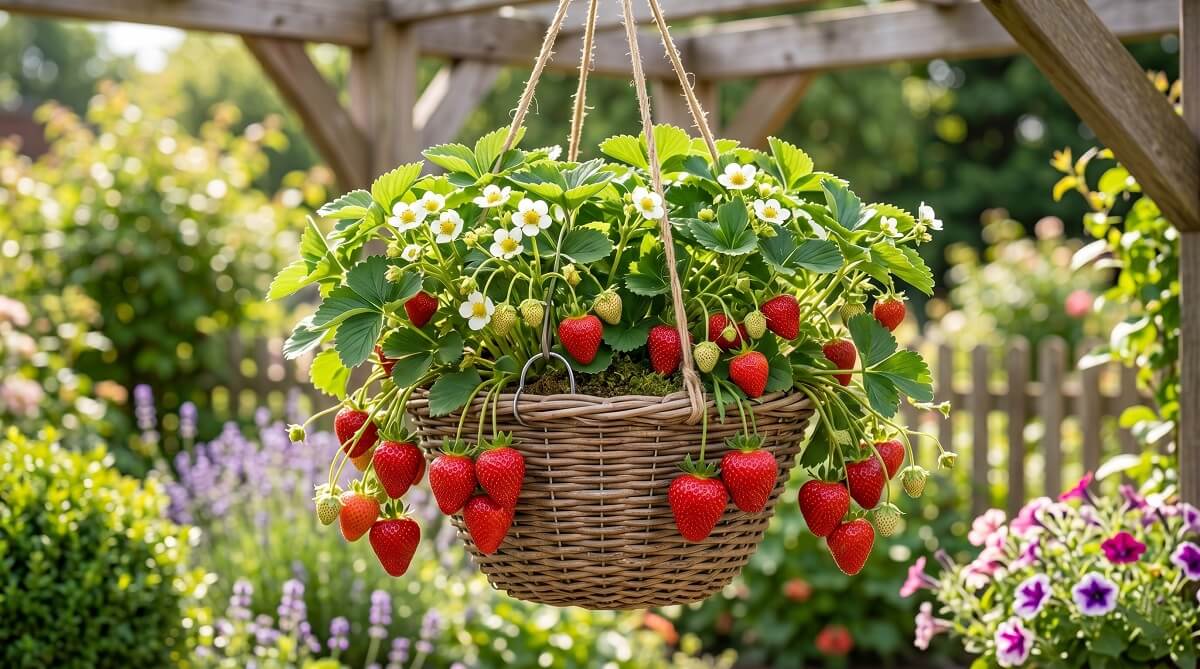
You don’t need a garden to grow strawberries. A hanging container on a balcony, porch, or fence does the job — and it does it well. A single 12-inch hanging basket holds three to four plants and can yield 1–2 pounds of berries per plant over the season, according to Oregon State University Extension Service. Hanging containers also keep fruit off the ground, away from slugs, and out of reach from most critters — a genuine advantage over traditional garden beds.
Two decisions matter most: picking the right variety (day-neutral, not June-bearing) and staying consistent with watering. Containers dry out faster than garden soil, and strawberries don’t forgive neglect during fruiting. Get those two things right, and you’ll be picking berries six to eight weeks after planting.
One honest caveat: hanging basket strawberries will never outproduce a crop grown in the ground. on ChubbytIps if you have in-ground space to work with. But if your outdoor footprint is a patio or a balcony, hanging planters are a solid, practical setup.
Is a Hanging Strawberry Garden Right for You?
Before you buy a basket and bare-root plants, spend 30 seconds on this quick decision check. on ChubbytIps for gear recommendations to go along with your setup.
✅ Go for It If:
- You have a balcony, porch, deck, or fence with 6–8 hours of daily sun
- You want fresh berries without a garden bed or raised bed setup
- You’re growing for snacking and small household use, not bulk production
- You live in USDA zones 3–10 — strawberries are adaptable across most of the US
- You want a natural pest barrier (elevated containers stop slugs and ground-dwelling insects cold)
❌ Skip the Hanging Approach If:
- You need large-scale production — hanging baskets max out at 4–6 plants each
- Your space gets fewer than five hours of direct sun daily
- You travel frequently and can’t water during summer heat spikes
- You’re in a high-heat zone (sustained temperatures above 90°F) without shade management
Choosing the Right Container — Not All Baskets Are Equal
The planter you pick shapes everything that comes after: how many plants fit, how often you water, and how long the setup lasts. Most articles mention “hanging baskets” as if they’re all the same. They’re not.
Container Types at a Glance
| Type | Plants | Approx. Price | Best For |
|---|---|---|---|
| Wire basket + coir/moss liner | 4–6 (12–14 in) | $8–15 | Traditional look, good airflow, widely available |
| Felt / fabric grow bag | 6–11 (pocket style) | $12–25 | More plants, excellent drainage, breathable fabric |
| Strawberry tower / pocket planter | 15–30 | $20–45 | Maximum plant count in minimal floor space |
| Plastic hanging pot | 3–5 | $5–12 | Hot/dry climates — retains moisture longer |
Minimum size rule: Use a container at least 12 inches in diameter and 10 inches deep. A 12-inch container fits about four plants; a 14-inch fits five to six, according to OSU Extension’s home garden guide. Go smaller and you’ll be fighting root crowding and soil moisture fluctuations all season.
Popular options on Amazon’s hanging strawberry planter category include felt-style bags with multiple side pockets and wire baskets with coir liners. Check current pricing before buying — availability and price shift seasonally. Bare wire baskets from Home Depot or your local garden center work just as well at lower cost. for setting up small-space gardens from scratch.
The Right Strawberry Variety Makes All the Difference
Pick the wrong variety and you’ll spend the season managing runners instead of picking berries. Here’s the straightforward breakdown.
Day-Neutral Varieties — Best Choice for Most US Growers
Day-neutral strawberries produce fruit continuously throughout the growing season, regardless of day length. They generate fewer runners than June-bearing types, making them the clear winner for container growing.
Top day-neutral picks for USDA zones 4–8 include Albion, San Andreas, Seascape, and Sweet Ann, per Oregon State University Extension. Tristar and Tribute are also reliable selections you’ll find at most nurseries. if you’re comparing bare-root plant sources or planter kits.
If you’re in a hotter climate (zones 8–10), varieties like Seascape and Camarillo handle heat better. In the Pacific Northwest or upper Midwest, Albion and San Andreas are proven performers.
Everbearing Varieties — A Solid Second Option
Everbearing types produce two crops — one in late spring and another in early fall. They don’t fruit as consistently through the hottest months as day-neutral varieties, but they’re a good pick if you prefer concentrated harvests. Ozark Beauty, Fort Laramie, and Quinalt are reliable choices widely available as bare-root plants.
Alpine Strawberries — For Shady Spots
Low on sun? Alpine strawberries tolerate partial shade (four to five hours) better than standard varieties. The berries are small — more intensely flavored than sweet — and the plants never send out runners, so they stay tidy. Mignonette and Rugen Improved are the most commonly available varieties. Worth considering if your balcony faces north or is shaded by a building in the afternoon.
What to Skip
June-bearing strawberries are not a good match for hanging containers. They produce one heavy crop in early summer, then spend the rest of the season pumping out runners. Those runners have nowhere to root in a hanging basket and sap energy from the plant. Skip them unless you’re growing in a large ground-level container where you can let runners take root in adjacent pots.
Soil, Setup, and Planting
Getting the Soil Right
Regular garden soil doesn’t belong in a hanging planter. It compacts, drains poorly, and gets heavy enough to strain your mounting hardware. Use a quality potting mix instead.
Strawberries prefer slightly acidic conditions — a soil pH between 5.6 and 6.5 is ideal, according to OSU Extension. Most commercial potting mixes fall in this range. Avoid soil mixes that include mushroom compost with added lime, as these push pH too high.
For a DIY mix: combine two parts coco coir or a peat-free alternative, two parts compost, and one part perlite or vermiculite. This gives you good drainage, adequate water retention, and the airy structure container roots need.
Planting Step by Step
- Fill your container to about two inches below the rim with pre-moistened potting mix — dry soil repels water and creates air pockets around roots.
- Place each strawberry plant at crown level. The crown — the compact, slightly raised center where the leaves emerge — must sit at the soil surface. Bury it and the plant risks crown rot. Leave it too exposed and it dries out and dies back.
- Space plants evenly: three to four per 12-inch basket, four to six per 14-inch basket.
- Water thoroughly after planting, allowing the mix to settle. Add more potting mix if the soil level drops significantly.
- Hang the basket in a spot with full sun — at least six to eight hours daily. Position it where it gets some shelter from harsh afternoon wind if possible.
A Note on Pollination
Strawberries rely on bees and other pollinators to set fruit. If your container is on a high-rise balcony or in an area with minimal bee activity, you can hand-pollinate using a soft artist’s brush or cotton swab. Gently brush the center of each open flower in a circular motion to transfer pollen. Do this every day or two while the flowers are open. It’s a small effort that makes a real difference in fruit set when pollinators aren’t reaching you.
Watering — The Part Most People Get Wrong
Container strawberries need the equivalent of 1 to 1.5 inches of water per week, with the soil staying consistently moist but never saturated, per OSU Extension and Bonnie Plants. The challenge in hanging containers is that the soil surface can feel dry within hours on a warm day while the core is still damp — or the reverse on cooler days.
Check the soil daily. Stick a finger an inch into the mix; if it’s dry at that depth, water. During heat waves above 80°F, you may need to water morning and evening. Always water at the base, not overhead — wet foliage and fruit invite rot and fungal disease.
Self-Watering Solutions
If daily watering isn’t realistic for you, there are a couple of practical work-arounds:
- Drip bottle method: Poke a few small holes in the cap of a plastic bottle, fill it with water, and invert it into the soil. It releases moisture slowly over 12–24 hours. Free to set up, works for short absences.
- Self-watering hanging baskets: Some containers come with built-in reservoirs or wicking systems that deliver moisture from the bottom. These aren’t cheap — expect $20–40 — but they substantially reduce the daily watering burden during peak summer.
One consistent tip from both extension services and experienced growers: mulch the surface of your container soil (leaving the crown exposed) to reduce evaporation and keep soil temperature stable. for more practical tips on container gardening maintenance throughout the season.
Feeding, Runner Removal, and Seasonal Care
Fertilizing
Strawberries are heavy feeders. Potting mix in a basket depletes fast compared to garden beds, so regular fertilizing isn’t optional — it’s necessary for consistent fruit production.
- At planting: Mix a balanced slow-release fertilizer (10-10-10 or 14-14-14) into the top layer of potting mix.
- During the growing season: Apply a liquid fertilizer — fish emulsion, compost tea, or a balanced liquid feed — every two to three weeks from early spring through first flower bud development.
- Stop feeding when fruit forms: High nitrogen at this stage pushes leafy growth at the expense of berries. Switch to plain water or a low-nitrogen formula once you see green fruit.
OSU Extension recommends 0.5 to 0.8 oz of actual nitrogen per 10 feet of row in the first year, split across two to three applications. For most home growers using a balanced 10-10-10 granular, follow the package rate for containers and you’ll be in the right ballpark.
Runner Removal
Clip runners as soon as they appear. This is especially important in hanging containers — runners can’t root into anything useful, and they divert energy from fruit. Snap them off at the base, or snip with small scissors. In early fall, if you want free plants for next year, you can root runners into small cups of potting mix before the season ends.
Harvesting
Pick strawberries when they’re fully red all the way around — including the shoulders near the cap. Fruit that’s even slightly white at the tip will be noticeably less sweet. Leave the cap and a short stem attached to extend shelf life. Berries left on the plant until peak ripeness taste significantly better than those picked early and left to ripen on the counter.
Pests, Birds, and Common Problems
One of the real perks of hanging containers is pest control. Slugs, pill bugs, and most ground-dwelling insects can’t reach elevated planters. You’ll still deal with a few things:
- Birds: Once berries start to turn color, birds will find them. Drape lightweight bird netting over the basket — secure it loosely so pollinators can still access the flowers if they haven’t yet set fruit.
- Crown rot: Caused by overwatering or burying the crown too deep. Keep the crown at soil surface level and water at the base. If you see the center of the plant browning and softening, remove the affected plant to prevent spread.
- Powdery mildew: Shows up as white powder on leaves, usually during humid weather. Remove affected leaves promptly and increase airflow around the container. Avoid overhead watering.
- No fruit setting: Usually one of three causes — not enough sun, insufficient pollinator access (see hand-pollination tip above), or a June-bearing variety that didn’t set in year one. Confirm your variety type and sun exposure before assuming the worst.
Overwintering Hanging Strawberries
Whether your plants survive winter depends largely on where you live.
| USDA Zone | Approach |
|---|---|
| Zones 3–5 | Bring containers indoors before the first hard frost — an unheated garage, basement, or shed works fine. The plants go dormant; they don’t need light but need occasional watering so the roots don’t completely dry out. |
| Zones 6–7 | Move to a sheltered spot (against a wall or under an overhang). Plants may survive outdoors with some protection; wrap the container with burlap or a frost cloth during hard freezes. |
| Zones 8–10 | Leave outdoors. Reposition during brief cold snaps if temperatures drop below 25°F. Containers are more vulnerable to freezing than in-ground roots. |
Repot with fresh potting mix each spring. Berry plants are productive for two to three years before fruit quality and quantity decline. Plan on replacing them after year three. for sourcing quality bare-root replacements each season.
Frequently Asked Questions
How many strawberry plants fit in a hanging basket?
A 12-inch hanging basket fits three to four plants; a 14-inch basket fits four to six. Using more plants than this leads to overcrowding, root competition, and smaller yields per plant.
How long does it take to get strawberries from a hanging basket?
Day-neutral varieties typically begin producing fruit six to eight weeks after planting, with steady production through the season. First-year plants may produce less than second-year plants. June-bearing types planted in a new basket may not produce well until the following year.
Do I need to water hanging strawberries every day?
During warm weather, yes — daily watering is common. Container soil dries out much faster than garden beds. Check the soil by feel each morning; if the top inch is dry, water. In cooler weather or spring, every two to three days may be sufficient.
What is the best strawberry variety for hanging baskets in the USA?
Day-neutral varieties are the best overall choice for containers. Albion, San Andreas, and Seascape are widely recommended across USDA zones 4–8 by extension services. Everbearing types like Ozark Beauty and Fort Laramie are strong alternatives.
Can I grow strawberries in a hanging basket on an apartment balcony?
Yes, provided your balcony gets at least six hours of direct sun. The main challenge on high balconies is reduced bee access for pollination — use the hand-pollination brush technique to compensate. Also account for wind exposure, which dries containers out faster.
Should I remove runners from hanging basket strawberries?
Yes. Remove runners as soon as they appear. In a hanging container, runners can’t root into anything useful and divert energy from fruit production. Clip them at the base and compost or pot them separately if you want free plants for next year.
How do I hand-pollinate strawberries in a hanging basket?
Use a soft artist’s brush or cotton swab. Gently swirl it inside each open flower to transfer pollen. Do this daily or every other day while flowers are open. Morning is the best time, when pollen is most viable.
Can hanging basket strawberries survive winter?
It depends on your zone. Zones 3–5: bring containers inside before hard frost. Zones 6–7: sheltered outdoor spots work with some protection. Zones 8–10: leave outdoors with minimal intervention. In all cases, repot with fresh mix each spring for best results.
Ready to get started? Check current availability and pricing for hanging strawberry planters on Amazon, or pick up bare-root plants from a local nursery in early spring for the widest selection. Day-neutral bare-root plants are typically available February through April across most of the US. for more small-space gardening ideas on ChubbytIps.
