


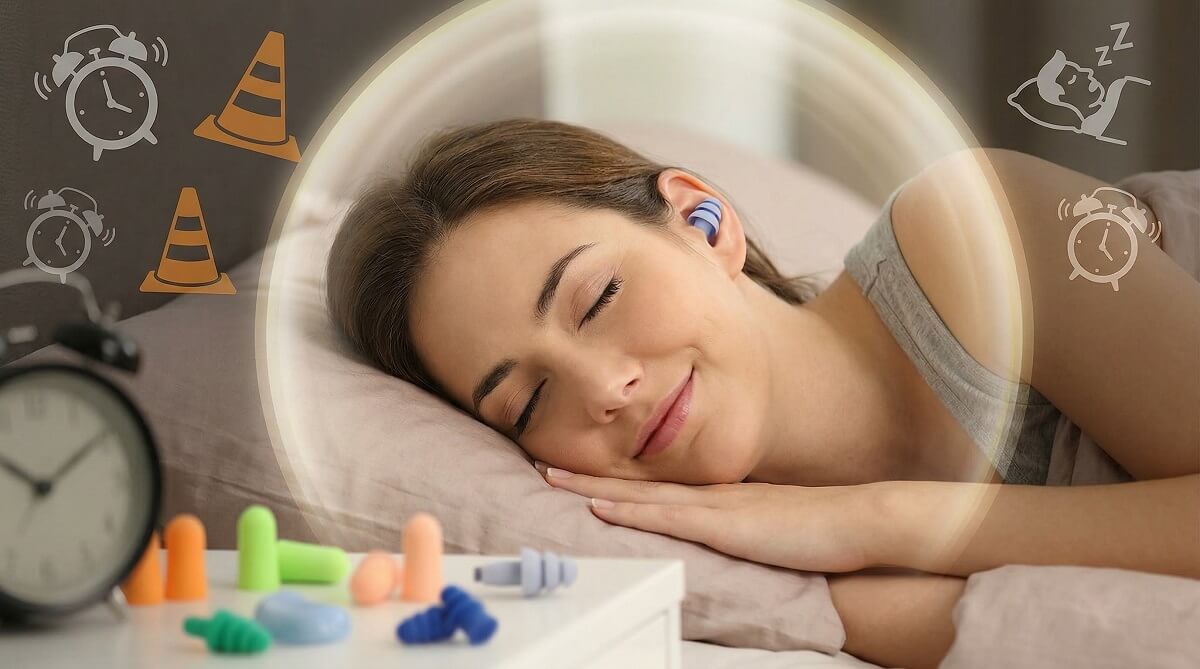
Short answer: no earplug blocks all sound. Sound reaches your inner ear through two paths — the ear canal, which earplugs can seal, and your skull bones, which they can’t. Even pressing both palms tightly over your ears still lets some noise in. That’s bone conduction, and there’s no physical plug that stops it.
But here’s the thing: you don’t need total silence to sleep through a snoring partner, focus through a noisy office, or rest on a loud flight. The best foam earplugs cut perceived loudness by 80–90%, which in practice is the difference between a lawn mower and a whisper. For most people, that’s enough. The key is knowing which earplug type and NRR rating actually delivers that reduction — and which ones fall short.
Bottom line: For maximum noise reduction, foam earplugs rated NRR 33 (like Mack’s Ultra Soft or Howard Leight MAX) are the closest thing to silence you’ll find. For all-day wearability without total isolation, reusable silicone earplugs hit a better balance. If comfort and fit are everything, custom-molded earplugs from an audiologist are worth considering.
Who Should (and Shouldn’t) Use High-Noise-Reduction Earplugs
✅ Best For
- Light sleepers sharing a bed with a snorer
- Shift workers who need to sleep during daytime hours
- People with noise sensitivity, ADHD, autism, or misophonia
- Travelers trying to sleep on planes, trains, or in hotels
- Students or remote workers who need deep focus in noisy spaces
❌ Skip If (or use with caution)
- You rely on hearing an alarm, smoke detector, or a baby monitor while sleeping
- You have recurring ear infections or significant earwax buildup — check with a doctor first
- You need to maintain normal conversations — high-NRR plugs make speech very difficult to hear
- You’re going to concerts or events where you want to hear the music — use filtered high-fidelity earplugs instead
The Real Reason No Earplug Can Block All Sound
When you plug your ears, you seal off the ear canal — one of two paths sound uses to reach your cochlea (the inner ear). But the second path, bone conduction, carries sound vibrations through your skull directly to the cochlea, bypassing the ear canal entirely. According to Wikipedia’s article on bone conduction, this pathway allows you to perceive audio even when the ear canal is fully blocked.
This is why you can still hear yourself hum even when your fingers are pressed firmly over both ears. It’s also why Encyclopaedia Britannica notes that bone conduction vibrations “are converted into sound signals for the brain by the inner ear” — a process no earplug can physically interrupt.
The practical implication: even the best-performing foam earplugs reduce perceived loudness by about 80–90%, not 100%. That’s still a dramatic reduction — enough for most sleeping and focus situations — but it sets a realistic ceiling on what earplugs can do.
Understanding NRR: Why the Number on the Package Isn’t the Whole Story
The Noise Reduction Rating (NRR) is the number printed on every earplug package in the US. It’s measured under controlled lab conditions using the ANSI/ASA S12.6-2016 standard. Higher NRR means more noise reduction — NRR 33 is the highest rating currently available for consumer earplugs.
The catch: real-world protection is consistently lower than the lab-tested NRR. OSHA’s Appendix B to 29 CFR 1910.95 provides the standard formula for estimating actual attenuation: (NRR − 7) ÷ 2. For an NRR 33 earplug, that works out to (33 − 7) ÷ 2 = 13 dB of real-world protection. NIOSH recommends an even more conservative 50% derating, putting the figure closer to 16–17 dB for properly inserted formable foam earplugs.
Thirteen to seventeen decibels sounds modest, but in practice it’s significant. Snoring typically ranges from 50 to over 100 dB depending on severity — Ozlo Sleep notes that loud snoring above 85 dB approaches the noise level of a busy highway. With a well-inserted NRR 33 foam plug, that 70 dB snore drops to roughly 53–57 dB — quieter than a normal conversation. Add a white noise machine and most people can sleep through it.
If you’re shopping for European brands like Loop or Alpine, look for SNR (Single Number Rating) instead of NRR. SNR values typically read 5–10 points higher than an equivalent NRR product, so an SNR 24 earplug provides roughly similar real-world attenuation as an NRR 17–20.
The 4 Types of Earplugs — Which Blocks the Most Noise
Not all earplugs are built the same. Here’s how the four main categories stack up for maximum noise reduction, comfort, and everyday practicality.
| Type | Max NRR | Best For | Price Range | Reusable? |
|---|---|---|---|---|
| Disposable foam | NRR 33 | Max noise blocking, sleeping, work | $0.10–$0.30 per pair | No (1–3 uses) |
| Moldable wax/silicone | NRR 22–27 | Side sleepers, sensitive ears | $0.50–$2.00 per pair | Limited (3–5 uses) |
| Reusable silicone (filtered) | NRR 12–28 | Daily use, ADHD, travel, events | $15–$45 (multi-use) | Yes (washable) |
| Custom-molded | Up to NRR 26+ | Best fit, long-term daily use | $100–$300 per set | Yes (years) |
1. Foam Earplugs — Maximum Noise Reduction
Disposable foam plugs are the gold standard for blocking sound. Insertion technique matters: compress the earplug into a tight cylinder, pull your outer ear gently up and back to open the canal, push it in slowly, then hold it in place for 30 seconds while the foam expands to fill the canal. A sloppy insertion can slash effectiveness by half.
Mack’s Ultra Soft (NRR 33) — around $10 for 50 pairs as of March 2026 (check current pricing on Amazon) — are the most popular consumer foam earplug in the US market. Made in the USA, they’re soft and comfortable compared to harder foam options.
Howard Leight MAX (NRR 33) comes in bulk packs — around $33 for 200 pairs as of March 2026 at safety supply retailers and Amazon — making them the most economical option for frequent use. Pre-shaped tip makes insertion slightly easier than roll-down models.
Drawbacks: foam earplugs are porous and collect bacteria, so replace them every 1–3 uses. They can feel warm over long periods and fall out if not inserted correctly.
2. Moldable Wax and Silicone Earplugs — Best for Side Sleepers
These plug the ear canal entrance rather than going inside it, which means they lie flat against the ear — a big win if you sleep on your side. Mack’s Pillow Soft (NRR 22) is the bestselling option in this category, available at most drugstores for a few dollars per pair.
The trade-off is lower noise reduction. NRR 22 is solid but won’t match the NRR 33 of foam plugs. Good for moderate snoring or ambient city noise; less effective against very loud snorers.
3. Reusable Silicone Earplugs — Daily Wearability and Versatility
If you’re wearing hearing protection every day for hours at a time — whether for ADHD, noise sensitivity, or focus work — disposable foam gets expensive and uncomfortable. Reusable silicone options like Loop Quiet 2 ($24.95 from Loop’s US store, SNR 24 dB) or 3M Push-Ins (NRR 28) deliver solid all-day comfort with respectable attenuation.
Loop Quiet 2 comes with four ear tip sizes (XS through L) and a carry case, making it easy to take anywhere. They’re washable and built to last years.
One thing to watch: filtered reusable earplugs that preserve sound quality (like Loop Experience) are designed for concerts and events, not maximum noise reduction. Don’t confuse them with Loop Quiet — different products, different purposes.
4. Custom-Molded Earplugs — Best Fit, Highest Upfront Cost
An audiologist takes an impression of your ear canal using a soft paste, which hardens in a few minutes into your exact ear shape. That impression is used to cast a custom silicone or acrylic earplug that fits you — and only you — perfectly. The result is the most consistent seal available, meaning the most reliable noise reduction on every insertion.
The cost is real: custom molded earplugs typically run $100–$300 per pair at US audiologists, with an additional $25–$100 for the ear impressions if not included. Most last 3–5 years, which works out to less than $1 per night for heavy users. If you’ve cycled through dozens of foam and silicone options without finding comfort, a custom fitting is worth the visit.
Choosing by Use Case
For Sleeping
The goal is staying asleep, not just falling asleep. Foam NRR 33 plugs give you the most attenuation, but they fall out for some people and can feel warm over 8 hours. Moldable silicone is more forgiving for restless sleepers and works well for side sleeping. Combining earplugs with a white noise machine addresses residual sound that bone conduction lets through — many sleepers find this combination more effective than high-NRR plugs alone.
For Focus and Noise Sensitivity (ADHD, Autism, Misophonia)
For people who wear ear protection all day, total silence can cause its own problems — hyper-awareness of internal body sounds, difficulty communicating when needed, discomfort from pressure buildup. Moderate-reduction reusable plugs (NRR 15–28) are a better fit here. Loop Quiet 2 (SNR 24) or 3M Push-Ins (NRR 28) dial back the din without cutting you off entirely. Easy insertion and removal matters for frequent use throughout the day.
For Travel
Airplane cabin noise typically sits around 85 dB. Foam plugs rated NRR 33 handle this well and weigh almost nothing in a carry-on. Bring a small zip bag of 5–6 pairs for a long trip. If you prefer reusable ear inserts, moldable silicone travels better since you don’t need to nail insertion technique in a cramped seat.
For Concerts and Events
Don’t use high-NRR foam plugs at concerts — they muffle music and make everything sound dull and underwater. Filtered high-fidelity earplugs (like Loop Experience 2) reduce volume evenly across frequencies so the music still sounds like music, just quieter. These aren’t for blocking everything out; they’re for protecting your hearing while staying present.
5 Tips for Getting the Most Out of Any Earplug
- Nail the insertion for foam plugs. Compress, pull ear up and back to open the canal, push in slowly, hold 30 seconds. A half-inserted foam plug performs like a much lower NRR product.
- Try different sizes. Ear canals vary significantly. Many brands offer small-sized options, and going a size smaller can dramatically improve both comfort and seal for narrower canals.
- Test the seal. After inserting, cup both palms over your ears. If sound drops significantly further, the seal is solid. If there’s little difference, reinsert.
- Pair with white noise for sleeping. A fan, white noise machine, or app at low volume masks residual sound that bone conduction passes through. This combination outperforms high-NRR earplugs alone for many people.
- Replace foam plugs regularly. Dirty or deformed foam provides a worse seal and carries bacteria. Replace every 1–3 uses — at $0.10–$0.20 per pair for bulk packs, it’s not worth stretching them.
Frequently Asked Questions About Earplugs and Sound Blocking
Can any earplug truly block out all sound?
No. Sound reaches your inner ear through both air conduction (through the ear canal) and bone conduction (through the skull). Earplugs can seal the ear canal, but bone conduction bypasses that entirely. Even with the best foam earplugs properly inserted, some sound — especially low-frequency vibrations — still gets through. The maximum practical reduction is around 80–90% of perceived loudness.
What is the highest NRR earplug available?
NRR 33 is the highest Noise Reduction Rating available for consumer earplugs sold in the US. Several foam earplug models achieve this, including Mack’s Ultra Soft and Howard Leight MAX. No commercially available earplug currently exceeds NRR 33.
What NRR do I need to sleep through snoring?
Snoring typically runs 50–70 dB for moderate cases, and can exceed 85 dB for loud snorers. An NRR 33 foam plug provides roughly 13–17 dB of real-world attenuation. That’s often enough for moderate snoring, especially combined with a white noise machine. Very loud snorers may require a combination of earplugs plus white noise, or a separate sleeping arrangement.
Are Loop earplugs good for blocking all sound?
Loop Quiet 2 (SNR 24) is a solid option for reducing noise, but it’s not designed for maximum sound blocking. It’s best suited for daily use, focus work, noise sensitivity, and light sleeping. For maximum attenuation, high-NRR foam earplugs outperform Loop Quiet. Loop’s other products (Experience, Engage) are designed for events and social situations — not for sleeping or full noise blocking.
Can I wear earplugs every night?
Yes, for most people. The main risks are hygiene-related: reusing disposable foam too many times, or not cleaning reusable silicone plugs regularly, can introduce bacteria to the ear canal. Use reusable silicone or wax types and clean them after each use, or replace disposable foam every 1–3 uses. If you experience persistent ear pain, discharge, or reduced hearing, see a doctor — don’t just insert more earplugs.
What are the best earplugs for side sleepers?
Moldable wax or silicone earplugs (like Mack’s Pillow Soft, NRR 22) work best for side sleepers because they mold over the ear canal entrance without protruding, so they don’t get pushed out when your head is on a pillow. Loop Dream earplugs are also designed with a flat profile specifically for side sleeping, though at a higher price point.
What’s the difference between earplugs and noise-canceling earbuds for blocking sound?
Earplugs use passive physical blocking — they create a seal in or over the ear canal to reduce sound mechanically. Noise-canceling earbuds add active electronic cancellation on top of a physical seal, which is particularly effective against low-frequency steady-state noise like engine hum and AC systems. For mid and high-frequency sounds (voices, alarms, random noise), well-inserted foam earplugs typically outperform earbuds. For overall silence in a quiet environment with only low-frequency noise, premium ANC earbuds can be competitive.
Do earplugs help with ADHD or sensory sensitivity?
Many people with ADHD, autism, or conditions like misophonia find that moderate-reduction earplugs meaningfully reduce overstimulation from background noise. The key is choosing the right attenuation level — total silence can be uncomfortable and disorienting for daily use. Reusable earplugs with NRR 15–28 (like Loop Quiet 2 or 3M Push-Ins) are generally more practical than maximum-reduction foam plugs for all-day wear.
Prices and availability change frequently. Check current pricing for Mack’s Ultra Soft (50 pair) on Amazon, Howard Leight MAX on Amazon, or Loop Quiet 2 on Loop’s official site. For custom-molded earplugs, contact a local audiologist for a fitting and current pricing.
