


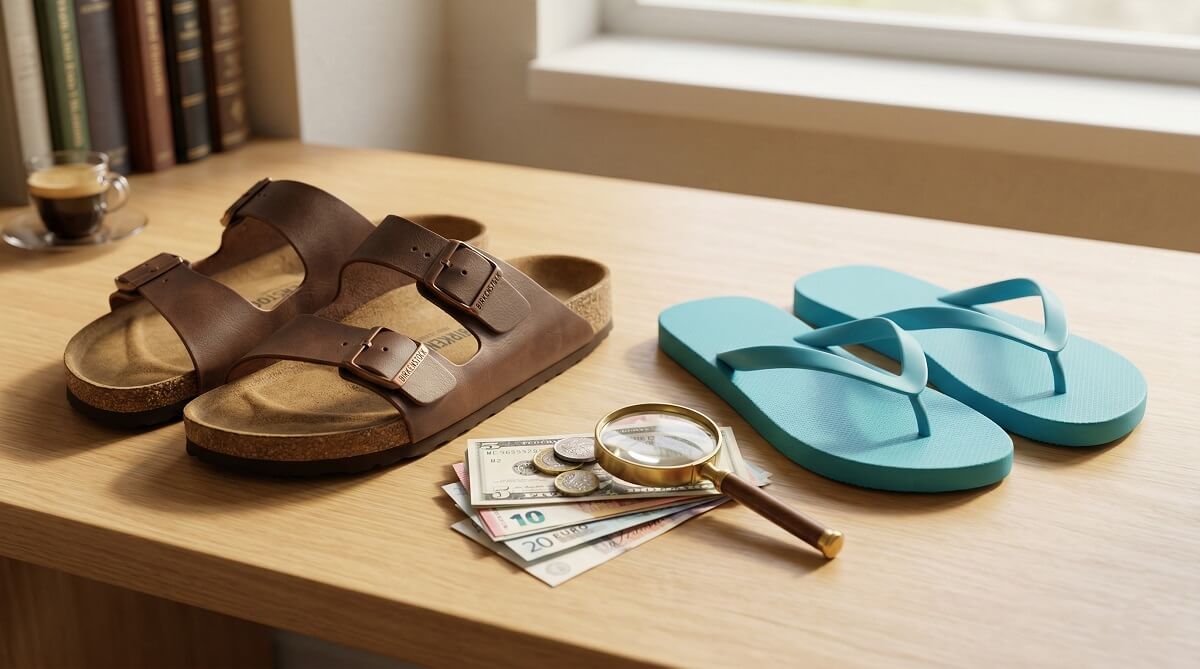
Short answer: for most people, yes — but with a couple of real caveats. Birkenstocks run $40–$170 depending on the model and material, and the most popular leather styles sit between $115 and $155 on . With basic care, a good leather pair typically lasts five to ten years. Do the math and you’re paying less than $20 a year for a sandal your feet actually thank you for.
The catch everyone mentions is real: there’s a one- to two-week break-in period where the cork footbed can dig into your arch and heel. Push through it, and the footbed gradually shapes to your foot like nothing else on the market. Size wrong or wear them for a full day on day one, and you’ll write a frustrated one-star review and miss what the fuss is about.
If you spend a lot of time on your feet, have plantar fasciitis or bunions, or just want a pair that won’t need replacing every spring, Birkenstocks make sense. If you need something waterproof right out of the box, or you want instant ease with zero adjustment period, there are better options — including Birkenstock’s own EVA line, which starts at $39.95 and needs no break-in at all.
Who Should (and Shouldn’t) Buy Birkenstocks
✅ Best For
- People who stand or walk for hours daily — retail workers, nurses, teachers, parents on their feet all day
- Anyone dealing with plantar fasciitis, bunions, or mild flat feet who needs more structural support than a regular flip-flop offers
- Buyers who want one solid pair that lasts multiple seasons instead of replacing cheap sandals every summer
- Anyone willing to commit to the break-in period (it typically takes 1–2 weeks of short daily wear)
- Shoppers who care about natural materials — cork, leather, jute — and want footwear made in Germany or Portugal with transparent manufacturing
❌ Skip If
- You need a waterproof, no-break-in option immediately — look at the Birkenstock EVA line, Crocs, or Tevas instead
- You only wear sandals a handful of times per summer; the cost-per-wear math won’t work in your favor
- You have serious foot conditions requiring prescription orthotics — Birkenstocks help many people but aren’t a medical device
- Your budget is firmly under $50 for a leather sandal — consider the EVA versions or budget-friendly alternatives
What Actually Makes Birkenstocks Different From Other Sandals
The Cork-Latex Footbed
Most sandals give you a flat piece of foam or rubber underfoot. Birkenstock uses a cork-latex composite core — and that difference shows up from the first day you wear them. According to Birkenstock’s official footbed page, the construction runs in layers: a jute foundation for structure, the cork-latex core for shock absorption and flexibility, a second jute layer around the sides to regulate moisture and add durability, and a suede lining that pulls moisture away from your foot. It’s the kind of layered engineering you’d expect in a shoe, not a summer sandal.
What makes it stand out is what happens over time. The cork is firm at first, but as you wear the footwear, your foot’s weight and warmth gradually compress and shape the material. After a few weeks, the base has a faint imprint of your foot — your heel sits in a natural cup, your arch is supported at the right height for your specific anatomy, and your toes rest along the raised toe bar that encourages your foot to grip naturally instead of clawing or splaying. No foam insole does that.
Foot Health — Who Benefits Most
Stuart Metcalfe, a consultant podiatric surgeon at Spire Parkway Hospital, told Vox that Birkenstocks “incorporate some support for the natural foot arch” and that “this, combined with a reasonably firm cork construction, is beneficial for many people” — specifically those with normally shaped or mildly flat feet. He’s careful to note they aren’t a substitute for prescription orthotics in serious cases, but for the typical person dealing with daily foot fatigue, arch strain, or the early stages of plantar fasciitis, that built-in structure makes a real difference.
People with bunions often find Birkenstocks particularly helpful. The wide toe box doesn’t squeeze the forefoot, the firm sole provides the stable base bunion-prone feet need, and the footbed’s gentle contouring relieves pressure points that flexible, floppy shoes tend to aggravate.
The Break-In Period — What to Expect and How to Get Through It
Jochen Gutzy, Birkenstock’s head of communications, put it plainly to Vox: “It’s not that the shoes are uncomfortable — it’s an indication that your feet are regaining their natural function.” That’s the company line, but it tracks with what most long-term owners report. The discomfort isn’t damage — it’s the arch bar and heel cup doing their job on feet accustomed to flat, unsupported footwear.
A realistic break-in plan:
- Days 1–3: Wear for one to two hours at a time, preferably around the house. Don’t tackle a 5-mile walk on day one.
- Days 4–7: Gradually increase to three or four hours. If you’re getting blisters on the straps, wear thin socks during this phase — yes, socks with sandals. It works.
- Week 2: Most people hit a turning point here. The footbed starts to soften, and the arch bar feels less aggressive as it begins molding to your specific arch height.
- After week 2: You’ll likely notice the base has taken on the outline of your foot. That’s when the ease people rave about clicks in.
One honest note: if three weeks in they still feel wrong, it’s worth checking whether you have the right size and width. Birkenstock makes each model in Regular and Narrow widths, and buying the wrong one is the most common reason people give up prematurely.
How Long Do Birkenstocks Actually Last?
The Durability Reality
Plenty of owners report wearing the same pair for a decade. Others have had straps tear after a year. Both experiences are real, and they tend to split along two lines: model type and care habits.
Leather models — the Arizona Natural Leather, the Boston Oiled Leather — hold up best with occasional conditioning and by avoiding extended soaks. Suede and nubuck variants are more vulnerable to water damage; get them caught in a rainstorm and you may see warping or staining. Birko-Flor (Birkenstock’s synthetic material) sits in between — it handles light moisture better than suede but doesn’t have the decades-long track record of a well-maintained leather upper.
The main failure points people report are: upper straps tearing at the attachment point (more common in synthetic styles), sole wear on the heel pad, and cork edge chipping if the edges aren’t sealed periodically. Applying Birkenstock’s cork sealer once a season extends the life of the footbed significantly.
Repair and Resole — What’s Actually Possible in the USA
Here’s something most competitor reviews miss: Birkenstock’s official repair service isn’t available to US customers. Their workshops are based in Germany, and customs restrictions mean they only serve European buyers. If your pair needs resoling or footbed replacement in the US, you’re looking at a local cobbler.
The good news: most cobblers who work with quality footwear can replace worn-out soles on Birkenstock sandals. Birkenstock also sells replacement footbeds directly through their US site — the Super Birki replacement footbed is $30.00 — so you can extend the life of a pair with a good upper but worn insole without replacing the whole thing. EVA models and Papillio styles can’t be repaired, so factor that into your material choice upfront.
Birkenstock Prices in the USA — What You’ll Actually Pay
Current pricing from Birkenstock’s US website (as of March 2026 — check current pricing before purchasing):
| Model | Style/Material | Price (USD) | Best For |
|---|---|---|---|
| Arizona | EVA (waterproof) | $49.95 | Beach, travel, rain, budget entry point |
| Arizona | Birko-Flor (synthetic/vegan) | $117.95 | Easy care, vegan, water-resistant |
| Arizona | Soft Footbed Natural Leather | $154.95 | All-day wear, maximum longevity |
| Boston | Natural Leather Oiled | $154.95 | Year-round wear, cooler weather |
| Boston | Soft Footbed Suede Leather | $169.95 | Year-round wear, softer feel |
| Gizeh | EVA (waterproof) | $49.95 | Beach, pool, quick errands |
| Gizeh | Natural Leather | $130.00 | Dressy-casual, toe-post style |
| Madrid | EVA (waterproof) | $39.95 | Most affordable; single-strap slide |
EVA vs Leather vs Birko-Flor — Which Should You Get?
The EVA versions ($40–$60) are fully waterproof, need zero break-in, and are the right call for the beach or pool. The trade-off: the footbed doesn’t mold to your foot the way cork does, support isn’t quite as good for long walks, and they typically last two to four years versus five-plus for leather.
Birko-Flor ($115–$120) hits a useful middle ground — Birkenstock’s synthetic material that looks like nubuck or smooth leather, handles light moisture better than suede, and is easier to wipe clean. The footbed is still real cork underneath, so you get the molding benefits at a lower price than full leather. Solid vegan option too.
Natural leather ($130–$170) is what most long-term Birkenstock owners swear by. More expensive upfront, but the upper is the part most likely to outlast the footbed if you take care of it. Condition once or twice a season, keep them out of standing water, and these are the pairs people hand down to friends or wear for a decade.
Birkenstocks vs. The Competition
Here’s how the cork-footbed classics stack up against the sandals most people consider alongside them — :
| Birkenstock (leather) | Crocs Classic | Teva Original | Dr. Scholl’s | $20 Amazon Dupe | |
|---|---|---|---|---|---|
| Price | $115–$170 | $40–$60 | $50–$100 | $30–$80 | $15–$35 |
| Arch support | Excellent | Minimal | Moderate | Moderate | None |
| Molds to foot | Yes (cork) | No | No | No | No |
| Waterproof | EVA version only | Yes | Yes | Some styles | Often yes |
| Est. lifespan | 5–10+ years | 2–3 years | 2–4 years | 1–3 years | Under 1 season |
| Repairable/resolable | Yes (cobbler) | No | Limited | No | No |
| Break-in needed | Yes (1-2 weeks) | No | No | No | No |
Crocs win on waterproofing and convenience; Tevas are better suited for outdoor hikes and water activities. Neither delivers the orthopedic support structure that makes Birkenstocks the choice for people with specific foot needs. Budget knock-offs that mimic the Arizona look might fool the eye, but the flat foam underfoot provides none of the structural benefits — and as podiatric surgeon Stuart Metcalfe told Vox, cheap flimsy flats can actively stress the Achilles tendon: “I see many many patients with tendon problems from wearing flat, flimsy shoes.”
Sizing — The Part Most People Get Wrong
Birkenstocks use European sizing, and they come in two widths: Regular (fits medium to wide feet) and Narrow (fits slim, low-volume feet). Getting the width wrong is the single biggest reason people give up on their first pair — not the style itself.
The Birkenstock size guide converts European sizes to US men’s and women’s sizes. Most styles run a bit long by design — that extra toe room is intentional, not a sign of poor fit. If you’re between two EU sizes, the conventional wisdom is to size down if you have narrow or average-width feet and size up if you have a wide foot.
Some models (the Boston, certain Arizona variants) offer half sizes. If you’re right on the boundary between two EU sizes, it’s worth checking whether half sizes are available in your preferred style before ordering.
Frequently Asked Questions
Are Birkenstocks good for plantar fasciitis?
For many people, yes. The cork footbed provides genuine arch support and a deep heel cup that reduces strain on the plantar fascia. As podiatric surgeon Stuart Metcalfe confirmed to Vox, the design is “beneficial for many people” with normally shaped or mildly flat feet. That said, if your plantar fasciitis is severe, you may need prescription orthotics in addition to — or instead of — supportive sandals. Birkenstocks are a solid option, not a guaranteed fix.
How long does it take to break in Birkenstocks?
One to two weeks of short daily wear is the standard timeline. Start with one to two hours per day for the first several days, then gradually increase. The arch bar and heel cup are the areas that take the most adjustment. Wearing thin socks during the break-in phase reduces friction and speeds things along.
Can you get Birkenstocks resoled in the USA?
Birkenstock’s own repair service doesn’t extend to the US — it’s limited to European customers. For US owners, a skilled local cobbler is your best bet. Birkenstock sells replacement footbeds ($30 for the Super Birki model) through their US site, so you can swap out a worn insole without replacing the entire pair if the upper is still in good shape.
Are cheap Birkenstock dupes worth it?
For a beach trip where you don’t care about support? Maybe. For everyday wear? No. The Arizona-style silhouette is easy to copy, but the flat foam base in budget dupes provides none of the orthopedic structure. They typically wear out within a single season and don’t mold to your foot. If price is the barrier, the Birkenstock EVA Arizona at $49.95 is a better value than a $20 knockoff — it’s still made by Birkenstock and holds up significantly better.
Do Birkenstocks run true to size?
They run in European sizing and tend to run a half to full size large compared to US athletic shoes. Most people size down one US size from their typical sneaker size. More importantly, check whether you need Regular or Narrow width — it matters more than a half-size difference in most cases.
Can you wear Birkenstocks in water or rain?
Standard leather and suede models should be kept away from extended water exposure. Light rain won’t ruin them, but standing water warps the footbed over time. The EVA versions ($39.95–$59.95) are fully waterproof and designed for the beach, pool, or rainy days. They’re a different product in terms of support and ease, but they’re the right tool for wet conditions.
Are Birkenstocks good for bunions?
Generally yes. The wide toe box doesn’t compress the forefoot, the firm sole provides the stable base bunion-prone feet need, and the footbed’s contouring relieves pressure points that narrow, flexible shoes aggravate. Multiple podiatrists recommend Birkenstocks specifically for bunion management. Avoid styles with a toe post (like the Gizeh), which can irritate the area between the first and second toe.
What’s the difference between the Arizona and the Boston?
The Arizona is an open two-strap sandal — the original Birkenstock silhouette. The Boston is a closed-toe clog, which makes it suitable for three seasons rather than just summer. The Boston is warmer and more protective but less breathable. Both share the same cork footbed. The Boston typically runs $10–$15 more for equivalent materials.
Ready to check current prices? The full Birkenstock range — including all widths, materials, and sizes — is available at Birkenstock’s US website. Zappos and Nordstrom both carry a wide selection with free returns, which is worth considering if you’re unsure about width or sizing and want the option to exchange easily.
