


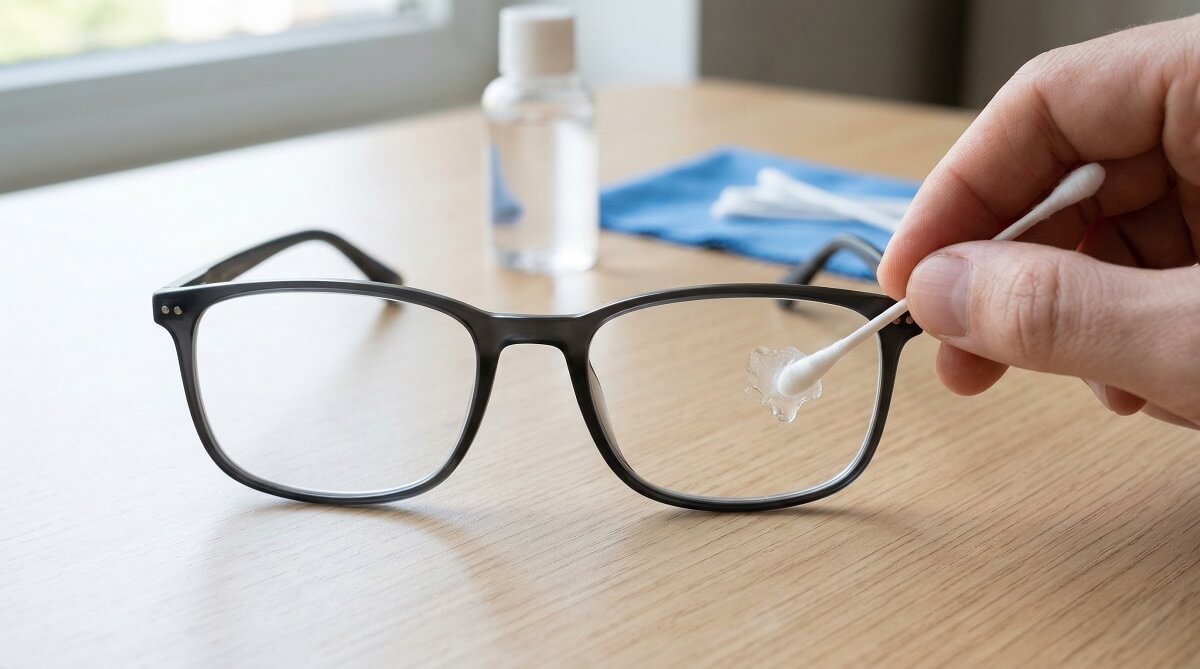
Getting super glue on your eyeglass lenses is one of those frustrating accidents that happens more often than you’d think. Maybe you were repairing the frame, or the adhesive dripped while you were working on something else entirely. Either way, you’re now staring at a blob of hardened cyanoacrylate right in your line of sight.
Here’s the good news: Most super glue mishaps on glasses can be fixed at home using gentle household products. The safest approach for nearly all lens types is the dish soap and warm water technique. It takes patience, but it softens the adhesive without harming lens coatings. For glass lenses only—and I mean only if you’re absolutely certain they’re glass—acetone works faster, but comes with serious risks.
Before you grab any cleaning products, you need to know two things: what your lenses are made of (plastic, polycarbonate, or glass), and whether they have special coatings like anti-reflective or blue light protection. Most modern glasses have coatings that acetone will permanently destroy. Fresh adhesive typically comes off easier than week-old residue, but even dried glue can be removed if you’re willing to put in the time.
The key decision is straightforward: Can you safely tackle this yourself, or should you visit an optician? Small glue spots on uncoated lenses are usually DIY-friendly. Large smears, high-prescription lenses, or any uncertainty about your lens type means it’s time to get professional help.
Quick Decision Checklist
Safe to Try DIY Removal:
- Small glue spots (smaller than a pencil eraser)
- You know your lens material and coating type
- Glue is on the lens surface only (not between layers)
- You have 20-30 minutes to work slowly and carefully
- Non-prescription glasses or low-prescription lenses
- You have a backup pair to wear while working
Visit an Optician Instead:
- Large glue coverage (more than 25% of the lens)
- High prescription lenses (you can’t function without them)
- Unsure whether lenses are plastic or glass
- Glue has been there for months and won’t budge
- Progressive or bifocal lenses
- Expensive designer frames (warranty concerns)
- You’ve already tried DIY removal and failed
Understanding Your Lens Type (Check Before You Start)
Different materials and coatings react differently to cleaning products. Get this part wrong, and you could turn a small glue spot into permanently clouded lenses. Here’s what you’re likely dealing with:
Common Lens Materials
Plastic (CR-39): This is the most common lens material, according to market research data accounting for about 63% of all eyeglass lenses globally. Acetone will cloud or crack it, so stick with gentle methods. CR-39 lenses are lightweight and affordable, but they’re very sensitive to harsh chemicals.
Polycarbonate: Used in about 35% of prescription glasses, especially for kids and safety glasses. Impact-resistant and lighter than plastic, but acetone will harm it just as easily. If you have active kids or work in environments where eye protection matters, you probably have polycarbonate lenses.
High-index plastic: These are the thin lenses prescribed for strong prescriptions. They’re even more sensitive to chemicals than standard plastic. If your prescription is above +/-4.00, you might have high-index lenses.
Glass: Rare today because of weight and breakage concerns. The upside is that glass can handle acetone, but you’ll still need to watch out for coatings. If you’re over 60 and have old frames, glass is more likely.
Trivex: Similar to polycarbonate but with better optical clarity. No acetone here either. These are premium lenses, so you definitely don’t want to risk damage.
Lens Coatings That Complicate Things
Anti-reflective (AR coating): This is the most vulnerable coating. According to ZEISS, strong organic solvents like acetone can affect the optical quality of lens coatings, causing permanent harm. Once AR coating is stripped or damaged, it can’t be reapplied to the same lens. If your glasses reduce glare from screens and headlights, you have AR coating.
Blue light blocking: Popular for computer users. Harsh chemicals can peel this coating right off. The coating is usually built into the lens material or applied as a thin layer, and either way, acetone will ruin it.
UV protection: Sometimes built into the lens material, sometimes applied as a coating. If it’s a coating, acetone poses risks. Most modern lenses have UV protection as standard.
Scratch-resistant coating: Adds hardness to the surface but doesn’t protect against chemical damage. This coating can still be stripped by acetone.
Photochromic (Transitions): The lenses that darken in sunlight. These use chemical compounds that acetone will absolutely destroy. If your glasses change tint outdoors, avoid acetone completely.
Polarized: Common in sunglasses. Acetone will strip the polarizing film, leaving you with regular tinted lenses that don’t block glare.
How to Identify Your Lens Type
If you’re not sure what you’re working with, try these methods:
- Check your prescription paperwork or receipt from when you bought the glasses
- Call the optical shop where you purchased them—they keep records
- Look for manufacturer markings on the inside of the frame temples
- Tap the lens gently with your fingernail: glass makes a sharp “ting” sound and feels cold; plastic makes a duller “thunk” and feels warmer
- When in doubt, assume plastic with coatings—it’s the safest assumption for most modern glasses
Method 1: Dish Soap Solution (Safest for All Lens Types)
This is the method I recommend first for almost everyone. It’s gentle, uses products you already have, and works on all lens materials and coatings. The trade-off is time—you’ll need patience.
Best for: All lens types, especially plastic and coated lenses
Time needed: 15-30 minutes
Success rate: High for fresh glue, moderate for aged glue
What You’ll Need
- Mild dish soap (Dawn and Palmolive both work well)
- Warm water (not hot—heat can stress lenses and frames)
- Microfiber cloth (have 2-3 clean ones ready)
- Cotton swabs (Q-tips)
- Small bowl
- Good lighting and patience
Step-by-Step Instructions
Step 1: Prepare the solution
Mix 1/2 cup warm water with 1 teaspoon dish soap in your bowl. Stir gently until the soap dissolves. The solution should feel slippery but not overly sudsy.
Step 2: Initial soak
Dip a microfiber cloth in the solution and wring out the excess—you want it damp, not dripping. Press the damp cloth against the glue spot and hold it there for 5 minutes. This lets moisture penetrate the glue and start breaking down the bond.
Step 3: Check the consistency
After 5 minutes, gently touch the glue with your fingernail. It should feel slightly softer, like modeling clay. If it’s still rock-hard, repeat Step 2. Don’t rush this—forcing hard glue will scratch your lens.
Step 4: Gentle rubbing
Dip a cotton swab in the soapy water and rub the glue using small circular motions. Use light pressure. You’re encouraging the glue to lift, not scraping it off. Think of it like coaxing the glue away from the lens.
Step 5: Rinse and assess
Rinse the lens under clean water to see your progress. If glue remains, repeat steps 2-4. Most spots require 3-5 cycles before the glue fully releases. Fresh glue (less than 24 hours old) usually needs fewer cycles than dried glue.
Step 6: Final clean
Once all the glue is gone, clean the entire lens with regular lens cleaner and dry with a fresh microfiber cloth. Check for any remaining tacky residue—if you find any, do one more soap cycle.
Pro Tips
- Don’t rush the soaking phase—patience prevents scratches and makes removal easier
- Change to a fresh cotton swab every few passes to avoid redepositing dissolved adhesive
- If your fingers get tired, take a break. Fatigue leads to excessive pressure
- Work in good lighting so you can see your progress clearly
- According to ZEISS, avoid using tissues or shirt sleeves to clean glasses, as these materials often contain dust or dirt particles that cause micro-scratches when rubbed on lenses
Method 2: Acetone (Glass Lenses ONLY)
WARNING: Only use this method if you’re 100% certain you have glass lenses with no coatings. Acetone permanently damages anti-reflective coatings, clouds plastic and polycarbonate lenses, and can weaken frame adhesives. When in doubt, skip this method.
Best for: Uncoated glass lenses, stubborn glue that won’t respond to soap
Time needed: 5-10 minutes
Success rate: Very high, but risky
What You’ll Need
- Pure acetone or acetone-based nail polish remover
- Cotton balls or swabs
- Microfiber cloth
- Lint-free cleaning cloth
Step-by-Step Instructions
Step 1: Verify lens material
If there’s any doubt about whether your lenses are glass, stop here. Glass lenses are extremely rare in modern eyewear. Unless you have vintage frames or specifically requested glass lenses, assume you have plastic.
Step 2: Test in an inconspicuous spot
Apply a tiny amount of acetone to the very edge of the lens, away from the glue. Wait 30 seconds. If you see any clouding, haziness, or color change, STOP immediately—your lenses aren’t acetone-safe.
Step 3: Apply acetone
Saturate a cotton ball with acetone. Press it directly against the glue spot. Don’t rub yet—just let it sit for 30-60 seconds while the acetone dissolves the cyanoacrylate adhesive.
Step 4: Gentle removal
As the glue softens and becomes gummy, gently wipe it away with the cotton ball. It should release easily. If it doesn’t, apply more acetone and wait another 30 seconds.
Step 5: Clean residue
Use a fresh acetone-dampened cloth to remove any remaining tacky residue. The glue often leaves a sticky film even after the main blob is gone.
Step 6: Final wash
Immediately wash the lens with dish soap and water to remove all acetone. Acetone evaporates quickly, but washing ensures no residue remains. Dry with a lint-free cloth.
Why Acetone Is So Risky
Acetone dissolves plastic lens materials very efficiently, which also means it can harm plastic frames, lens cements used to glue multi-element lenses together, and polycarbonate lenses. Here’s what can go wrong:
- Permanently destroys anti-reflective coatings, causing cloudiness or peeling
- Clouds plastic and polycarbonate lenses with a hazy “etched” appearance
- Can weaken the adhesive holding your lenses in the frame if it drips
- Creates visible harm on some materials that can’t be repaired
- Strips photochromic, polarized, and tinted coatings
According to professional optical cleaning guidelines, only compressed air, reagent-grade alcohol, or de-ionized water should be used to clean plastic optics. Acetone is explicitly warned against for plastic lenses and frames.
Alternative Methods Worth Trying
If the dish soap method isn’t making progress and you can’t use acetone, here are some alternatives. Each comes with its own risks, so proceed carefully.
Toothpaste (Mild Abrasive)
Best for: Very small spots on non-coated plastic lenses
Risk level: Medium—can scratch coatings
Use non-gel, non-whitening toothpaste. Apply a pea-sized amount directly to the adhesive spot. Rub gently with a damp microfiber cloth in circular motions. Rinse immediately and thoroughly. Only try this as a last resort before seeking professional help. The abrasives in toothpaste can scratch anti-reflective coatings, so if you have AR coating, skip this method entirely.
Isopropyl Alcohol (70%)
Best for: Light adhesive residue, not hardened glue
Risk level: Low to medium
This is safer than acetone but still carries risk for coatings. According to Essilor’s Crizal FAQ, their anti-reflective coating can tolerate occasional alcohol cleaning but shouldn’t be cleaned with alcohol daily. Dampen a cloth with alcohol (don’t saturate it), apply quickly to the adhesive spot, and rinse immediately. Don’t let the alcohol sit on the lens—quick application is key.
Before using alcohol, always rinse your lenses under warm running water first to remove any dust or particles that might scratch when you rub.
Commercial Glue Removers
Options: Goo Gone, Loctite Glue Remover, Un-Du
Risk level: Medium to high—check lens compatibility
Most commercial glue removers are not tested for eyeglass lenses. Read ingredient labels carefully and avoid products containing acetone, MEK (methyl ethyl ketone), or other strong solvents. If you try a commercial remover, test it on the frame edge first, far from the lenses. Some optical shops sell lens-safe adhesive removers—ask at your local optician.
What NOT to Try
Some methods sound reasonable but will damage your glasses:
- WD-40: Oil will create impossible-to-remove smears and can seep into frame crevices
- Sandpaper or abrasive pads: Will scratch your lenses beyond repair
- Hot water: Temperature shock can crack lenses or warp plastic frames
- Razor blades or sharp tools: Will gouge the lens surface and ruin optical clarity
- Hair dryer heat: Can warp frames and damage coatings
- Vinegar: Not effective on cyanoacrylate and can damage some coatings over time
Special Scenarios That Need Extra Care
Aged or Dried Adhesive (More Than 48 Hours Old)
Old adhesive is tougher to remove because the cyanoacrylate has fully cured and bonded tightly to the lens surface. You’ll need longer soaking times—30 minutes or more per cycle. Plan on multiple sessions spread across 2-3 days rather than trying to force it in one sitting.
If you see no progress after three patient attempts with the dish soap method, it’s time to consider professional removal. Don’t increase pressure to compensate for slow progress—you’ll end up scratching the lens.
Bifocal or Progressive Lenses
These lenses are significantly more expensive to replace than single-vision lenses. According to industry pricing data, progressive lenses range from $175-$250 for basic options, $250-$500 for mid-range, and can exceed $1,000 for premium progressive lenses. With costs that high, professional removal is usually the smarter choice.
If glue is near the optical center or in the progressive corridor (the area where your vision transitions from distance to reading), it affects your vision most. DIY removal is riskier because any mistake costs more to fix. If you do attempt DIY removal, use extra caution near the progressive corridor and work slowly.
Different Frame Materials
Acetate/Plastic Frames: Acetone will dissolve plastic frames, so if you use acetone (glass lenses only), keep the solution on the lens only. Use cotton swabs for precision application and avoid letting acetone drip onto the frame.
Metal Frames (Titanium, Stainless Steel): More acetone-tolerant than plastic frames, but still avoid getting acetone on nose pads, which are often plastic or silicone. Check that acetone won’t drip into hinges, where it might affect lubricants or small internal components.
TR-90 (Flexible Frames): These memory plastic frames are resistant to most chemicals, making them safer around solvents. Still avoid acetone on the lenses themselves.
Wood or Horn Frames: Very sensitive to moisture and chemicals. Use water only, and consider professional removal. Exotic frame materials warrant extra caution because replacement frames are expensive.
Glue Between Lens Layers or in Frame Grooves
If glue has seeped between lens layers (in laminated lenses) or into the groove where the lens sits in the frame, you can’t safely remove it at home. This requires professional disassembly of the frame. Attempting to dig glue out of frame grooves often damages the lens edges or loosens the fit. Take these cases to an optician.
When to Seek Professional Help
Sometimes the smart move is admitting a problem is beyond DIY solutions. Here’s when to call in the professionals:
Signs You Need an Optician
- Glue won’t budge after three gentle attempts with the dish soap method
- You’ve created cloudiness or scratches trying to remove the glue
- Glue is on the inner lens surface or between layers
- Frame is damaged or has become loose
- You’re not confident about your lens type or coating
- Your prescription is very strong and you can’t go without your glasses
- The glue covers a large area (more than 25% of the lens)
What Professional Removal Includes
Optical Shop Services: Most major optical retailers offer cleaning services, and you might be surprised to learn that both LensCrafters and Visionworks provide free professional cleaning services for glasses purchased from them, including free cleanings for the lifetime of your glasses. This includes cleaning off adhesive residue.
Professional services typically include:
- Ultrasonic cleaning that uses gentle vibration to loosen glue without chemicals
- Professional-grade lens-safe solvents not available to consumers
- Frame disassembly if needed to access hard-to-reach glue
- Immediate lens replacement if damage has already occurred
- Free adjustments and tightening of loose frames
Optometrist Clinics: Your optometrist can provide the same services as optical shops. They can also write a new prescription if your lens must be replaced. Many optometrists offer complimentary cleaning for existing patients, so check with your eye doctor before paying elsewhere.
Independent Opticians: Local independent optical shops are often more flexible with repairs than chain retailers. They may attempt salvage methods not available at larger stores and can provide personalized advice for your specific frames and situation.
Cost vs. DIY Comparison
Professional cleaning often costs $15-30 at shops that charge for the service, but as mentioned, major chains frequently do this free for customers. Compare that to replacement costs:
- New single-vision lenses: $107 average (ranging from $48 for basic CR-39 to $298 for premium high-index with coatings)
- Progressive lenses: $175-$500+ depending on quality
- Complete new glasses: $200-$300 average (frames plus lenses)
- DIY supplies: ~$5-10 if you need to buy soap and microfiber cloths
As of early 2026, these are typical costs without insurance. The decision rule is simple: If your glasses cost more than $200, professional removal makes financial sense to avoid replacement costs.
Preventing Future Glue Mishaps
Once you’ve dealt with the hassle of glue removal, you’ll want to avoid repeating the experience. Here are some practical prevention strategies:
Smart Repair Practices
- Remove your glasses before using super glue nearby—place them in another room if possible
- Use precision applicators like needle-tip bottles for better control
- Work on a covered surface away from where you keep your glasses
- Store glasses in a hard case during any DIY projects
- Consider using eyeglass-specific adhesives for frame repairs instead of standard super glue
Eyeglass-Safe Adhesives for Frame Repairs
If you need to repair a frame, these products are designed for eyewear:
- Loctite Super Glue Glass – Clear formula designed for glass and plastic, less runny than standard super glue
- UV-cure optical adhesives – Require a UV lamp but provide very clean, precise bonds
- Cyanoacrylate gel formulas – Thicker consistency means less dripping onto lenses
For permanent frame repairs, consider taking your glasses to an optical shop. They have professional repair tools and can often fix frames more durably than home methods.
Proper Storage to Avoid Accidental Contact
- Use a hard-shell case whenever you’re not wearing your glasses
- Designate a safe spot away from workshop or craft areas
- Keep a microfiber pouch for daily protection when carrying glasses in a bag
- Never set lenses face-down on surfaces where adhesives might be present
- Clean your glasses regularly so you notice any problems immediately
Comparison Table: DIY vs. Professional vs. Replacement
| Factor | Dish Soap DIY | Acetone DIY | Professional Removal | Lens Replacement |
|---|---|---|---|---|
| Cost | $5-10 | $5-10 | Free-$30 | $107-$500+ |
| Time | 20-30 min | 5-10 min | 15-30 min in-store | 3-7 days |
| Risk to Lenses | Very low | High | Very low | None (new lens) |
| Success Rate | 80-90% | 95% (if applicable) | 95%+ | 100% |
| Best For | All lens types | Glass lenses only | Uncertain cases | Already damaged lenses |
| Skill Required | Low | Medium | None (pro does it) | None |
| Warranty Impact | None | May void warranty | Usually preserves | New warranty |
Frequently Asked Questions
How long does it take to remove super glue from glasses?
Fresh adhesive (less than 24 hours old) typically takes 15-30 minutes with the dish soap method. Dried glue that’s been there for days or weeks may require multiple 30-minute sessions or professional removal. The age of the adhesive makes a significant difference—fresh glue is still partially pliable, while fully cured adhesive requires more patience and multiple soaking cycles.
Can I use nail polish remover on my glasses?
Only if you’re absolutely certain you have uncoated glass lenses, which are rare in modern eyewear. Most glasses today have plastic lenses or protective coatings that nail polish remover (which contains acetone) will permanently damage. The damage appears as cloudiness, peeling, or a hazy “etched” look that can’t be repaired. When in doubt, stick with the gentle dish soap method.
Will toothpaste remove super glue from glasses?
Toothpaste can work on very small glue spots on non-coated plastic lenses because it acts as a mild abrasive, but it’s risky. The abrasives that polish your teeth can also scratch anti-reflective coatings and create more damage than the original glue spot. Try the dish soap method first—it’s safer and just as effective with patience.
What if the glue is on my prescription lenses?
Use the dish soap method only. Don’t risk acetone or abrasive methods on prescription lenses because replacement costs are high. Single-vision prescription lenses average $107, but can range from $48 to nearly $300 depending on your prescription strength and lens features. If home removal fails after 2-3 patient attempts, take your glasses to an optical shop for professional cleaning, which is often free at major retailers like LensCrafters or Visionworks.
Can super glue damage the anti-reflective coating?
The adhesive itself usually doesn’t harm AR coating—it just sits on top of it. However, aggressive removal methods absolutely can. Acetone, excessive rubbing alcohol, and abrasive scrubbing will strip or scratch AR coatings. According to optical manufacturers like Zeiss and Essilor, once AR coating is damaged or removed, it cannot be reapplied to the same lens. Stick with gentle dish soap and patience to preserve your coatings.
How do I know if my lenses are plastic or glass?
Tap the lens gently with your fingernail. Glass makes a sharp “ting” sound and feels cold to the touch. Plastic makes a duller “thunk” sound and feels warmer. Glass lenses are also noticeably heavier—if your glasses feel lightweight, they’re almost certainly plastic or polycarbonate. Given that plastic-based lenses (CR-39, polycarbonate, high-index) account for over 98% of modern eyeglass lenses, assume plastic unless you know otherwise.
Is it worth trying to remove glue, or should I just buy new glasses?
For expensive glasses ($200+) or custom prescriptions, it’s definitely worth spending 30 minutes trying the gentle dish soap method. For cheap reading glasses from a drugstore ($10-20), replacement might be easier than the effort. Compare the value of your time versus the cost of new glasses. If you have progressive lenses ($175-$1000+) or high-prescription lenses, absolutely try careful removal first.
Can I take my glasses to LensCrafters or Walmart Vision for glue removal?
Yes, most optical retailers offer cleaning services. LensCrafters and Visionworks both provide free professional cleaning for the lifetime of glasses purchased from them, which includes adhesive removal. Walmart Vision and other retailers may charge a small fee ($15-30) or offer free cleaning for customers. Call ahead to confirm they handle adhesive removal—ultrasonic cleaners are very effective for this type of problem.
What if I already tried acetone and my lenses look cloudy?
The cloudiness is likely permanent coating damage or chemical etching of the lens material itself. You’ll need to either accept the reduced optical quality or replace the lenses. Some optical shops can strip remaining coating completely, leaving bare lenses, but vision quality will be reduced without AR coating. In most cases, lens replacement is recommended. This is exactly why acetone should only be used on uncoated glass lenses.
Does insurance cover accidental lens damage from super glue?
Most vision insurance plans don’t cover accidental damage—they typically only cover routine eye exams and one pair of glasses per year or two years. However, some homeowners or renters insurance policies may cover accidental harm to personal property, including eyeglasses. Check your policy details or contact your insurance agent. Keep in mind that deductibles often exceed the cost of lens replacement, making insurance claims impractical for this type of issue. Some retailers like Davis Vision offer optional scratch and breakage protection plans ($20-40) that may cover accidental damage.
Final Thoughts
Removing super glue from your glasses is usually manageable at home with patience and the right technique. The dish soap and warm water method works for virtually all lens types without risk of permanent harm—it just takes time and a gentle touch. Resist the temptation to rush with harsh chemicals unless you’re absolutely certain your lenses can handle them, which in practice means glass lenses only.
When you’re unsure about your lens material or coating type, choosing caution over speed is the smart move. A free or $15-30 professional cleaning is far cheaper than $100-500+ replacement lenses. Keep your backup pair handy while working on your primary glasses, and don’t attempt removal if you can’t function without them during the process.
The dish soap method might seem slow compared to acetone’s quick action, but spending an extra 20 minutes protects your investment in quality eyewear. Most glue removal attempts succeed with the gentle approach—and when they don’t, you haven’t made the problem worse by damaging coatings or clouding the lens material.
For next time, store your glasses in their case during any DIY projects, and consider using precision applicators for repairs. Your vision is too important to risk on guesswork or impatience.
Need Help or Replacement Options?
For professional assistance: Visit your local optician or use the store locator for LensCrafters, Visionworks, or Pearle Vision to find a location near you. Many offer free cleaning services and can assess whether your lenses need replacement.
Shopping for replacement glasses or backup pairs: If you need new lenses or want an affordable backup pair, check out Amazon’s Eyewear Section for a wide selection with customer reviews, Warby Parker for their home try-on program, or Zenni Optical for budget-friendly prescription glasses starting around $10-15.
For frame repairs: Consider eyeglass repair kits that include precision tools and lens-safe adhesives specifically designed for eyewear maintenance.
