


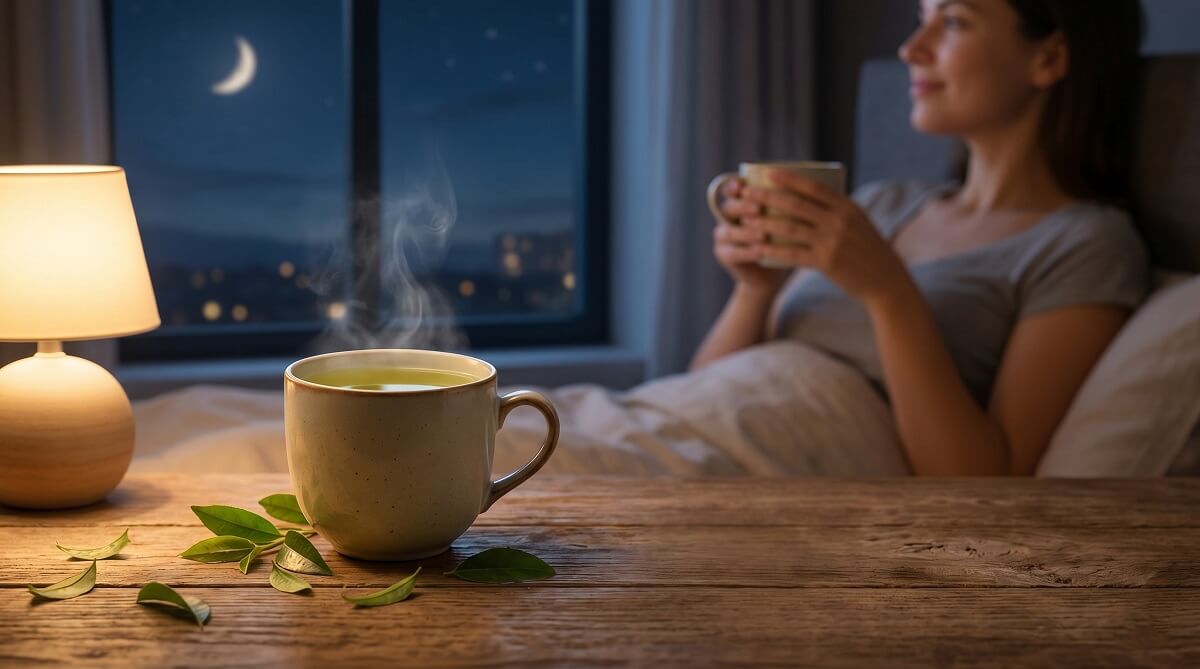
Green tea before bed can genuinely help you unwind — but whether it works in your favor depends on two things: how sensitive you are to caffeine, and which type of tea you choose. The L-theanine in green tea supports relaxation and may improve sleep quality, while the caffeine (around 30–50 mg per cup) can pull in the opposite direction if you drink it too close to bedtime.
The practical bottom line: drink green tea at least 2–3 hours before you plan to sleep, choose a low-caffeine variety like bancha or hojicha, or go with a decaf option. Most healthy adults handle it just fine. The caffeine-sensitive crowd needs to be more careful — but for them, decaf green tea offers nearly the same relaxation and antioxidant benefits without the sleep interference.
Below is a clear breakdown of the real benefits backed by research, the honest downsides, how to pick the right variety, and exactly how to time your evening cup to get the most out of it.
Is Nighttime Green Tea Right for You?
✅ Drink It at Night If You:
- Handle caffeine well and can fall asleep after a cup of tea
- Want a calming pre-bed ritual with genuine health benefits
- Struggle with an overactive, stressed mind at bedtime
- Prefer a low-caffeine variety like bancha, hojicha, or decaf
- Drink it at least 2–3 hours before you plan to sleep
❌ Skip It at Bedtime If You:
- Are sensitive to caffeine — even small amounts disrupt your sleep
- Deal with frequent nighttime urination or light sleeping
- Are pregnant or breastfeeding (total daily caffeine should stay under 200 mg)
- Take medications that interact with caffeine (blood thinners, stimulants, certain heart meds)
- Already struggle to fall asleep — try chamomile or valerian instead
What’s Actually in Green Tea That Affects Your Sleep
Green tea comes from the leaves of the Camellia sinensis plant, and it contains three compounds that directly influence how your body responds to a nighttime cup.
L-Theanine — The Calming Amino Acid
L-theanine is an amino acid found almost exclusively in tea plants. It crosses the blood-brain barrier and works by reducing stress-related hormones and dampening neural excitability — essentially taking the edge off without making you drowsy. A typical cup of green tea provides roughly 8–30 mg of theanine, with most analyses landing around 25 mg per cup, according to a 2016 peer-reviewed analysis of commercial tea infusions.
One important caveat: the research studies showing the strongest sleep and anxiety effects used supplemental L-theanine at 200–400 mg — far above what a single cup provides. That said, the real-world calming effect many people notice is well-supported, particularly when caffeine is also present to be modulated.
A 2023 double-blind crossover study conducted by ITO EN researchers and Ehime Prefectural University found that 50 mg of theanine co-administered with 30 mg of caffeine fully suppressed the caffeine-induced increase in wake-after-sleep-onset (WASO). In plain terms: the theanine in green tea appears to blunt the sleep-disrupting effects of its own caffeine, according to the peer-reviewed study published in Food & Function (RSC, 2023).
Caffeine — The Compound That Cuts Both Ways
Green tea contains around 30–50 mg of caffeine per 8 oz cup, according to Healthline’s analysis of caffeine in green tea. That’s roughly one-third of a standard cup of coffee (~95 mg) but still enough to delay sleep if you’re sensitive to it.
| Beverage | Caffeine (mg) | Nighttime Suitability |
|---|---|---|
| Coffee (brewed) | ~95 mg | ❌ Avoid before bed |
| Black tea | ~50 mg | ⚠️ Use caution |
| Matcha (2–4g powder) | 38–176 mg | ❌ Skip unless caffeine-tolerant |
| Green tea (standard) | 30–50 mg | ⚠️ Drink 2–3 hrs before bed |
| Decaf green tea | <12 mg | ✅ Best for nighttime |
| Herbal tea (chamomile, etc.) | 0 mg | ✅ Best for sleep-focused goal |
Caffeine effects begin about 20 minutes after drinking and peak around 60 minutes. With a half-life of roughly 5–6 hours, a cup of regular green tea at 9 PM still has significant caffeine circulating in your system at midnight.
Catechins (EGCG) — The Antioxidant That Works Around the Clock
Epigallocatechin gallate (EGCG) is the main antioxidant in green tea. Its benefits — reducing inflammation, supporting heart health, and protecting against cell damage — are not time-dependent. Drinking green tea at night doesn’t reduce or boost these effects versus drinking it in the morning. According to Cleveland Clinic dietitian Julia Zumpano, RD, LD, EGCG and other catechins have anti-inflammatory properties linked to lower risk of certain cancers, stroke, and heart disease.
Proven Benefits of Drinking Green Tea at Night
1. Promotes Genuine Relaxation (Without the Grogginess)
L-theanine increases alpha brain wave activity — the mental state associated with calm, alert relaxation. This isn’t the same as a sedative. You won’t feel knocked out or foggy; you’ll feel like you’ve genuinely unwound after a long day. That’s a real distinction from sleep aids, which often leave you groggy the next morning.
2. Takes the Edge Off Stress and Anxiety
According to Cleveland Clinic, L-theanine significantly reduces the stimulating effects of caffeine while simultaneously improving mood and concentration. For people who struggle with racing thoughts at bedtime, a cup of low-caffeine green tea about 2 hours before sleep can function as a signal to the nervous system that the day is winding down. This isn’t just anecdotal — the theanine-as-stress-buffer mechanism is well-documented in the research.
3. May Support Better Sleep Quality — With the Right Type
The key word is “may.” The 2023 Food & Function study showed that theanine suppressed caffeine-induced wake-after-sleep-onset — meaning it helps prevent nighttime waking caused by caffeine. That’s not the same as actively inducing deeper sleep. And the evidence base is largely on low-caffeine green tea consumed throughout the day, not regular green tea drunk right before bed.
If sleep quality is your primary goal, decaf green tea or herbal tea is a smarter choice. But if you want a calming ritual that also happens to preserve some tea’s antioxidant and relaxation benefits, a low-caffeine green tea in the early evening is a reasonable option.
4. Supports Digestion After Dinner
The anti-inflammatory catechins in green tea may ease post-dinner heaviness and support gut motility. For timing, aim to drink your evening cup 30–60 minutes after eating rather than with your meal — iron and other minerals in food can inhibit catechin absorption. This also gives your stomach time to settle before you add liquid to the mix.
5. Delivers Antioxidant Benefits Regardless of Timing
EGCG and other polyphenols in green tea work whether you drink it at 8 AM or 8 PM. A 2023 study cited by Cleveland Clinic found that drinking 2–4 cups of green tea daily lowered stroke risk by as much as 24%. These cardiovascular and anti-inflammatory benefits build up through regular daily consumption — your evening cup contributes just as much as your morning one.
6. A Modest Metabolic Nudge Overnight
Green tea catechins have been shown to increase 24-hour energy expenditure by approximately 4% through a process called COMT inhibition — essentially slowing the breakdown of fat-burning hormones like norepinephrine. That finding comes from a 2021 systematic review of green tea catechins and resting metabolic rate. Overnight is when your body does a lot of cellular maintenance and fat oxidation, so a pre-sleep cup could theoretically contribute.
The honest qualifier: this effect is modest, requires regular multi-cup daily intake (studies used 270–1,200 mg catechins/day), and one cup in the evening alone won’t shift your metabolism noticeably. Think of it as a minor bonus, not a weight-loss strategy.
The Downsides Worth Knowing
Caffeine Can Delay or Fragment Sleep
This is the main concern, and it’s real. Even 30 mg of caffeine affects some people enough to delay sleep onset by 30–60 minutes or reduce deep sleep stages. Caffeine’s half-life of 5–6 hours means a cup at 9 PM still has about half its caffeine present at 2 AM. If you know you metabolize caffeine slowly — or if you notice your sleep quality dips after tea — either switch to decaf or move your last cup to late afternoon.
Nighttime Trips to the Bathroom
Drinking any fluid within 2 hours of bed increases the chance you’ll wake up to urinate. Caffeine’s mild diuretic effect compounds this. If you already sleep lightly or have nocturia, limit yourself to one small cup (6–8 oz) and drink it no closer than 2 hours before you plan to sleep.
It’s Not the Same as a Proper Sleep Aid
Green tea isn’t melatonin, valerian, or magnesium glycinate. The relaxation effect is mild and mostly derived from ritual and theanine’s gentle nervous system calming. If you have persistent insomnia or a diagnosed sleep disorder, managing your sleep hygiene and speaking with a doctor will do far more than any tea.
Which Green Tea to Choose for Nighttime
Low-Caffeine Varieties Worth Trying
| Variety | Approx. Caffeine | Flavor Profile | Nighttime? |
|---|---|---|---|
| Hojicha | ~7–15 mg | Roasted, nutty, low bitterness | ✅ Excellent |
| Bancha | ~10–15 mg | Earthy, mild, slightly woody | ✅ Excellent |
| Decaf green tea | <12 mg | Varies by brand; mild | ✅ Best for caffeine-sensitive |
| Sencha | ~25–35 mg | Grassy, fresh, light | ⚠️ Drink 2–3 hrs before bed |
| Gyokuro | ~35–50 mg | Rich, savory, umami | ❌ Too much caffeine at night |
| Matcha | 38–176 mg | Earthy, grassy, creamy | ❌ Avoid before sleep |
Best Decaf Green Tea Options on Amazon
If you want the health benefits of green tea without any meaningful caffeine, decaf options are the practical answer. Two of the best-rated decaf green teas available right now:
- Bigelow Decaffeinated Organic Green Tea (40 bags) — USDA certified organic, natural decaffeination process that preserves some antioxidants, gluten-free, zero calories. A consistent top-seller in the decaf green tea category.
- Salada Decaffeinated Green Tea (40 bags) — Spring water decaffeination, individually wrapped bags, smooth and subtly sweet flavor. A solid everyday option.
Note: Check Amazon for current pricing, as tea prices fluctuate with promotions.
How to Brew for Lower Caffeine Extraction
If you’re using regular green tea (not decaf), brewing technique makes a meaningful difference in caffeine content:
- Use water at 160–175°F (not boiling at 212°F) — cooler water extracts less caffeine and preserves more theanine
- Steep for 1–2 minutes rather than 3–5 minutes
- Avoid adding sugar or sweeteners before bed — a blood sugar spike is the last thing you want when trying to sleep
- Skip milk or cream — some research suggests dairy proteins may reduce the antioxidant absorption from green tea
Frequently Asked Questions
What time should I drink green tea at night?
Aim to finish your cup at least 2–3 hours before your planned bedtime. This buffer gives caffeine time to partially clear your system (remember: green tea’s ~30–50 mg of caffeine takes 5–6 hours to reduce by half). If you go to bed at 11 PM, have your tea by 8–9 PM at the latest.
How much caffeine is in green tea versus coffee?
A standard 8 oz cup of green tea contains roughly 30–50 mg of caffeine. Brewed coffee typically delivers around 95 mg per cup — about two to three times more. Black tea sits around 50 mg. Matcha can range from 38 to over 175 mg depending on how much powder you use. Decaf green tea drops under 12 mg per cup.
Can green tea help with insomnia?
Not directly. Green tea’s L-theanine can ease stress-related sleeplessness and reduce nighttime waking caused by caffeine — but it’s not a treatment for clinical insomnia. If you have persistent sleep trouble, decaf green tea or chamomile is a better bet, and a conversation with your doctor matters far more than any beverage choice.
Is decaf green tea a good choice before bed?
Yes — it’s the safest nighttime option for green tea drinkers. Decaf green tea retains some L-theanine and antioxidant benefits while reducing caffeine to under 12 mg per cup. The relaxation benefit is diminished compared to regular green tea (lower theanine after processing), but for caffeine-sensitive people, it’s the right tradeoff.
Can I drink green tea every night?
Most healthy adults can drink 1–2 cups of green tea nightly without issue. Cleveland Clinic notes that up to 8 cups per day is generally considered safe for non-pregnant adults. The constraint at night is caffeine accumulation, not any harmful compound in green tea itself.
Does green tea help with weight loss overnight?
There’s a modest thermogenic effect from EGCG — roughly a 4% increase in 24-hour energy expenditure shown in studies using catechin doses of 270–1,200 mg/day. One cup in the evening contributes to that daily total, but it’s not a significant overnight weight-loss mechanism on its own. Sustained daily consumption, combined with diet and exercise, is where green tea’s metabolic benefits actually show up.
What’s better for sleep — green tea or chamomile?
If sleep is your primary goal and you’re caffeine-sensitive, chamomile is the more straightforward choice. It’s completely caffeine-free and has mild sedative properties from apigenin. Green tea is the better option if you want a calming pre-sleep ritual that also delivers antioxidants, supports heart health, and comes with the theanine-modulated relaxation effect — as long as you choose a low-caffeine variety and time it right.
Does nighttime green tea interact with medications?
Green tea can interact with blood thinners (warfarin), stimulant medications, and certain heart drugs. If you take regular prescriptions, particularly any of these categories, check with your doctor or pharmacist before adding nightly green tea to your routine. The caffeine content is low but not zero, and some interactions are clinically meaningful.
Ready to Try Green Tea at Night?
Start with a low-caffeine variety. Hojicha and bancha are excellent entry points — both are mild, naturally lower in caffeine, and easy to find. Or go straight to decaf if you know you’re caffeine-sensitive. Brew at lower temperature, give yourself a 2–3 hour buffer before bed, and pay attention to how you sleep for the first few nights.
Check current prices on Bigelow Decaf Green Tea on Amazon or browse the full range of caffeine-free green teas on Amazon.
