


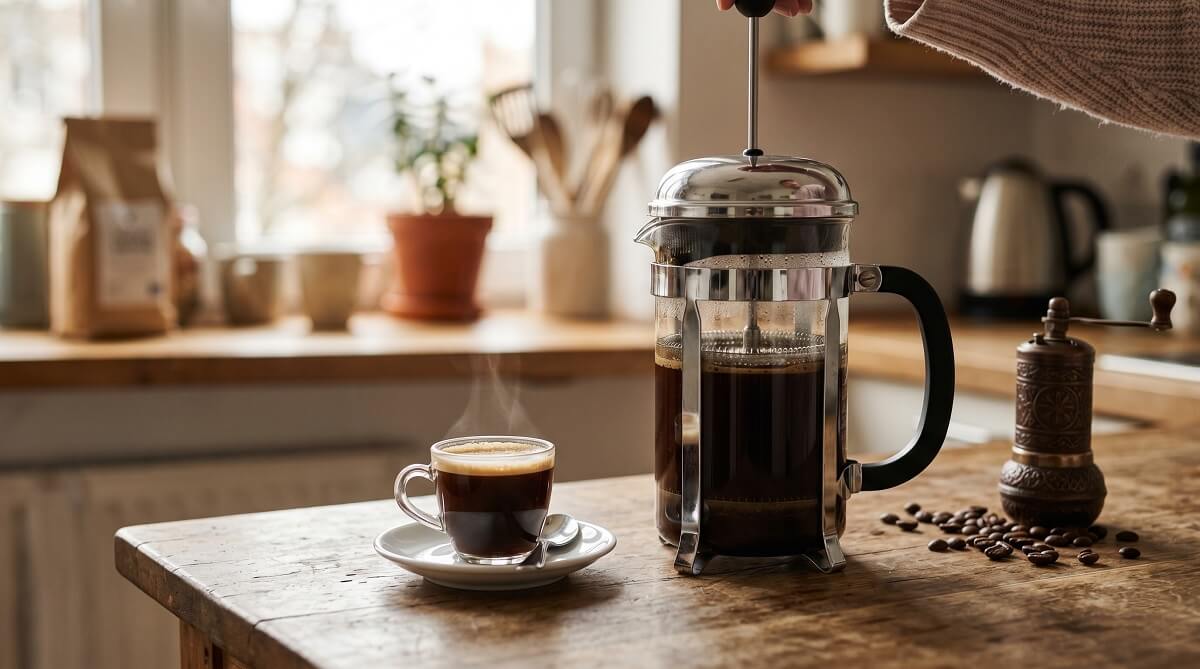
The short answer: a cafetiere can produce strong, concentrated, espresso-style coffee — but it cannot make true espresso. Real espresso is defined by pressure. According to the Specialty Coffee Association, authentic espresso requires water forced through finely-ground coffee at 9–10 atmospheres of pressure (roughly 130 psi). A cafetiere — known as a French press in the US — uses gravity and a plunger. There’s no pressurized extraction involved.
That said, what a cafetiere can produce is something genuinely useful: a bold, rich, full-bodied brew that works as the base for lattes, cappuccinos, Americanos, and flat whites at home. For most home coffee drinkers, that’s more than good enough. You already own the equipment; you just need the right ratio and a bit of technique. on ChubbytIps.
This guide covers exactly that — plus a clear breakdown of what you’ll get vs. what a machine produces, so you know what to expect before you start.
Should You Try It? A Quick Decision Guide
✅ Good fit if you:
- Already own a cafetiere and don’t want another appliance
- Want a strong base for milk-based drinks — lattes, cappuccinos, flat whites
- Are on a budget (a solid cafetiere typically runs $15–$40 — check current pricing at Walmart or Amazon)
- Are happy with espresso-style rather than technically correct espresso
❌ Skip it if you:
- Want genuine crema and true high-pressure extraction
- Need precise, repeatable shots for specialty drinks
- Are a coffee purist who’ll notice the difference in mouthfeel and concentration
First Things First: What Is a Cafetiere?
“Cafetiere” is the British and Irish term for what North Americans call a French press or press pot. Both refer to the same device: a cylindrical glass or stainless steel carafe with a mesh plunger that pushes coffee grounds to the bottom after steeping.
Few brewing methods are simpler — no electricity, no paper filters, no complicated setup. You add ground coffee, pour hot water over it, wait a few minutes, and press the plunger down. The mesh separates the liquid from the grounds, and you pour. on ChubbytIps for other methods worth trying.
Throughout this article, “cafetiere” and “French press” are used interchangeably — they’re the same thing.
Why a Cafetiere Can’t Make True Espresso
The Specialty Coffee Association puts it plainly: espresso is “a 25–35ml beverage prepared from 7–9 grams of coffee through which clean water of 195°–205°F has been forced at 9–10 atmospheres of pressure” in 20–30 seconds. That pressure — roughly 130 psi, or nine times the atmospheric pressure at sea level — is what separates espresso from every other brewing method.
At that pressure, water emulsifies the oils in finely-ground coffee, creating the thick, syrupy texture and golden crema that define a proper shot. A cafetiere generates no meaningful pressure. The plunger filters; it doesn’t extract under force. The physics simply don’t allow it.
What About the Crema?
Real crema forms when CO₂ gas — trapped in freshly-roasted beans — is released rapidly under high pressure during extraction. That specific condition can’t happen in a cafetiere. If you pump the plunger several times before pressing it down, you’ll create a foamy layer on top, but it’s surface agitation, not crema. It looks similar and adds a bit of texture, but dissolves quickly.
If crema matters to you, a cafetiere isn’t the answer. But if you’re making a latte or cappuccino, crema is barely relevant once the milk goes in.
What You Need
Making espresso-style coffee in a cafetiere requires the same equipment you’d use for any French press brew — just with different quantities and a slightly different grind.
- A cafetiere — smaller is better for this method; a 12–17 oz (350–500ml) press works best. Larger ones make it harder to saturate all the grounds evenly with a small volume of water. Budget options start around $15–$20; check current pricing at Amazon or for vetted recommendations.
- Dark roast coffee — French roast, espresso roast, or any bold dark blend. “Espresso roast” is a marketing term, not a regulated standard; any dark roast works. Whole beans freshly ground give the best flavor.
- Hot water at 195–205°F (90–96°C) — bring water to a boil, then let it rest for 30 seconds. Pouring boiling water directly can scorch the grounds and add bitterness.
- A kitchen scale (optional but helpful) — the espresso-style ratio is precise; eyeballing with tablespoons works in a pinch, but a scale gives reproducible results.
- A timer — 4 minutes steep time is the standard. More than 5 minutes and you’ll get over-extraction and bitterness.
How to Make Espresso-Style Coffee in a Cafetiere: Step by Step
The technique is close to a standard French press brew, with two key differences: a finer grind and a much higher coffee-to-water ratio.
- Grind your beans to medium-fine. Finer than your usual French press grind, but not as fine as you’d use in an espresso machine. The texture should resemble coarse sea salt — fine enough to produce a concentrated brew, coarse enough not to clog the mesh filter.
- Heat your water. Bring it to a boil, then take it off the heat for 30 seconds. You’re aiming for 200°F (93°C). Too hot and you scorch the grounds; too cool and you underextract.
- Preheat the cafetiere. Pour a small amount of hot water into the empty carafe, swirl, and discard. This keeps the brewing temperature stable during steeping.
- Measure your coffee. Use approximately 30g of ground coffee for every 100g (3.5 oz) of water. That’s a roughly 1:3 ratio — much stronger than the typical French press 1:12–1:16 ratio for a regular cup.
- Add coffee to the preheated cafetiere.
- Pour and stir. Add the hot water slowly in a circular motion to saturate all the grounds evenly. Give it a gentle stir with a wooden or plastic spoon (metal can crack borosilicate glass). Start your timer immediately.
- Lid on, plunger up. Steep for 4 minutes. Don’t plunge yet.
- Press slowly and steadily. Apply even pressure — don’t rush it. If resistance is very high, your grind may be too fine.
- Pour immediately. Don’t leave the brewed coffee sitting in the cafetiere; it’ll keep extracting and turn bitter. Pour it into warm cups right away.
The Ratio That Makes the Difference
| Brew Style | Coffee | Water | Ratio | Result |
|---|---|---|---|---|
| Regular French press | 15g | 240g (8 oz) | 1:16 | Standard cup of coffee |
| Espresso-style cafetiere | 30g | 100g (3.5 oz) | 1:3 | Strong, concentrated brew |
| True espresso (machine) | 18–20g | 36–40g (1.2–1.4 oz) | 1:2 | True espresso shot |
Cafetiere vs. Other Espresso Alternatives
A cafetiere isn’t the only machine-free way to get a strong, concentrated coffee. Here’s how it stacks up against the main alternatives:
| Method | True Espresso? | Real Crema? | Typical Cost | Ease of Use | Best For |
|---|---|---|---|---|---|
| Cafetiere / French press | ❌ | ❌ | $15–$40 | Very easy | Milk drinks, Americanos, home use |
| Moka Pot (stovetop) | ❌ (closest) | Light layer | $30–$50 | Moderate | Stronger, richer brew; closer to espresso |
| AeroPress | ❌ | Minimal | $35–$45 | Moderate | Versatile, travel-friendly, concentrated |
| Nespresso / pod machine | Close ✅ | ✅ | $150–$250 + pods | Very easy | Convenience, consistent results |
| Entry-level espresso machine | ✅ | ✅ | $300–$600+ | Steep learning curve | True espresso at home |
If you want something closer to real espresso flavor without buying a machine, a stovetop moka pot is worth a look — INeedCoffee has a solid moka pot tutorial if you want to explore that route. for a full breakdown of stovetop brewers and which one fits your setup.
What Drinks Can You Make with Cafetiere Espresso?
Once you have your concentrated cafetiere brew ready, you can use it as the base for most popular espresso drinks. The intensity isn’t identical to a pulled shot, but it’s close enough for home use:
- Latte: 2 parts cafetiere espresso + 4 parts steamed or heated milk. Froth the milk with a hand frother or cafetiere (use the press to pump air through warm milk).
- Cappuccino: Equal parts cafetiere espresso, steamed milk, and milk foam. The foam-to-liquid ratio matters more than the espresso source.
- Americano: Cafetiere espresso + hot water to taste. Simple and effective.
- Flat white: 2 parts cafetiere espresso + 2 parts microfoamed milk — smaller and more intense than a latte.
- Iced latte: Pour the cafetiere espresso over a glass of ice, add cold milk. Works well and is popular in summer.
- Espresso martini: 2 parts cafetiere espresso + vodka + coffee liqueur (Kahlúa). Shaken over ice. The cafetiere brew is a solid substitute here — nobody will know the difference.
Frequently Asked Questions
Is cafetiere espresso the same as real espresso?
No. Real espresso is brewed under 9–10 atmospheres of pressure (roughly 130 psi), which emulsifies coffee oils to create a thick, concentrated shot with genuine crema. A cafetiere uses no pressurized extraction — it steeps and filters. The result is robust, bold coffee, but not espresso in any technical sense. if you’re thinking about making the jump to a proper machine.
What grind size should I use?
Medium-fine works best for this method — finer than a standard French press grind, but coarser than a true espresso grind. If the grounds are too fine, they’ll pass through the mesh filter and turn the brew muddy. If too coarse, the coffee won’t be concentrated enough. Think coarse sea salt as a reference point.
Do I need espresso roast beans?
No. “Espresso roast” is a marketing label with no fixed standard — it typically just means a dark roast blend. Any dark or French roast coffee produces the bold, intense flavor you want. Use whichever dark roast you enjoy drinking.
Can a cafetiere produce crema?
No — not real crema. Crema forms when CO₂ is released from fresh beans under high pressure. A cafetiere can’t replicate that. You can pump the plunger several times before pressing to create surface foam, which looks similar and adds a bit of texture, but it’s not the same thing and dissolves quickly.
How much caffeine does cafetiere espresso have vs. a machine shot?
A standard single shot of machine espresso (about 1 oz) contains approximately 63–68mg of caffeine, according to Barista Life’s caffeine comparison. A regular 8oz cup of French press coffee contains roughly 80–120mg total. The difference: espresso has far higher concentration per ounce (~64mg/oz) while French press delivers more total caffeine per standard serving due to the larger volume. The espresso-style cafetiere brew using a 1:3 ratio will land somewhere in between.
How do I stop my cafetiere espresso from tasting bitter?
Two main causes: water that’s too hot (above 205°F/96°C), and steeping too long. Let boiling water rest for 30 seconds before pouring, and don’t exceed 4–5 minutes of steep time. Also pour immediately after plunging — leaving the brew in contact with the grounds continues extraction and adds bitterness.
Can I use a large cafetiere for this method?
A smaller cafetiere (12–17 oz) works better. With only 100g of water, it’s hard to saturate the grounds evenly in a large pot. If a big one is all you have, scale up — double or triple the recipe so the grounds are properly submerged.
What’s the difference between a cafetiere and a French press?
They’re the same device. “Cafetiere” is the common term in the UK and Ireland; “French press” is standard in the US and Canada. The brewing method, equipment, and technique are identical regardless of what you call it.
Check current cafetiere prices on Amazon. For more home brewing guides, browse .
