


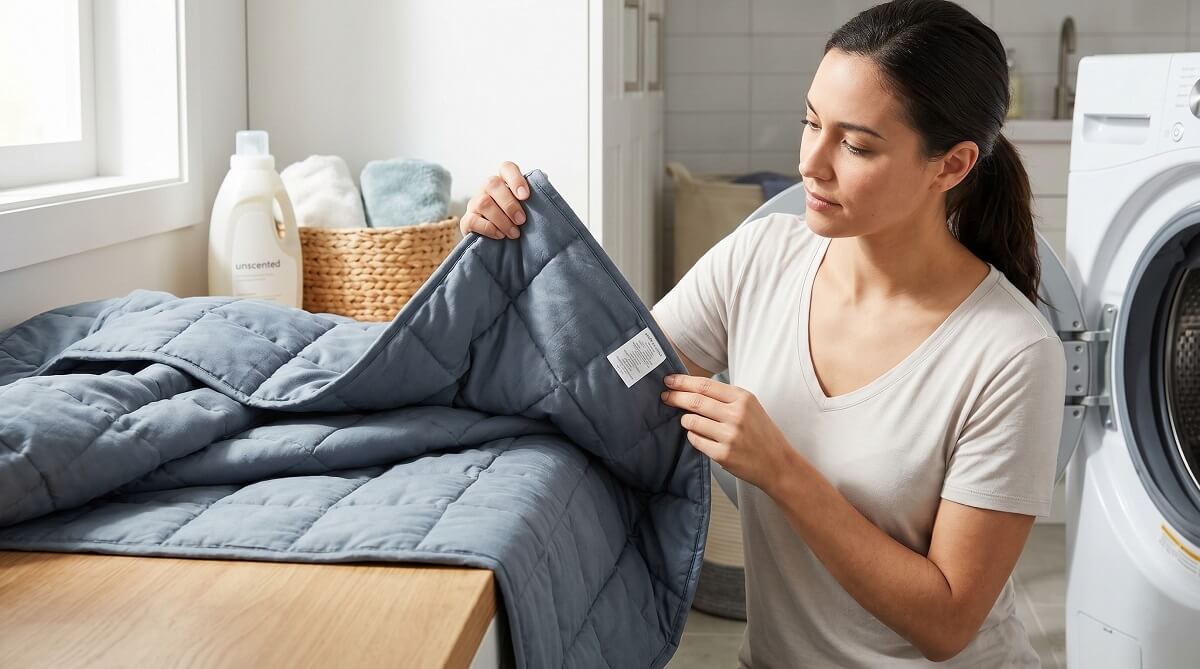
The short answer is yes — most weighted blankets can be laundered at home. If yours weighs under 15–20 pounds and is filled with glass beads or plastic pellets, a standard home washer on a gentle cycle with cold water will do the job. Blankets filled with organic materials like sand, rice, or beans are a different story: those can’t be submerged at all and need spot cleaning only.
The problems most people run into aren’t complicated — wrong water temperature, a machine that’s too small for the load, or pulling out a blanket that feels dry but still has damp fill pockets in the center. This guide covers all three, plus a washing frequency chart and fill-type comparison table you won’t find in most how-tos. If you’re still choosing a blanket, our can help you pick one that’s easy to care for.
Quick check before you start:
- Glass beads or plastic pellets → machine washable (with care)
- Organic fill (sand, corn, rice, beans) → spot clean only; do not submerge
- Silk or wool outer fabric → hand wash or dry clean
Wash at Home or Send It Out?
✅ Wash at Home If:
- Your blanket weighs under 15–20 lbs
- The care label says “machine wash” or “gentle wash”
- You have a front-loading washer or a high-capacity top-loader without a central agitator
- The fill is glass beads or poly pellets
❌ Take It to a Laundromat or Dry Cleaner If:
- The blanket weighs over 20 lbs
- The care label says “spot clean” or “dry clean only”
- The fill is organic (sand, rice, corn, beans)
- The outer fabric is silk, linen, or delicate wool
What Your Blanket Is Filled With Changes Everything
Before you run a single load, you need to know your fill type. Weighted blankets get their heft from different materials, and each has its own rules. cover this in more detail, but here’s a quick summary for washing purposes.
Fill Type Comparison Table
| Fill Type | Machine Washable? | Water Temp | Dryer OK? | Notes |
|---|---|---|---|---|
| Glass beads | Yes | Cold/warm (max 85°F) | Low heat only | Most common; durable and dense |
| Micro glass beads | Yes | Cold (max 85°F) | Low heat only | Finer than standard; same wash rules |
| Plastic poly pellets | Yes | Cold/warm | Low heat only | Can clump or melt if overheated |
| Steel shot beads | Hand wash only | Cold | Air dry only | Too heavy for most home machines |
| Sand / organic fills | No — spot clean only | N/A | N/A | Absorbs water; ruins the blanket |
| Rice, corn, beans | No — spot clean only | N/A | N/A | Can rot or mold if submerged |
Outer Fabric Matters Too
- Cotton — Machine washable; may shrink slightly in hot water, so stay cool
- Polyester / Minky — Machine gentle; avoid high heat
- Bamboo — Gentle cycle or hand wash recommended for longevity
- Linen-rayon blends — Dry clean is the safe call
- Silk — Hand wash or dry clean only; never machine wash
Does Your Washing Machine Actually Handle the Weight?
Standard home washers can typically handle weighted blankets up to 15–20 pounds, according to guidance from Spincycle Laundry. What most guides don’t mention: a wet 15-pound blanket soaks up additional water and weighs significantly more by the time the rinse cycle starts. If you’re right at the limit, go to a laundromat.
Front-Loader vs. Top-Loader with Agitator
Front-loading washers are the better choice for weighted blankets. The horizontal drum distributes weight evenly and uses a gentler tumbling action. Top-loaders with a central agitator — the plastic post in the middle of the drum — can twist and stress the stitching on a heavy blanket over time, especially at higher speeds. If a top-loader is all you have, use the lowest agitation setting available or take the blanket to a laundromat with front-loading commercial machines.
How to Machine Wash a Weighted Blanket (Step-by-Step)
- Find the care label first. It’s usually sewn into a corner seam. Follow those instructions above everything else in this guide.
- Pre-treat any stains. Mix 1 teaspoon of mild liquid dish soap with 2 cups of cold water. Dab the solution onto the stain with a clean cloth — don’t scrub, just press and lift. Let it sit for 5 minutes before loading.
- Load the blanket alone. No other laundry. Distribute it evenly around the drum so the machine doesn’t become unbalanced mid-cycle.
- Select gentle or delicate cycle with cold or warm water. Cold is the safest universal choice. According to YnM’s official care FAQ, glass bead blankets should not exceed 85°F wash temperature.
- Use a mild, bleach-free detergent. Skip fabric softener — it coats the fibers and breaks them down over time.
- Add an extra rinse cycle. Weighted blankets are thick; detergent gets trapped inside. A second rinse clears it out and keeps the fabric soft.
- Remove promptly. Don’t leave a wet blanket sitting in the drum. Move it straight to drying.
How to Hand Wash a Weighted Blanket
Hand washing is the right move for blankets over your washer’s weight limit, those made with delicate outer fabrics, or any blanket where the care tag says to avoid machine washing.
- Fill a bathtub with cold or lukewarm water.
- Add a small amount of mild detergent and swirl until dissolved before the blanket goes in.
- Submerge the blanket and gently knead it for 5–10 minutes — work through the entire surface area.
- Drain the tub. Refill with clean cold water to rinse.
- Knead again until water runs clear and no soap residue remains.
- Press (don’t wring) excess water out. Wringing can break stitching around bead pockets.
- Transfer to a flat surface or two drying racks to air dry.
Drying a Weighted Blanket — The Step Most People Get Wrong
Washing is the easy part. Drying is where things go sideways. The fill pockets inside a weighted blanket hold moisture long after the outer fabric feels dry — and a blanket stored even slightly damp can develop mildew in the fill.
Air Drying (Recommended)
- Lay the blanket flat on a clean surface or across two drying racks — laying flat prevents the fill from shifting to one end
- Flip it every 4–6 hours so both sides get airflow
- Drying time: 24–48 hours, per guidance from Spincycle Laundry — longer in humid climates
- Before folding, press firmly on the center of the blanket. If it feels cool or damp, it’s not done. The edges always dry first.
Machine Drying (Low Heat Only)
- Set the dryer to the lowest heat setting — high heat melts plastic pellets and can warp glass bead pockets
- Add 2–3 clean tennis balls. They bounce around inside the drum, breaking up bead clumping and improving airflow so the blanket dries faster and more evenly — a tip from the pros at Star Bright Cleaners
- Stop and fluff the blanket every 20–30 minutes — redistribute the fill manually before restarting
- Run as many cycles as needed. A 15-pound blanket may need 2–3 full dryer cycles on low
What Happens If It Doesn’t Dry Fully
A damp weighted blanket stored folded is a mildew risk. The fill pockets trap moisture with very little airflow. If your blanket smells musty after washing, run another full rinse cycle to flush out any detergent residue, then dry it completely in a well-ventilated area before use. Never fold or store it until the center feels completely dry to the press.
Stain Removal Without Damaging the Fabric
Handle stains before they set — fresh spills are far easier to clear than dried ones.
| Stain Type | Solution | Method |
|---|---|---|
| Food or drink | 1 tsp dish soap + 2 cups cold water | Dab with clean cloth; blot, don’t rub |
| Body oils / sweat | 50% white vinegar + 50% water | Dab on stain; let sit 5 min; rinse with cold water |
| Tough/set-in stains | Baking soda paste (baking soda + small amount of water) | Apply to stain; leave 10 minutes; rinse |
| Pet accidents (urine) | Enzyme-based cleaner or vinegar solution | Blot immediately; apply solution; rinse well before full wash |
Always spot-test any cleaning solution on a hidden corner or seam first — some fabrics react to vinegar or baking soda differently.
How Often Should You Actually Wash It?
Cleaning too often wears down a weighted blanket faster than you’d expect. Heavy blankets are more vulnerable to fiber stress than lightweight bedding. According to Sleep Foundation, with proper care a weighted blanket should last around 5 years — and how often you launder it is a big factor in that.
| Use Pattern | Wash Frequency | Notes |
|---|---|---|
| Daily sleeper (on the bed every night) | Every 2–4 weeks | Body oils accumulate quickly against the skin |
| Occasional couch or lap use | Every 2–3 months | Less direct skin contact; lighter soil load |
| Child’s blanket | Every 1–2 weeks | Kids mean more spills and more contact |
| Shared by multiple users | Every 2–3 weeks | Multiple users speed up soil buildup |
| Blanket with a duvet cover | Cover: weekly; blanket: every 2–3 months | Cover takes the brunt; blanket stays cleaner longer |
The single best thing you can do to extend your blanket’s life: get a removable duvet cover. Cleaning a light cover is far less stressful on your washer (and the blanket) than laundering the full weighted insert every few weeks.
When to Use a Laundromat — and What to Tell the Attendant
Any blanket over 15–20 pounds exceeds most home washer capacities, per guidance from laundry professionals at Spincycle Laundry. Commercial front-loading washers at laundromats typically handle 20–40 lbs safely and use a gentler tumbling action than household machines.
If you take your blanket in, tell the attendant:
- “This has glass bead / poly pellet fill — not organic material.”
- “Gentle cycle, cold or warm water, no bleach or fabric softener.”
- “Low heat dry if possible, or air dry only.”
Frequently Asked Questions
Can you wash a weighted blanket in a regular washing machine?
Yes, if the blanket weighs under 15–20 pounds and your machine has the capacity. Use a gentle cycle with cold or warm water and mild detergent. Blankets heavier than 20 pounds should go to a laundromat with commercial washers.
Can weighted blankets go in the dryer?
Yes, but only on the lowest heat setting. High heat damages poly pellets and can warp the stitching around bead pockets. Add clean tennis balls to the drum to prevent clumping, and fluff every 20–30 minutes. Air drying is safer if you have the time.
What detergent is safe for weighted blankets?
Use a mild, fragrance-free, bleach-free detergent. Skip fabric softener entirely — it coats the fibers and breaks them down over repeated washes. A smaller-than-normal amount is fine; these blankets trap detergent, which is why an extra rinse cycle helps.
How do you wash a weighted blanket with glass beads?
Glass bead blankets are machine washable. Use cold or warm water (not above 85°F), a gentle cycle, and mild detergent. Glass beads don’t absorb water themselves — you’re mainly washing the fabric shell. Air dry or low-heat tumble dry. YnM, a leading brand in this space, confirms this in their official FAQ.
Is a 15 lb weighted blanket too heavy for a standard washer?
Most modern large-capacity home washers can handle 15 pounds dry. The catch: a soaked 15-pound blanket weighs considerably more. If your washer is older or smaller, take it to a laundromat to be safe. When in doubt, check your washer’s manual for its maximum load weight.
How long does a weighted blanket take to air dry?
Plan on 24–48 hours laid flat, depending on the fill density, your home’s humidity, and airflow. The edges dry faster than the center. Press firmly into the middle of the blanket before folding — if it feels cool or damp, it needs more time.
What happens if you use hot water on a weighted blanket?
Hot water can shrink cotton outer fabrics, warp or melt plastic pellet fill, and weaken the stitching around bead pockets over time. Always wash in cold or warm water (under 85°F) regardless of the fill type.
Can you dry clean a weighted blanket?
Yes — dry cleaning is appropriate for blankets marked “dry clean only,” those with silk or delicate wool fabrics, or any blanket you’d rather not risk in a home washer. Professional dry cleaners handle the size and weight safely.
A Few More Things Worth Knowing
A good weighted blanket is worth taking care of. Wash it right and it can last 5 years or more. Most of the damage people see — clumped fill, broken stitching, shrunken fabric — comes from hot water, an overloaded washer, or pulling it out of the dryer before it’s fully dry.
Check current prices on popular weighted blankets at Amazon’s weighted blanket bestsellers — entry-level options run $27–$50, while premium picks from brands like Gravity start around $130 (prices as of February 2026; check for current deals). If you own one with a removable cover, laundering just the cover weekly and the full blanket every few months will keep both in much better shape, for much longer.
