


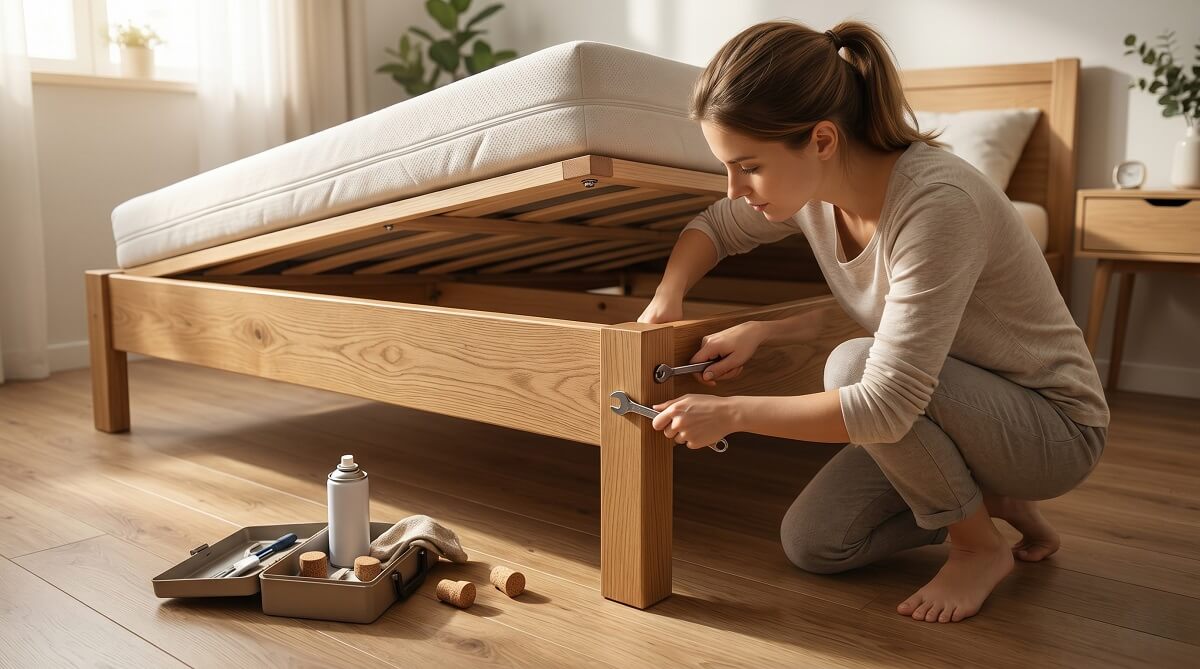
Most squeaky beds are resolved in under 15 minutes with a screwdriver and a can of WD-40. The trick is identifying what’s making the noise before you start: the metal or wood frame joints, the mattress springs, the box spring coils, or the bed legs rubbing against the floor. Jump to the wrong fix and you’ll still hear that creak at 2 a.m. For more hands-on home maintenance guides, browse our how-to section on ChubbytIps.
This guide covers every source of bed noise — in order of how common each is — with the fix, the tools required, how long it takes, and what it costs. Most repairs run $0 to $15. Start with the two-minute diagnostic below; it narrows down the culprit before you touch a single bolt.
Fix It Yourself or Replace? A Quick Decision Guide
✅ Try the DIY Fix If:
- Joints visibly wobble or screws look loose
- The noise disappears when you lift the mattress off the frame
- The creaking only happens when you shift weight on the bed
- Your bed frame is under 8 years old and structurally intact
❌ Consider Replacing If:
- Frame joints are cracked, bent, or welds have snapped
- Screw holes are stripped and won’t hold any fastener
- Your innerspring mattress is over 8–10 years old and coils are audibly grinding
- Box springs creak loudly even when you press on them off the bed
Squeaky Bed: Quick Cause-to-Fix Reference
Not sure where your bed noise is coming from? Use this table to match the most likely source to a solution before diving into the full steps.
| Source of Noise | Most Likely Cause | Fix | Time | Approx. Cost |
|---|---|---|---|---|
| Metal frame joints | Loose bolts / metal-on-metal contact | Tighten + apply WD-40 | 10 min | ~$8 (WD-40) |
| Wooden frame joints | Wood-on-wood rubbing | Beeswax or candle wax on joints | 10 min | $0–$5 |
| Slats on rails | Slats shifting or grinding | Felt tape strips on slat ends | 10 min | ~$7–$10 |
| Innerspring mattress | Worn coil springs | Rotate 180°; replace if over 8 years old | 5 min / varies | Free / varies |
| Box springs | Fatigued internal coils | Lubricate coils; swap for a foundation | 15 min / varies | $8 / $100+ |
| Leg-to-floor contact | Bed legs sliding on hard floor | Adhesive furniture pads under legs | 5 min | $7–$10 |
| Mattress-to-frame contact | Firm mattress fabric rubbing metal rails | Felt or fabric buffer along rails | 10 min | ~$7–$10 |
Step One: Find the Source Before You Fix Anything
Two minutes spent diagnosing saves an hour of guessing. Strip everything off the bed — pillows, duvet, mattress, and if you have one, the box spring — and work through these checks.
Test the Mattress on the Floor
Place the mattress directly on the floor. Lie down and roll around, shifting your weight the same way you do while sleeping. If the creaking follows the mattress to the floor, the noise is coming from inside the mattress — usually worn innerspring coils. If it’s silent on the floor, the frame or box spring is the culprit.
Test the Box Spring Separately
If you have a box spring, place it flat on the floor and press firmly on different sections. An audible groan from the box spring means fatigued coils inside — not a frame problem.
Test the Frame
With both the mattress and box spring removed, press firmly on each corner of the frame, then wiggle the headboard and footboard from side to side. Rock the side rails. Listen for which specific joint or point produces the sound. A flashlight helps you spot loose bolts or rust.
Check Floor Contact
If the noise only happens when the whole bed shifts position — not from a specific joint — the bed legs are probably sliding or vibrating against a hard floor. Adding furniture pads to the legs is a fast solution for this.
How to Stop a Metal Bed Frame from Squeaking
Metal frames squeak almost exclusively because of friction — either at loose joints where metal meets metal, or between the mattress and the rail surface. Work through these four fixes in order.
1. Tighten Every Bolt and Nut (This Resolves Most Metal Frame Squeaks)
Grab the Allen key or wrench that came with the bed and work your way around the entire frame: headboard mounting bolts, rail-to-corner connectors, slat support brackets. Don’t assume any bolt is tight just because it looks fine. Quarter-turns add up.
If screws are rusty or strip out easily, swap them for new ones from a hardware store — a set of M6 or M8 bolts costs under $5. Adding a metal washer behind each bolt gives the fastener more surface area to grip, which helps prevent future loosening.
2. Lubricate the Joints
After tightening, if metal-on-metal contact points are still grinding, a lubricant eliminates the residual rubbing. WD-40 is the go-to option: a 12oz can costs around $8.39 at Target (as of March 2026) and reaches into tight joints easily with the straw applicator. You can also find it at Amazon for a similar price.
Spray directly onto the contact surfaces — joint connections, where side rails slot into corner posts, and around bolt heads. Wipe off any excess so it doesn’t drip onto your sleeping surface. For a longer-lasting option, white lithium grease (available at any hardware store) stays put better than WD-40 and won’t need re-applying as often. Vegetable oil works in a pinch, but can turn rancid over time — use a proper lubricant when you can.
3. Add Padding Between the Mattress and Rails
A firm mattress pressing down on bare metal rails creates its own category of squeak — separate from joint friction. You’ll notice this type of noise happens when you shift position on the bed, not when you press on the frame with the mattress off.
Cut strips of old fabric, felt tape, or foam pipe insulation and lay them along the top surface of each side rail. This buffers the contact between the mattress and the metal structure. Adhesive felt tape (the same kind used for furniture pads) works well here and stays in place. Our home buying guides cover the best bed frame materials if you’re considering an upgrade.
4. Add Furniture Pads Under the Legs
If the sound comes from leg-to-floor contact, peel-and-stick felt furniture pads under each bed leg address it in minutes. A 20–24 pack runs $7–$10 at Walmart or Home Depot and works on hardwood, laminate, and tile. You can also check felt furniture pads on Amazon for options and current pricing. Rubber pads or carpet grippers work similarly on carpeted floors.
How to Stop a Wooden Bed Frame from Squeaking
Wood-on-wood friction at the joints is the primary cause of creaking in wooden frames. The good news: it’s often silenced with materials you already have at home.
1. Tighten All Screws and Allen Key Connections
Flat-pack wooden beds are especially prone to joint loosening, particularly if the bed has been dismantled and rebuilt. Get out the original Allen key and go around every connection point. If a screw hole is stripped and won’t hold the screw, fill it: push a toothpick dipped in wood glue into the hole, let it dry overnight, trim flush, then re-drive the screw. This works reliably on most softwood frames. For more step-by-step home fixes, see our how-to guides.
2. Apply Wax or Soap to the Joints
Beeswax rubbed onto wooden joint surfaces reduces the wood-on-wood contact that produces creaking. A plain candle (paraffin wax) works just as well and costs nothing if you have one on hand. Partially disassemble the joint, rub wax across both mating surfaces, then reassemble. The wax acts as a dry lubricant — no mess, no dripping, and it won’t damage the wood.
It sounds too simple to work. It isn’t. A five-minute job with a candle can eliminate a creak that’s been waking you up for months.
3. Replace Worn or Cracked Slats
A single broken slat creates an outsized amount of noise and — left unaddressed — can damage your mattress by allowing it to sag unevenly. Slats are inexpensive and available at most hardware stores or online. Before ordering, measure the old slat’s width, thickness, and length, since standard slat widths vary (common sizes are 2.75″ and 3″). Replace like-for-like or opt for slightly thicker slats for added rigidity.
4. Check the Headboard Mounting
Headboards on wooden beds develop their own wobble noise independently of the rest of the frame. Tighten the headboard bolts and add a small rubber washer behind each bolt head to dampen vibration. If the headboard mounts to the wall rather than the frame, check those fasteners too.
How to Quiet a Squeaky Mattress
Mattress noise is almost always an innerspring problem — foam and pocketed-coil mattresses don’t generate this kind of sound. If your diagnostic check confirmed the mattress itself is the source, here are your options.
Rotate the Mattress First (Free Fix)
Rotating 180 degrees (head-to-foot) redistributes your body weight to less-worn coils. This doesn’t address the worn springs, but it often reduces the audible noise enough to buy you more time before replacement. Rotating every 3–6 months also slows the wear process overall — according to multiple sleep researchers, this routine can add one to two years to an innerspring mattress’s usable life.
Try a Mattress Topper as a Buffer
A 2-inch memory foam topper placed over the mattress creates distance between your body and the coils, which dampens the sound noticeably. This is a short-term measure — it treats the symptom, not the cause — but it can make an aging innerspring tolerable for another season.
When It’s Time to Replace the Mattress
Traditional innerspring mattresses begin to sag after about five to six years of continuous use, according to the Sleep Foundation, making them the shortest-lived mattress type on average. Total lifespan runs 7–10 years; budget models with thinner coils can develop problems in as few as 3–5 years.
When audible coil noise persists after rotating and your mattress is approaching or past that window, replacement is the practical call. Two mattress types that genuinely don’t generate coil noise:
- Memory foam: Contains no coils at all — analysis of 25,581 mattress owner reviews found memory foam “silent under all conditions.”
- Pocketed coil / hybrid: Each spring is individually wrapped in fabric, eliminating metal-on-metal contact. Pocketed coil systems stay mostly quiet even as they age.
For in-depth comparisons of quiet mattress options, check our mattress review section.
How to Fix Squeaky Box Springs
Box springs house a grid of metal coils that can begin creaking as they lose tension with age. Unlike frame repairs, box spring work is a short-term measure — the coils will eventually wear out regardless. Here’s what you can try, and when to stop trying.
Lubricate the Internal Coils
Flip the box spring upside down to access the dust cover — the thin fabric panel stapled across the bottom. Carefully cut a small section away from its staples (keep the piece; you’ll re-attach it). Spray WD-40 on each visible coil, coating the springs evenly. Reattach the fabric with a staple gun. This often reduces noise significantly, though it may need repeating after a few months.
Rotate the Box Spring
Similar to rotating a mattress, rotating a box spring 180 degrees (head-to-foot) shifts weight to less-fatigued springs. Box springs have a top and bottom — don’t flip them over, just rotate horizontally.
Replace the Box Spring With a Foundation or Platform Frame
When lubrication stops working and the box spring groans even when empty, the coils have reached end-of-life. Rather than buying another box spring (which restarts the same deterioration cycle), consider switching to a platform frame or mattress foundation. Our buying guide for bed bases breaks down the tradeoffs in detail.
Foundations use wooden or metal slats instead of coils — dramatically quieter, and compatible with all mattress types including foam. Platform frames with steel slats run as low as $50–$100 on Amazon for a queen. Traditional box springs for a queen run $100–$300; a quality foundation runs $200–$500. The math usually favors the foundation once you factor in longevity.
Keep Your Bed Quiet Long-Term
Once you’ve silenced the creak, a few simple habits prevent it from coming back.
- Tighten all frame bolts every 6 months. Set a calendar reminder. It takes five minutes and stops noise before it starts.
- Re-lubricate metal joints once a year. A quick spray of WD-40 or lithium grease on contact points costs pennies and keeps rubbing from building up.
- Keep felt pads on leg bottoms. Replace them when they’ve worn flat — pads lose effectiveness before you notice the sound returning.
- When buying a new frame: welded steel joints stay tighter over time than bolt-only connections. Solid steel platform frames and solid hardwood frames with traditional joinery are the quietest long-term choices.
Frequently Asked Questions
Why does my bed squeak?
Squeaking comes from friction at a contact point — typically loose bolts at frame joints, metal-on-metal wear at connections, wood-on-wood movement at wooden joints, worn coils in an innerspring mattress or box spring, or bed legs sliding against a hard floor. Finding the source first (see the diagnostic section above) is the fastest path to a lasting solution.
What’s the best lubricant for a squeaky metal bed frame?
WD-40 works quickly and is easy to find — a 12oz can is around $8 at Target or Home Depot. For longer-lasting results, white lithium grease stays in place better and won’t need reapplying as often. Avoid vegetable or cooking oil on metal; it can turn rancid and attract dust over time.
Can candle wax really fix a squeaky wooden bed?
Yes — plain paraffin (candle wax) or beeswax rubbed onto wood joint surfaces works well. It reduces friction between mating wood surfaces the same way a dry lubricant would, without damaging the material or leaving a mess. Rub it on both sides of a disassembled joint, reassemble, and the creak often disappears immediately.
Do memory foam mattresses squeak?
No. Memory foam contains no coils, so it can’t produce coil noise. According to a survey of over 25,000 mattress owners, memory foam is “silent under all conditions.” If you’re hearing noise from a memory foam mattress, the sound is almost certainly coming from the bed frame or foundation, not the foam. Pocketed coil (hybrid) mattresses are also mostly quiet since each spring is individually wrapped in fabric, preventing metal-on-metal contact.
How do I know if it’s the mattress or the frame making the noise?
Remove the mattress from the frame, place it on the floor, and lie on it. If the creaking follows the mattress to the floor, the mattress is the problem. If it’s silent on the floor, the noise is coming from the frame or box spring.
How much does it cost to fix a squeaky bed?
Most repairs cost under $15. WD-40 runs about $8, a pack of felt furniture pads runs $7–$10, and candle wax costs nothing if you have one. Swapping worn slats or a stripped bolt set adds another $5–$10. The only expensive fix is replacing the mattress or box spring — which should only happen when the component is genuinely worn out, not as a first attempt.
When should I replace the bed frame instead of fixing it?
Replace the frame when the joints are cracked or bent, welds have failed, or screw holes strip out repeatedly and won’t hold any fastener. If you’ve tightened, lubricated, and padded the structure and it still creaks within a week, the frame is likely compromised. A basic metal platform frame starts around $50–$80 on Amazon for a queen.
What bed frames are least likely to squeak?
Solid steel platform frames with welded joints are the quietest metal option — no bolted connections means fewer potential friction points. Solid hardwood frames with traditional mortise-and-tenon or dowel joinery (rather than metal bolt-and-bracket flat-pack assembly) are the quietest wooden choice. Either type, paired with a foundation or direct mattress placement, eliminates box spring noise entirely.
Ready to silence your bed tonight? Check current prices on WD-40 on Amazon and adhesive felt furniture pads — most repairs cost under $15 in supplies.
