


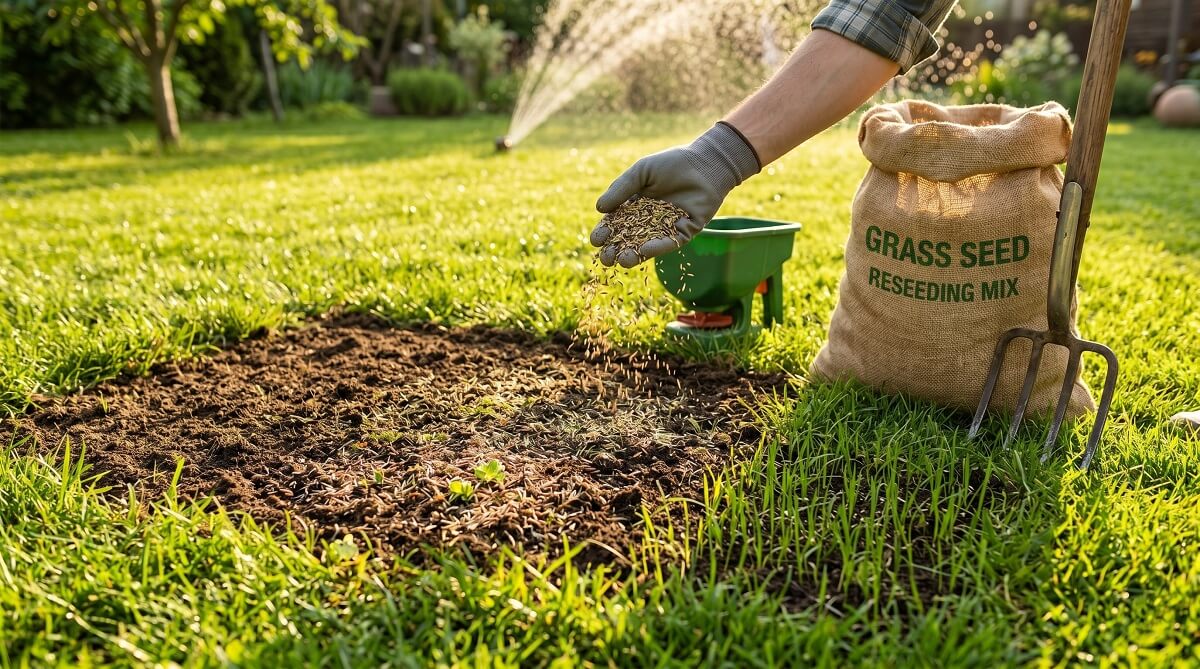
Reseeding a lawn means starting from scratch — clearing dead grass and weeds, prepping the soil, and planting new seed. It’s different from overseeding, which just thickens a yard that’s still mostly alive. You reseed when the damage is too widespread to save: think more than half your turf is bare, weedy, or dead. For a quick rundown of which approach fits your situation, see our .
Timing separates a successful reseed from a disappointing one. For cool-season grasses — tall fescue, Kentucky bluegrass, perennial ryegrass — aim for late August through early October when soil temperatures are between 50°F and 65°F. For warm-season grasses like bermuda and zoysia, late spring works best once soil temps consistently hit 65–70°F. These thresholds come from Barenbrug turfgrass research, which recommends measuring soil temp 2–4 inches deep each morning.
Plan for 6–8 weeks of active care. The fastest grass to establish (perennial ryegrass) shows blades in as few as 3–10 days. Kentucky bluegrass, on the other hand, takes 14–30 days, according to LawnStarter’s germination guide. Factor that in before you start — and commit to daily watering throughout that window.
Should You Reseed or Just Overseed?
✅ Reseed if:
- More than 50% of your lawn is bare, dead, or overrun with weeds
- You want to switch to a different grass type for your climate
- Multiple rounds of overseeding haven’t fixed the problem
- Drought, grubs, or fungal disease killed off large sections
❌ Skip reseeding (overseed instead) if:
- Your lawn is thin but still mostly alive
- Bare spots are small and scattered (under 6 sq ft each)
- You can’t commit to 6–8 weeks of daily watering during germination
Reseeding vs. Overseeding: What’s the Actual Difference?
Overseeding means spreading new seed over existing grass to fill thin areas and improve density. You don’t tear anything out — you’re just building on what’s already there. cover both approaches in detail.
Reseeding is a full reset. You clear out the existing vegetation — dead or not — prep the ground, and plant from bare soil. It takes longer and demands more effort, but when a lawn is truly beyond recovery, it’s the only route worth taking.
A practical rule: if healthy grass covers less than half the yard, reseed. If it covers more than half, address the thin patches with overseeding instead. A full-scale renovation when targeted overseeding would have worked just wastes a growing season.
When to Reseed a Lawn (Timing by Region)
Grass seed doesn’t care about the calendar date — it responds to soil temperature. Using a cheap soil thermometer (stick it 2–4 inches deep in the morning) takes the guesswork out of timing.
Cool-Season Grasses — Northern US
Tall fescue, Kentucky bluegrass, fine fescue, and perennial ryegrass all germinate best when soil temperature sits between 50°F and 65°F, per Barenbrug’s germination temperature guide. In most of the Northern US, that window falls from mid-August through early October. Soil is still warm from summer, nights are cooling down, and weed pressure drops off significantly compared to spring.
Spring seeding works in a pinch, but it comes with more competition from crabgrass and other warm-weather weeds that thrive as temperatures climb.
Warm-Season Grasses — Southern US
Bermudagrass, zoysiagrass, and centipede need consistent soil temps of 65–70°F or higher to germinate well. That lands most of the Southeast in the late May to early July window. Planting too early means seeds sit in cool soil and rot or fail.
Note: St. Augustinegrass is rarely seeded — it’s almost always established via sod or plugs.
Quick Regional Reference
| Region | Common Grass Types | Best Reseeding Window |
|---|---|---|
| Northeast / Midwest | Tall fescue, KY bluegrass, perennial rye | Aug 15 – Oct 1 |
| Southeast | Bermuda, zoysia, centipede | May – June |
| Pacific Northwest | Fine fescue, perennial rye | Sept – Oct |
| Southwest / Texas | Bermuda, buffalo grass | April – June |
| Transition Zone (VA, KY, NC) | Tall fescue (best option) | Sept – Oct |
What You’ll Need Before You Start
Pull everything together before you dig in. A missing bag of topsoil on day two stalls the whole process.
- Grass seed — matched to your region, sun exposure, and intended use (high traffic, shade, drought tolerance)
- Starter fertilizer — high in phosphorus to support root development. Not a pre-emergent combo — those block germination.
- Topsoil or lawn soil mix — especially important if your existing layer is compacted or thin
- Garden rake + dethatching rake — one for clearing, one for working seed into soil
- Broadcast spreader — hand spreader works for small patches; a wheeled spreader handles larger areas more evenly
- Straw mulch (optional) — helps retain moisture in dry climates and reduces seed washout on slopes
- Garden hose with adjustable nozzle or sprinkler — you’ll use this constantly for 2–3 weeks
For a mid-size yard of around 2,500 sq ft, budget $150–$300 for seed, starter fertilizer, and topsoil. Scotts Turf Builder Sun & Shade Mix (5.6 lb) lists at $45.49 and covers up to 745 sq ft on a new lawn. Jonathan Green Black Beauty Ultra is a solid alternative — see our for current picks.
How to Reseed a Lawn: 8 Steps
Step 1 — Diagnose the Problem Before You Do Anything
Reseeding over the same issue that killed your lawn gives you the same dead lawn a year later. Before touching a seed, figure out why the grass failed. Grubs chewing through roots? A fungal disease? Heavy clay soil that sheds water instead of absorbing it? Chronic underwatering during drought?
If grubs are present, treat them first. If soil compaction is the cause, plan to aerate. If the pH is off (most grasses want 6.0–7.0), lime or sulfur will need to go down before seed. Skipping the diagnosis is the single most common reason a reseed fails.
Step 2 — Kill Existing Grass and Weeds
You have three options, each with different tradeoffs:
- Non-selective herbicide (e.g., glyphosate-based): Fastest method. Apply on a dry, wind-free day. Wait the label’s recommended period before seeding — typically 1–2 weeks. Read and follow all label directions carefully.
- Solarization: Lay clear plastic sheeting over the lawn after mowing short and soaking it. Weight down the edges. Heat and moisture kills everything beneath in 6–8 weeks. Chemical-free but takes time.
- Newspaper/mulch smothering: Layer 7–10 sheets of newspaper over the area, wet it down, then cover with 5–7 inches of compost or grass clippings. No chemicals, takes 6–8 weeks, and as it breaks down it adds organic matter to the soil.
Step 3 — Dethatch and Rake
Most people don’t rake enough. Dead thatch creates a physical barrier between seed and soil — seeds that can’t make soil contact don’t germinate well. Work through the area with a dethatching rake, making multiple passes in different directions. Bag or remove the debris. For heavily matted areas, a power dethatcher (rentable at most hardware stores) speeds this up considerably.
University of Minnesota Turfgrass Science documented this in a case study: even after herbicide application, hand-spiking the seeded area to improve seed-to-soil contact made a measurable difference in how well the grass came in.
Step 4 — Prepare the Soil
Good soil prep is where reseeding outperforms quick fixes. A few things to do at this stage:
- Check soil pH. Test strips or a simple kit from any hardware store work fine. Most grass types do best at 6.0–7.0. If you’re below that, add lime. Above 7.0, add sulfur.
- Add topsoil if needed. If the topsoil layer is thin or heavily compacted, work in a 1–2 inch layer of quality lawn soil. This also helps level out low spots.
- Aerate compacted areas. Clay-heavy soils benefit significantly from core aeration before seeding. Plugs pulled from the soil give seeds and roots room to breathe.
- Rake level. Work the soil until it’s reasonably flat, with no large clumps. New seedlings struggle to emerge from uneven ground.
Step 5 — Choose and Spread the Right Seed
Seed selection matters more than most people realize. Using a warm-season grass in a northern climate or a shade-only mix in a full-sun yard leads to thin, struggling turf. Match your seed to your region, sun exposure, and how the lawn is used (foot traffic, pets, etc.).
| Grass Type | Best For | Seeding Rate (New Lawn) | Germination Time |
|---|---|---|---|
| Tall fescue | Drought tolerance, adaptability, North & Transition Zone | 8–10 lbs / 1,000 sq ft | 5–12 days |
| Kentucky bluegrass | Self-repairing, dense turf; Northern US | 1–2 lbs / 1,000 sq ft | 14–30 days |
| Perennial ryegrass | Fast establishment, Northern/Pacific NW | 6–9 lbs / 1,000 sq ft | 3–10 days |
| Fine fescue | Shade tolerance, low-maintenance | 3–5 lbs / 1,000 sq ft | 7–14 days |
| Bermudagrass | Heat, drought, high traffic; Southern US | 1–2 lbs / 1,000 sq ft | 10–30 days |
Use a broadcast spreader at the rate listed on the bag. For the coverage you need, the bag label is your most reliable guide since rates vary by product. After spreading, lightly rake to press seeds 1/4 inch into the soil, or use a lawn roller for even seed-to-soil contact.
Step 6 — Apply Starter Fertilizer Immediately
Put down starter fertilizer right after seeding — don’t wait. A starter formula is high in phosphorus, which supports the root development that brand-new seedlings depend on. Most starter fertilizers show an “N-P-K” ratio with a high middle number (e.g., 12-24-8 or similar).
One thing to be absolutely clear on: never use a pre-emergent weed preventer before or right after seeding. Pre-emergents work by blocking germination — they don’t distinguish between weed seeds and your grass seed. The same goes for weed-and-feed combo products labeled for existing lawns.
Step 7 — Water Daily (This Is Where Most Reseeds Fail)
Keeping the top inch of soil consistently moist is critical for the first 2–3 weeks. Let it dry out even once, and you can lose days of germination progress. Bob Vila’s lawn care guides recommend watering 10–15 minutes three times a day until significant growth appears. The UMN case study ran irrigation 4 times a day at 5-minute intervals until germination — then scaled back to twice daily for 10 minutes.
Adjust based on weather: hot and windy days may require more frequent watering; rainy stretches let you skip a cycle or two.
Once the grass reaches 2 inches, reduce to deeper, less frequent watering — about twice weekly at 1/2 inch per session. This encourages roots to grow down rather than staying shallow.
Step 8 — Aftercare: Mowing, Feeding, and Patience
Wait until the new grass reaches 3–4 inches before the first mow. Set the blade high and only take off the top 1/3 — no more. Cutting too low on new seedlings sets them back significantly. At 3 inches, mow to about 2.5 inches.
Six to eight weeks after seeding, the lawn should be established enough for a standard fertilizer application. At that point, you can begin addressing weeds that crept in — but hold off on post-emergent herbicides until after at least 2 mowings, giving the new grass time to toughen up. Browse more for ongoing maintenance tips.
6 Reseeding Mistakes That Waste Your Entire Season
- Using pre-emergent weed killer before seeding. It prevents germination — including your grass seed.
- Seeding at the wrong time of year. Planting cool-season grass in July or warm-season grass in September sets you up for failure before you start.
- Skipping soil prep. Dropping seed onto compacted, nutrient-poor, or pH-imbalanced soil is the definition of hoping for the best.
- Under-watering during germination. A single dry-out event can kill newly germinated seedlings before they’re established.
- Mowing too early or too low. Cutting new grass before it reaches 3 inches stresses the plants and slows coverage.
- Using the wrong grass type for your region. Kentucky bluegrass in the Arizona heat, or bermuda in Minnesota — both are wasted time and money.
Seed vs. Sod: Which Makes More Sense?
For a full-lawn renovation on a budget, seed almost always wins. A Milorganite agronomist with 25 years of turf experience estimated roughly $0.25/sq ft installed for seed vs. $1.30/sq ft installed for sod — though both figures have risen since that writing and vary significantly by region. Verify current local pricing before setting your budget.
| Factor | Seed | Sod |
|---|---|---|
| Cost | Lower ($0.25–0.40/sq ft est.) | Higher ($1.00–1.75/sq ft est. installed) |
| Time to use lawn | 6–8 weeks | 2–3 weeks |
| Root depth long-term | Deeper (grows in place) | Shallower initially |
| Grass variety options | Wide selection | Limited to local supply |
| Best for | Budget renovation, full control over grass type | Instant results, erosion control, high-traffic areas |
Frequently Asked Questions
How long does it take for reseeded grass to grow in?
Expect visible germination in 3–30 days depending on the grass type. Perennial ryegrass is fastest at 3–10 days; Kentucky bluegrass is the slowest at 14–30 days. Full coverage typically takes 6–8 weeks, and the lawn reaches maturity in one to two growing seasons.
Can I reseed in spring?
Yes, but fall is the better window for cool-season grasses in the North. Spring seeding means competing with crabgrass and other weeds that germinate as temperatures rise. If you go the spring route, seed as early as possible and skip any pre-emergent crabgrass preventer — it will block your grass seed too.
Do I need to remove all the old grass before reseeding?
For a true reseed, yes. Dead thatch and existing vegetation create a barrier that prevents seed-to-soil contact. Kill, dethatch, and rake thoroughly before spreading new seed. If you’re just overseeding thin areas, you can skip this.
How much grass seed do I need for 1,000 square feet?
Seeding rates vary significantly by grass type. Tall fescue needs 8–10 lbs for a new lawn; perennial ryegrass takes 6–9 lbs; fine fescue around 3–5 lbs; and Kentucky bluegrass only 1–2 lbs. Always confirm the rate on your specific seed bag — different products within the same species can differ.
What’s the best grass seed for the Northeast?
Tall fescue (turf-type varieties) is the most broadly adaptable choice for the Northeast and Midwest — it handles drought better than Kentucky bluegrass and establishes faster. Kentucky bluegrass is the classic choice for a dense, self-repairing lawn but requires more water and patience during establishment. Many premium mixes blend the two along with perennial ryegrass for quick coverage while the bluegrass fills in.
Can I use weed killer after reseeding?
Wait until after at least two to three mowings before applying any post-emergent herbicide. New grass is too tender in the first 6–8 weeks. For broadleaf weeds that pop up during establishment, hand-pull them rather than reaching for a spray. Pre-emergent weed preventers (for crabgrass, etc.) should be avoided entirely during the reseeding period.
How do I reseed just the bare patches?
Dig 2–3 inches into the bare area, break up the soil, work in a little topsoil, level it flush with the surrounding lawn, apply seed at the appropriate rate, press it in lightly, and water twice daily until it catches. Straw or a light mulch over the patch helps retain moisture. Match the seed type to what’s already growing around it.
My reseeded grass is patchy after a month — what went wrong?
The most common culprits: inconsistent watering (even a few dry days early on can create bare zones), poor seed-to-soil contact, or seed washed off by rain or heavy irrigation. Birds can also pick off seed before it sprouts. Try a second pass over thin areas — lightly rake the surface, apply more seed, and cover with a thin layer of straw mulch. More can help you work through ongoing issues.
Ready to buy? Check current grass seed pricing at Amazon, Home Depot, or Lowe’s. Scotts Turf Builder and Jonathan Green are the two most widely available brands in the US. Confirm the coverage on the bag before you buy — you don’t want to run short mid-project.
